Water Heater Leak Detection in Columbia, TN
A puddle by the water heater could be a tired valve, a corroded connection, or the tank itself, and the fix is very different for each. We test each suspect in turn, so you get a straight answer instead of a guess.
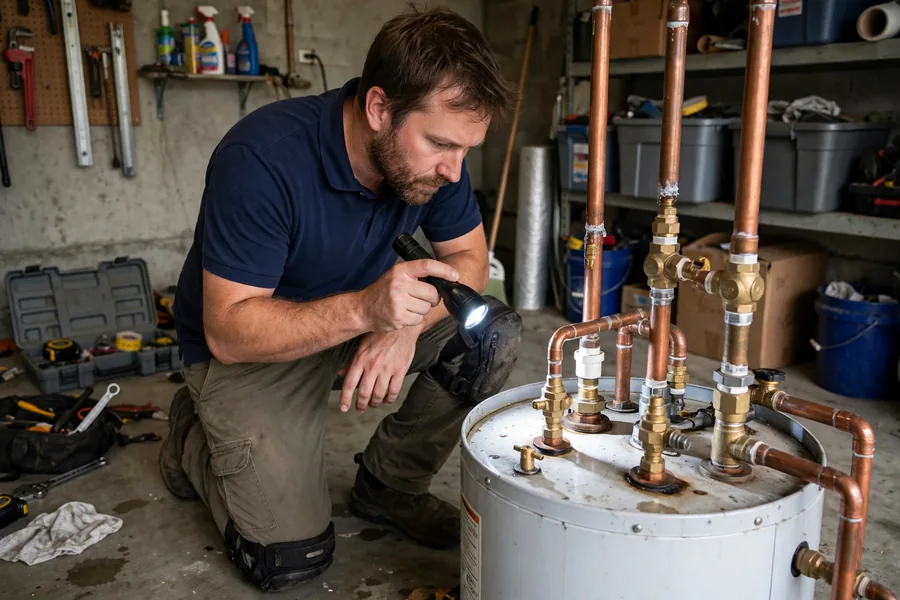
Spotted a warning sign? Let’s find the source.
Most leaks are located in a single visit. Call now and tell us what you’re seeing.
Start with the tank you actually have
Columbia garages and utility rooms hold two very different animals, and the leak signs are not the same for both. A traditional tank heater stores forty or fifty gallons behind a steel shell, and when it goes, it usually goes at a connection first and at the tank body last. A tankless unit hangs on the wall and heats on demand, with no stored water to burst, but with fittings, seals, and a condensate path that can all weep. Knowing which one you are looking at changes where we look first.
Tank heaters are still the majority of what we see in Maury County homes, especially in older subdivisions where the original setup was a tank in the garage. Tankless units show up more in newer builds and remodels. Either way, the first rule is the same: a damp floor near a water heater is worth a look now, not at the next water bill. Tanks rarely fail politely.
Signs your water heater is leaking
The obvious one is water on the floor. The sneaky ones are what bring most of our calls: a water bill that climbed for no clear reason, a faint rust stain creeping down the side of the tank, a white or green crust forming at a fitting, or a pilot that keeps going out because water is reaching the burner area. On tankless units, watch for drips at the wall connections, damp drywall behind the unit, or an error code that keeps coming back after a reset.
Rust deserves its own mention. A little surface rust on a fitting is common in a humid garage. Rust streaks running down from a seam, or rust-colored water at a hot tap, point to something internal, and that is a different conversation from a weeping connection. Sediment plays a part here too. Middle Tennessee water carries minerals that settle in a tank over years, and that sediment can insulate the bottom, stress the tank, and speed up corrosion. If your heater rumbles or pops when it fires, that is often sediment, not a leak, but it is still worth mentioning when you call.
The usual suspects, point by point
The T&P relief valve
The temperature and pressure relief valve is the safety device on your tank, and it has a discharge pipe that should run down toward the floor. A drip at the end of that pipe gets ignored a lot, because it looks harmless and the pipe points at a drain. Do not ignore it. It can mean a tired valve, a failing expansion tank, or pressure running higher than it should. We test the valve and the pressure feeding the tank, because replacing a valve without checking why it opened just buys you another drip.
The drain valve
Down near the bottom of a tank sits the drain valve, the spigot used to flush sediment. These valves, especially older plastic ones, are a classic slow-leak point. They weep after a flush, or the washer inside gives up quietly over years. A damp spot directly under the drain valve, with the rest of the tank dry, usually points here, and it is one of the quicker diagnoses we make.
Supply lines and inlet/outlet connections
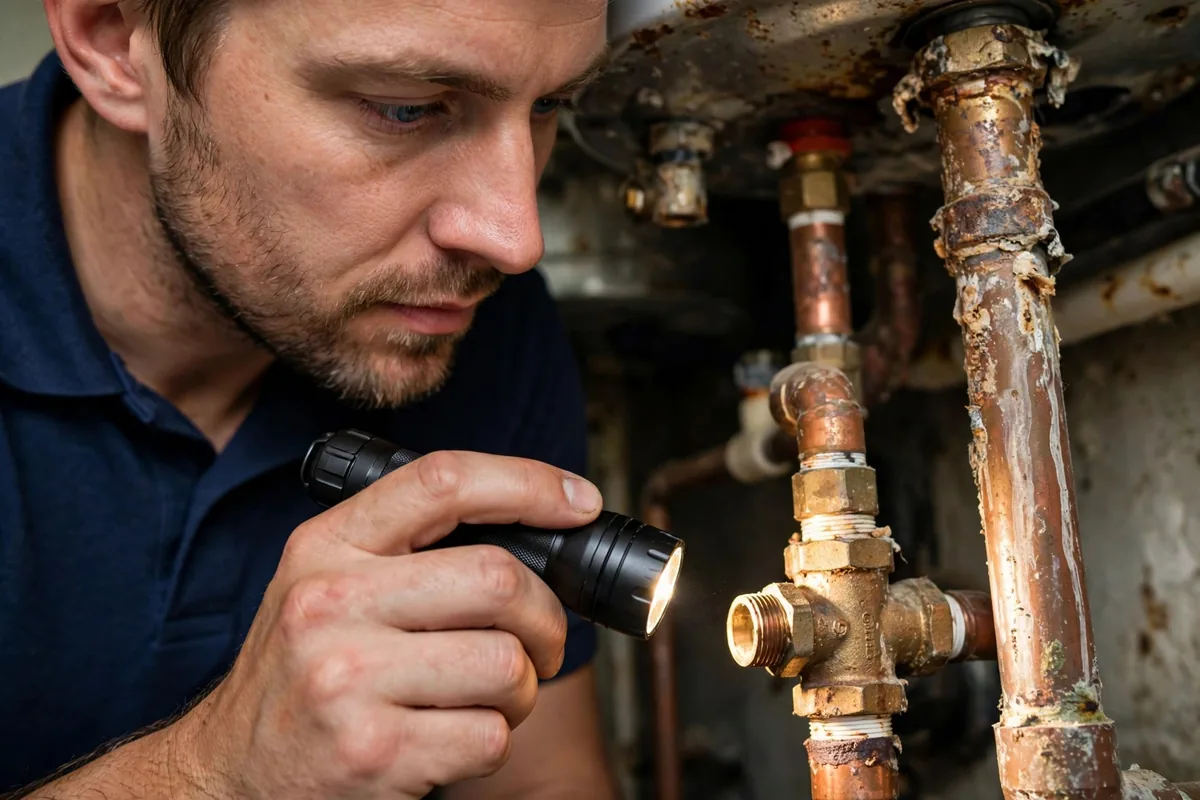
The cold water comes in and the hot water goes out through connections on top of the tank, and in Columbia's mineral-heavy water those joints corrode. Dielectric unions, the fittings meant to join dissimilar metals without corrosion, can themselves fail. Flexible supply lines age too, and a line that looks fine can be brittle at the crimp. We check each connection dry, then watch it under pressure, because a joint that only weeps when the tank is heating is easy to miss on a quick glance.
Rust, sediment, and mineral clues
Read the tank like a crime scene. White crust at a fitting usually means a slow mineral-laden weep that evaporates and leaves the minerals behind. Green or blue staining on copper points to corrosion at that joint. A rust ring at the base, or rust streaks from a seam, suggests the tank body itself. None of these prove the diagnosis alone, but together they tell us where to test first, and they often tell a homeowner whether they are looking at a fitting problem or a tank problem.
Condensation or a real leak? The wipe-dry test
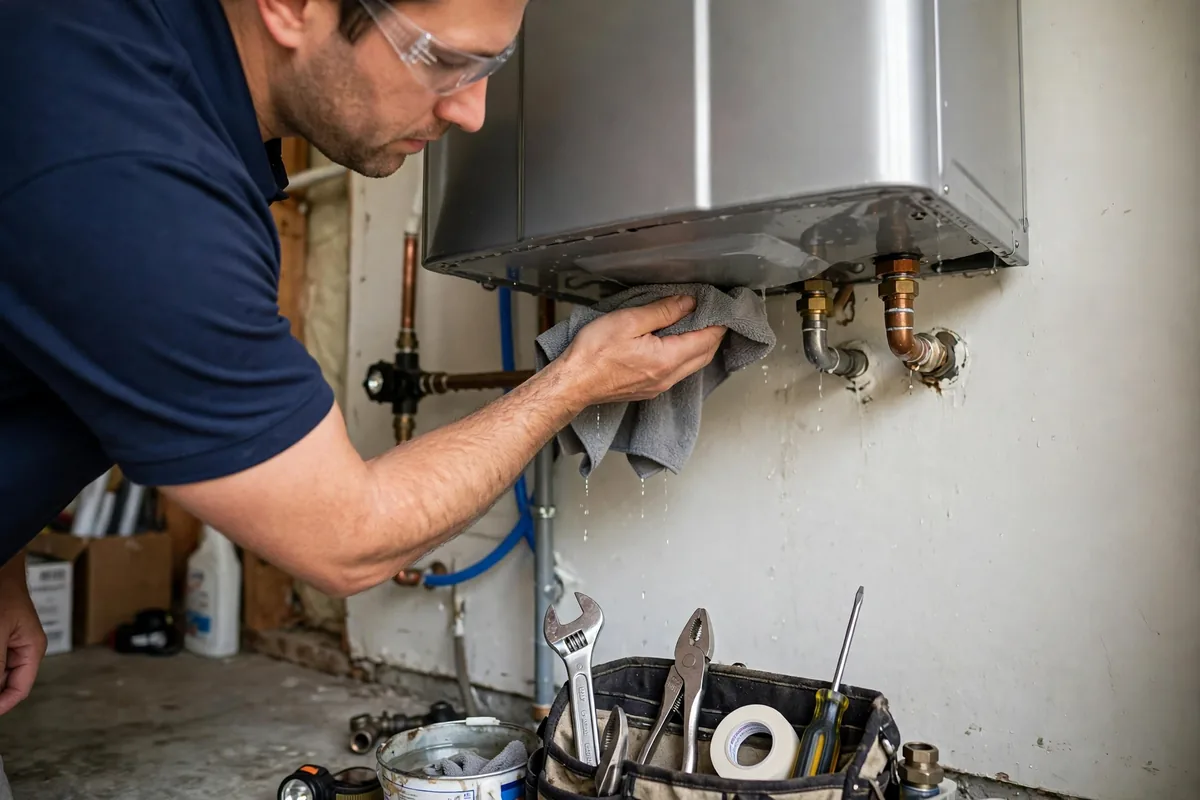
This is the single most useful check a homeowner can do, and it costs nothing. Dry the tank completely, base, sides, and every connection, with a towel. Come back in a day, without running a lot of hot water in between if you can help it, and look again. Condensation, which is common when a cold tank meets a humid Columbia summer garage, will usually be gone or much reduced. A real leak comes back in the same place, often with a trail.
There is a catch worth knowing. A tank that only leaks while it is heating, when the metal expands, can pass a cold wipe-dry test and still be leaking. If the puddle keeps reappearing, or appears only after showers and laundry, tell us that pattern when you call. It changes how we test. The same logic applies to tankless condensate: a condensing unit makes water by design, but that water belongs in its drain line, not on your floor.
When to call, and when to call right now
Call right now if water is pooling or running, if the tank is making hissing or rumbling sounds with visible water, or if you smell gas near a gas unit. In that last case, leave the house and call the gas utility first. For a slow weep, a returning damp spot, or a relief valve drip, a prompt weekday call is fine, but do not put it off for months. A tank that weeps today can let go on a Sunday, and the difference between those two events is a mop versus a flooded garage.
What not to do matters too. Do not cap or plug a relief valve discharge pipe, do not crank a weeping valve tighter until something snaps, and do not assume a water heater leak is the same as a plumbing leak elsewhere in the house. The heater is its own system with its own failure points, and guessing at it wastes the one thing a leaking tank does not give you, which is time.
How we trace a water heater leak
A visit from our Columbia leak detection team starts the way most of our visits start, with questions and a meter check, then narrows to the heater. We dry and inspect the tank body, top connections, relief valve and discharge line, drain valve, and supply lines, one at a time. We check the pressure feeding the tank, because high pressure can masquerade as a valve problem. On tankless units we trace the inlet, outlet, condensate line, and internal connections in the same order. Each suspect gets isolated or watched under pressure until the source is clear, and you get the findings in plain language: which part is leaking, whether it is a connection or the tank itself, and what the sensible next step looks like.
If the source turns out to be somewhere else entirely, a nearby supply line or a drain, we will say so. Heater corners collect water from neighboring runs, and blaming the tank for a laundry line leak helps nobody. That honest narrowing is the whole job, and it is the same approach we use on a hidden leak detection visit or a general water leak detection call. If you are still unsure whether what you are seeing counts as a leak at all, the leak symptoms page walks through the signs worth acting on.
Water Heater Leak Detection FAQs
Is my water heater leaking, or is it just condensation?
Wipe the tank dry, top to bottom, and check it a day later. Condensation dries and usually appears when a cold tank meets humid air, common in a Columbia garage in summer. A real leak comes back in the same spot, often with rust streaks or a white mineral crust. If the puddle returns after a wipe-dry test, treat it as a leak and call.
What is the T&P relief valve, and why does it drip?
The temperature and pressure relief valve is a safety valve, usually on the top or upper side of the tank, with a discharge pipe running down toward the floor. A drip there can mean the valve itself is tired, or it can mean the tank is overheating or over-pressurizing, which is a different problem. Either way, do not cap it or plug the discharge pipe. That valve exists to keep a tank from becoming dangerous, and a dripping one deserves a prompt look.
My tankless unit has a damp spot underneath. Is that the same kind of leak?
Not quite. Tankless units have their own failure points: the inlet and outlet connections, the condensate line on high-efficiency models, and internal seals. Condensate is normal for condensing tankless units, but it should drain through its line, not pool under the unit. If the dampness returns after you dry it, or you see mineral buildup at a fitting, get it traced rather than assuming it is condensate.
Should I turn off my water heater if it is leaking?
If water is pooling or running, yes, turn off the cold water supply to the heater and, for an electric unit, the breaker feeding it. For a gas unit, leave the gas alone unless you know what you are doing and smell gas, in which case leave the house and call the gas utility. Then call us to find the source before the tank empties or the floor soaks further.
Can you tell whether the tank itself is bad, or just a connection?
Often, yes, and the difference matters. A leaking inlet, outlet, drain valve, or relief line is a smaller problem than a tank whose base or seam has failed. We test each connection separately and check the tank body itself, so you get a straight answer about which one it is before any replacement conversation starts.
Related Leak Detection Services
Water Leak Detection
The general visit for leaks anywhere in the house, narrowed to a source.
Learn moreHidden Leak Detection
No visible water, but something is off. We trace it before it spreads.
Learn moreSlab Leak Detection
Warm floors and water sounds under concrete, pinpointed first.
Learn more
Puddle by the water heater? Let's find the source.
Dry it, watch whether it comes back, and call us with what you find. We will trace it to the fitting or the tank, and tell you straight which one it is.