That Sewer Smell Has a Source. We Find It Before Anyone Digs
Sewer leaks don't behave like water supply leaks. There's no pressure, no hiss to listen for, just odors, slow drains, and ground that stays wet. We trace where the sewer line is failing, usually with a camera, so excavation plans start from facts.
A small leak found now beats a big repair later.
The earlier we catch it, the smaller the fix stays. Call and tell us what's going on.
Sewer leaks announce themselves differently
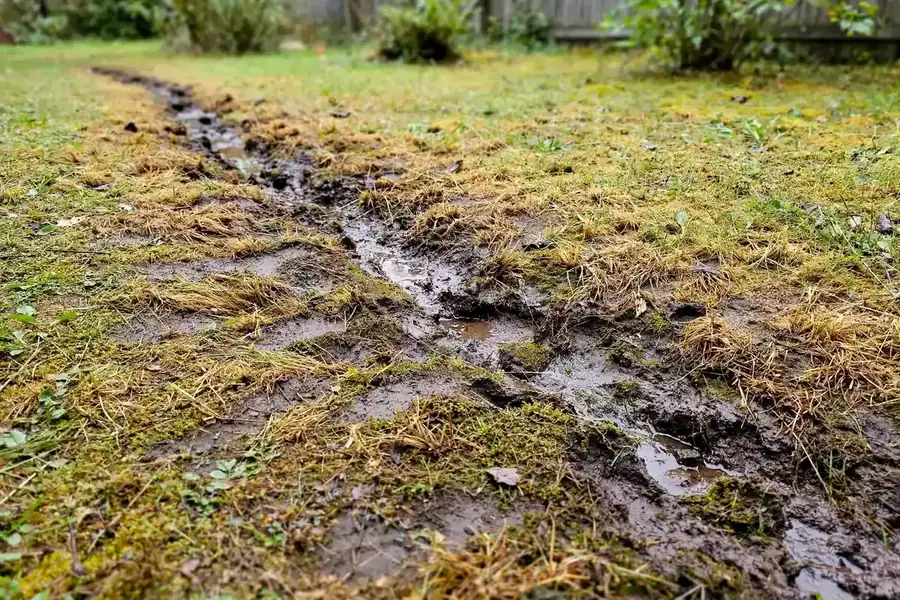
Nobody calls about a sewer leak because the meter is spinning. They call because of the smell, a rotten-egg or sewage odor that shows up in a bathroom, near a floor drain, or in the yard on a warm day. Or because a patch of ground stays soggy and smells off. Or because drains gurgle and back up in patterns that don't match a simple clog. Sewer lines run on gravity, not pressure, so a break doesn't spray. It seeps, and the signs are indirect.
The tricky part is that several different failures produce similar symptoms. A cracked pipe, a separated joint, a section that's bellied and holding water, or root intrusion at a joint can all cause odors and slow drainage. Guessing wrong means digging in the wrong place or replacing a line that only needed a spot repair. That's why the camera comes first.
The camera tells the truth
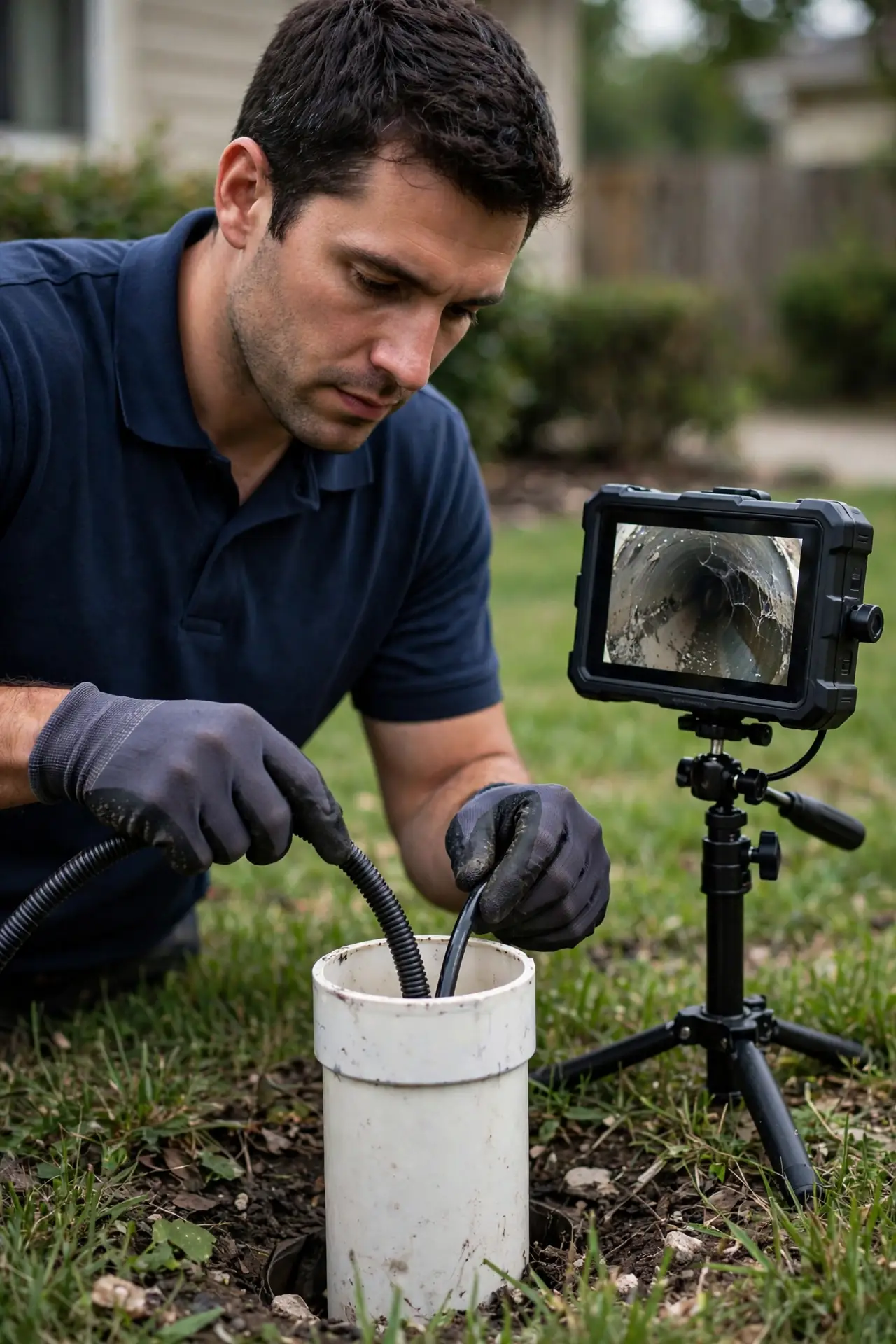
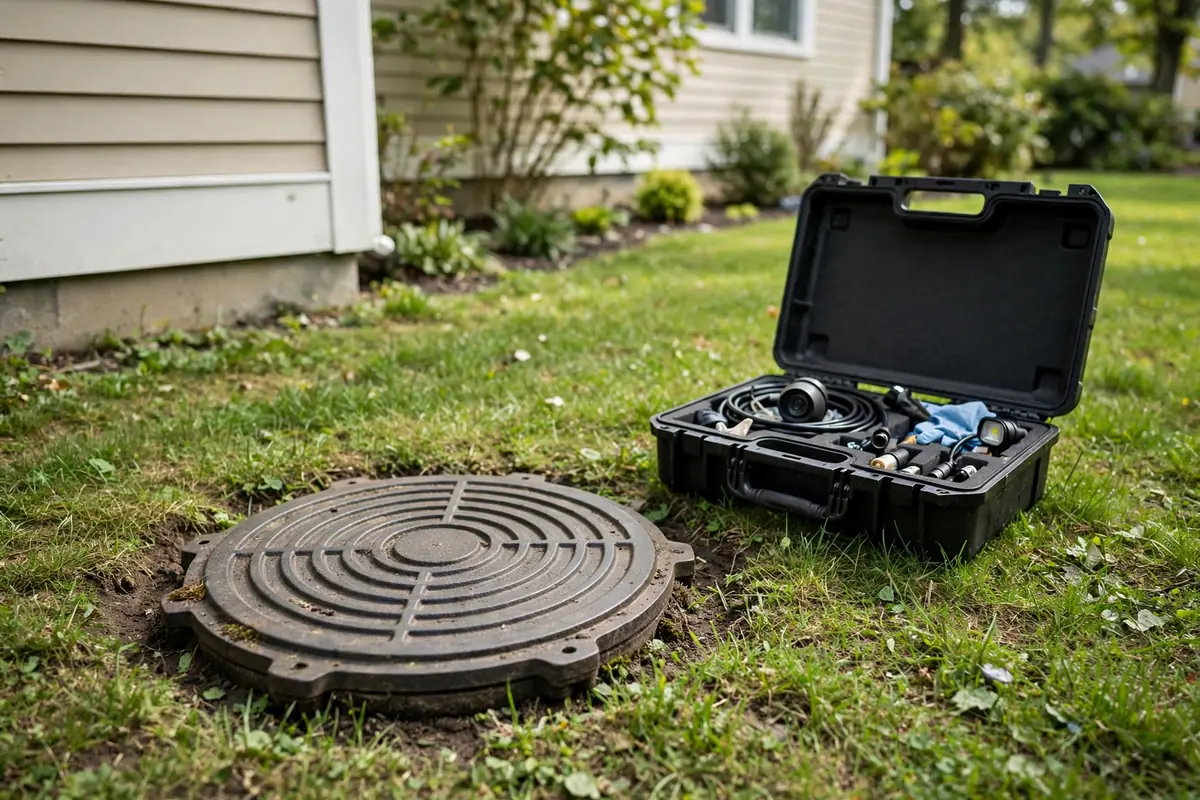
A sewer camera inspection, one of the methods commonly used in the trade, is exactly what it sounds like: a waterproof camera on a push cable fed through a cleanout or pulled toilet, sending live video back to a monitor. (RIDGID's SeeSnake systems are the most widely used example of this class of equipment; their inspection camera page shows what the setup looks like.) What we're looking for is specific: cracks, breaks, offset or separated joints, bellies where the pipe sags and holds water, root masses, and scale buildup narrowing the line.
The camera also has a locator sonde, so when we see the problem on screen, we can mark its position and depth on the surface above. That mark is the whole point. A sewer repair is excavation work, and excavation without a location is a trench. With a location, it's a targeted dig at the failed section.
What sewer lines in Columbia are up against
Older Columbia homes may have clay tile or cast iron sewer laterals, and both have known weak points. Clay tile comes in short sections with a joint every few feet, and every joint is a place for roots to enter and for soil movement to shift things apart. Cast iron corrodes from the inside, scaling up until flow slows and the pipe wall thins. Newer PVC laterals are tougher, but a poorly bedded section can belly, and a belly holds solids until the line chokes.
Maury County's clay soil matters here too. It shifts with wet and dry cycles, and that movement works on joints over decades. Mature trees in established neighborhoods send roots toward the moisture and nutrients in a sewer line, and roots are patient. They'll find the smallest opening at a joint and widen it over seasons. For homes in Columbia and the surrounding Maury County communities, these are the patterns we check first.
Odors aren't always a broken pipe
Worth saying plainly: a sewer smell inside the house doesn't always mean the underground line is broken. A dried-out trap in a floor drain or an unused shower lets sewer gas straight in, and the fix is pouring water down the drain. A failed wax ring at a toilet base leaks gas around the flange. A blocked vent stack can push odors back through drains. We check these before assuming the worst, because the cheap answer is the right answer when it's actually the answer.
That's part of why the visit starts with questions and a walkthrough, not the camera. Where exactly do you smell it? When did it start? Which drains are slow? The pattern usually points somewhere, and the camera confirms it.
What you get from the visit
A marked location and depth for the problem section, video findings explained in plain language, and an honest read on whether it's a spot repair, a section replacement, or something that needs a second opinion from a sewer contractor. If the line turns out to be fine and the odor is coming from a trap or a vent, we'll tell you that too. Nobody benefits from digging up a good pipe.
One practical note: if sewage is actively backing up into the house, that's urgent and it's a different call than detection. Stop using water, and if you need us to locate the blockage point, say so when you call and we'll prioritize it.
Common Questions
How do you find a break in a sewer line without digging?
With a camera inspection. A waterproof camera travels through the line from a cleanout and shows cracks, breaks, separated joints, bellies, and root intrusion on a monitor. A locator tracks the camera's position so we can mark the problem spot and its depth on the surface.
I smell sewage in my bathroom. Is my sewer line broken?
Not necessarily. Dried-out drain traps, a failing toilet wax ring, or a blocked vent can all let sewer gas in without any underground break. We check the simple causes first. If the signs point underground, that's when the camera goes in.
What's the difference between a belly and a break in a sewer line?
A belly is a sagging section that holds water and solids, causing slow drains and buildup. A break is an actual opening in the pipe wall, which can leak sewage into the soil and let roots in. The camera shows which one you're dealing with, and the repair is different for each.
Can tree roots really break a sewer pipe?
They usually get in through an existing weak joint first, then widen it over time. Clay tile joints and older connections are the most vulnerable. Once roots are established, they catch solids and the problem compounds. The camera shows exactly where they've entered.
Will the camera inspection damage my pipes?
No. It's a standard non-invasive method: the camera rides through on a flexible cable and the line stays intact. It's the opposite of exploratory digging.
Related Leak Detection Services
Drain Pipe Leak Detection
Leaks that only appear when water runs: sinks, tubs, laundry standpipes.
Learn moreUnderground Leak Detection
Buried lines between meter and house: soggy yard, green strips, spinning meter.
Learn moreToilet Leak Detection
Silent tank leaks and base seeps found with dye and pressure checks.
Learn more
Think you've got a leak? Let's find it.
The longer a leak runs, the bigger the repair bill gets. One call, and we'll start narrowing it down.