Bathroom Leaks Come From Three Directions. We Sort Out Which
Bathrooms concentrate every kind of plumbing in one small room: pressurized supply lines, drain lines, and water splashing where it shouldn't. When something's damp, the question isn't just where, it's which system. We test supply, drain, and surface water separately to get the real answer.
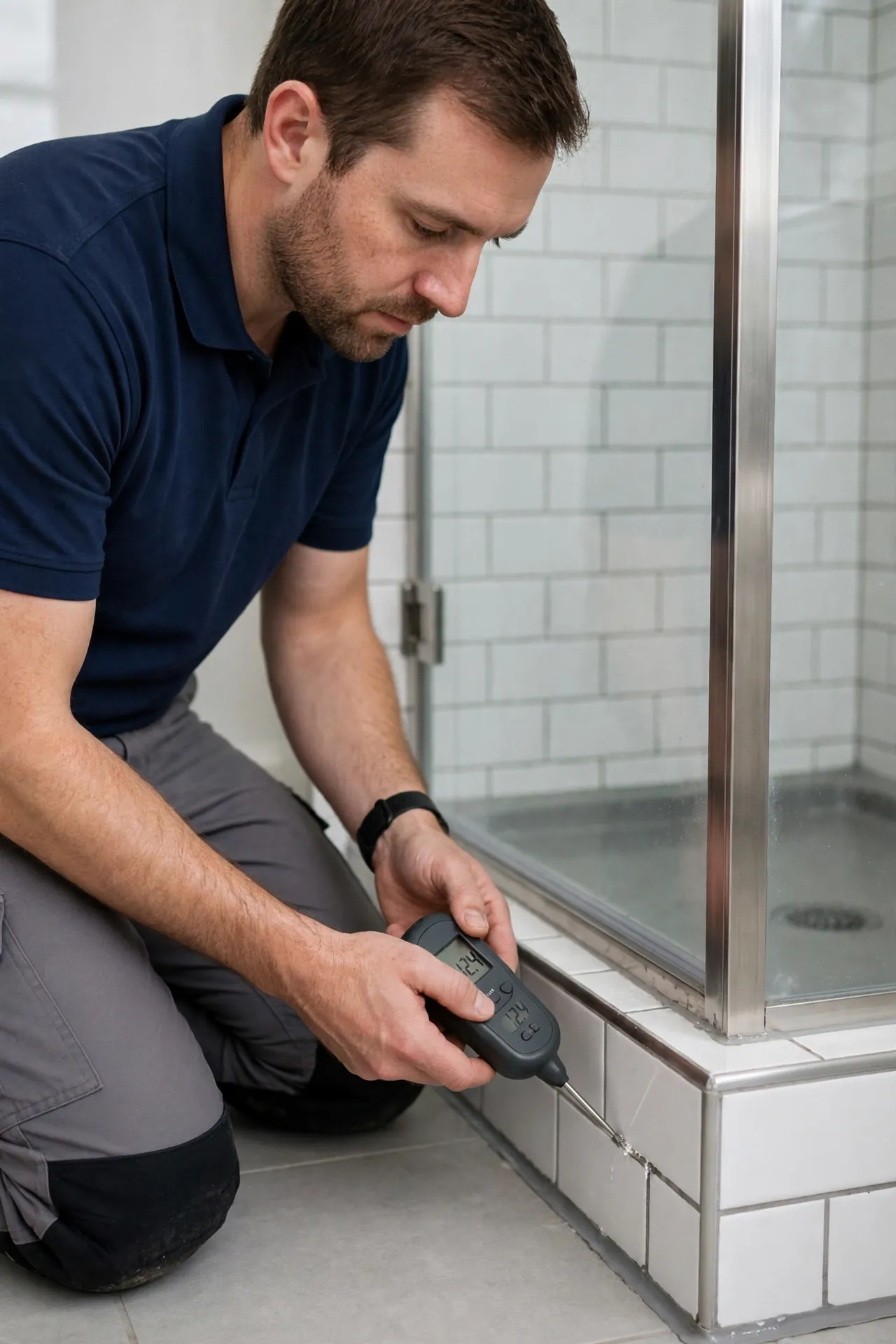
Spotted a warning sign? Let’s find the source.
Most leaks are located in a single visit. Call now and tell us what you’re seeing.
Why bathrooms are leak magnets
Think about what's packed into a typical bathroom: hot and cold supply lines to the sink, toilet, and shower valve. Drain lines from all three. A tub or shower with gallons of water hitting tile and grout daily. Caulk lines and grout that are supposed to keep surface water out of the walls. It's the most plumbing-dense room in the house, and every one of those systems can leak independently.
That density is what makes bathroom leaks confusing. A damp wall could be a supply line in the wall, a drain joint, or just shower water getting past failed grout. Each has a different fix and a different urgency. Guessing wrong means repairing the wrong thing while the real leak keeps going.
The three sources, and how we tell them apart
Supply-side leaks run constantly. If the wall is damp even when nobody has used the bathroom for hours, suspect the supply: the shower valve, the sink supply lines, or the toilet supply. The meter test helps here, and so does timing. Dampness that never dries is pressurized water, not splash.
Drain-side leaks follow use. Damp after showers but dry otherwise? That's the tub or shower drain, the overflow gasket, or the drain joints. We test by running each fixture separately while watching the suspect area. Fill the tub to the overflow and the ceiling below tells you about the overflow gasket. Run the shower and it tells you about the drain and the pan.
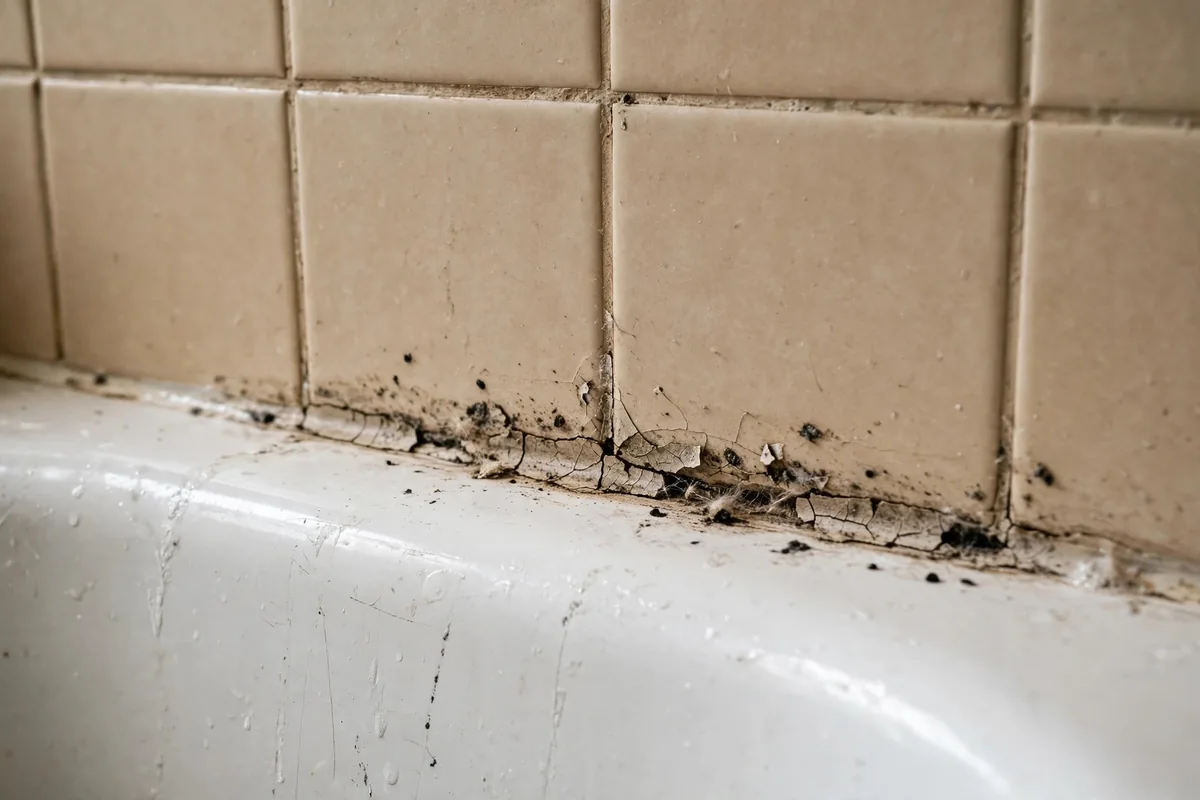
Surface water getting past grout and caulk is the third source, and it's not a plumbing leak at all. Failed grout lines, cracked caulk at the tub-to-tile joint, or a missing bead of sealant lets shower water straight into the wall with every use. The fix is re-grouting and re-caulking, not a plumber. We check this by inspecting the grout and caulk lines closely, because it's the cheapest answer and it's common.
Tile, grout, and the shower pan
Tile is not waterproof. It's the waterproof membrane or pan underneath that keeps water out of the structure, and tile and grout are just the wearing surface. When grout cracks or caulk fails, water gets behind the tile. If the membrane underneath is intact, it drains to the weep holes and out. If the membrane has failed too, or was never installed properly, water goes into the wall cavity and the subfloor.
Shower pan failures are particularly destructive because every shower feeds them. The signs: a ceiling stain below the bathroom that grows with shower use, tiles that feel loose or sound hollow, grout that stays dark and damp long after the shower, or a musty smell that cleaning won't touch. Testing a pan means plugging the drain, filling the shower base with a few inches of water, and watching the ceiling below. It's definitive when it's positive.
Toilets in the bathroom picture
The toilet gets its own check during a bathroom visit: the dye test for the flapper, the base for rocking and moisture, the supply line behind. A toilet with a failed wax ring leaks with every flush, and in a bathroom with tile floors, that water spreads under the tile where you can't see it. If the flooring around the toilet feels different underfoot, hollow or spongy, mention it. That's the subfloor talking.
Bathrooms and Columbia's housing mix
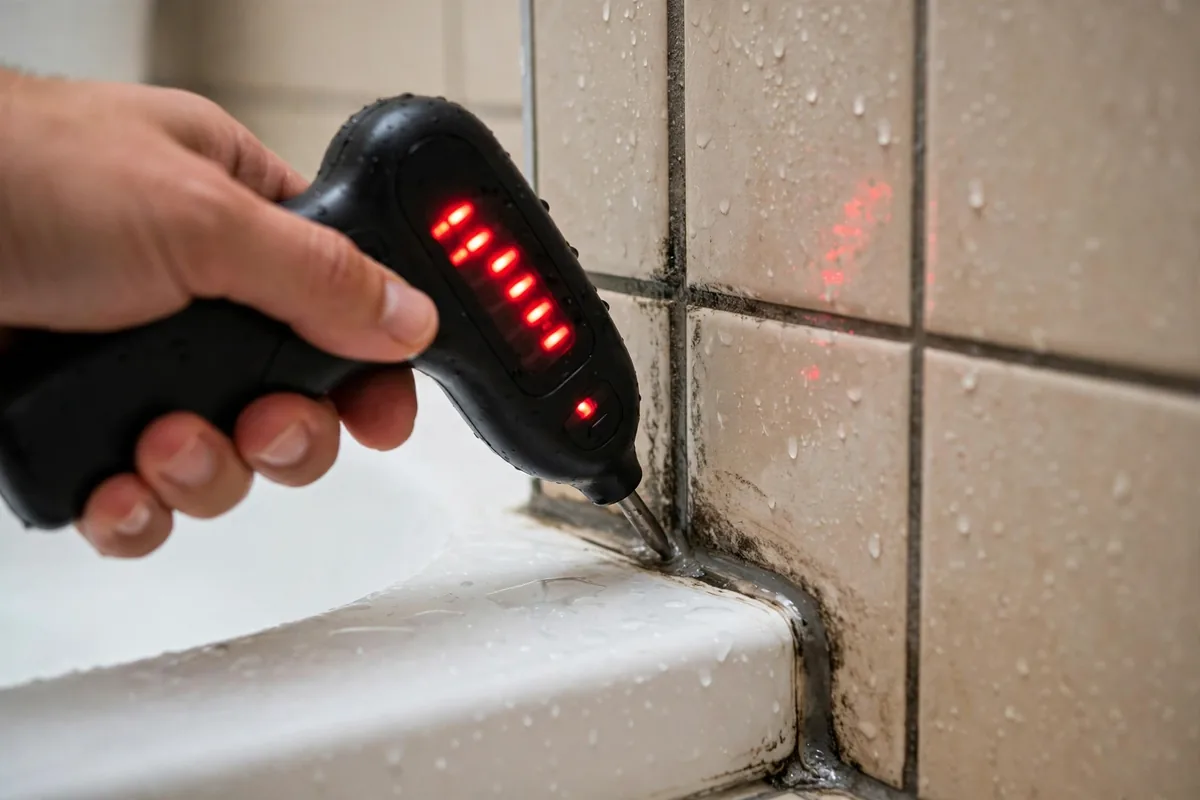
Columbia's bathrooms span every era: original tile and cast iron in the oldest homes, seventies and eighties remodels with their own quirks, and new construction with modern membranes and PEX. The likely failure changes with the era, which is why we test rather than assume. Whatever decade your bathroom comes from, we cover it in our Columbia and Maury County service area.
What a bathroom detection visit covers
We work the room fixture by fixture: supply lines and valves, drain assemblies, the tub overflow, grout and caulk condition, the shower pan test when it's warranted, and moisture mapping of the walls, floor, and the ceiling below. By the end, you know which of the three sources is responsible, exactly where, and what kind of repair it needs. No more wondering whether it's the plumbing or the tile. You'll know.
Common Questions
How do you tell if a bathroom leak is supply, drain, or grout?
By timing and testing. Supply leaks stay damp constantly; drain leaks follow fixture use; grout failures only leak during and after showers. We test each fixture separately and inspect grout and caulk lines, so the answer comes from evidence, not guessing.
My ceiling stain below the bathroom only appears after showers. What is it?
Most likely the shower drain, the tub overflow gasket, the shower pan, or failed grout letting water behind the tile. We test each one separately: fill the tub to the overflow, run the shower, flood-test the pan. The test that reproduces the stain identifies the source.
Is it just grout, or do I need a plumber?
If water is getting past cracked grout or caulk but the membrane underneath is intact, re-grouting and re-caulking fixes it and no plumber is needed. If the moisture is coming from a supply or drain line, that's plumbing. Our visit tells you which one before you call the wrong trade.
Can a leaking shower cause mold inside the wall?
Yes, it's one of the most common hidden mold sources. Daily shower water entering a wall cavity through failed grout creates exactly the dark, damp conditions mold needs. A musty bathroom smell that cleaning doesn't fix is worth investigating.
Do you test the shower pan?
When the symptoms point that way, yes. We plug the drain, fill the base with a few inches of water, and watch the area below. It's the definitive test for a pan failure, and it avoids tearing up tile on a hunch.
Related Leak Detection Services
Toilet Leak Detection
Silent tank leaks and base seeps found with dye and pressure checks.
Learn moreDrain Pipe Leak Detection
Leaks that only appear when water runs: sinks, tubs, laundry standpipes.
Learn moreCeiling & Wall Leak Detection
Stains and damp drywall traced back to the source with moisture mapping.
Learn more
Ready to stop guessing?
One visit is usually all it takes to turn a mystery into a marked spot. Call and we'll take it from there.