The Drip You Can't See Is Doing the Most Damage
A dripping faucet spout is annoying. A leak inside the wall behind the shower valve is destructive. Fixture leaks hide inside walls and under cabinets, staining and swelling everything around them long before anyone notices. We find where the fixture is actually letting go.
Noticed something off with your water?
A quick call is the cheapest diagnostic there is. Tell us what you're seeing and we'll tell you what it likely means.
Two kinds of fixture leaks
There's the leak you can see: a faucet that drips into the sink, a showerhead that won't stop. Those waste water and they're annoying, but they're honest. Then there's the leak you can't see: water escaping from the valve body inside the wall, from a supply connection behind the vanity, or from a shower arm connection inside the wall cavity. That second kind is the one that rots framing and grows mold while the visible fixtures look fine.
Fixture leaks are sneaky because the fixture itself works normally. The shower has good pressure. The faucet runs fine. But behind the escutcheon plate or inside the vanity, a connection is weeping a little with every use, and the water has nowhere to go but into the wall or the cabinet.
Shower valves: the hidden leaker
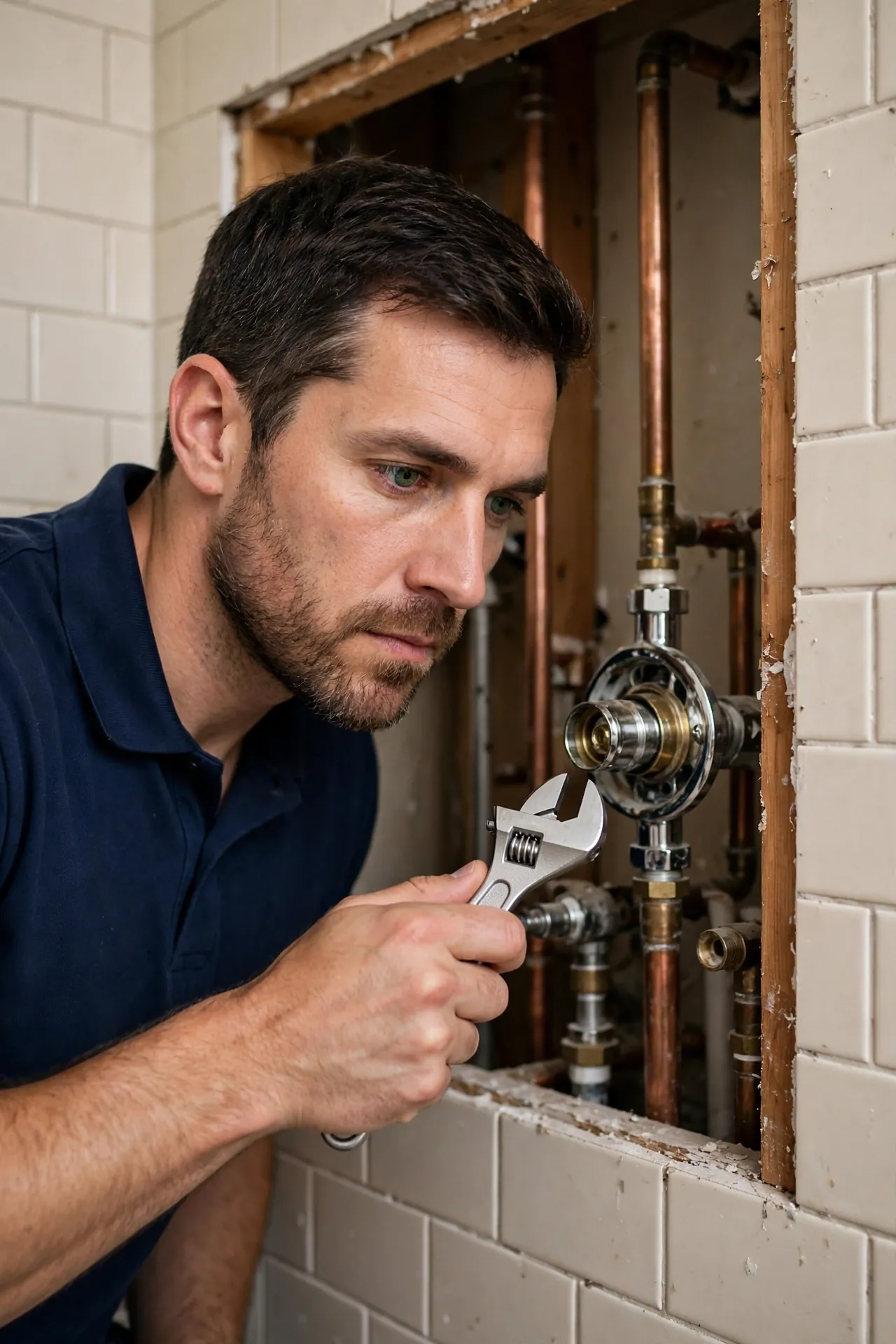
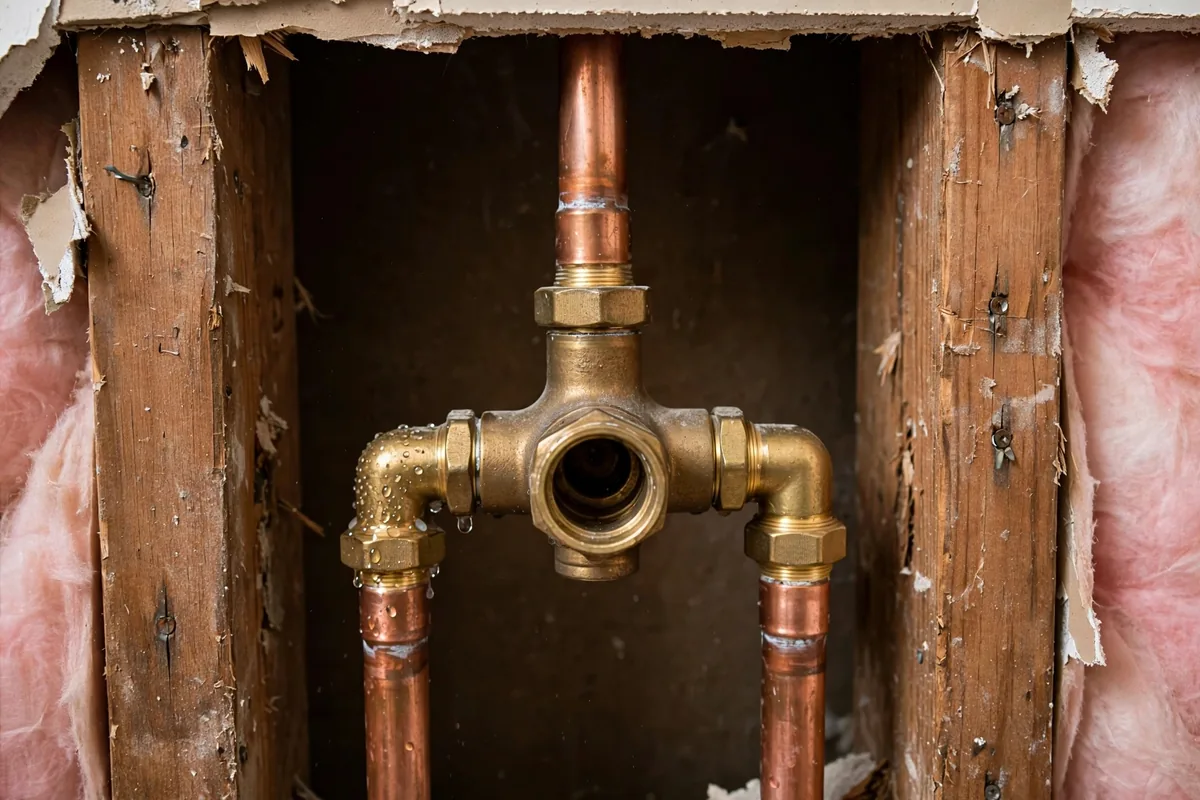
The shower valve sits inside the wall, and everything about its location conspires to hide leaks. The valve body has multiple connections: hot in, cold in, mixed out to the shower arm and the tub spout. Any of those joints can weep. The cartridge seals inside the valve wear out over years of use. And the tub spout diverter, the little mechanism that switches between tub and shower, can leak backward into the wall when it fails.
The signs are indirect: a damp spot on the wall of the adjacent room, paint bubbling near the shower, a musty smell in the bathroom that cleaning doesn't fix, or a ceiling stain below the bathroom that appears after showers. We check the valve by removing the escutcheon plate and looking inside the wall cavity with a light and a moisture meter, which often tells the story immediately.
Faucet bodies and supply connections
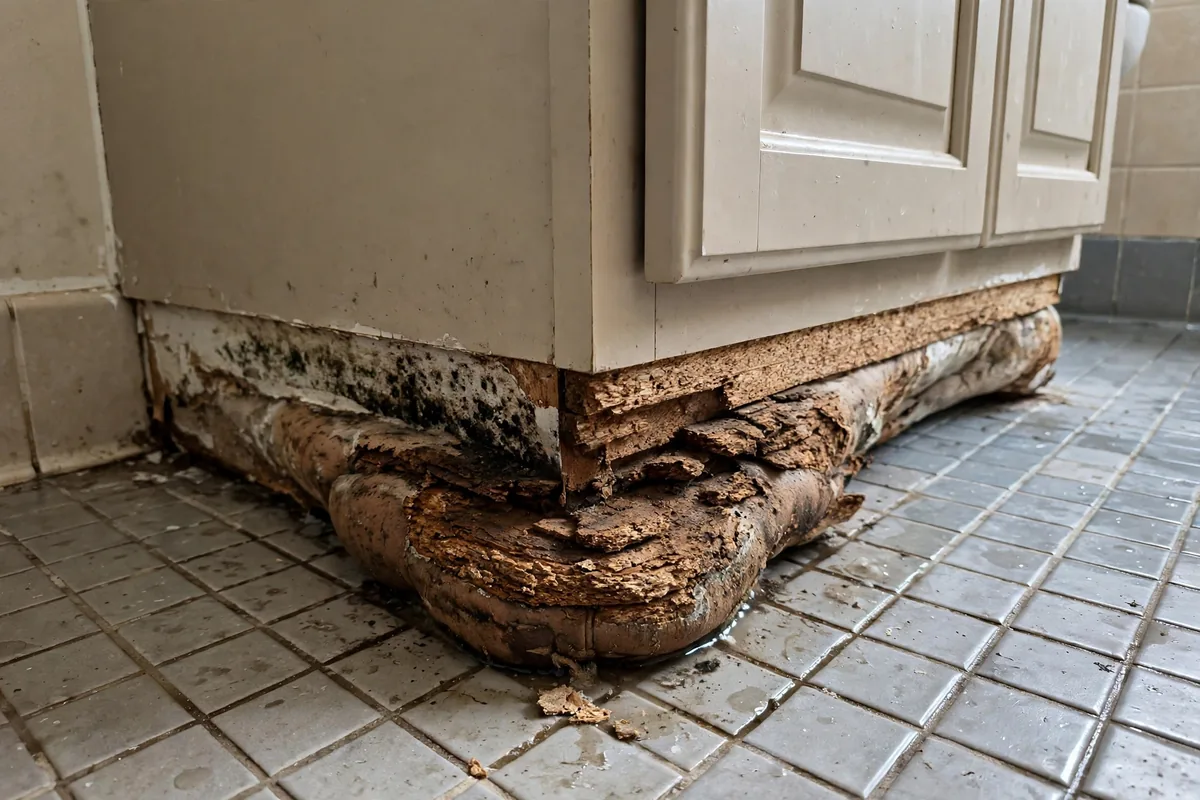
We see fixture leaks across all the major brands, Moen, Delta, Kohler and others. The failure points don't care about the name on the handle: cartridges wear, seals harden, and supply connections loosen with time and use. At sinks, the leak points are the faucet body itself, where internal seals wear, and the supply connections underneath: the braided lines, the shutoff valves, and the tailpiece where the faucet meets the sink. Under-sink cabinets in Columbia homes tell a familiar story: a darkened ring on the cabinet floor, a musty smell when you open the doors, cleaning supplies with rusted bottoms. People blame humidity. It's usually a slow weep at a connection.
The test is simple and worth doing: dry everything under the sink thoroughly, lay down a dry paper towel or newspaper, run the faucet for a few minutes including the sprayer if there is one, then check. A wet spot on the paper points to the failing connection. If you can't see where it's coming from, that's when we come in with the moisture meter and the inspection light.
Hose bibs and exterior fixtures
Don't forget the outside. A frost-free hose bib can fail at the interior connection inside the wall, which means the leak is indoors even though the fixture is outdoors. After a hard freeze, the classic failure is a split in the bib's long stem, and the water runs inside the wall cavity every time the hose is used. If you've got a damp spot on an interior wall opposite an outdoor spigot, especially after spring watering starts, the hose bib is suspect number one.
Winterizing matters in Middle Tennessee. Disconnect hoses before the first hard freeze, and if a bib drips or the handle feels wrong in spring, have it checked before the summer watering season puts it under daily load.
What the visit looks like
We go fixture by fixture through the suspect areas: escutcheon plates off, supply connections inspected, moisture readings inside the cavities, and the fixtures run while we watch. Dye in the water can trace a weep's path when it's ambiguous. The goal is the same as every visit: a specific location and a plain-language explanation of what's failing, so the repair, usually a cartridge, a connection, or a valve replacement, is targeted and final. We do this work across Columbia and Maury County.
Common Questions
My shower works fine but the wall behind it is damp. What's happening?
Likely a leak at the shower valve body, one of its connections, or the tub spout diverter leaking back into the wall. The fixture can work perfectly while a joint weeps inside the cavity. We check by removing the escutcheon plate and inspecting inside the wall with a light and moisture meter.
There's a musty smell under my sink but everything looks dry. Could it still be a leak?
Yes. Slow weeps at supply connections or the faucet tailpiece can dampen the cabinet floor intermittently, and it dries between uses. Try the paper towel test: dry everything, lay down paper, run the faucet and sprayer, then check for wet spots.
Can an outdoor hose bib leak inside the house?
It can. A frost-free bib's working parts extend inside the wall, and a freeze split or failed connection leaks indoors every time the hose runs. A damp interior wall opposite an outdoor spigot is the classic sign, especially in spring.
My faucet drips into the sink. Is that worth fixing?
For water waste, yes, a steady drip adds up fast on the bill. But the drip you see is also a reminder to check what you can't see: run your hand along the supply connections under the sink while the faucet runs and feel for moisture.
Do you replace the faulty fixture or valve?
We find exactly which fixture or connection is failing and document it. Your plumber handles the replacement. Most fixture leaks are cartridge, seal, or connection repairs once the location is known.
Related Leak Detection Services
Bathroom Leak Detection
Supply vs drain vs grout: we test each source separately.
Learn moreKitchen Plumbing Leak Detection
Sinks, dishwashers, ice-maker lines: the slow drips that ruin cabinets.
Learn moreCeiling & Wall Leak Detection
Stains and damp drywall traced back to the source with moisture mapping.
Learn more
Think you've got a leak? Let's find it.
The longer a leak runs, the bigger the repair bill gets. One call, and we'll start narrowing it down.