Where's That Water Coming From? We'll Track It Down
This is the visit for when you know something's wrong but can't point to it. A high bill, a sound, a smell, a damp spot that doesn't make sense. Our general water leak detection visit covers your property and narrows the mystery down to a source.
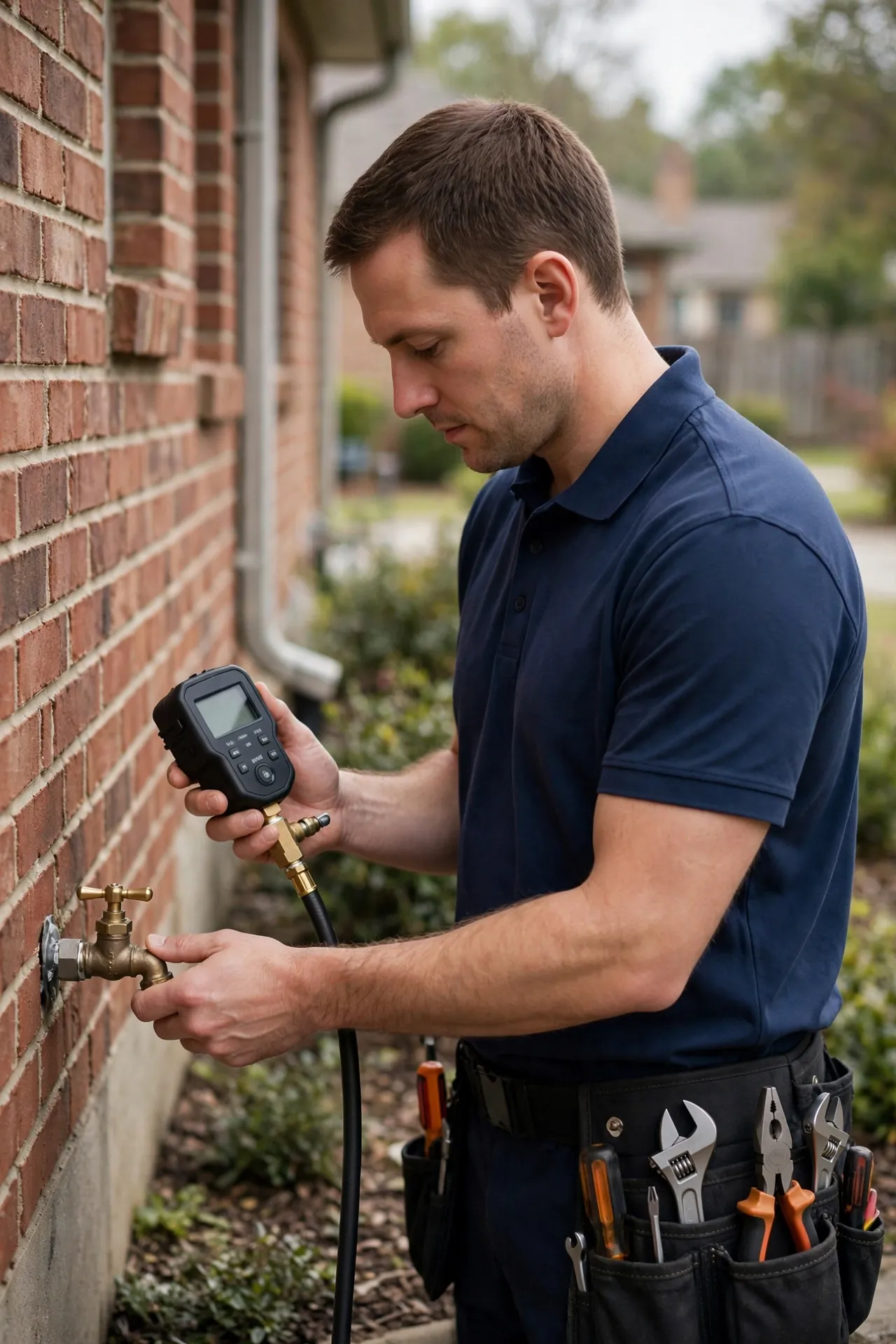
A small leak found now beats a big repair later.
The earlier we catch it, the smaller the fix stays. Call and tell us what's going on.
Start with the symptoms, not a guess
Most of the calls that turn into a general water leak detection visit sound the same at the start. "My bill jumped and I changed nothing." "I hear water running but every tap is off." "There's a musty smell in the hallway and I can't find where it's coming from." None of those tells you where the leak is. They just tell you water is moving somewhere it shouldn't be, or has been.
A general detection visit is built for exactly that. Instead of picking one system and hoping, we work the property the way you'd work a puzzle: confirm water is actually leaving the system, figure out which side of the house it's on, then zoom in. The meter check usually comes first. With everything shut off, if the meter's leak-indicator triangle is still turning, you've got a confirmed leak, not a billing error or a one-time spike from filling the pool.
From there it's a process of elimination. Hot side or cold side? Inside the house or between the meter and the foundation? Supply line or drain? Each answer cuts the search area down, and by the time we bring out the listening equipment or the thermal camera, we're already pointed at the right part of the house. That's how you find a leak without opening walls at random.
The checks you can do before we arrive
You don't need to wait for a visit to learn something useful. Two simple checks tell you a lot, and they take about ten minutes:
- The meter triangle test. Make sure nobody runs any water, not the ice maker, not the irrigation, nothing. Find your meter (usually near the street or sidewalk in Columbia) and look for the small triangle or star-shaped indicator on the dial. If it's moving, water is flowing through the meter. That's a leak, or something running you forgot about. For extra certainty, write down the meter reading, avoid using any water for two hours, then read it again: any change confirms water left the system in that window.
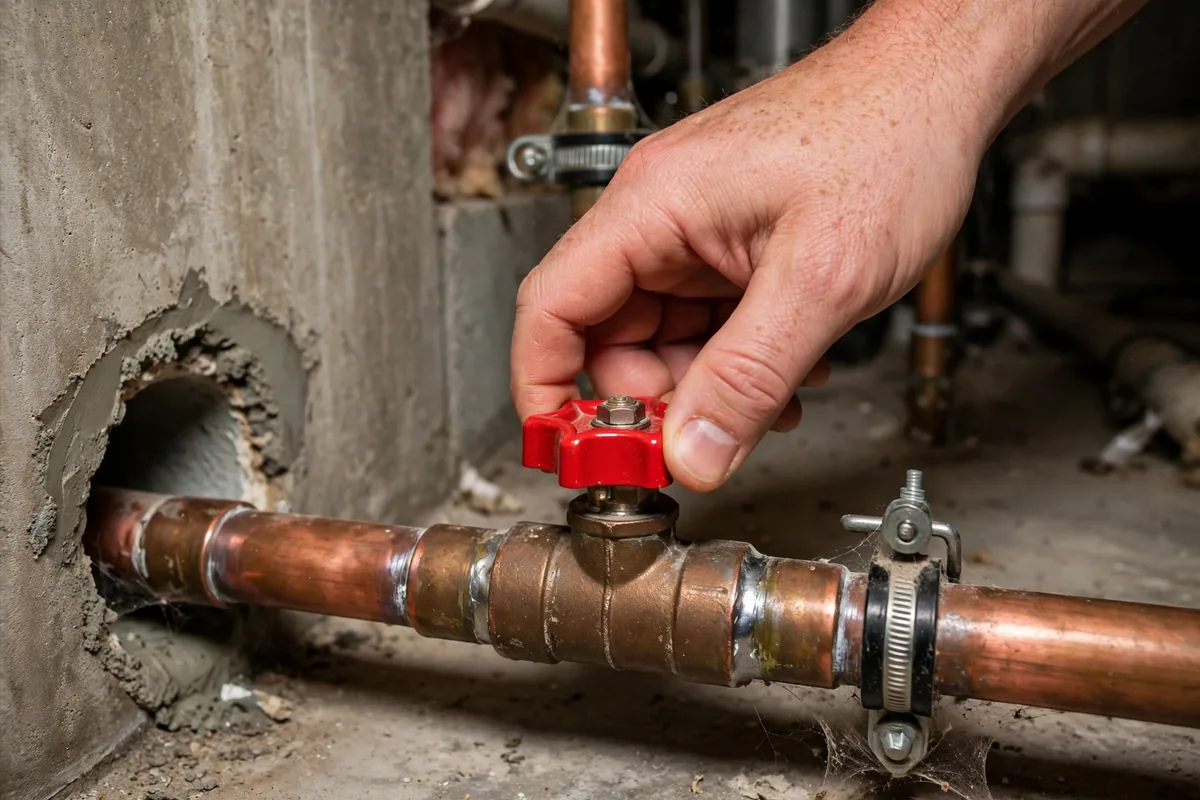
- The main-valve isolation test. Close the main shutoff valve where the line enters your house, then watch the meter again. If it stops moving, the leak is on the house side of the valve. If it keeps moving, the leak is in the service line between the meter and the house. Either answer is genuinely useful, and it tells us where to start.
That's the same two-hour check the EPA's WaterSense program recommends: read the meter, wait two hours without using water, then read it again. If the reading changed, you probably have a leak.
One caution about the meter test: a still meter during a short check doesn't fully rule out an intermittent leak. A toilet that runs only sometimes, an irrigation zone on a timer, or a water softener regenerating at night can all pass a ten-minute test and still waste water. If the symptoms persist but the meter sits still, note when things happen, the timing is a clue in itself.
Write down what you find and tell us when you call. A customer who says "the meter kept moving with the house valve closed" has already done half the diagnosis.
What a general detection visit covers
We walk the whole picture, not just one fixture. That means the meter and the main valve, the water heater and its pan, under every sink, around toilets, the laundry area, the attic or crawlspace access if it's safe to get in there, and a look at the yard for soft spots or greener strips of grass. We're looking for the full pattern: where water shows up, where it might be traveling, and which system could produce it.
If the visit turns up a specific suspect, say a slab line or the main service line, we'll say so and focus the pinpointing work there. Sometimes the answer is simpler than expected: a toilet running silently, an irrigation zone stuck on, a water heater relief valve dribbling into a pan nobody checks. Those are good days. The point of the general visit is that we don't assume.
How we narrow it down
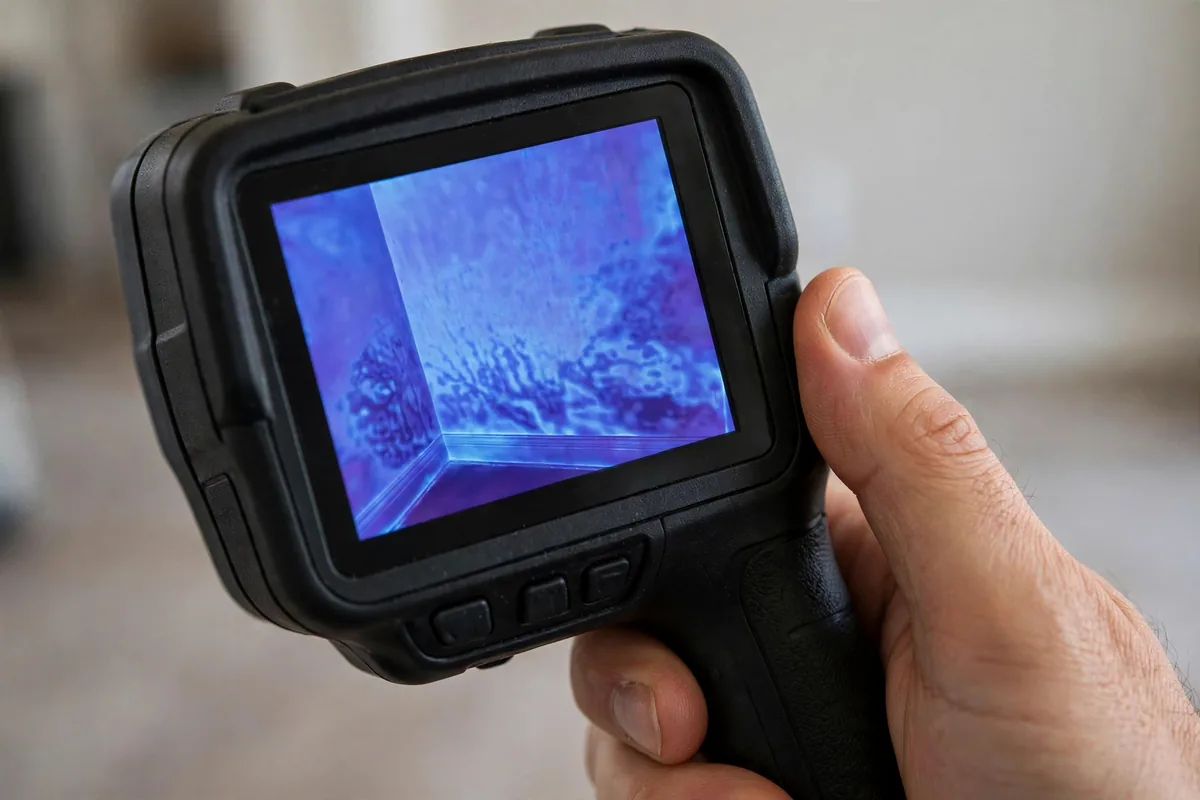
Detection is really a narrowing process. The tools, acoustic listening, thermal imaging, tracer gas, pressure testing, the methods commonly used in the trade, each answer a different question. Listening finds pressurized leaks by their sound. Thermal imaging finds the temperature difference moisture leaves behind. (FLIR is the best-known maker of this class of camera, though several manufacturers build them.) Pressure testing tells us whether a specific line holds pressure or bleeds it off. Tracer gas can trace a line's path and find where it escapes.
The rule we follow: confirm with two methods before calling it found. One reading can mislead. A warm spot on a thermal camera might be a duct run, not a leak. A sound through a stethoscope might be normal pipe noise. Two independent methods pointing at the same spot is a finding. That's the standard we hold ourselves to before we mark a location for your plumber or contractor.
Water leaks in Columbia homes: what's typical
Columbia's housing stock runs from historic homes near downtown to newer subdivisions, and the leak patterns follow the era. Older homes may still have galvanized or early copper supply lines that corrode from the inside out. Mid-century and later homes often have slab foundations, which puts supply lines under concrete. Newer builds lean on PEX, which is forgiving but not immune to fitting failures.
Then there's the local climate. Humid Middle Tennessee summers keep everything damp, which can mask a slow leak's signs for months. Winter brings real freeze risk, and a hard freeze followed by a thaw is one of the most common times for a weakened pipe to let go. Maury County's clay soil holds water against foundations and shifts with wet and dry cycles, which stresses underground lines. None of this means your home has a leak. It just means these are the patterns we look for when the symptoms fit.
If something about your water use has changed and you can't explain it, that's enough reason to call. The visit is non-invasive, the findings are in plain language, and you'll know what you're dealing with instead of wondering. For the neighborhoods and communities covered, see our Columbia, TN service area.
Common Questions
My water bill suddenly went up. Does that always mean a leak?
Not always. A running toilet, a stuck irrigation zone, a houseguest, or filling a pool can all spike a bill. But an unexplained jump with no change in habits is one of the most common first signs of a hidden leak. The meter triangle test with everything off will tell you whether water is actually leaving the system.
Can you find a leak if there's no visible water anywhere?
Yes, that's most of what we do. No visible water just means the leak is inside a wall, under a slab, underground, or draining somewhere out of sight. The meter check confirms it's real, then listening, thermal imaging, or pressure testing narrows down where.
How long does a general water leak detection visit take?
Most homes take one to two hours for the full walkthrough and pinpointing. Larger properties or leaks that turn out to be in tricky spots take longer. We'll set expectations on the phone once you describe what you're seeing.
Will you have to cut into my walls?
Not as part of detection. We use non-invasive methods first and mark the location. If a small access opening is ever needed to confirm something, we'd only do it with your go-ahead, and usually that's the repair contractor's call, not ours.
Do you fix the leak after you find it?
We're detection-first. Our job is to pinpoint the source and hand you clear findings your plumber or contractor can take straight to the repair. That separation is deliberate: it keeps us focused on finding, not selling a fix.
Related Leak Detection Services
Slab Leak Detection
Warm floor spots and water sounds under the slab, traced without tearing up floors.
Learn moreHidden Leak Detection
No visible water, just symptoms: meter checks, thermal scans, moisture mapping.
Learn moreUnderground Leak Detection
Buried lines between meter and house: soggy yard, green strips, spinning meter.
Learn more
Ready to stop guessing?
One visit is usually all it takes to turn a mystery into a marked spot. Call and we'll take it from there.