Water Coming In Right Now? Call First, Then Shut It Off
If water is actively flooding your home or business, don't wait for a convenient time. Call (931) 800-6431. We'll prioritize getting someone out to find the source fast, and in the meantime, here's what to do in the next five minutes.
Spotted a warning sign? Let’s find the source.
Most leaks are located in a single visit. Call now and tell us what you’re seeing.
What counts as an emergency
Not every leak is an emergency, and it's worth being clear about what is. An emergency is water actively entering or damaging your property right now: a burst pipe spraying, water pouring through a ceiling, flooding you can't stop, sewage backing up into the house, or a complete loss of water with signs of a major break. These can't wait for business hours because every hour means more damage.
What's not an emergency: a stain that's been there for weeks, a bill that's been climbing, a damp spot that's stable. Those are important and we want to find them, but they can be scheduled normally. When you call, tell us what's happening right now and we'll triage honestly. If it's urgent, we prioritize it. If it can wait a day, we'll tell you that too and schedule it properly.
Do this right now: shut off the water
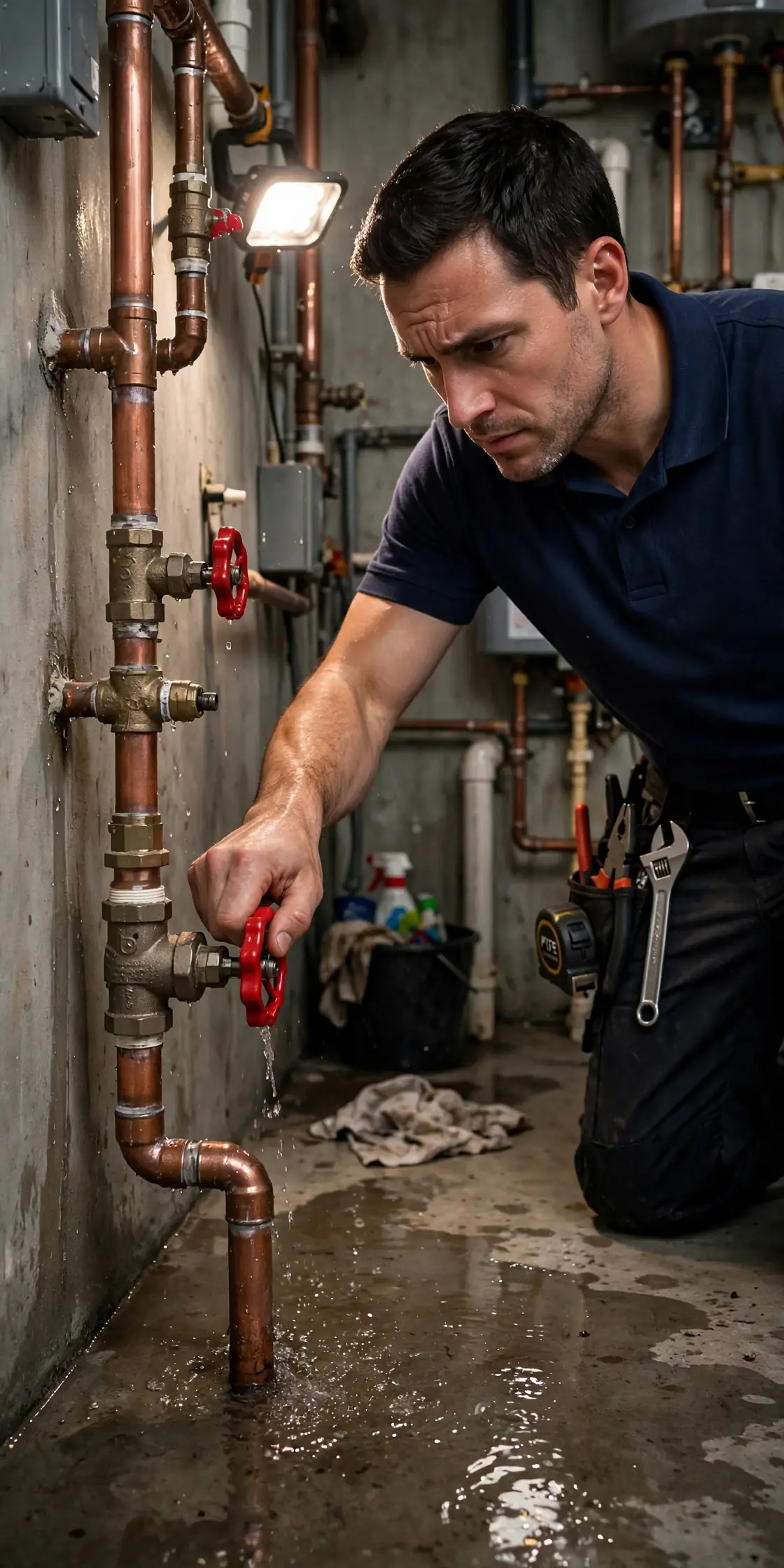
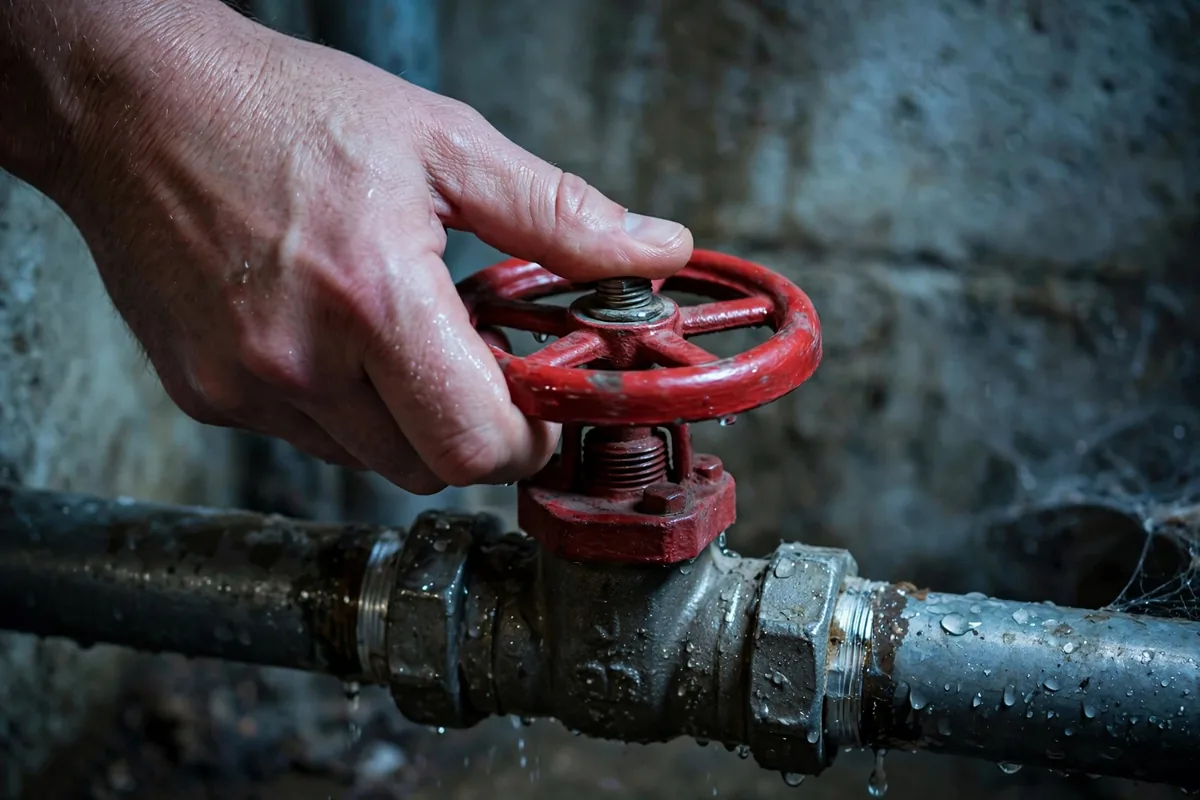
The single most useful thing you can do in the first minutes is stop the water. Every home has a main shutoff valve, usually where the water line enters the house: in a utility room, garage, crawlspace, or near the water heater. Turn it clockwise until it stops. If you can't find it or can't turn it, the meter at the street has a shutoff too, though you'll need a meter key or a wrench, and in some areas you should let the utility do it.
Once the water's off, the damage stops growing. Open a faucet at the lowest point in the house to drain pressure from the lines. If water is near anything electrical, stay clear and call the fire department if there's any doubt about safety. Then call us. Finding the source is our job, and it goes much faster when the water's already off.
What we do on an emergency call
Speed matters, but so does accuracy, because the repair that follows an emergency is already going to be disruptive. We confirm the water is off, then work fast through the triage: which system failed, where the break is, and how bad the spread is. Acoustic listening and thermal imaging work just as well in a hurry as they do on a scheduled visit. The goal is a located source, not just a stopped leak, because "we turned the water off" isn't a resolution.
We also map the water's spread while we're there. In an emergency, water goes everywhere: under flooring, into wall cavities, across rooms you wouldn't expect. Knowing the full extent matters for the drying and restoration that follows, and for any insurance documentation. Take photos of everything before cleanup starts. Your future self will thank you.
Sewage backups: a special case
If sewage is coming up through drains, toilets, or tubs, treat it as both urgent and hazardous. Stop using all water immediately: every flush and every running tap adds to the backup. Don't try to plunge it or run water to "push it through." Sewage contains bacteria you don't want to be around without protection, so keep people and pets away from the affected area.
Call us and describe what's backing up and where. We'll prioritize locating the blockage or break. In the meantime, if you know where your sewer cleanout is, leave it alone unless you know what you're doing: opening the wrong thing can make the mess worse.
After the emergency: what comes next
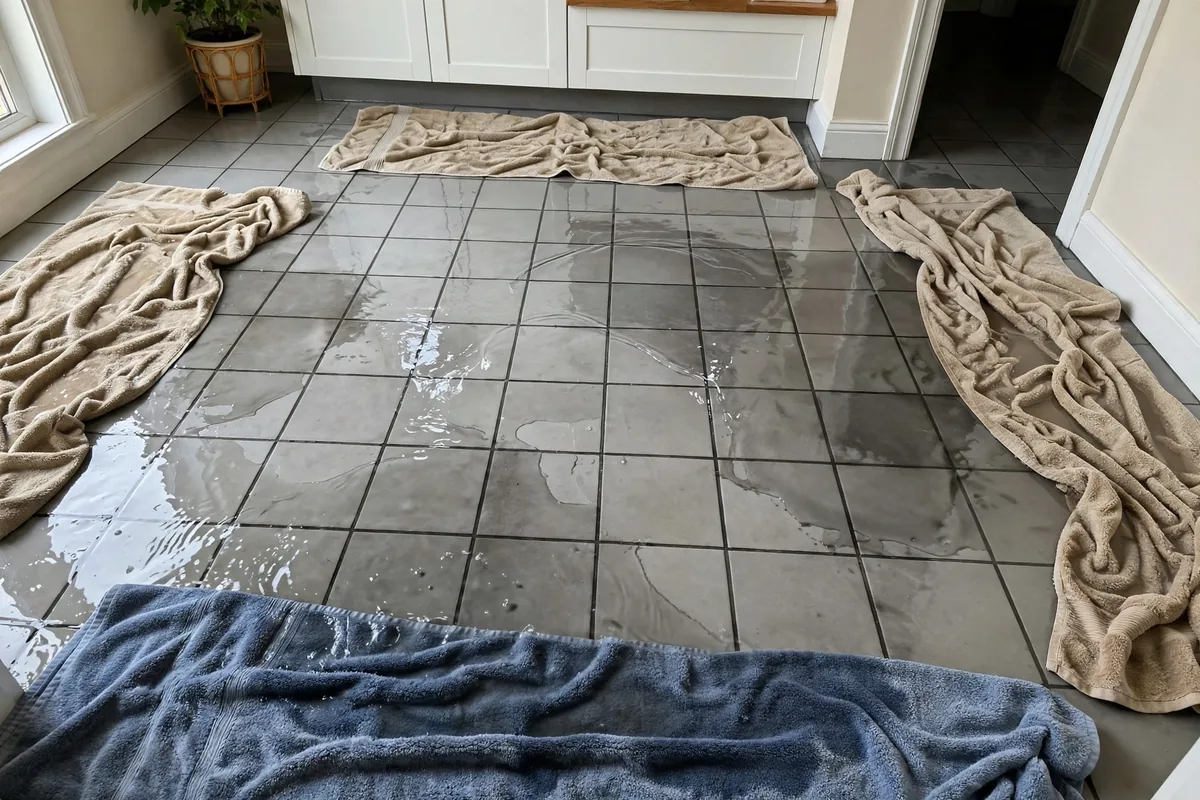
Once the source is found and the water is stopped, the next phase is drying and repair. Standing water needs to come up fast: wet vacuums, mops, towels, whatever you have. Get air moving with fans and open windows if the weather allows. Pull up wet rugs and move furniture off wet flooring. The first 24 to 48 hours determine whether you're dealing with a repair or a mold remediation.
You'll have our findings in hand: the located source, the extent of the spread, and photos. That's your package for the plumber, the restoration company, and the insurance claim. Document everything, keep receipts for any emergency spending, and don't throw away damaged materials until the adjuster has seen them or you've photographed them thoroughly.
Know your shutoff before you need it
The best emergency preparation takes five minutes on a calm day: find your main shutoff valve, make sure it turns, and show everyone in the house where it is. Put a tag on it. Know where the water heater shutoff is too. In an emergency, the difference between a mop-up and a disaster is often just how fast someone got the water off. If you can't find your shutoff, call us during normal hours and we'll help you locate it. We serve Columbia and Maury County. Knowing where your shutoff is? That's the cheapest insurance there is.
Common Questions
Water is pouring into my house right now. What do I do first?
Shut off the main water valve where the line enters your house, turning it clockwise until it stops. Then call us at (931) 800-6431. Stopping the water first limits the damage; finding the source is our job and goes faster with the water already off.
How fast can you get someone out for an emergency?
Emergency calls get priority scheduling. Call and describe what's happening: active flooding, burst pipe, sewage backup, and we'll get someone out as fast as possible. The more detail you give about what's happening and where, the better we can prepare.
Sewage is backing up into my tub. Is that an emergency?
Yes. Stop using all water immediately, keep people and pets away from the affected area, and call us. Sewage backups are both urgent and hazardous. Don't try to plunge it or run water through; that makes it worse.
Should I try to find the leak myself before you arrive?
Only if it's safe and obvious, like a visibly burst pipe. Otherwise, shut off the water and wait. Poking around in wet walls or near electrical hazards isn't worth it. We'll locate the source with proper equipment when we arrive.
Will my insurance cover the damage?
Most homeowners policies cover sudden water damage from burst pipes, though coverage varies and flood exclusions may apply. Document everything with photos before cleanup, keep receipts, and don't discard damaged materials until documented. We can provide written findings for your claim.
Related Leak Detection Services
Water Leak Detection
The general visit: we work the whole property and narrow the mystery to a source.
Learn morePipe Leak Detection
Supply pipes in walls and ceilings, found with listening and pressure testing.
Learn moreWater Line Leak Detection
The main service line from meter to house, traced so the dig happens once.
Learn more
Let's pin down that leak.
Describe the symptom on the phone and we'll show up with a plan, not a hunch.