A Leak Under Your Concrete Slab, Pinpointed Without Guesswork
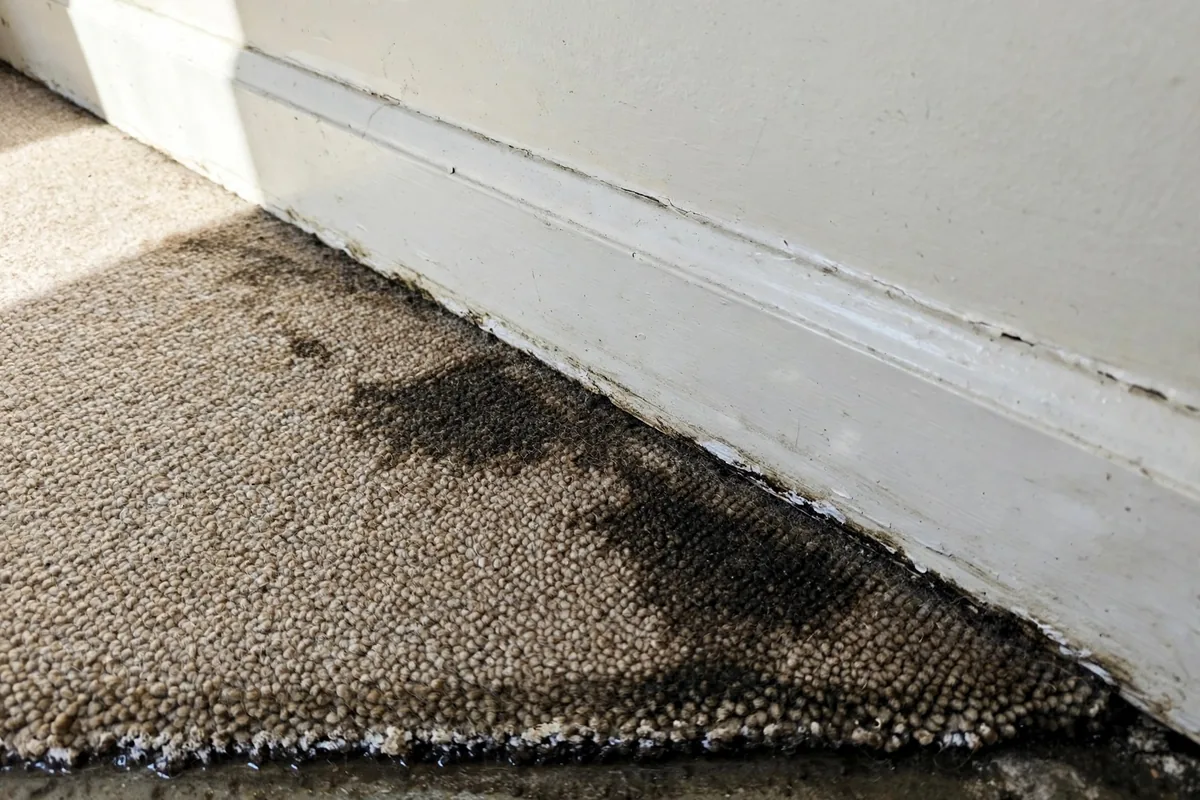
Slab leaks are the ones people worry about most, and for good reason: the pipes are buried in concrete. Warm spots on the floor, water sounds with everything off, or damp edges along the carpet are the classic signs. We trace the line under the slab and mark the spot.
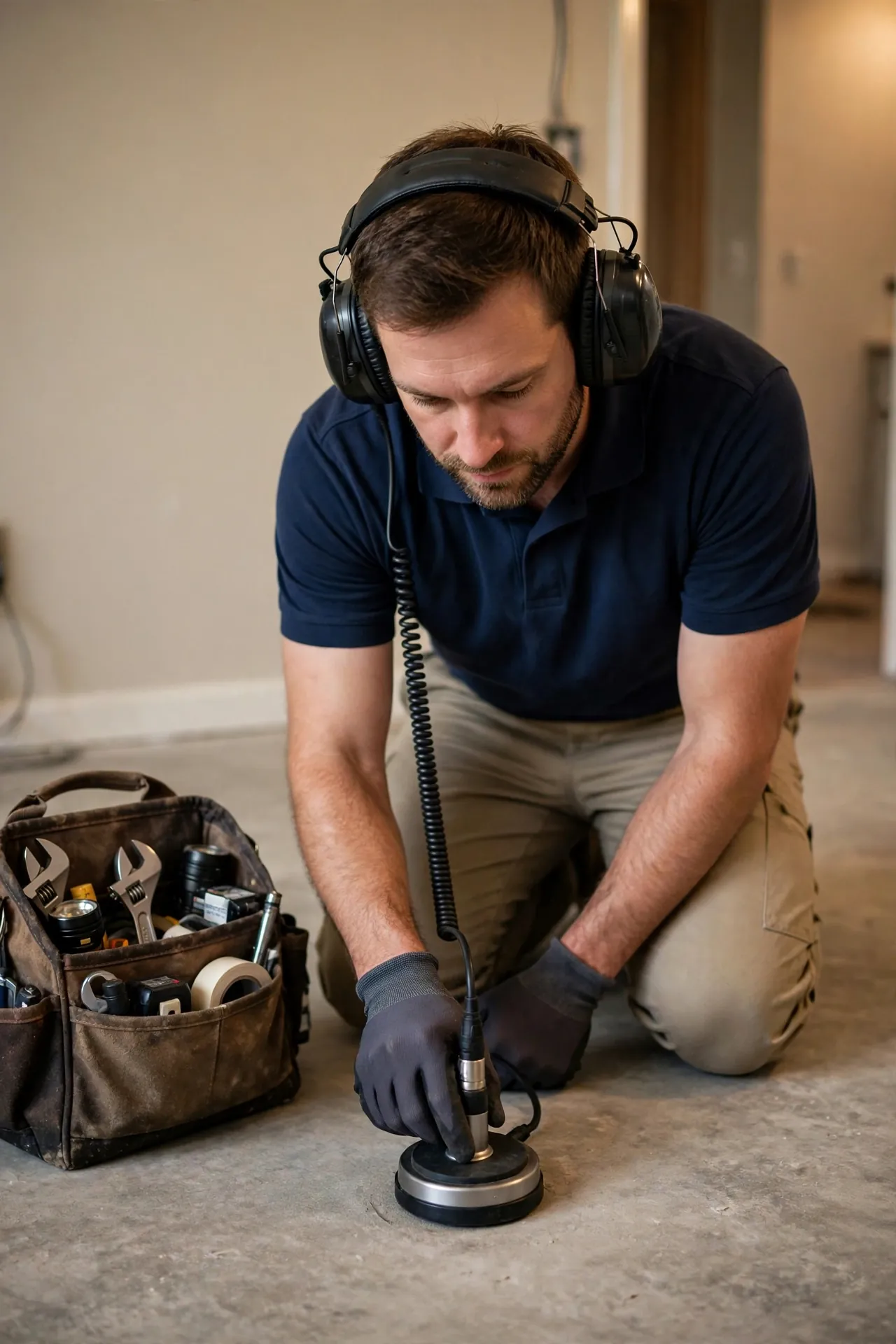
Spotted a warning sign? Let’s find the source.
Most leaks are located in a single visit. Call now and tell us what you’re seeing.
Why slab leaks get their own service
In a lot of Columbia homes, especially mid-century and newer builds on slab foundations, the hot and cold supply lines run through or under the concrete slab. When one of those lines develops a pinhole or a fitting fails, the water has nowhere visible to go. It soaks into the soil under the slab, wicks up through the concrete, or follows the path of least resistance until it shows up somewhere surprising, like damp carpet ten feet from the actual break.
That's what makes slab leaks stressful. You can see the symptom but not the source, and the old-school answer was to start breaking concrete and hope. We don't work that way. The whole point of slab leak detection is to find the break's location accurately enough that any concrete work happens in one small, marked spot instead of a trench across the room.
How slab leaks usually come to our attention
Most slab calls start with one of a short list of clues: a warm patch on the floor, the sound of water running with everything off, damp carpet edges, a water heater that never rests, or a bill climbing for no reason. If you want to run the checks yourself first, our slab leak signs guide walks through each one in order. When you call us, tell us which clues you've found; that tells us whether we're chasing the hot side or the cold side before we unload a single tool.
Hot side versus cold side: why it matters
Not all slab lines behave the same. Hot water lines expand and contract with every heating cycle, which stresses fittings and can wear copper against concrete over time. Cold lines don't cycle the same way, but they're still subject to corrosion, soil chemistry, and the occasional poor original installation. Knowing which side is leaking changes both the detection approach and the repair conversation.
The warm-spot check is the homeowner's version of this test: warmth points to the hot side. On our end, we confirm it by isolating lines and pressure-testing them separately. A line that won't hold pressure is the leaking one, and that simple answer saves a lot of hunting.
How we trace a line under concrete
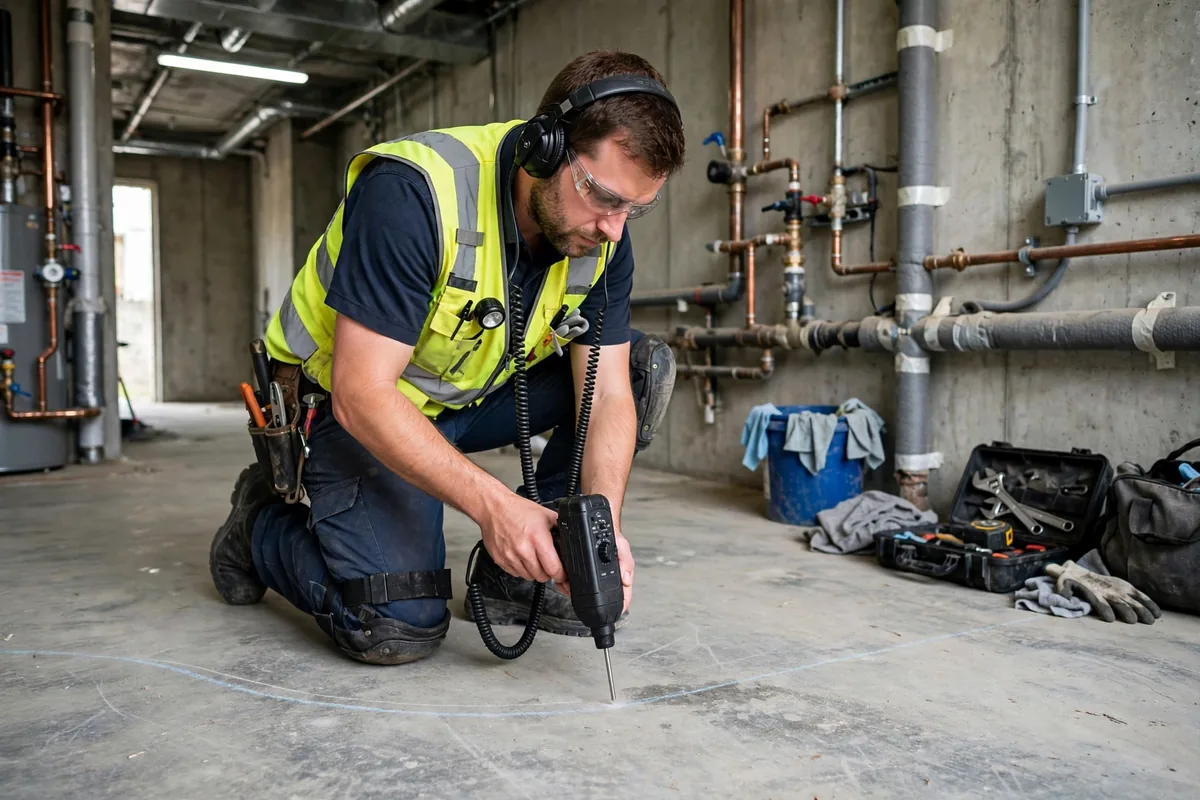
Concrete is not a barrier to detection, it's just a medium. Acoustic listening picks up the hiss or vibration of pressurized water escaping a pipe, and sound travels well through a slab. Thermal imaging spots the temperature difference where hot water warms the concrete above it, or where moisture cools a section. For cold-side leaks that don't make much heat signature, tracer gas or pressure testing isolates the run.
We map the line's path first, then work along it listening and scanning, narrowing the search until two methods agree on a spot. Only then do we mark it. The mark is what your plumber or slab contractor works from, and the tighter the mark, the smaller the repair opening. Drilling or breaking concrete blindly to "see what's down there" is exactly what detection exists to prevent.
A note on foundations and soil
One straight answer we give on every slab visit: most slab leaks caught early don't damage the foundation, but a leak that's been saturating Maury County's clay soil for months deserves a serious look. If our findings suggest long-term saturation, we'll say so plainly and recommend a foundation specialist takes a look. No drama, just the facts as we find them, across Columbia and Maury County.
What happens after we mark the spot
You get the marked location, notes on which line is leaking and how we confirmed it, and findings in plain language. From there, the repair is usually one of two approaches your contractor will discuss: opening the slab at the mark to repair the section, or rerouting the line overhead or through walls to bypass the slab entirely. Which makes sense depends on the line's condition, the home's layout, and cost. Our part is making sure that conversation starts from a known location, not a guess.
Common Questions
How do you find a leak under concrete without breaking it up?
Sound and temperature travel through concrete just fine. Acoustic listening picks up the noise of pressurized water escaping, thermal imaging spots the warmth from a hot-side leak, and pressure testing confirms which line is losing pressure. We mark the spot from above, so any concrete work happens in one small area.
My floor feels warm in one spot. Is that definitely a slab leak?
It's a strong clue for a hot-side leak, but not a certainty on its own. Sun exposure, ductwork, or radiant heat can warm a floor too. That's why we confirm with a second method, like isolating and pressure-testing the hot line, before calling it a leak.
Do you need to shut off my water during the visit?
For part of it, yes. Pressure testing a slab line means isolating it and watching the gauge, which requires the water off for that section. We coordinate with you so you're never without water longer than necessary, and we turn everything back on before we leave.
Will my whole floor need to come up?
No. The point of detection is the opposite: one marked spot instead of exploratory demolition. The repair contractor opens the slab at the mark, or reroutes the line to bypass the slab. Either way it starts from a pinpointed location.
How long can a slab leak go unnoticed?
Months, sometimes. Water under a slab often drains into the soil without ever surfacing indoors. The water bill or the meter is frequently the first sign. If your bill has been creeping up with no explanation, the meter triangle test is worth doing.
Related Leak Detection Services
Water Leak Detection
The general visit: we work the whole property and narrow the mystery to a source.
Learn moreUnderground Leak Detection
Buried lines between meter and house: soggy yard, green strips, spinning meter.
Learn morePipe Leak Detection
Supply pipes in walls and ceilings, found with listening and pressure testing.
Learn more
Ready to stop guessing?
One visit is usually all it takes to turn a mystery into a marked spot. Call and we'll take it from there.