Low Pressure Everywhere? The Problem May Be Between the Meter and the House
When every fixture in the house has weak pressure and the bill is up, the trouble is often in the main water line itself: the buried pipe from the meter to your house. We confirm it's the service line, then trace the break so the repair digs once, in the right place.
Spotted a warning sign? Let’s find the source.
Most leaks are located in a single visit. Call now and tell us what you’re seeing.
The case for the service line
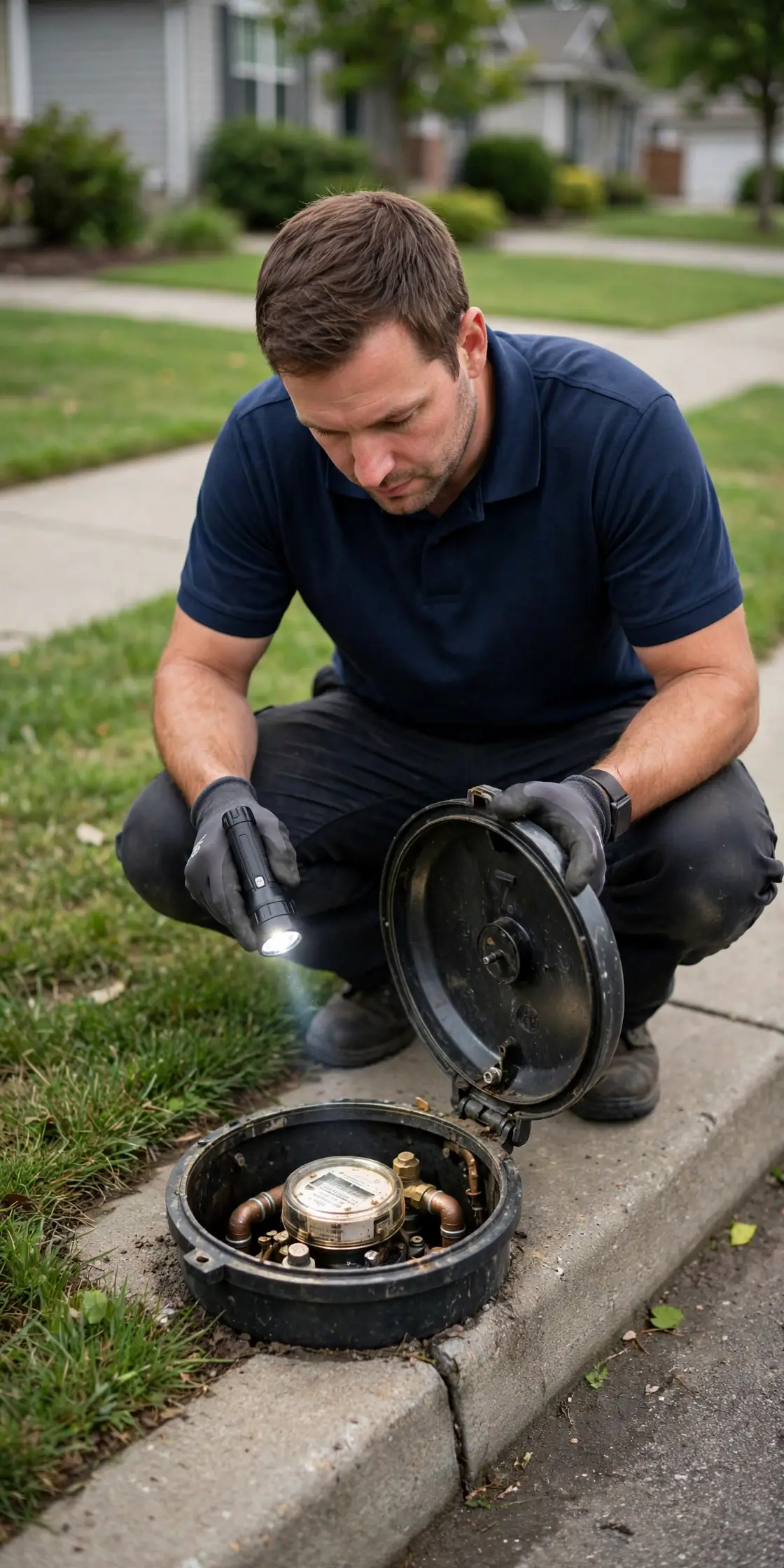
Here's the pattern that points at the main water line: pressure is low at every fixture, not just one. The water bill is up. There's no sign of a leak inside the house, no stains, no sounds, no damp spots. And the meter moves with everything off. When the whole house is affected equally and the house itself looks dry, the leak is usually in the one pipe everything shares: the service line from the meter to the house.
The main-valve isolation test confirms it. Close the valve where the line enters the house and watch the meter. If the meter keeps turning, water is escaping between the meter and that valve. There's nowhere else for it to go. That test takes five minutes and it changes the entire job from "search the house" to "trace the yard."
What breaks a service line
Service lines fail for unglamorous reasons. Age and corrosion on older galvanized or copper lines. Shifting clay soil working a joint loose over decades. A rock pressing against the pipe since installation day, finally wearing through. Freeze expansion in a shallow section. Or damage from later yard work: a fence post, a new tree, a trench for something else that nicked the line years ago and finally let go.
In Columbia's older neighborhoods, original service lines can be many decades old, and they're living on borrowed time. In newer areas, the lines are younger but not immune: poor bedding, sharp backfill, or a fitting that was stressed during installation can fail early. The symptom is the same regardless of age: water leaving the system underground. We locate service line leaks across Columbia and the surrounding communities.
Tracing the line, then the break
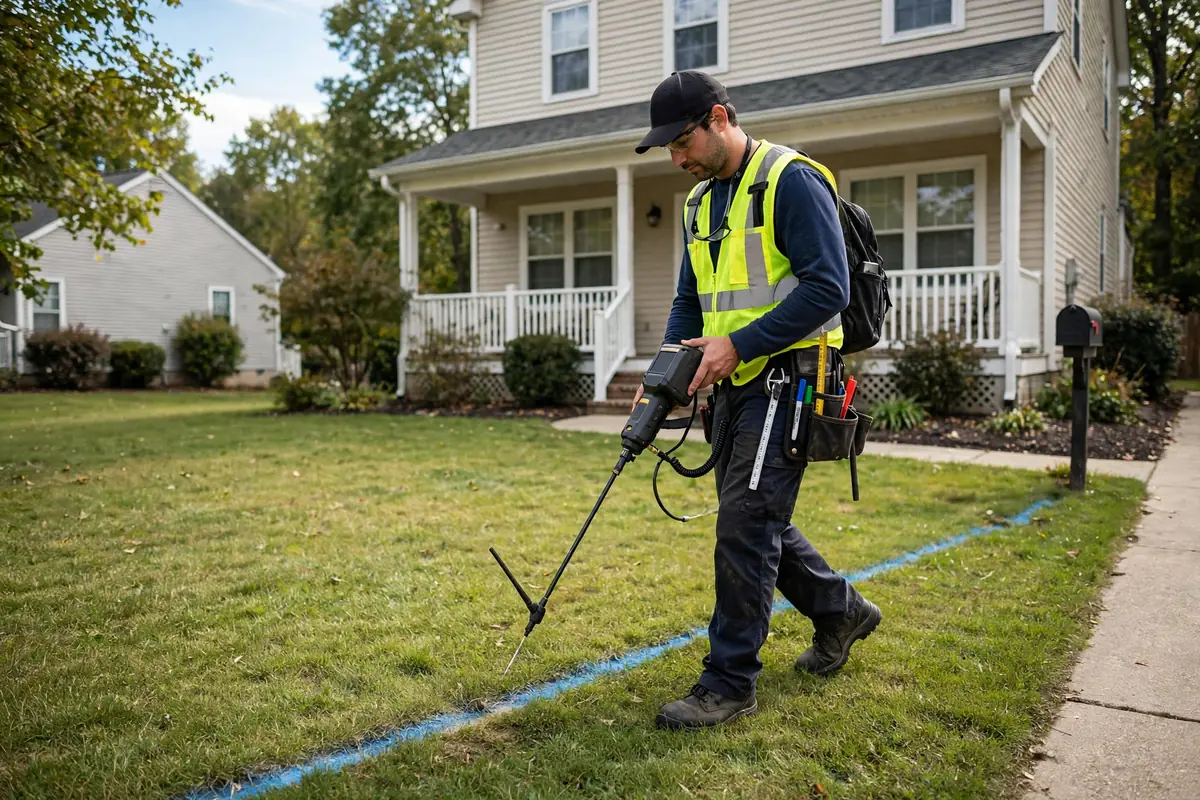
The work has two phases. First, the line's path: from the meter to the house, verifying the route rather than assuming it's straight. Landscaping, driveways, and old repairs can all shift where the line actually runs. Second, the break: listening along the path for the sound of escaping water, which is loudest at the surface directly above the failure. Pressure testing the isolated line confirms the diagnosis and hints at the leak's size.
Where conditions allow, tracer gas adds precision: introduced into the isolated line, it escapes at the break and rises through the soil to be detected at the surface. Two methods agreeing on a spot is our standard before the mark goes down, because the mark is where the excavator digs, and digging is the expensive part.
Repair, replace, or reroute
Once the break is marked, the repair conversation is your contractor's, but it helps to know the options. A single break in an otherwise sound line usually means a spot repair: dig at the mark, cut out the failed section, couple in new pipe. A line with multiple weak points, or one that's at the end of its material life, may be a better candidate for full replacement, often by trenchless methods or a new routed line. We'll give you our honest read on the line's apparent condition, but the call is yours and your contractor's.
One thing to settle early: responsibility. You typically own the service line from the meter to the house; the utility owns the meter and the street main. Our isolation test shows which side the leak is on. If it's the utility's side, that's their repair, and you shouldn't be paying for it.
Don't wait on a service line leak
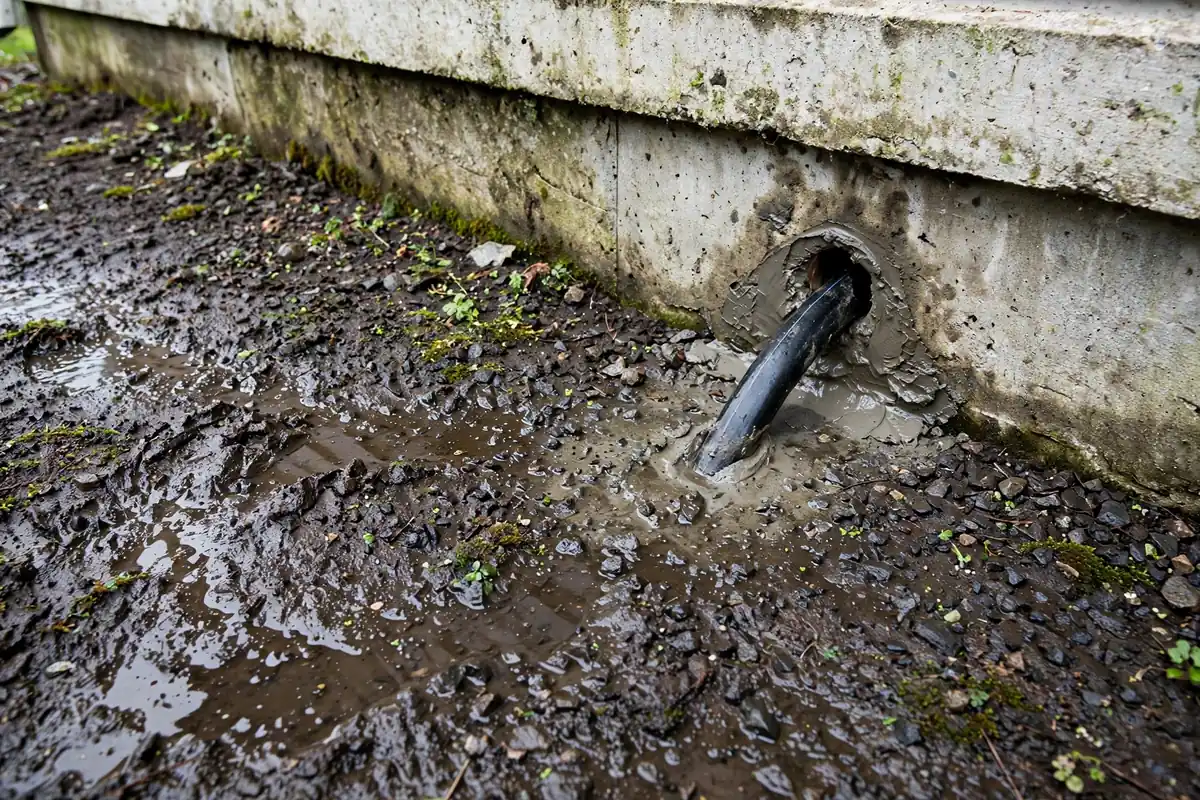
A leaking service line doesn't fix itself and it doesn't stay the same size. Water eroding the soil around the pipe washes out the bedding, the pipe flexes more, and the break grows. What starts as a high bill becomes a sinkhole in the yard, undermining for the driveway or walkway above, and in a worst case, water finding its way to the foundation. The earlier the mark goes down, the smaller the dig and the smaller the bill.
Common Questions
How do I know the leak is in the main water line and not inside the house?
Do the main-valve isolation test: close the valve where the line enters the house, then watch the meter. If it stops, the leak is inside. If it keeps moving, it's in the service line between the meter and the house. That one test answers the question.
My water pressure dropped across the whole house. Is that a service line leak?
It's a strong possibility, especially combined with a higher bill. A break in the main line bleeds off pressure before water reaches any fixture, so everything is affected equally. Low pressure at one fixture is a local problem; low pressure everywhere points to the main.
Who is responsible for the service line, me or the water utility?
In most setups you own the line from the meter to the house, and the utility owns the meter and the street main. Our testing shows which side the leak is on. If it's on the utility's side, call the water department, that's their repair.
Will the whole line need to be replaced?
Not necessarily. A single break in a sound line is usually a spot repair at the marked location. Full replacement makes sense when the line has multiple weak points or the material is at end of life. We'll give you an honest read; your contractor makes the call with you.
How deep is the service line buried?
It varies with age, code at installation time, and grading changes since. Part of our tracing notes the line's apparent depth and path, so the repair crew knows what to expect before digging.
Related Leak Detection Services
Underground Leak Detection
Buried lines between meter and house: soggy yard, green strips, spinning meter.
Learn moreWater Leak Detection
The general visit: we work the whole property and narrow the mystery to a source.
Learn moreEmergency Leak Detection
Active water coming in now: we prioritize finding the source fast.
Learn more
Let's pin down that leak.
Describe the symptom on the phone and we'll show up with a plan, not a hunch.