One Soggy Zone Is Watering Your Wallet. Let's Find the Break
Irrigation leaks are the great mimics of the leak world. They spike the water bill, create soggy patches, and get blamed on everything else. A cracked lateral line, a stuck valve, or a weeping head can waste thousands of gallons while looking like 'just a wet lawn.' We find the break in the zone.
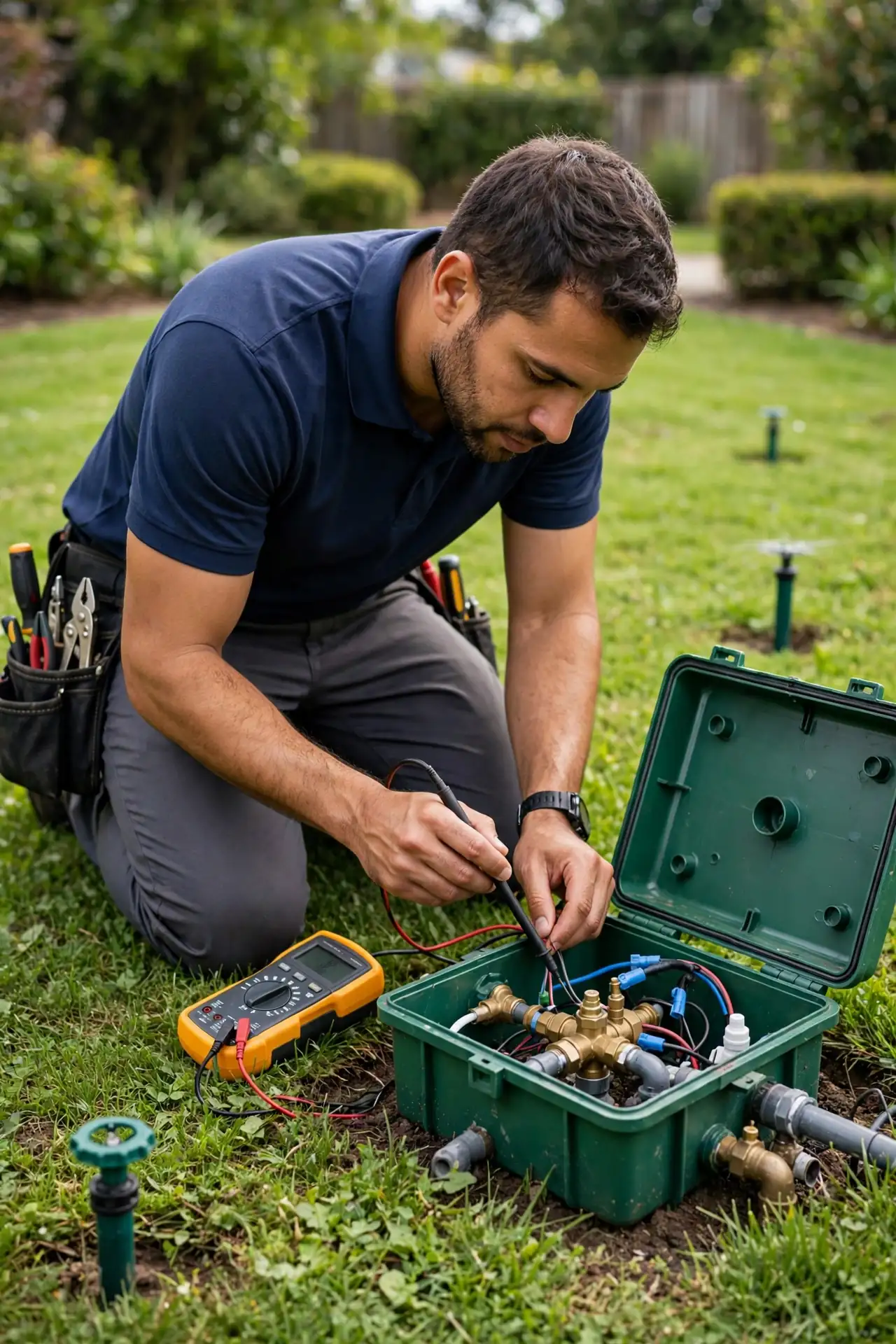
A small leak found now beats a big repair later.
The earlier we catch it, the smaller the fix stays. Call and tell us what's going on.
Why irrigation leaks hide so well
An irrigation system is designed to put water on the ground, so a leak looks like the system working. A cracked lateral line waters the lawn from below. A valve stuck open runs a zone around the clock. A broken head mists the sidewalk. Homeowners see a green lawn and a high bill and assume the system is just thirsty. Meanwhile thousands of gallons are going somewhere unplanned.
Irrigation is also the first suspect when a bill jumps in the watering season and the last thing people check, because the system runs while everyone sleeps. If your bill spikes from May through September and settles in winter, the irrigation system deserves a hard look before anything else.
The signs, zone by zone
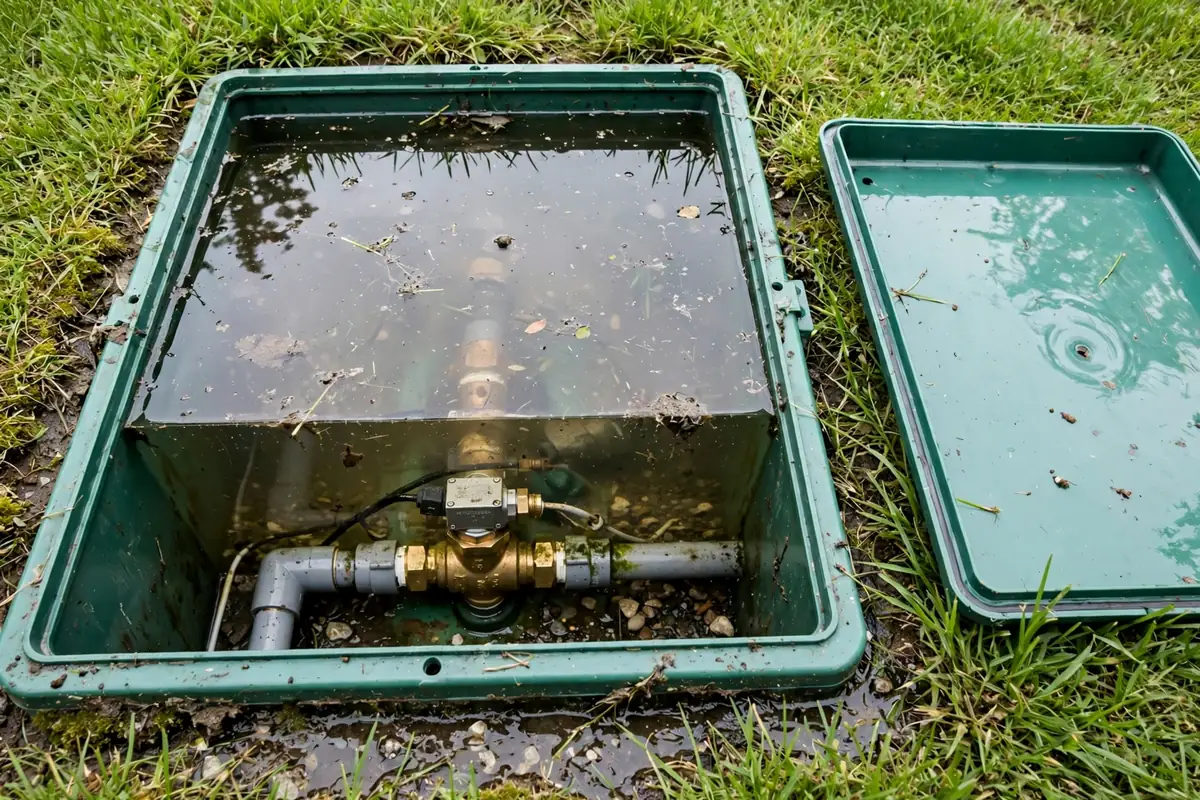
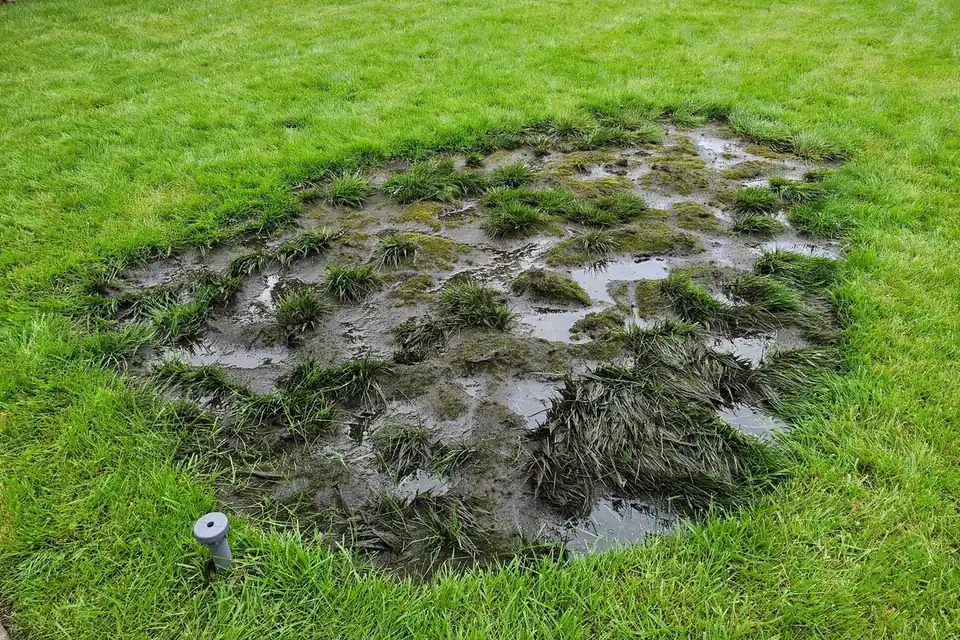
Walk the system while it runs and look for the tells. A head that mists or fogs instead of throwing a clean stream is usually a pressure problem from a break downstream, or a clogged nozzle. One zone that's soggy while the others are fine points to that zone's lateral line. A valve box that's full of water when the system hasn't run for days means the valve is weeping through. Heads that don't pop up fully, or a zone with weak pressure throughout, suggest a break stealing pressure upstream of the heads.
The meter test works for irrigation too, with a twist: check the meter when the system is scheduled to be off. If it's moving and nothing else is running, a zone valve may be stuck open, which is one of the most common and most wasteful irrigation failures.
Valves: the usual suspects
Zone valves live in boxes in the ground, and they fail in a few predictable ways. The diaphragm inside wears out and the valve won't fully close, so the zone seeps constantly. Debris holds the valve open a crack. The solenoid fails and the valve sticks. Any of these produces the same symptom: a zone that never quite shuts off, a valve box that never dries, and a bill that climbs.
We test valves by running each zone and watching what happens when it shuts off. A zone that keeps dribbling after its time is up has a valve problem, not a pipe problem, and the fix is at the valve box. It's worth knowing the difference before anyone starts digging up lateral lines.
Lateral lines and heads
The lateral lines from the valves to the heads are thin-walled pipe, and they're vulnerable to the usual yard hazards: shovels, aerators, edgers, and freeze expansion. A cracked lateral leaks only when its zone runs, which is why the soggy patch follows the watering schedule. We find these by running the zone and walking the line, watching for surfacing water, listening for the hiss of a pressurized break, and checking pressure at the heads.
Winter damage is the seasonal story. Lines that weren't blown out before a hard freeze can split, and the leak appears the first time the system runs in spring. If your system worked fine last fall and one zone is suddenly soggy this spring, freeze damage is the leading theory.
What the visit produces
We run every zone, check every valve box, walk every lateral line while it's pressurized, and test heads for proper operation. You get a zone-by-zone report: which zones are sound, which valve is weeping, where the lateral break is marked for repair, and which heads need attention. For a lot of systems, the fix list is small and specific, and the water savings start the day it's done.
One more thing worth saying: a lot of irrigation "leaks" turn out to be programming. A controller set to water daily in a rainy month, or run times doubled after a power outage reset, wastes as much as a break. We check the schedule too, because the cheapest fix is a button press. Irrigation checks are available throughout Columbia and Maury County.
Common Questions
My water bill spikes every summer. Could it be my sprinklers?
Very possibly. Irrigation is the top suspect for seasonal bill spikes. Check the meter when the system should be off: if it's moving with nothing else running, a zone valve may be stuck open. Walk each zone while it runs and look for misting heads, soggy spots, and valve boxes full of water.
One zone is soggy but the others are fine. What does that mean?
The problem is isolated to that zone: a cracked lateral line, a weeping valve, or a broken head. We run that zone and trace the line while it's pressurized to find the break, so the repair digs in one spot.
A valve box is full of water. Is that normal?
No. A valve box should be dry when the system hasn't run recently. Standing water in the box means the zone valve is weeping through and the zone is seeping constantly. That's a valve repair, and it's one of the most wasteful failures because it never stops.
Can you find a leak in a buried irrigation line?
Yes. We run the zone to pressurize the line, then walk it looking and listening for the break. Lateral breaks usually announce themselves once the zone is running: surfacing water, a pressure drop at the heads, or the sound of escaping water.
Do I need to be home for the irrigation check?
It helps. We need access to the controller to run zones manually and to all the valve boxes. If you can walk the zones with us, you'll see exactly what we see, which makes the repair conversation easy.
Related Leak Detection Services
Water Leak Detection
The general visit: we work the whole property and narrow the mystery to a source.
Learn moreUnderground Leak Detection
Buried lines between meter and house: soggy yard, green strips, spinning meter.
Learn morePool Plumbing Leak Detection
Pressure testing pool lines, skimmers, and equipment to isolate water loss.
Learn more
Let's pin down that leak.
Describe the symptom on the phone and we'll show up with a plan, not a hunch.