Leak Detection in Graymere
Graymere is Columbia’s upscale corner, built around Graymere Country Club and its 18-hole golf course. Bigger homes, bigger lots, and more of everything water touches. Let’s walk through the house, the yard, and the pool, and talk about where leaks hide in each one.
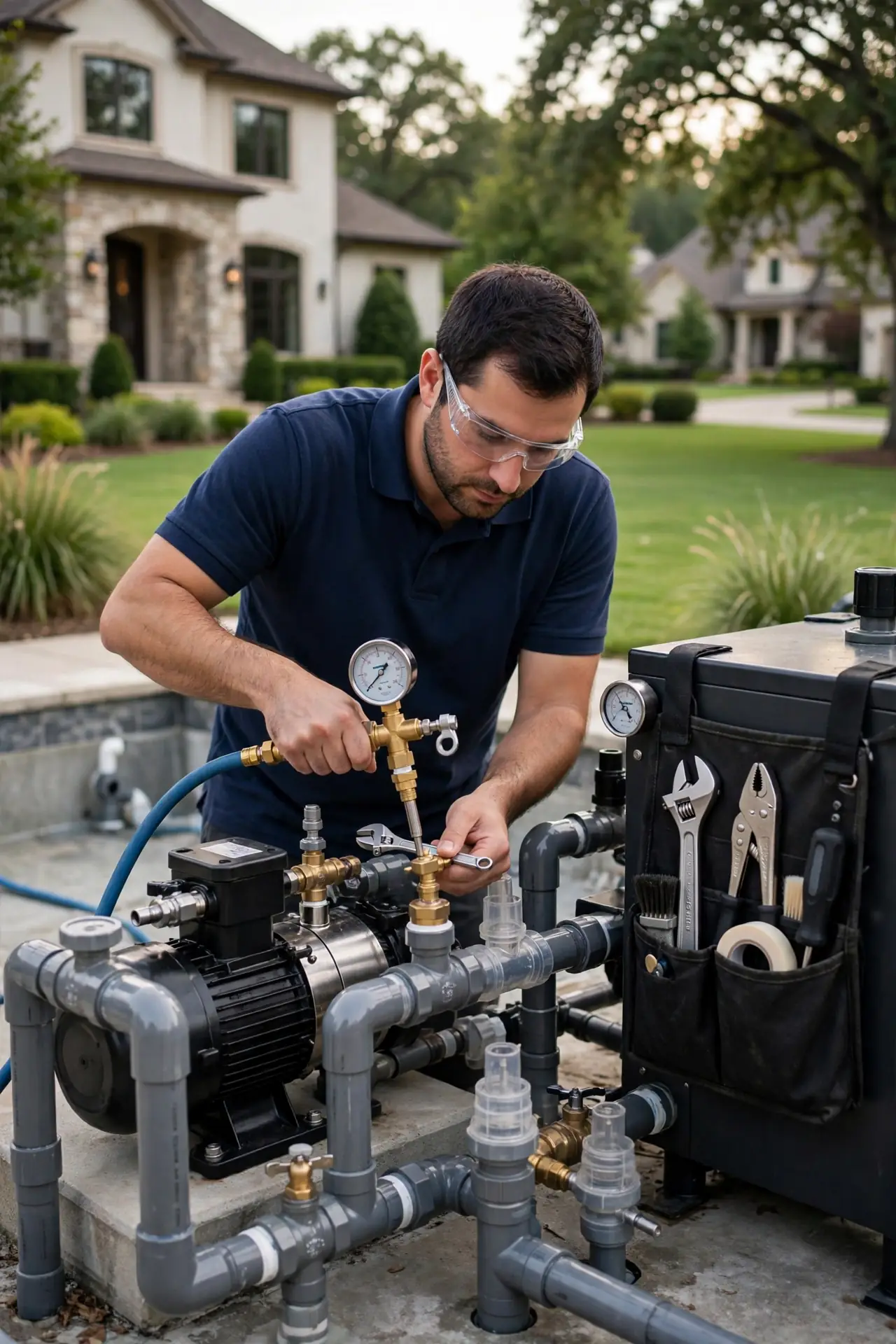
More Bathrooms, More Leak Points
A Graymere home usually has more bathrooms than a typical ranch, and that’s not a brag, it’s just arithmetic. Every bathroom adds a toilet with a wax ring and supply line, a tub or shower with a valve buried in the wall, and a vanity with supply connections and a drain trap. Multiply that across three or four baths plus the kitchen and laundry, and you’ve got a lot of joints where a slow seep can start.
The leak that gets Graymere homeowners is almost never dramatic. It’s the guest bathroom nobody uses, where a supply line weeps for months inside the wall. Or a master shower valve that drips into the stud bay, feeding mold long before it stains the ceiling below. By the time there’s a visible sign, the water has been traveling a while.
That’s why a detection visit here is methodical. We go bathroom to bathroom: dye-check toilets, pressure-check supply runs (copper or PEX, depending on the build), moisture-map walls and floors, and listen at the walls. The stain shows up in one place, but the leak is usually somewhere else. Finding the real source is the whole job, and it’s what our bathroom and faucet and fixture detection services are built for.

A small leak found now beats a big repair later.
The earlier we catch it, the smaller the fix stays. Call and tell us what's going on.

Irrigation on Bigger Lots
Graymere lots are generous, and most of them run full irrigation systems. That’s a lot of buried lateral line, a lot of heads, and a lot of zone valves, all of it out of sight. When we get a “my water bill doubled and I can’t find any water” call from Graymere, the irrigation system is one of the first things we check, and it’s the answer more often than people expect.
The usual pattern: a zone valve sticks open, or a head breaks below grade and dumps water underground where nobody sees it. The grass over it actually looks great, which is the cruel part. Meanwhile the meter spins all night. Other times a lateral line cracks from soil movement or a nick during landscaping work, and it only leaks when that zone pressurizes, so a quick glance at the yard tells you nothing.
Walk your zones while they run: soggy ground that never dries, heads that mist instead of spray, a valve box full of standing water. If the bill is high and the yard looks fine, an irrigation leak detection visit is the right call: we isolate zones, watch pressure and flow, and locate the break before any digging starts.
Pools Are Part of the Water Picture Here
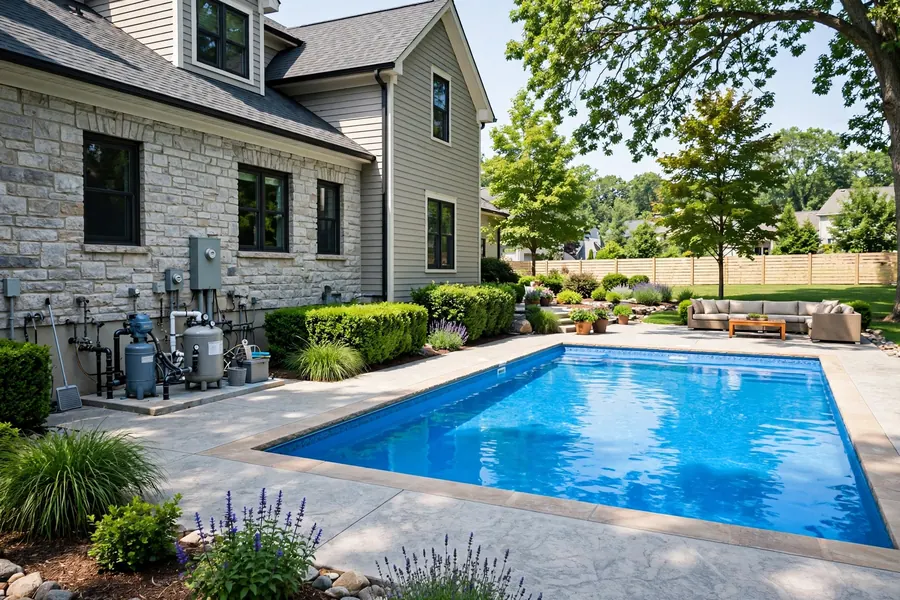
Plenty of Graymere properties have pools, and on a big lot the pool often gets mentally filed under "landscaping" instead of "plumbing." It shouldn't be. A pool is a pressurized plumbing loop, and a slow leak in it behaves exactly like a household leak: the autofill runs, the water bill creeps, and everyone blames evaporation. In a Tennessee summer, evaporation is real, which makes it the perfect cover story for a leak that's been running since spring.
The Graymere-specific wrinkle is the equipment pad's age. Many of these pools went in years ago, and the unions, seals, and multiport valve gaskets at the pad have been baking in the sun ever since. Before assuming the worst underground, walk the pad while the pump runs and look at every union and valve with dry hands. If the pad is dry and the level still drops, the leak is in the buried lines or the skimmer, and that's a job for pool plumbing leak detection, not a pool maintenance visit.
Slab Foundations in the Newer Sections
Parts of Graymere were built later, and slab-on-grade is the foundation you’ll find there. A slab puts the main water runs under concrete where no one can see them, which is why slab leaks are such a classic “invisible” problem: warm spots on the tile, damp carpet edges, the sound of water when the house is quiet, a bill that won’t stop climbing.
We’d never say slab homes leak more than any other. But when they do, finding the leak without tearing up the whole floor takes real equipment: acoustic listening to hear the pressurized run, thermal imaging to catch the temperature difference, pressure testing to confirm which line is losing water. All methods commonly used in the trade. Our slab leak detection service exists for exactly this scenario. Elsewhere in the city, our Columbia, TN page covers the rest of the picture.
Graymere Leak Detection FAQs
Why does my Graymere home have a higher risk of fixture leaks?
It’s simple math, not a quality problem. Larger homes usually have more bathrooms, each one with a toilet, a tub or shower, a vanity, and supply valves. That’s more wax rings, more shower valves, more supply connections, and more points where a slow seep can start. When we come out for fixture detection in Graymere, we check them all systematically, because the leak is almost never where the stain is.
My irrigation runs fine, but my water bill is huge. What should I check?
A stuck zone valve, a broken head that runs underground, or a cracked lateral line that leaks only when the system pressurizes. Bigger Graymere lots run longer zones and more heads, which gives a leak more places to hide. Turn each zone on and walk it: soggy spots, misting heads, and a valve box that never dries out are the giveaways. If you can’t find it, our irrigation leak detection service traces it.
My pool keeps losing water. Is it a leak or just evaporation?
Do the bucket test: fill a bucket with pool water, set it on the pool step, and mark the level inside and outside. If the pool drops faster than the bucket over a couple of days, water is leaving through the plumbing, not the air. Common culprits in Graymere pools are skimmer seals, return-line fittings, and underground lines. Our pool plumbing detection service pressure-tests the lines to isolate it.
Do slab foundations in Graymere’s newer sections leak more?
Slab foundations put the main supply and drain runs where you can’t see them, so when a line fails under concrete, the symptoms are indirect: warm floor spots, damp carpet edges, or the sound of running water when everything’s off. We wouldn’t say they leak more, but they’re harder to find without detection equipment, which is exactly why slab detection exists.
Can you find a leak in my irrigation system without digging up the whole yard?
Yes. We isolate zones one at a time, watch pressure and flow behavior, and use acoustic listening to narrow a break to a small area before any digging happens. Most irrigation breaks get located within a few feet, so the repair hole stays small and the lawn survives.
Graymere Leak? Call (931) 800-6431
Fixture leaks, irrigation breaks, pool plumbing, slab leaks. Tell us what you’re seeing and we’ll come find it, without tearing up the house or the yard.