The Stain Shows Where Water Landed. We Find Where It Started
A brown ring on the ceiling, paint bubbling on a wall, drywall that's soft to the touch. Water travels inside walls and ceilings, so the visible damage is rarely directly under the leak. Moisture mapping traces the water's path back to its source before anyone opens anything up.
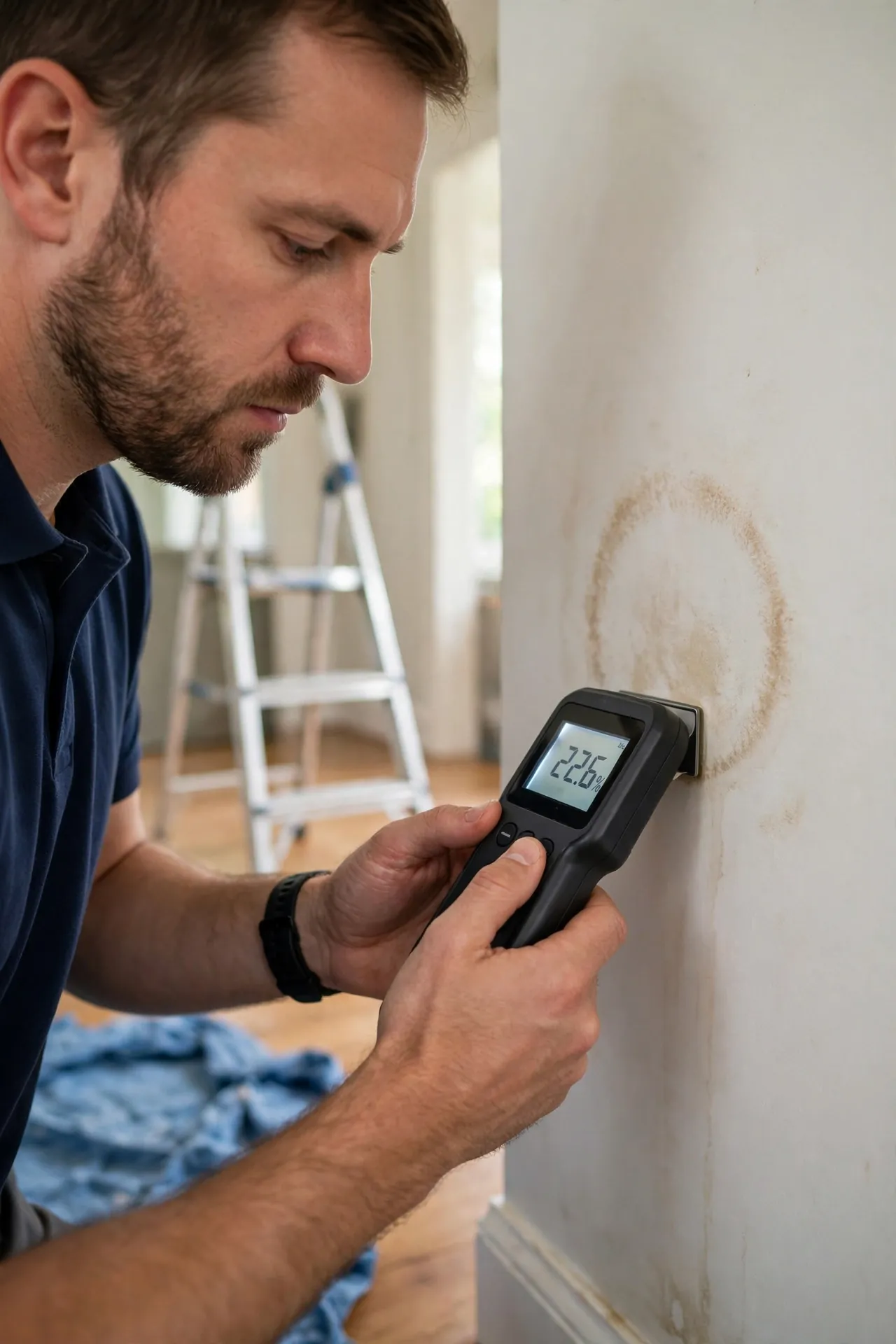
Noticed something off with your water?
A quick call is the cheapest diagnostic there is. Tell us what you're seeing and we'll tell you what it likely means.
Water doesn't fall straight down
This is the single most important thing to understand about ceiling and wall leaks: water follows the path of least resistance, not the shortest path. Inside a wall or ceiling cavity, water runs along pipes, follows the top of drywall, travels along framing members, and drips down only when it runs out of things to cling to. A stain on the living room ceiling might come from a bathroom three feet to the side, or a supply line running across the joists from the other direction.
This is why opening the ceiling at the stain so often disappoints. You find wet drywall, maybe some damp insulation, and no leak, because the leak is six feet away and the water traveled. Then it's a second hole, a third, and a ceiling that looks like Swiss cheese before anyone finds the source. Moisture mapping exists to prevent exactly that.
Reading the stain
Stains tell a story if you know how to read them. A brown or yellow ring with a darker edge usually means water that carried sediment or rust, which points to a supply line or a water heater issue. A stain that grows after rain points to the roof or flashing, not plumbing, and we'll tell you that honestly rather than sell you a plumbing search. A stain below a bathroom that darkens after showers points up at the tub, the shower pan, or the drain.
The stain's texture matters too. Bubbling or peeling paint means moisture is pushing from behind the drywall. Drywall that's soft or spongy to a gentle press has been wet long enough to compromise the gypsum. A stain that's dry and stable might be from a leak that's already been fixed, or one that's intermittent. We note all of it, because the pattern narrows the search.
Worth correcting a common myth here: painting over a stain doesn't fix anything. Stain-blocking primer hides the mark, but the water keeps coming and the drywall keeps weakening behind the fresh paint. The stain is a symptom. Until the source is found and fixed, every coat of paint is just a cover-up with a timer on it.
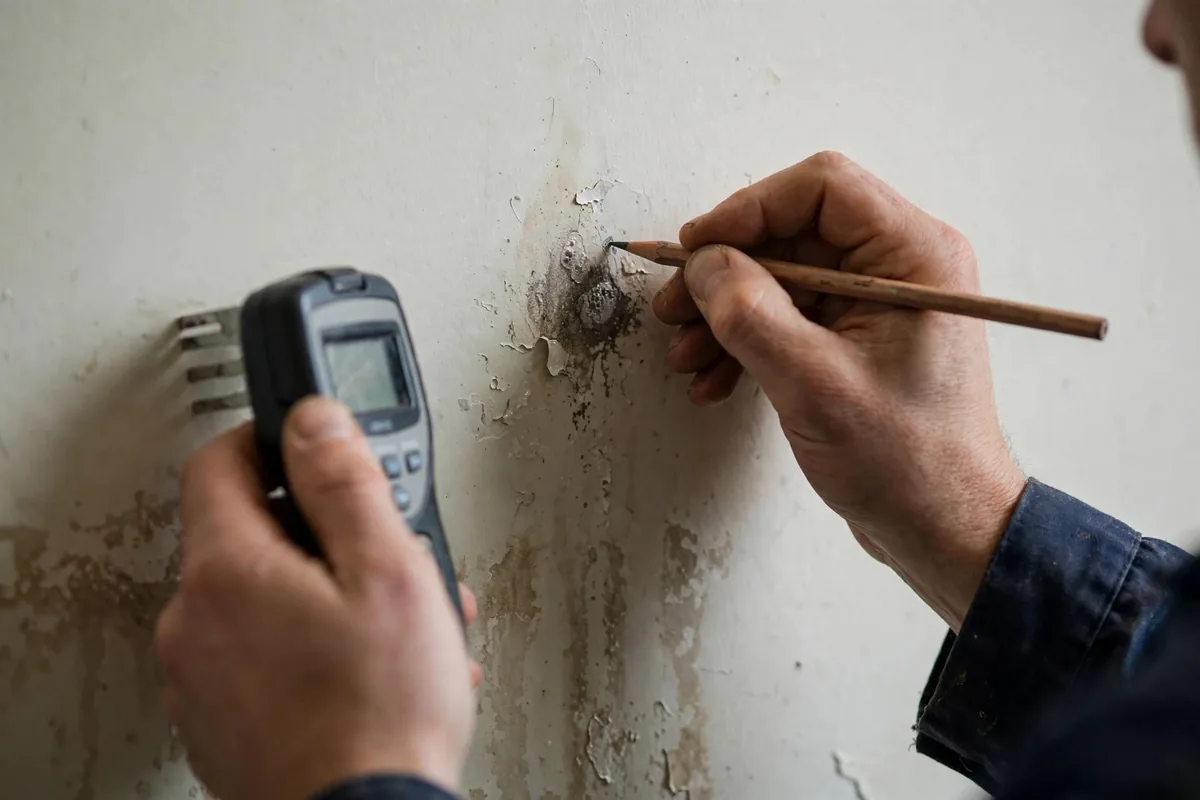
Moisture mapping: how the trace works
Moisture mapping is systematic. Starting at the visible damage, we take moisture readings in a grid pattern across the wall or ceiling, moving outward in every direction. The readings form a gradient: highest at the source, fading with distance. Follow the gradient uphill and it leads to where the water is entering the cavity.
Thermal imaging speeds this up enormously. A thermal camera shows the cool spread of moisture across a wall in one sweep, revealing the full shape of the wet area, including parts that haven't stained yet. Then the moisture meter confirms the camera's picture with hard numbers. The combination draws a map of the water's path, and the source is where the map points.
Plumbing leak or roof leak?
Ceiling stains are where plumbing leaks and roof leaks get confused, and telling them apart matters because they're different trades. The timing test is the first filter: does the stain grow or darken after rain? If yes, suspect the roof, flashing, or gutters. Does it change with plumbing use, after showers, when the washer runs, with no regard for weather? Then suspect plumbing.
We check both angles during the visit. If the evidence points to the roof, we'll say so plainly and you can call a roofer instead of paying for a plumbing search. If it points to plumbing, we keep tracing until we find which line. Either way you stop guessing.
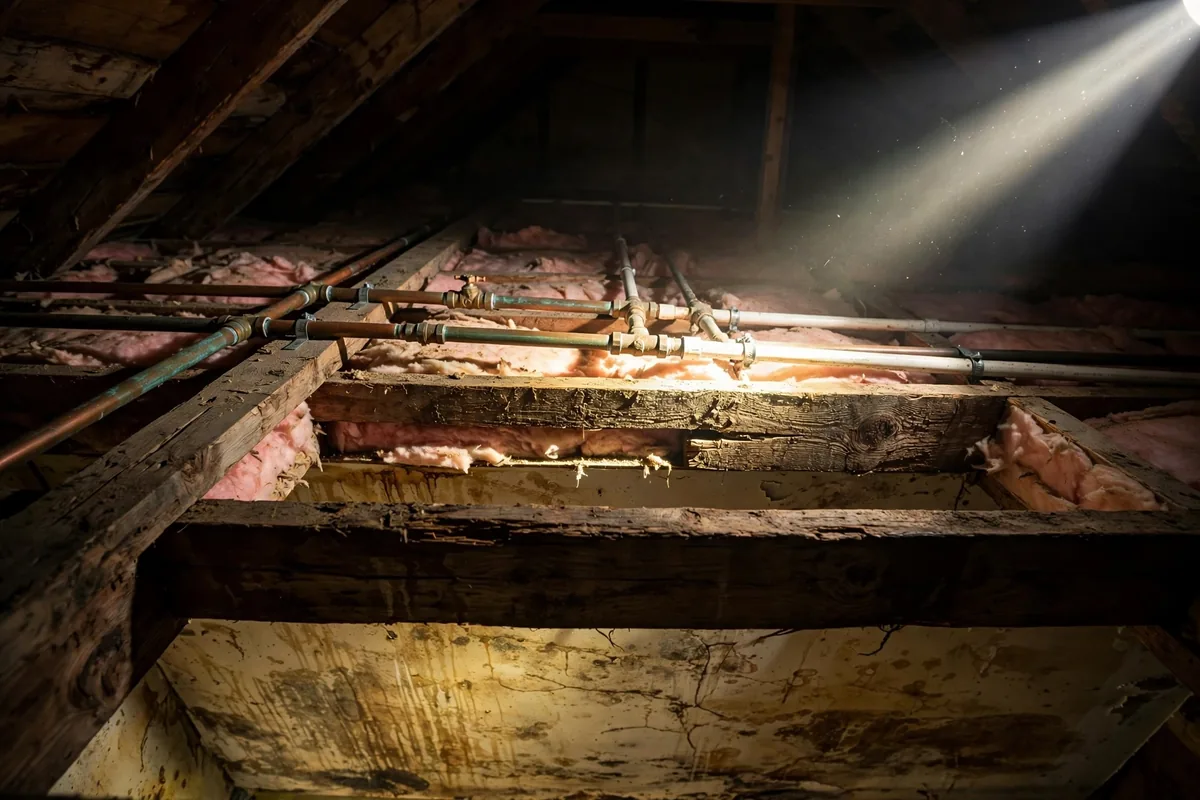
Ceiling leaks in Middle Tennessee homes
Our humid summers slow drying inside wall and ceiling cavities, so a leak here can stay damp longer and stain wider than the same leak would in a drier climate. Winter freeze-thaw cycles add attic pipe splits to the suspect list each spring. We trace ceiling and wall leaks across Columbia and Maury County.
After the source is found
You get the marked source location, the moisture map showing how far the water spread, and plain-language findings. The map matters for the repair, because drywall and insulation that got wet may need to come out even beyond the leak itself, and your contractor needs to know the full extent. Mold is the other conversation: any cavity that's been wet for a while deserves a look for growth before it's closed back up.
The goal, as always, is one opening in the right place instead of several in the wrong ones. The stain told you something was wrong. The map tells you what to do about it.
Common Questions
Should I cut open the ceiling where the stain is?
Not before the source is found. Water travels inside cavities, so the stain is usually not directly under the leak. Opening at the stain often reveals wet drywall and no source. Moisture mapping finds the entry point first, so there's one opening in the right place.
How do you tell a plumbing leak from a roof leak?
Timing. Roof-related stains grow after rain; plumbing stains change with water use regardless of weather. We check both during the visit, and if it looks like a roof issue we'll tell you to call a roofer rather than pay for a plumbing search.
The stain is old and dry. Is the leak still active?
Maybe not, but dry doesn't mean resolved. We take moisture readings across the area: if everything reads dry and the meter is still, the leak may have been fixed or may be intermittent. If readings are still elevated, it's active and hiding.
What is moisture mapping exactly?
Taking moisture readings in a grid across the damaged area and outward, building a gradient that points back to where water is entering. Thermal imaging shows the wet shape in one sweep, and the meter confirms it with numbers. Together they draw the water's path.
Will the wet drywall need to be replaced?
Often yes, at least the sections that stayed wet. Drywall that has been saturated loses strength and can harbor mold. The moisture map shows your contractor the full extent so the repair covers all of it, not just the stained part.
Related Leak Detection Services
Pipe Leak Detection
Supply pipes in walls and ceilings, found with listening and pressure testing.
Learn moreBathroom Leak Detection
Supply vs drain vs grout: we test each source separately.
Learn moreHidden Leak Detection
No visible water, just symptoms: meter checks, thermal scans, moisture mapping.
Learn more
Let's pin down that leak.
Describe the symptom on the phone and we'll show up with a plan, not a hunch.