Leak Detection in Windermere
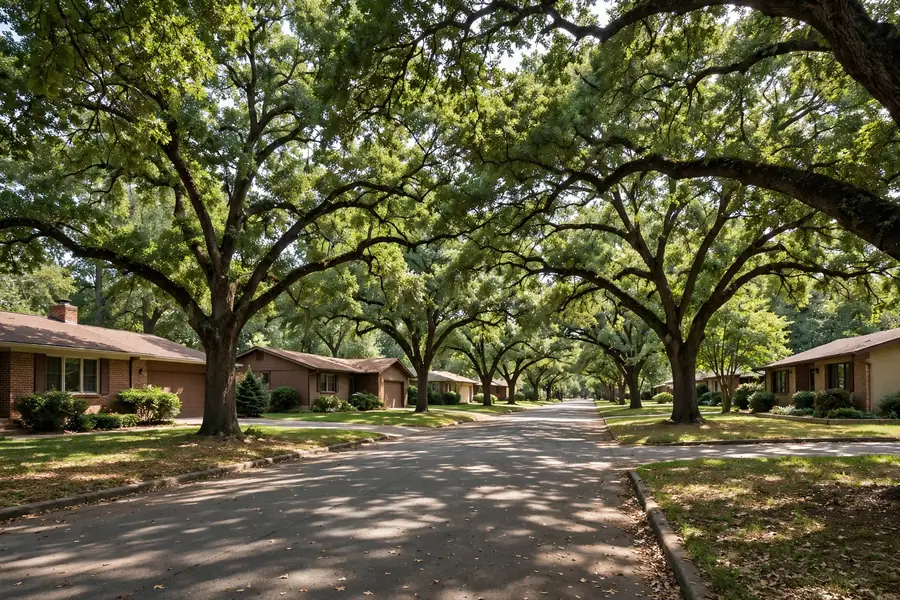
Windermere sits between Sunnyside and Graymere, a neighborhood of established ranch homes under a serious canopy of mature trees. We work this area outside-in: starting at the street and the yard, because in Windermere, that’s where the story usually begins.
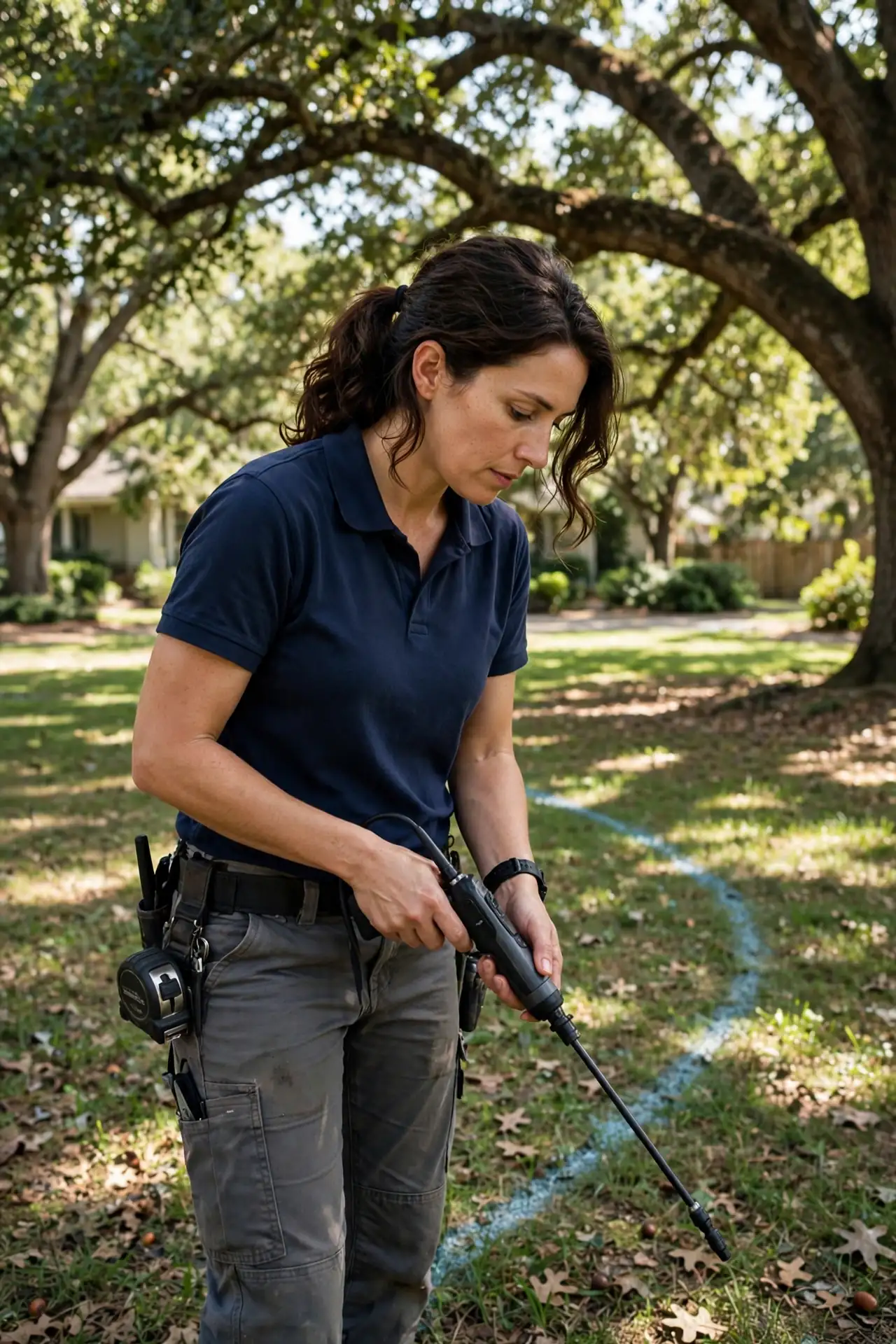
Mature Trees, and What They Do Underground
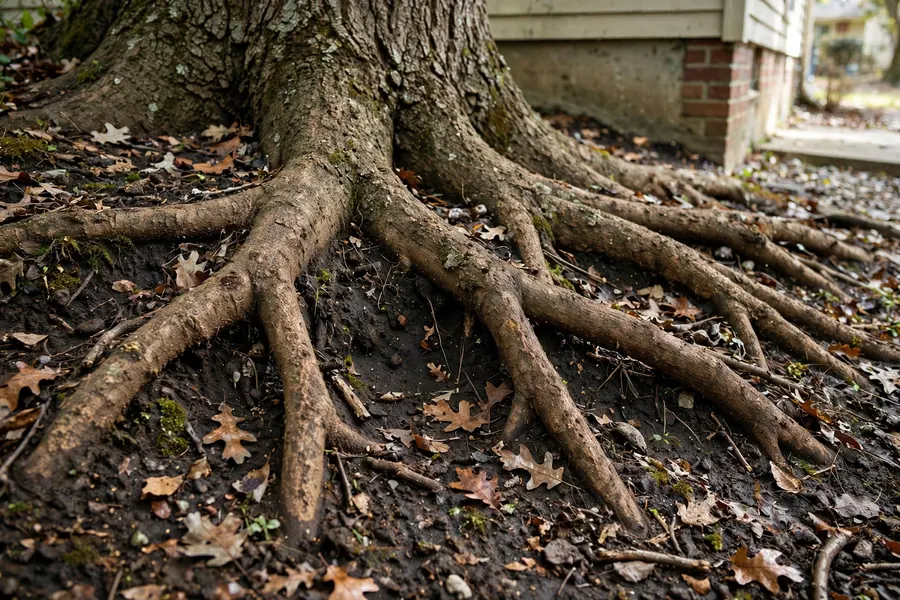
Windermere’s biggest asset is also its biggest plumbing variable: the trees. Mature oaks and maples have root systems that spread far beyond the canopy, and roots are relentlessly good at finding moisture. They don’t usually break a healthy pipe, but they work into joints, seams, and hairline cracks in older sewer laterals, and once inside, they grow and widen the opening until the pipe is in real trouble.
Homes of this era may have clay or cast iron laterals running from the house to the street, right under those root zones. The symptoms tell the story from inside: drains that gurgle, fixtures that drain slowly, a sewer smell after rain, or a soggy patch in the yard between the house and the road. When we get a call like that from Windermere, the lateral is one of the first things we check.
The right way to find out is a camera inspection, not a shovel. We run a camera through the line and watch the feed: roots show up clearly, and so do bellies, cracks, and separations. Once we know where and what the problem is, any repair can target that section instead of the whole run. Our sewer leak detection page covers how this works, and for pressurized lines, underground leak detection is the equivalent service.
Noticed something off with your water?
A quick call is the cheapest diagnostic there is. Tell us what you're seeing and we'll tell you what it likely means.
From the Meter to the House
Moving from the street toward the house, the next buried run is the water service line. Unlike the sewer lateral, this one is pressurized, which makes it tougher against roots but not invincible, especially where Maury County’s clay soil swells and shrinks around it season after season. That slow movement stresses old joints and corroded sections over time.
The symptoms are different from a lateral problem: a water bill that climbs with no change in usage, a meter that spins with every fixture shut off, a patch of yard that stays green or soggy when it shouldn’t, or low water pressure at the fixtures. Walk the path from your meter to the house. If there’s a suspiciously lush strip or a soft spot, note where it is and tell us when you call. That detail saves time.
We locate these with acoustic listening and pressure testing, methods commonly used in the trade, narrowing the break before anyone plans excavation. Our water line leak detection page goes deeper on the process.
Copper, PEX, and the Joints Between Them
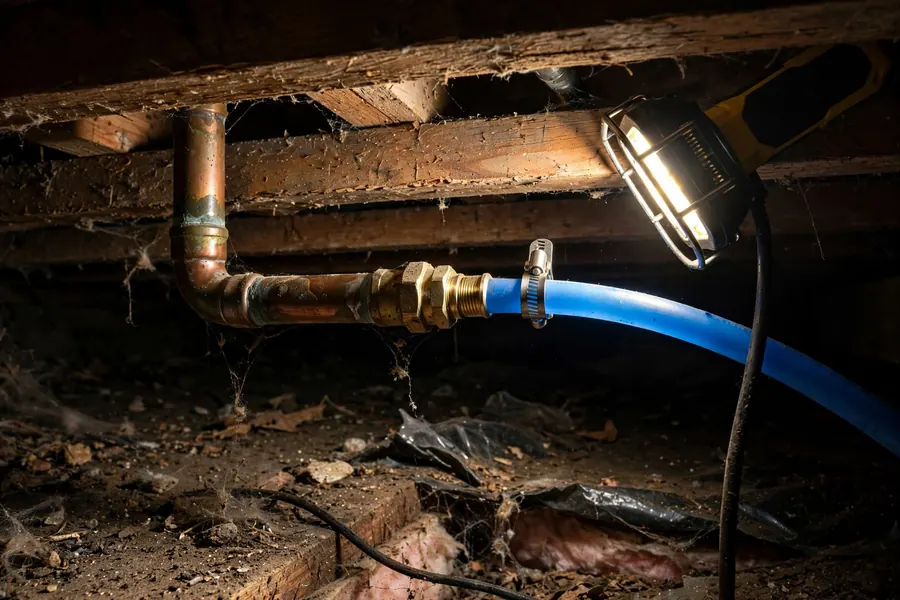
Once we’re inside a Windermere ranch, we’re looking at a different kind of age story. Many of these homes were built with copper supply lines, and over the years, bathrooms get remodeled, sections get repiped, and PEX tubing gets tied into the old copper. Those transition joints, copper on one side, PEX on the other, are perfectly good when done right. The trouble is that “done right” varies a lot across decades of handyman-era remodels.
We find these transitions in crawl spaces, inside wall cavities, and above ceilings, and when a leak shows up nearby, the joint is always worth a hard look. A weeping transition fitting can drip for weeks inside a wall before anything shows, and by then the drywall is soft and the floor plate is damp. While we’re tracing it, we also check the fixture shutoff valves; originals from this era often won’t seal fully after decades untouched. The fix is usually straightforward once you know where it is. Knowing where it is, that’s the hard part, and it’s what pipe leak detection is for.
The same outside-in thinking applies if you’re elsewhere in town. Our Columbia, TN page lays out how the city’s different eras fail differently.
What Windermere Homeowners Should Watch For
- Gurgling or slow drains, especially after rain. Roots in the lateral are the classic Windermere cause, and a camera inspection settles it.
- A soggy strip between the house and the street. That’s the path of the lateral and the service line. Mark where it is; it helps us.
- A water bill that climbs with no visible water. Pressurized lines don’t care about visibility. The meter check with everything off is step one.
- Stains or soft drywall near a remodeled bathroom, since older remodels may have copper-to-PEX transitions inside the wall. Worth investigating before it grows.
- A big tree directly over buried lines, you don’t need to cut it down. But if symptoms point underground, tell us which tree is where.
Windermere Leak Detection FAQs
Can tree roots really break my water or sewer line?
They don’t usually break a healthy line, but roots are relentless about finding moisture. They work into joints, seams, and tiny cracks in older sewer laterals, and once inside they grow and widen the opening. In Windermere, with its mature canopy, we see this pattern often enough to check the lateral early when symptoms point that way. A camera inspection tells the real story before anyone digs.
My drains gurgle and the yard is soggy. Is that a sewer lateral problem?
It could be. Gurgling drains, slow fixtures, and a soggy patch between the house and the street are the classic lateral symptoms. Roots near older clay or cast iron laterals are the usual suspect in Windermere, but a settled or cracked section of pipe can do the same thing. Our sewer leak detection service traces where the lateral is failing so repairs target the right section.
What is a copper-to-PEX transition, and why does it leak?
When a home’s plumbing gets partially repiped, the new PEX tubing ties into the old copper somewhere, and that junction is a transition fitting. The fitting itself is fine when it’s done right, but transitions done years ago, or done poorly during a remodel, can weep or fail. In Windermere ranches that have been updated in stages, we find these joints in crawl spaces and wall cavities, and they’re worth checking whenever a leak shows up nearby.
There’s a big oak right over my water service line. Should I worry?
Worry is too strong a word, but it’s worth watching. Water service lines are pressurized and generally hold up better against roots than sewer laterals, but older service lines in shifting clay soil can develop weak spots. If your water bill climbs and the meter moves with everything off, call us. We’ll trace the line and tell you whether the tree is involved or the line simply failed on its own.
Do you serve the streets between Sunnyside and Graymere?
Yes. Windermere sits right between Sunnyside and Graymere, and we cover the whole pocket, plus the rest of Columbia. If you’re not sure which neighborhood you’re in, it doesn’t matter. Tell us your street when you call and we’ll take it from there.
Windermere Leak? Call (931) 800-6431
Gurgling drains, soggy ground, a climbing bill, or a stain near a remodel. We’ll work it outside-in and tell you exactly what we find.