Your Pool's Losing Water Faster Than the Sun Can Explain
Every pool loses some water to evaporation, especially in a Tennessee summer. But when you're adding water every few days just to keep the level up, something's leaking. We pressure-test the pool's plumbing and equipment to find whether it's the lines, the skimmer, or the structure.
Hear water? See a stain? Bill climbing?
Those are the three signs we hear about most. Call and describe yours, and we'll point you at the right next step.
Evaporation or leak? The bucket test settles it
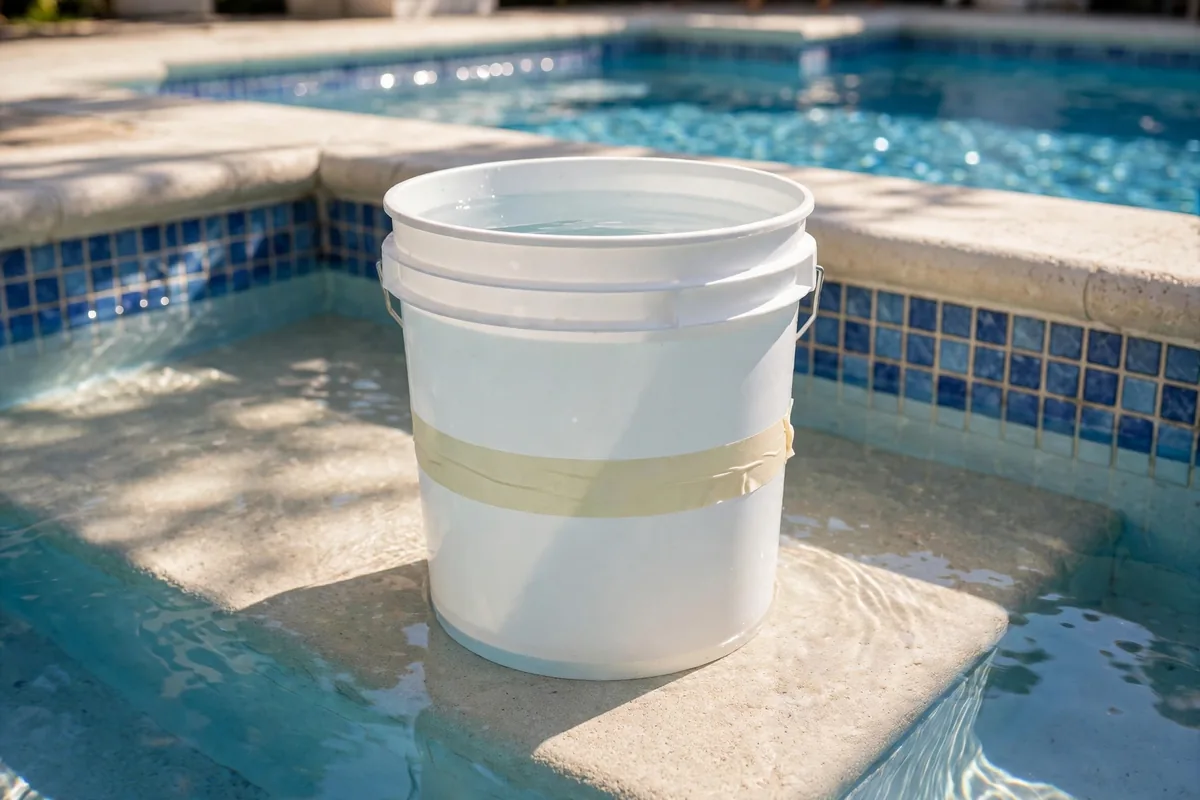
Before anything else, you need to know whether the water loss is actually a leak. Pools in Middle Tennessee can lose a noticeable amount to evaporation in July and August, and wind makes it worse. The bucket test is the standard DIY check: fill a bucket with pool water, set it on a pool step so the water levels inside and outside the bucket match, mark both levels, and wait 24 hours with the pump running normally. If the pool level drops more than the bucket level, water is leaving through a leak, not the air.
Run the test with the pump on for a day, then with the pump off for a day. If the pool loses more with the pump running, the leak is likely in the pressurized plumbing or equipment. If it loses the same either way, suspect the structure: the skimmer throat, the liner or shell, or a fitting. That one distinction tells us where to focus.
Where pool plumbing actually leaks
A pool's plumbing is a small underground network: skimmer lines, main drain lines, return lines, and the equipment pad connections for the pump, filter, and heater. The joints are the weak points, especially where pipes meet the skimmer body or where winter freeze expansion stressed a fitting. In our area, pools that weren't fully winterized before a hard freeze are prime candidates for cracked lines that show up the following spring.
The skimmer itself deserves special attention. The joint where the skimmer meets the pool wall flexes with every season, and the throat can develop cracks that leak steadily. A pool that loses water down to the bottom of the skimmer mouth and then stabilizes is practically pointing at the skimmer. That's one of the most useful observations you can make before calling.
Pressure testing the lines
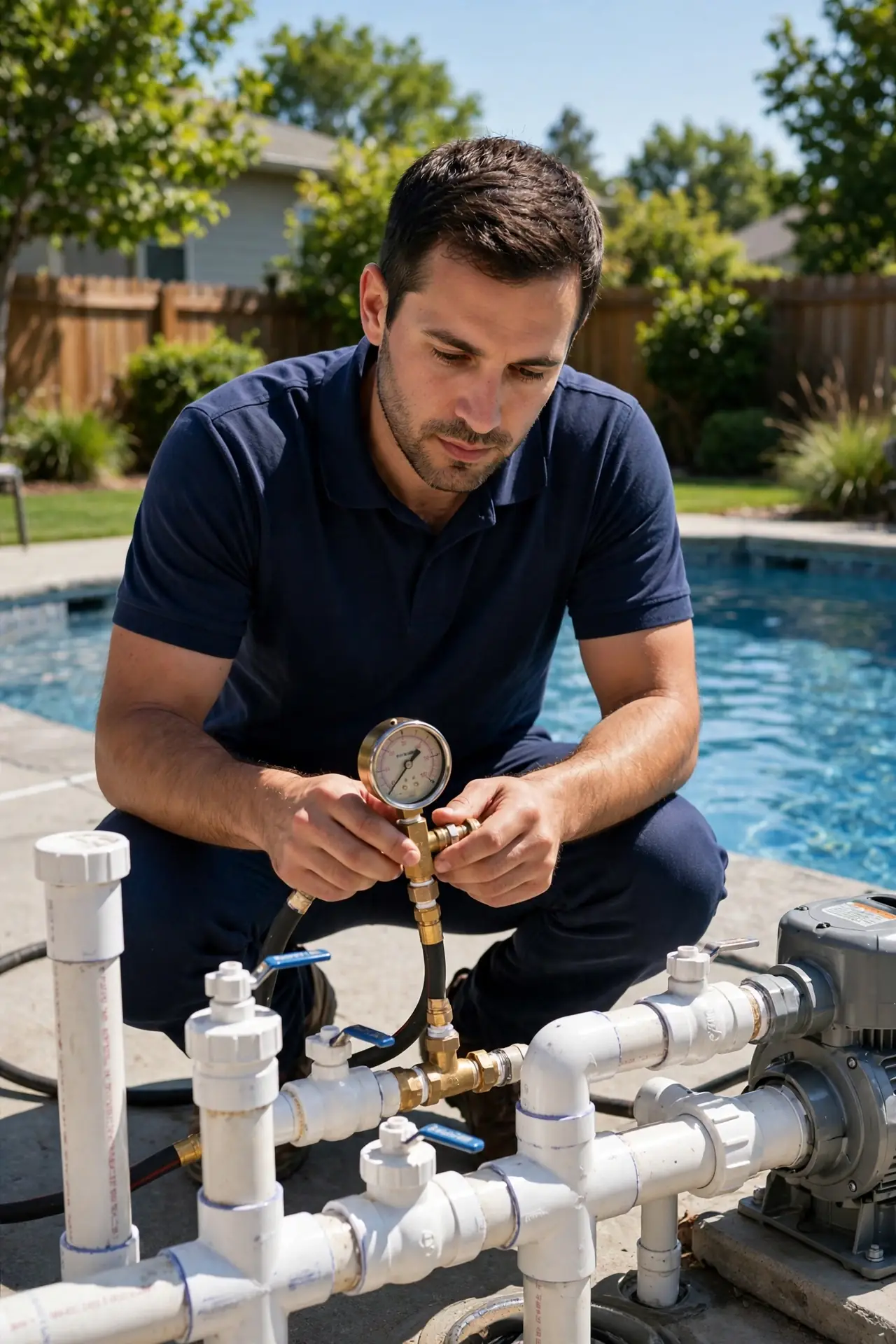
Pool plumbing is made for pressure testing. We isolate each line, skimmer, main drain, returns, one at a time, pressurize it, and watch the gauge. A line that holds pressure is clear. A line that bleeds off has a break, and the rate of loss hints at the size. This is methodical work: test, record, move to the next line, until every run is either cleared or flagged.
For lines that fail the pressure test, listening equipment at the surface can sometimes pick up the escaping air or water, narrowing down where along the run the break sits. The goal is the same as every other service: mark the spot so the repair digs in one place, not along the whole pipe run.
The equipment pad check
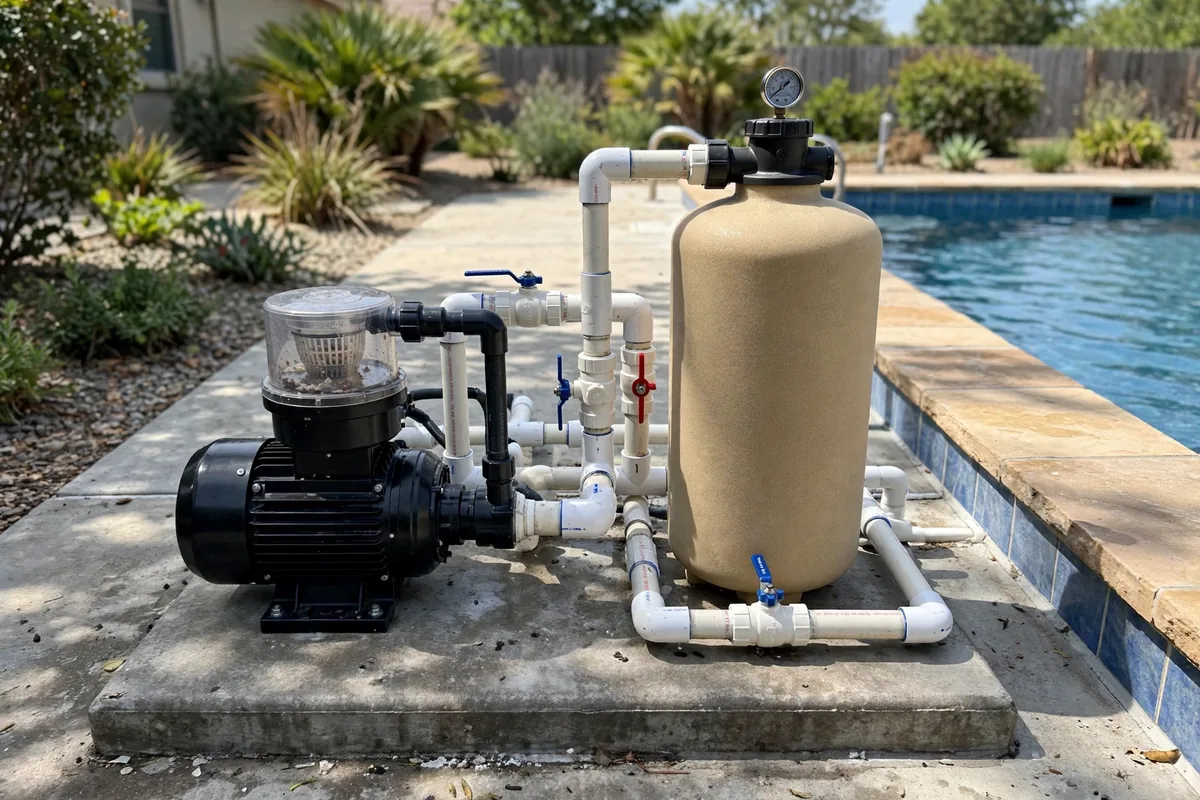
Don't overlook the equipment. The pump, filter, heater, and all their unions and valves sit above ground and leak visibly, but people stop seeing them because they're always a little damp. We check every union, the pump seal, the filter's drain plugs and pressure gauge port, and the heater connections while the system runs. An equipment-pad leak is the best kind: visible, accessible, and usually a gasket or a union away from fixed.
Multiport valves on sand and DE filters are a quiet culprit. A worn spider gasket inside the valve sends water to waste or backwash continuously, and the pool loses water with the pump running while everything looks normal. If your waste line is dribbling with the valve on filter, that's worth knowing.
Pools in Maury County
Backyard pools are common in Columbia's subdivisions, and the local clay soil shifts with the wet-dry cycle, stressing buried pool plumbing at the joints. Pools that weren't fully winterized before a hard freeze are the ones we hear about most each spring. Pool leak detection is available across our Columbia service area.
What you get from the visit
A line-by-line pressure test record, the skimmer and structural checks, the equipment pad inspection, and a clear statement of where the water is going. If the plumbing tests clean and the loss is structural, we'll say so and you can talk to a pool contractor about the shell or liner. If it's a line, you get the marked location for the repair dig. Either way, the bucket-filling ends with a diagnosis.
Common Questions
How much water loss is normal for a pool?
In a Tennessee summer, some evaporation is normal, and wind increases it. The bucket test is the way to know: if the pool drops more than the bucket over 24 hours, it's a leak, not evaporation. Consistently adding water every few days to maintain the level is beyond normal.
What is the bucket test and how do I do it?
Fill a bucket with pool water, set it on a pool step, match the inside and outside water levels, mark both, and wait 24 hours. If the pool level falls more than the bucket level, water is leaking out. Run it once with the pump on and once with it off: more loss with the pump running points to the plumbing.
My pool drops to the skimmer level and stops. What does that mean?
That pattern strongly suggests the skimmer throat or its joint with the pool wall. Water leaks out until it falls below the leak point, then stabilizes. It's one of the most diagnostic observations you can make, so mention it when you call.
Can you find a leak in underground pool plumbing?
Yes. We pressure-test each line individually to find which one fails, then narrow down the break's location along that run. The repair dig happens at the marked spot, not along the entire pipe.
Could the leak be the equipment instead of the pipes?
It could, and we check that first because it's the easy answer. Pump seals, filter unions, heater connections, and multiport valve gaskets all leak visibly once you know where to look. An equipment leak is usually a quick fix.
Related Leak Detection Services
Water Leak Detection
The general visit: we work the whole property and narrow the mystery to a source.
Learn moreIrrigation Leak Detection
Mushy zones and weeping valves located zone by zone.
Learn moreUnderground Leak Detection
Buried lines between meter and house: soggy yard, green strips, spinning meter.
Learn more
Let's pin down that leak.
Describe the symptom on the phone and we'll show up with a plan, not a hunch.