Leak Detection in Columbia, TN
A damp patch on the drywall. A water bill that jumped for no reason. A warm spot on the floor that wasn't there last month. If water's going somewhere it shouldn't, we'll track it down. Leak Fix Experts finds hidden leaks for homeowners and businesses across Columbia and Maury County, so you can fix the actual problem instead of opening up walls on a hunch.
- Non-invasive methods first
- Findings explained in plain terms
- Focused on Columbia & Maury County
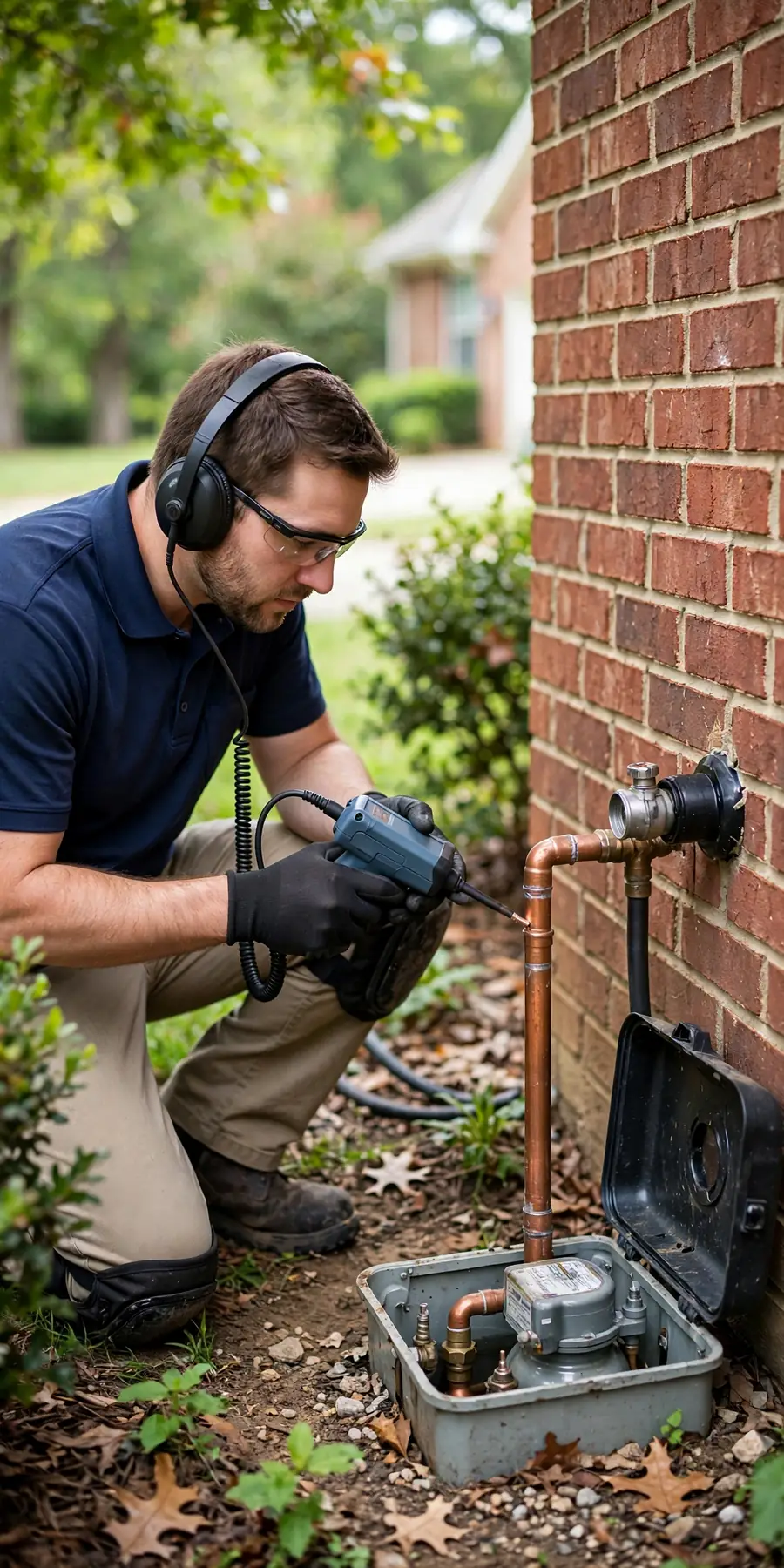
What type of leak are you dealing with?
Tap the symptom closest to what you're seeing. We'll point you toward the service page that covers it best.
This points you to a starting place, not a diagnosis. Water travels, and what looks like a roof leak can turn out to be a pipe two rooms away.
Spotted a warning sign? Let’s find the source.
Most leaks are located in a single visit. Call now and tell us what you’re seeing.
Leak Detection Services in Columbia, TN
One specialty, done properly: finding leaks. Every service below starts with the same goal, pinpoint the source so the repair that follows is as small as possible.
Water Leak Detection
Suspect water's getting out somewhere but can't tell where? Our general detection visit covers the property and narrows it down.
Learn moreSlab Leak Detection
Warm spots, damp carpet edges, or the sound of water under a slab foundation. We trace slab leaks without tearing up the whole floor.
Learn moreUnderground Leak Detection
For lines between the meter and the house: soggy ground, greener grass strips, or a meter that spins with everything shut off.
Learn morePipe Leak Detection
Copper, PEX, or older lines inside walls and ceilings. Acoustic listening and pressure testing narrow down the run.
Learn moreSewer Leak Detection
Sewer odors, soggy patches, or drains that gurgle. We trace where the sewer line is failing before excavation gets planned.
Learn moreHidden Leak Detection
The catch-all: no visible water, just the symptoms. Meter checks, thermal scans, and moisture mapping across the property.
Learn moreDrain Pipe Leak Detection
Leaks in drain and waste lines that only show when water's running, under sinks, tubs, and laundry standpipes.
Learn moreToilet Leak Detection
A toilet that refills on its own or seeps at the base. Dye and pressure checks tell whether it's the tank, the seal, or the flange.
Learn moreFaucet & Fixture Leak Detection
Drips inside walls from shower valves and faucet bodies that stain cabinets and swell baseboards before anyone notices.
Learn moreBathroom Leak Detection
Showers, tubs, and tile floors. We sort out whether the water's coming from the supply, the drain, or failed grout and caulk.
Learn moreKitchen Plumbing Leak Detection
Under-sink cabinets, dishwasher lines, and ice-maker feeds. The slow drips that ruin cabinets long before they're spotted.
Learn moreCeiling & Wall Leak Detection
Stains, bubbling paint, and soft drywall. Moisture mapping traces the water back to its source before repairs begin.
Learn morePool Plumbing Leak Detection
Pool losing more than evaporation accounts for? Pressure testing the plumbing and skimmer lines isolates the loss.
Learn moreIrrigation Leak Detection
Mushy zones, misting heads, or a valve box that never dries out. We locate breaks in irrigation lines and sprinkler heads.
Learn moreWater Line Leak Detection
The main service line from meter to house. Pressure drops, high bills, and wet soil point us toward the break.
Learn moreCommercial Leak Detection
Offices, retail, restaurants, and multi-unit buildings. Scheduled detection work planned around your business, with minimal disruption.
Learn moreEmergency Leak Detection
Active water coming in and you can't wait. Call and we'll prioritize getting someone out to find the source fast.
Learn more
10 Signs You Might Have a Leak
Most leaks don't announce themselves. These are the quiet signals homeowners in Columbia call us about most often.
1. Your water bill climbs for no reason
Same habits, bigger bill. That's one of the most common first clues of a hidden leak.
2. The meter moves with everything off
Shut off every tap and appliance, then watch the meter. Movement means water's going somewhere, often an underground or hidden line.
3. A warm spot on the floor
Hot water lines run under slab foundations. A floor patch that feels warm underfoot is a classic slab leak sign.
4. A musty or mildew smell
That damp-closet smell in a room with no visible water usually means moisture behind drywall or under flooring.
5. Stains on ceilings or walls
Brown rings, bubbling paint, or soft spots. Water travels, so the stain marks where it landed, not always where it started. Moisture mapping traces it back.
6. The sound of running water
Hearing water move when every tap is closed is worth investigating. Acoustic listening can tell whether it's a supply line.
7. Soggy patches in the yard
A soft spot that never dries, or grass that grows faster in one strip, can mean a broken underground line.
8. Low water pressure
Pressure that drops across the house can mean the main water line is losing water before it reaches you.
9. A toilet that refills between flushes
If you hear the tank refilling when nobody used it, water's escaping. Dye testing finds where.
10. Water pooling near the foundation
Standing water against the house after dry weather can point to a failing service line or drainage leak.
How Leak Detection Works
No tearing into walls to "take a look." Detection is a methodical process: rule things out, narrow the area, then pinpoint the source. Here's what a visit looks like.
You describe the symptoms
A quick call about what you're seeing, hearing, or smelling. That's the starting point.
A few questions
When it started, where it shows up, whether the bill changed. Small details point the search in the right direction.
The meter check
With everything off, the meter tells us whether water is actually moving through the system.
Visual inspection
Attic, crawlspace, under sinks, around the water heater. Sometimes the answer is sitting in plain sight.
Choosing the methods
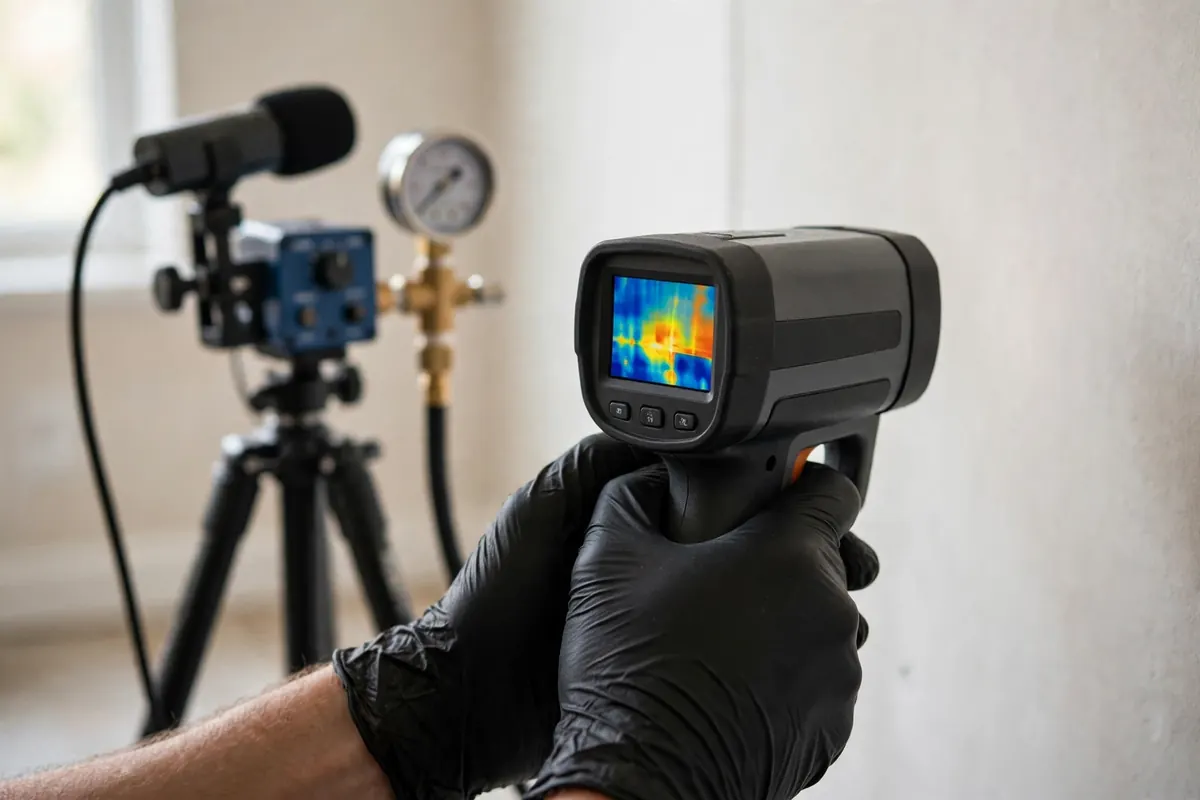
Acoustic listening, thermal imaging, tracer gas, or pressure testing, methods commonly used in the trade, matched to your situation.
Scanning and tracing
Systematic sweeps across the suspect areas, following the evidence instead of guessing.
Pinpointing the source
Narrowing it down to the pipe, joint, or section of line where the water is actually escaping.
Findings in plain language
What we found, where it is, and what it means. No jargon, no scare tactics.
Clear next steps
A marked location and written findings your plumber or contractor can take straight to the repair.
Homes and Businesses in Columbia
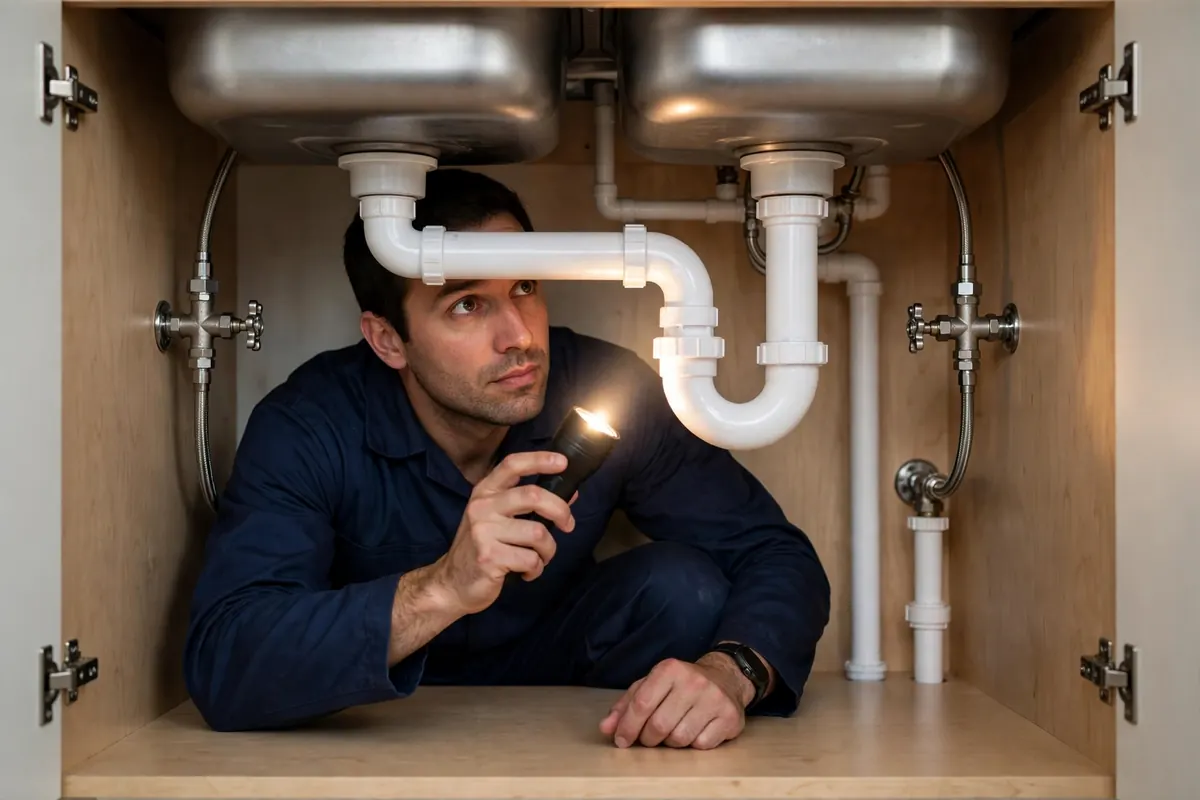
Residential Leak Detection
Slab foundations, crawlspaces, older brick homes near downtown and newer builds out toward the bypass. Most house calls wrap up in an hour or two, and you'll know exactly where the water's coming from before any repair work starts.
For homeowners
Commercial Leak Detection
Retail spaces, offices, restaurants, and multi-unit buildings around Columbia. Detection work is scheduled around your business day so a leak hunt doesn't shut down your operation.
For businessesBuilt for Maury County Homes
Columbia sits in Maury County along the Duck River, and the 38401 and 38402 ZIPs cover everything from historic homes near downtown to newer subdivisions off the bypass. The clay soil here holds moisture long after the heavy rains that roll through our humid summers, which keeps crawlspaces and slabs damp. That's exactly the kind of environment where a small leak can run for months unnoticed.
Then winter brings its own risk. A hard freeze in January can split an exposed hose bib or an uninsulated line in an older garage, and the leak may not show itself until weeks later as a stain on the ceiling or a spike on the bill. We see both patterns every year, from the farmhouses outside town toward Mt. Pleasant and Lewisburg to the neighborhoods around Columbia State Community College and Maury Regional Medical Center, and down the road toward Spring Hill and Chapel Hill.
The town that hosts Mule Day every spring is full of homes with real character, and older plumbing to match. Knowing which neighborhoods tend to have which pipe materials, and how the local soil and weather treat them, is part of finding leaks faster.
Serving Columbia & Nearby Communities
Based in Columbia, TN. We come to you anywhere in our service area.
See all service areasLeak Detection Questions, Answered
How do you find a leak without tearing my house apart?
Non-invasive methods come first. Depending on the situation we use acoustic listening to hear pressurized leaks, thermal imaging to spot temperature differences from moisture, tracer gas or pressure testing to isolate a line, all methods commonly used in the trade. Cutting into a wall or floor is a last step, and only happens with your go-ahead.
My water bill doubled but I don't see any water. What could be happening?
A few usual suspects: an underground supply line break, a slab leak soaking into the soil, a toilet that runs silently, or an irrigation zone stuck on. The first thing we'd do is a meter check with everything off. If the meter's moving, water is leaving the system somewhere, and the hunt begins from there.
How long does a leak detection visit take?
Most straightforward house calls wrap up in an hour or two. A larger property, a commercial building, or a genuinely tricky leak takes longer. We'll give you a realistic expectation on the phone once you describe what you're dealing with.
Can you find a leak under a concrete slab?
Yes, that's a common call for us. Warm spots on the floor, the sound of running water when everything's off, damp carpet edges, or a hot water bill that never makes sense are the usual signs. Slab leak detection uses listening equipment and thermal imaging to trace the line under the concrete.
What should I do before you arrive?
Clear access to the water heater, the main shutoff, the meter if it's on your property, and under-sink cabinets in the suspect areas. Note when you first noticed the problem and take photos of any stains, meters, or wet spots if you can do it safely. That heads-up saves real time on site.
Do you repair the leak once you find it?
We're a detection-first service. Our job is to pinpoint exactly where the leak is and explain the findings in plain language, so your plumber or contractor can go straight to the repair without exploratory demolition. You'll get a marked location and findings you can hand to whoever does the fix.
Think you've got a leak? Let's find it.
The longer a leak runs, the bigger the repair bill gets. One call, and we'll start narrowing it down.