No Visible Water, But Something's Wrong. That's Our Specialty
This is the catch-all visit for leaks with no obvious source: the bill that climbed, the musty smell, the meter that moves with everything off. We work the whole property with meter checks, thermal scans, and moisture mapping until the picture makes sense.
Hear water? See a stain? Bill climbing?
Those are the three signs we hear about most. Call and describe yours, and we'll point you at the right next step.
The leaks that don't show themselves
Most leak calls start with something visible: a stain, a puddle, a drip. Hidden leak calls start with a feeling that something's off. The water bill is up thirty percent and nobody changed anything. There's a musty smell in the guest room that air freshener won't fix. You hear water running at 2 a.m. and every tap is dry. Or the floor feels different in one spot and you can't explain why.
These are the hardest leaks for a homeowner to deal with alone, because there's nothing to point a plumber at. "Somewhere in my house, water is going somewhere" isn't a work order. Our job on a hidden leak visit is to turn that vague worry into a specific location, or to prove there's no leak at all, which is also a valuable answer. If you're not sure what you're seeing even counts, browse the common leak symptoms first.
We start by proving it's real
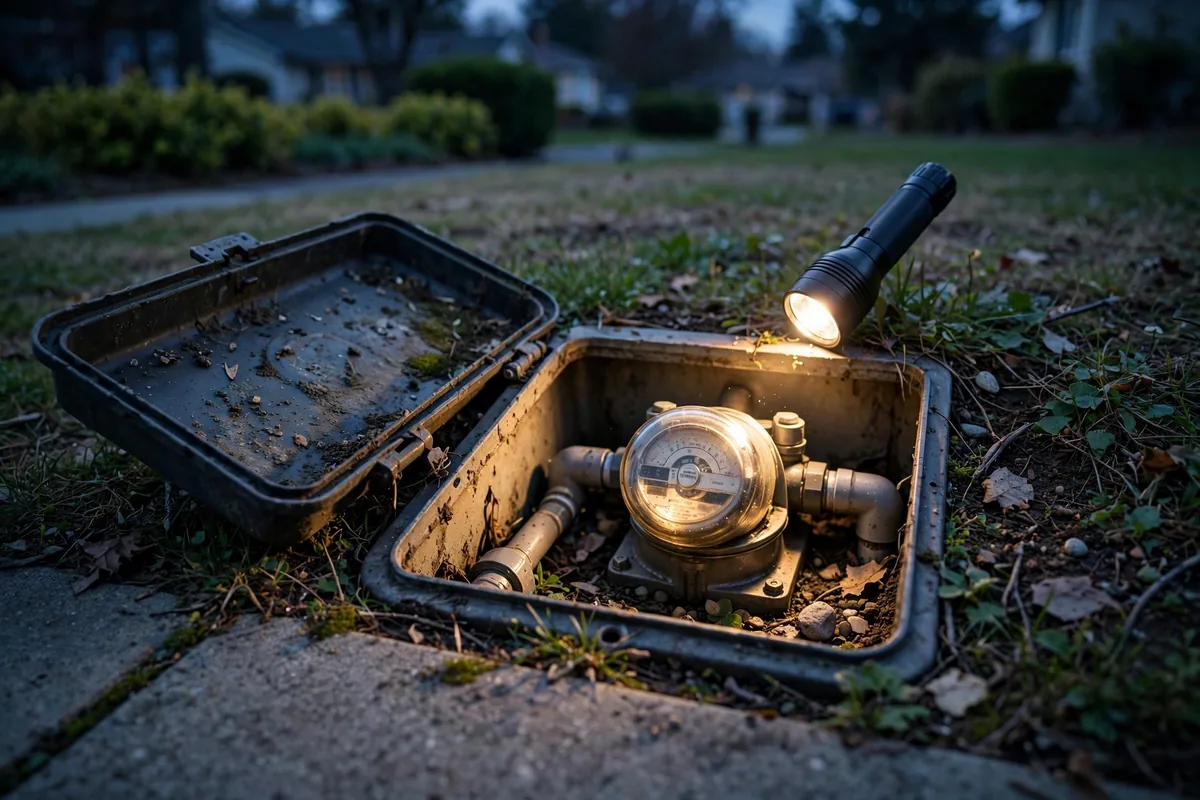
Before any equipment comes out, we confirm there's actually a leak. The meter check with everything off is step one, and it's remarkably decisive. A meter that sits still means no water is leaving the system, and then the conversation shifts to other explanations: a billing issue, a one-time usage spike, a toilet that ran for a weekend and stopped. We'd rather tell you there's no leak than sell you a search.
If the meter is moving, the leak is real and the hunt is on. The main-valve isolation test splits the world in two: house side or service-line side. From there, hot side or cold side. Supply or drain. Each split halves the search area, and we keep splitting until we're working a specific zone of the house.
Mapping moisture like a detective
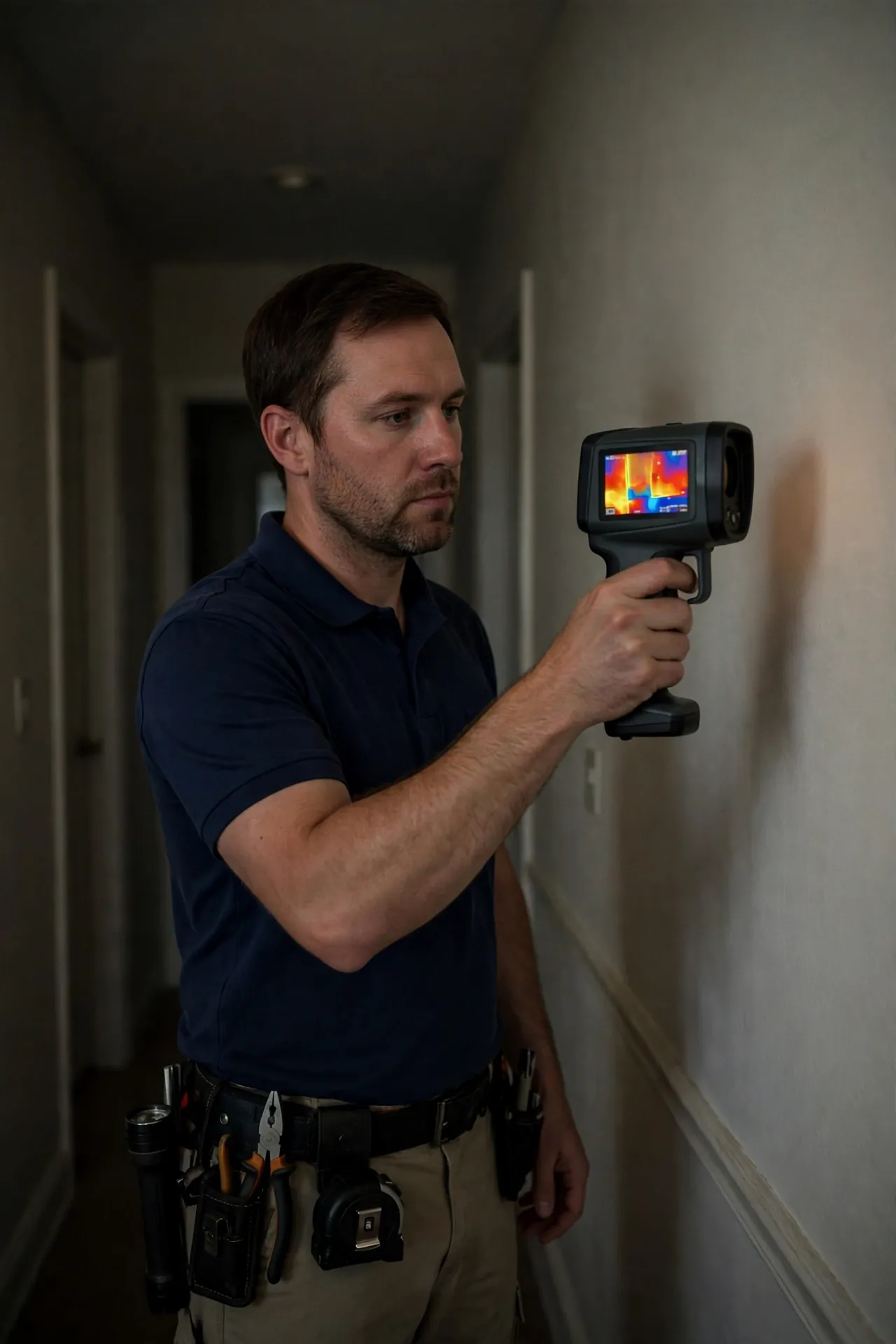
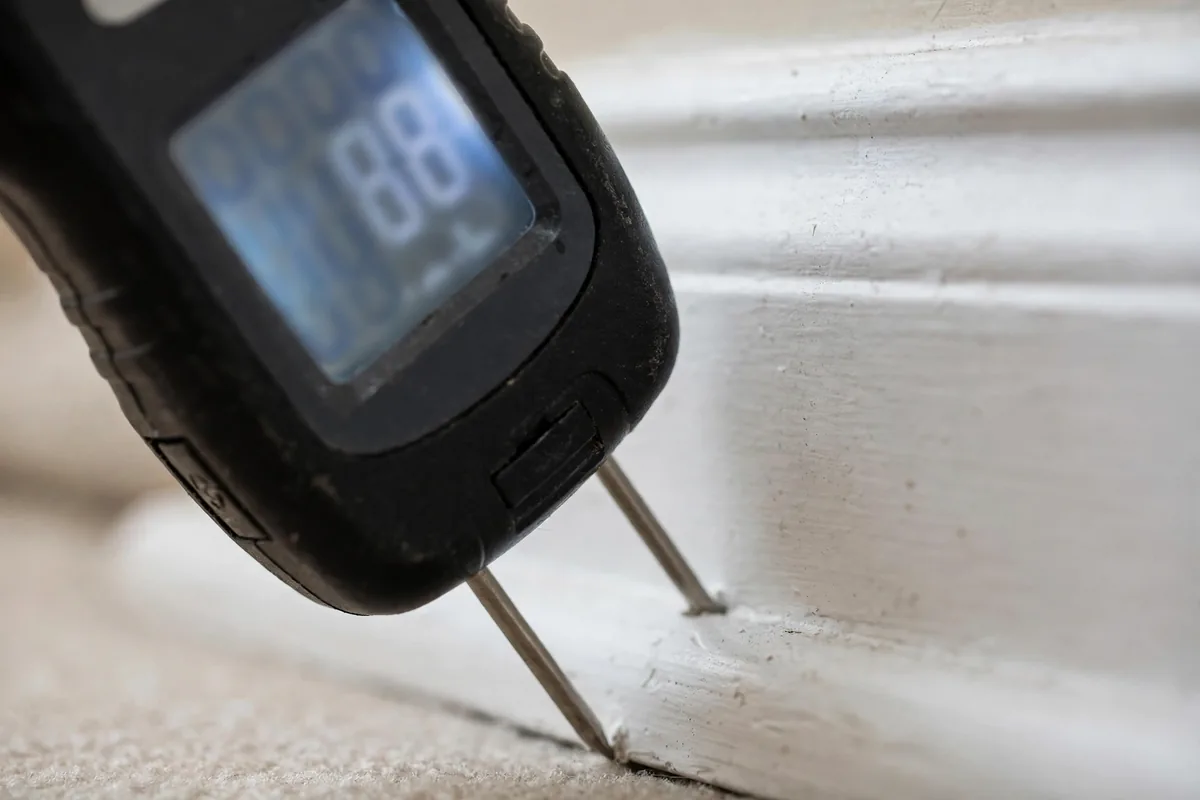
Once we know the general area, moisture mapping begins. A thermal imaging camera sweeps walls, ceilings, and floors looking for temperature differences: cool patches where moisture has spread, warm patches where a hot line runs under a slab. A pin or pinless moisture meter then quantifies what the camera suggests, giving actual readings at the baseboards, around fixtures, and along suspect runs.
The pattern matters more than any single reading. Moisture that's highest at the floor and fades as you go up suggests a slab or low supply leak. A cool patch in a ceiling below a bathroom points up. A damp line following a wall suggests a pipe run inside it. Reading the pattern is the skill; the tools just make the invisible visible.
Why hidden leaks love humid climates
Middle Tennessee's humid summers are camouflage for slow leaks. When the air is already damp, a musty smell doesn't stand out, condensation on cold pipes looks normal, and moisture behind drywall dries slowly enough that it never quite announces itself. A slow leak that would be obvious in a dry climate can hide here for a season or more.
Winter adds its own hidden-leak season. Pipes in crawlspaces, attics, and exterior walls can develop slow freeze splits that weep just enough to dampen insulation. Come spring, the homeowner notices a stain or a smell and the leak is already months old. If your mystery symptoms started after a cold snap, say so when you call. It changes where we look first. We run hidden-leak visits all across Columbia and Maury County.
What "no leak found" looks like
Sometimes the honest result is that there's no active leak. Maybe the meter sits still, the thermal scan is clean, and moisture readings are normal everywhere. When that happens, we say so and talk through what else could explain the symptoms: a past leak that's since been fixed, condensation issues, a drainage or grading problem rather than a plumbing leak, or an irrigation issue. You still get the full notes from the visit, and you haven't paid for a repair you didn't need.
And when there is a leak, you get what every one of our visits produces: a marked location, the confirmation method, and findings your plumber or contractor can act on without exploratory demolition. The mystery ends either way.
Common Questions
My bill is high but I can't find any leak. Where do we start?
With the meter. Everything off, watch the leak-indicator triangle. If it moves, water is leaving the system and the leak is real. If it doesn't, we look at other explanations like a billing error or past usage. Either way you get an answer, not a shrug.
Can a leak really hide with zero visible signs?
Easily. Water inside a wall cavity, under a slab, or in a buried line can run for months without surfacing. It soaks into framing, soil, or insulation instead. That's why the meter and moisture mapping matter more than eyeballing it.
How do you check a whole house for a hidden leak?
Systematically: meter check, isolation tests to split the house into zones, then thermal scanning and moisture-meter readings across the suspect areas. We narrow from the whole property down to a spot, ruling out zones as we go.
What if you don't find anything?
Then we tell you that, with the readings to back it up. No leak found is a real result, and we'll talk through other possible causes for what you're seeing, like condensation, drainage, or irrigation issues.
Is a musty smell always a leak?
No. Poor ventilation, high indoor humidity, or a past leak that's already dried can all cause musty odors. But a musty smell in one specific area with no obvious cause is worth checking with a moisture meter, because hidden moisture is the most common reason.
Related Leak Detection Services
Water Leak Detection
The general visit: we work the whole property and narrow the mystery to a source.
Learn moreCeiling & Wall Leak Detection
Stains and damp drywall traced back to the source with moisture mapping.
Learn moreSlab Leak Detection
Warm floor spots and water sounds under the slab, traced without tearing up floors.
Learn more
Ready to stop guessing?
One visit is usually all it takes to turn a mystery into a marked spot. Call and we'll take it from there.