Leak Detection in Tall Trees Estates
Tall Trees Estates is exactly what the name says: an established subdivision where the landscaping has had decades to grow into itself. In this neighborhood, the yard isn’t scenery around the plumbing. The yard is where most of the plumbing lives.
The Service Line Runs Under All of This
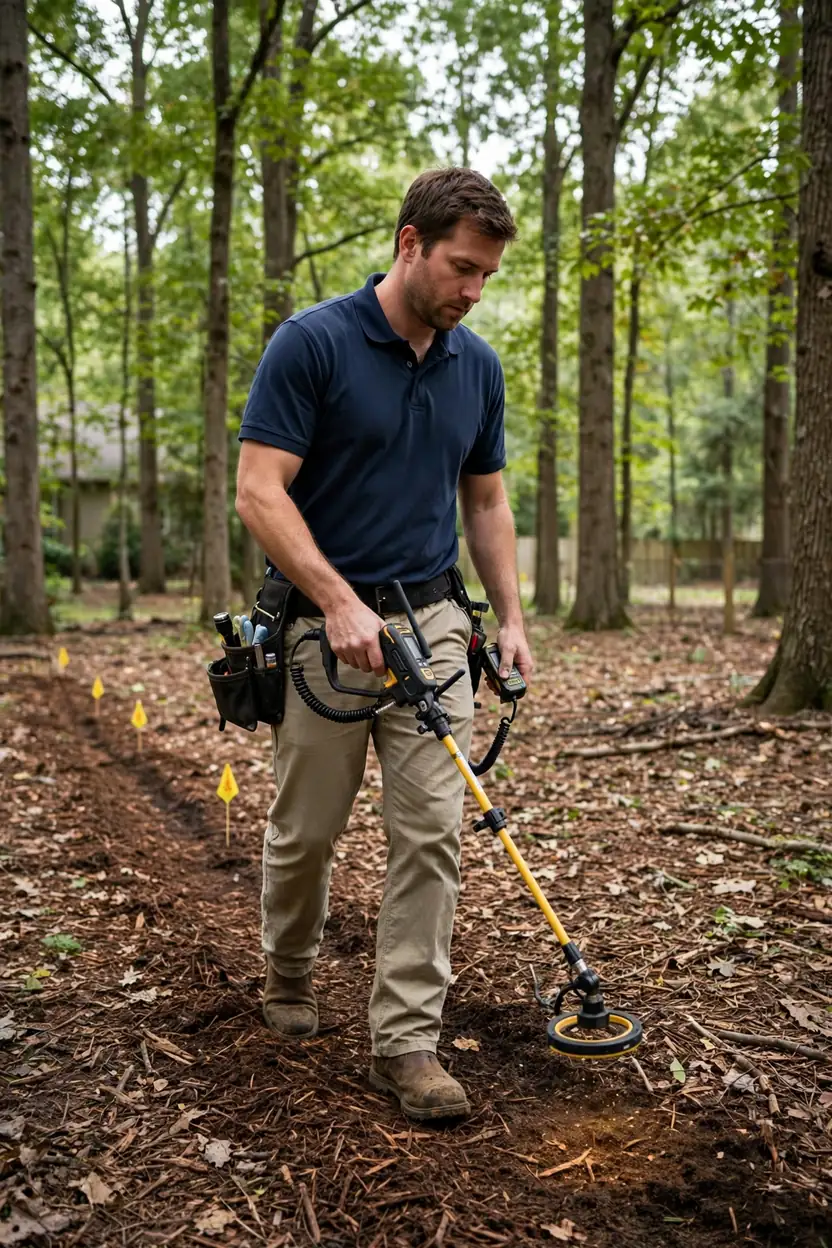
Start at the street and walk toward the house. Somewhere under that lawn, maybe under a mulched bed or a walkway, your water service line runs from the meter to the house. On lots that sit back from the road, that’s a long run of pipe under mature landscaping, in Maury County clay that swells and shrinks with the seasons.
Longer runs mean more joints and more ground movement to absorb, which is why service-line leaks are the Tall Trees Estates pattern. The symptoms: a water bill that climbs with no change in usage, a meter that spins with everything shut off, or a strip of lawn that stays greener or softer than the rest. That’s the call we get most from this neighborhood, and the service line is usually where the story ends. If you spot a suspicious patch, remember where it is and tell us when you call. That detail genuinely helps. One distinction that matters: this is the pressurized supply side, not the sewer lateral. A sewer problem won’t move the meter; a supply leak will.
We trace these with acoustic listening along the full route, narrowing the break to a small area before anyone plans an excavation. Our water line leak detection page covers the method, and underground leak detection covers the broader category.
A small leak found now beats a big repair later.
The earlier we catch it, the smaller the fix stays. Call and tell us what's going on.

Old Irrigation Under Decades of Landscaping
Tall Trees Estates yards are layered: beds, paths, ground cover, plantings added over thirty years. The irrigation underneath is usually just as old, and here's the part nobody talks about: on lots like these, nobody knows exactly where the lines run anymore. The original installer is long gone, the heads have been buried under mulch and pine straw, and tree roots have spent decades negotiating with every lateral line in the yard.
That makes irrigation leaks here an archaeology problem first and a plumbing problem second. The bill spikes in summer while the yard looks perfect, because the leak is feeding the grass through the mulch. A zone that weeps in October, when nothing should be running, has a valve that won't close. And spring startup is the annual reveal: the first pressurization of the year shows what the winter did to lines nobody winterized. Walk every zone on that first spring run, because a zone that won't build pressure is telling you where the winter won.
When the zone walk doesn't turn up an obvious head or valve box, that's when irrigation leak detection earns its keep: isolating zones and locating the break under all that landscaping before any digging starts, so the repair hole stays small and the beds survive.
The Tall Trees Leak Calendar
Leaks here follow the property's rhythm more than the plumbing's. Spring is startup season: the first pressurization reveals what winter did to lines nobody remembers winterizing. Summer is when the big lots cost you: a stuck valve on a large property can run thousands of gallons a month while the landscaping drinks the evidence. Fall is shutdown season, drain what's drainable and make sure zones aren't weeping, because a freeze snap will split any line with water left in it and the spring repair costs far more than the fall prevention. And winter is when the service line earns suspicion: if the bill jumps after a hard freeze, the long run from the street is the first place we'd look.
Is It the Yard or the House?
Before you call anyone, this two-minute test tells you where the leak lives:
- Shut off every fixture in the house and turn off the irrigation at the controller.
- Watch your water meter for a few minutes. If it’s moving, water is leaving the system.
- Now shut off the main valve where the service line enters the house. If the meter stops, the leak is inside. If it keeps moving, it’s in the yard.
That single fork decides the whole job. Inside means hidden leak detection. Yard means underground or irrigation detection. Tell us which side of the fork you landed on when you call, and we’ll bring the right equipment the first time. For the rest of the city, our Columbia, TN page covers how other neighborhoods fail differently.
Tall Trees Estates Leak Detection FAQs
My Tall Trees Estates water bill spiked in summer. Is it the irrigation?
Very possibly. Summer is when irrigation systems run the most, and it’s also when leaks in those systems cost the most. A stuck zone valve, a broken head below grade, or a cracked lateral line can run thousands of gallons a month without any visible sign. Walk each zone while it runs and look for soggy ground, misting heads, and valve boxes full of water. If everything looks fine and the bill is still high, our irrigation leak detection service traces the break without digging up the yard.
How long can a service line run in Tall Trees Estates?
It depends on the lot. Some homes sit well back from the street, which means the water service line is a long run under mature landscaping. Longer runs mean more pipe, more joints, and more ground that can shift. We can’t give you a number without seeing your lot, but when we trace a service line here, we expect a long path and we plan for it with acoustic listening along the full route.
Will you damage my landscaping to find a leak?
That’s exactly what non-invasive detection is designed to avoid. We locate underground breaks with acoustic listening and pressure testing before any digging happens, so the repair excavation is a small, targeted hole, not a trench across the yard. Mature landscaping is the reason for the method, not a casualty of it.
Should I shut off my irrigation in winter?
Yes, and drain the system if it’s not self-draining. A Columbia freeze snap will find any water left in an irrigation line, and the split shows up in spring as a zone that won’t pressurize or a valve box full of water. Winterizing the irrigation is cheap; repairing a freeze-split lateral under a landscaped bed is not.
How do I tell if my leak is underground or in the house?
The meter test settles it. Shut off every fixture and the irrigation, then watch the meter. If it’s moving, water is leaving the system. Then shut off the main valve where the service line enters the house: if the meter stops, the leak is inside; if it keeps moving, it’s in the yard. That’s the fork in the road between an inside detection visit and an underground one.
Tall Trees Estates Leak? Call (931) 800-6431
Climbing bill, soggy patch, zone that won’t pressurize. We’ll find it in the yard without tearing up the yard.