Something's Leaking Under Your Yard. Let's Find the Exact Spot
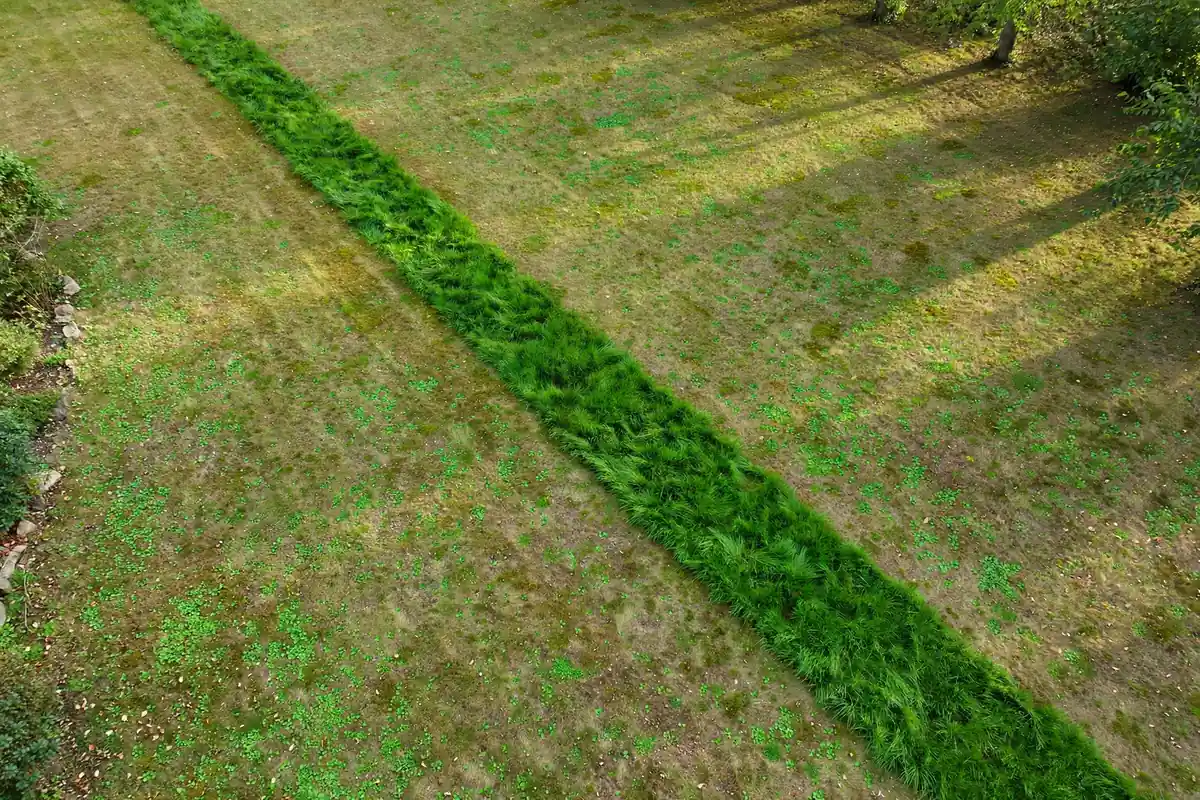
The line between your water meter and your house is out of sight, and when it breaks, the water often never surfaces where you'd expect. Soggy ground, a suspiciously green strip of grass, or a meter that won't sit still are the usual tells. We trace buried lines and mark the break.
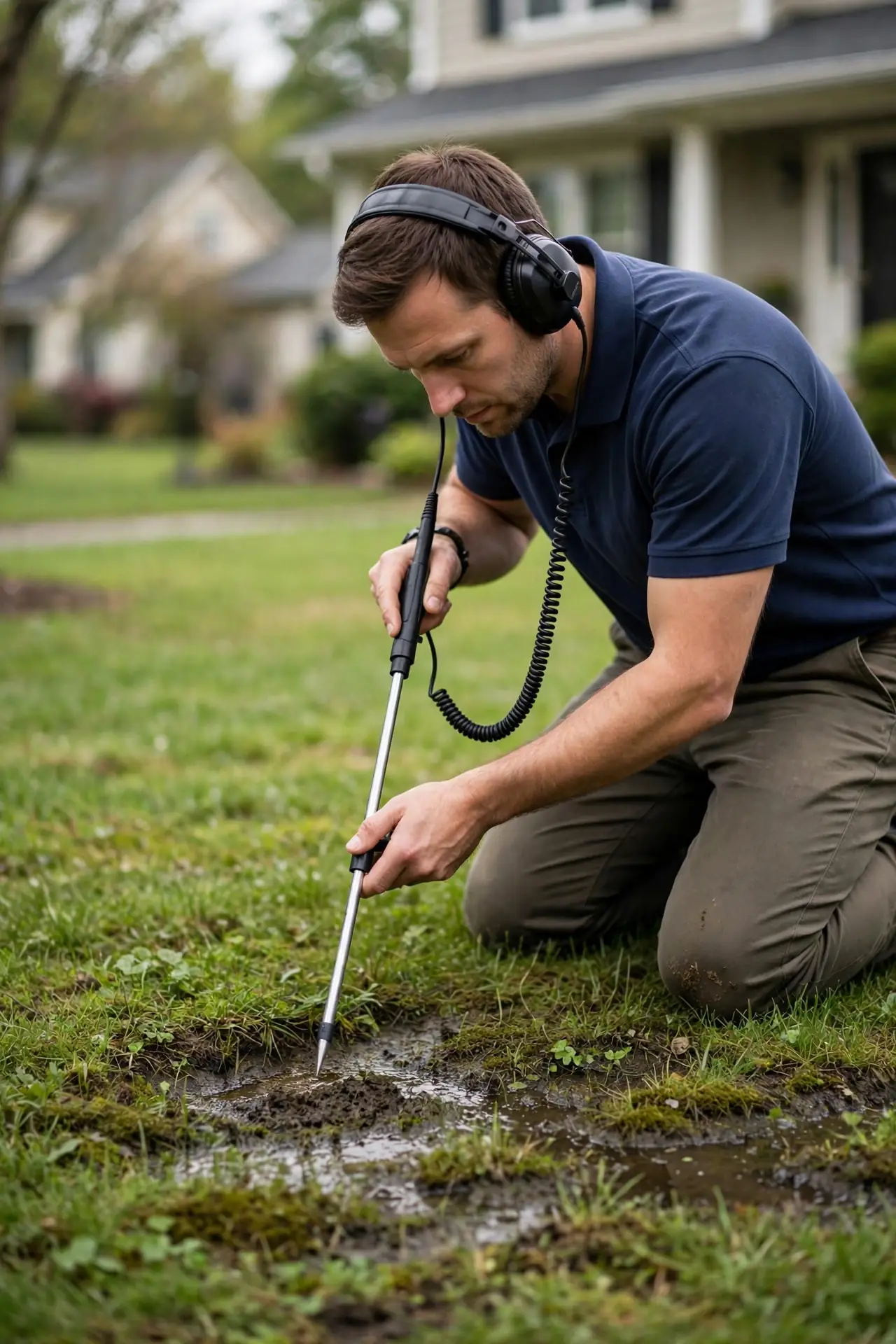
Hear water? See a stain? Bill climbing?
Those are the three signs we hear about most. Call and describe yours, and we'll point you at the right next step.
Your yard has more buried pipe than you think
When people picture a buried water line, they picture one: the service line from the meter to the house. But most Columbia properties have more pipe underground than that. A branch to the detached garage with its hose bibb. A line out to the workshop or barn. The run feeding the pool equipment pad. A hose bibb at the far fence line, or a line stubbed out for a garden that never got planted. None of it is mapped, most of it was buried decades ago, and any of it can leak.
The signs are the same family as a service-line break: a soggy patch that outlasts the rain, a strip of grass that's greener than its neighbors, a bill that climbs, a meter that won't sit still. The difference is the search area. "Somewhere between the street and the house" is one line. "Somewhere in the yard" is a network, and the first job is figuring out which branch of the network is losing water. If your situation is specifically the main service line, our water line leak detection page covers that run in detail; this page is for everything else buried on your property.
Which buried line is it?
This is the question that decides the whole job, and you can start answering it yourself. Most branch lines have their own shutoff: a valve at the garage, a bibb shutoff in the crawlspace, a pool equipment valve. Close the branch valves one at a time and watch the meter after each one. When the meter stops, you've found your branch.
No individual branch valves? Then it goes by elimination at the main. Close the main house valve: if the meter keeps moving, the leak is underground somewhere. From there, the property's layout does the talking. A soggy patch halfway to the garage points at the garage branch. Wet ground near the pool pad points at the equipment run. A green strip along the fence line points at the far bibb. Tell us what the yard looks like when you call, and we'll bring the right plan for tracing that specific run instead of wandering the whole property.
How a buried line gets traced
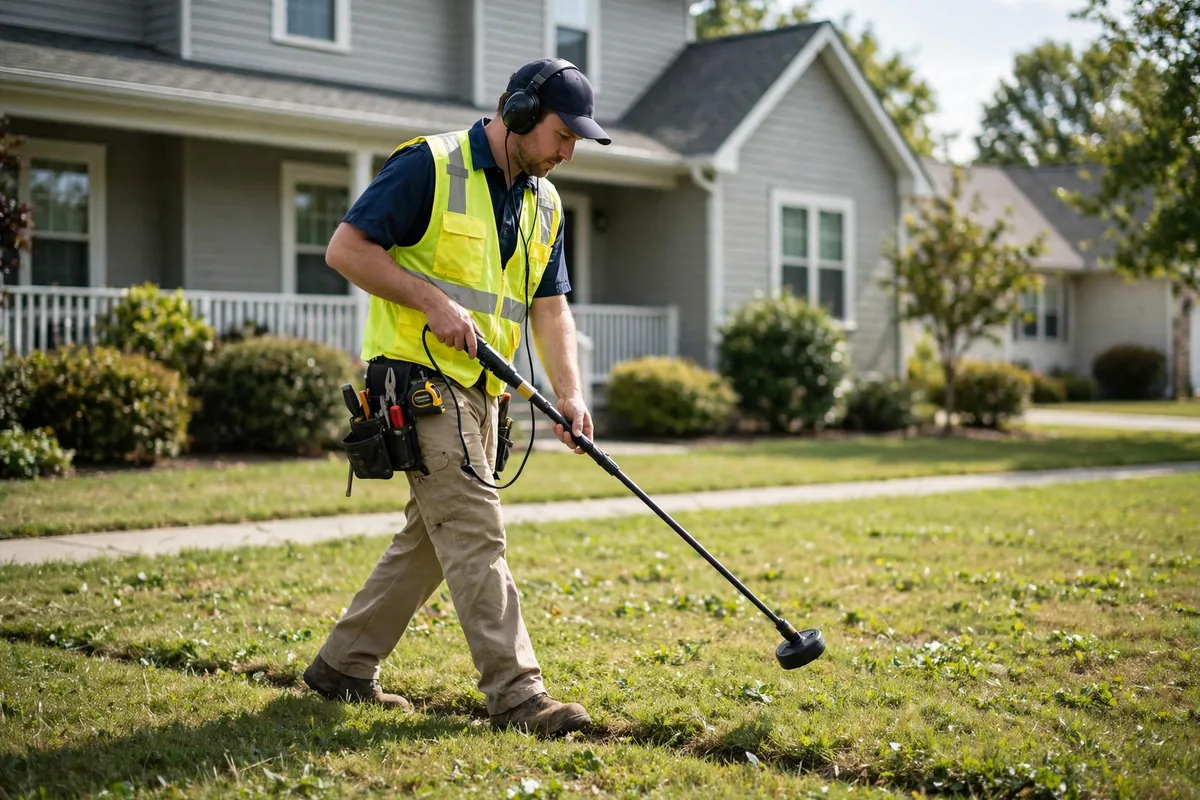
You can't see the pipe, so the work happens in layers. First, we establish the line's path. In many Columbia yards the route is roughly straight from meter to house, but additions, landscaping, and old repairs can change that, so we verify rather than assume. Listening equipment on the ground surface picks up the sound of water escaping under pressure, and the sound is loudest directly above the break. Thermal imaging can help in the right conditions, showing where escaping water changes the soil temperature.
For lines that are hard to hear, tracer gas is one of the methods commonly used in the trade: a safe gas is introduced into the isolated line, and it escapes at the break and rises through the soil, where a sensitive detector finds it at the surface. Pressure testing sections of the line confirms which segment is losing water. As always, we want two methods agreeing before we mark the spot.
What breaks yard lines around here
Branch lines live a rougher life than the main service line. They're often shallower, which makes them the first casualty of a hard freeze. They get crushed by vehicles parked or driven over their path, nicked by fence posts and landscaping projects, and chewed by tree roots that follow the moisture to a joint. A hose bibb line run to the far fence in the 1980s has survived forty years of all of that.
Maury County's clay soil adds its own stress. It holds water against the pipe and shifts with wet and dry cycles, flexing buried lines year after year. And because branch lines were often added casually, a weekend project decades ago, the bedding and depth are anybody's guess. We trace yard-line leaks throughout Columbia and the surrounding Maury County area, and the first thing we do on every one is map which branches exist before we trace any of them.
Why the mark matters more here than anywhere
With an indoor leak, opening the wrong section of drywall is an afternoon's annoyance. With an underground leak, digging in the wrong place means tearing up landscaping, driveways, or walkways for nothing, then digging again. Excavation is priced by the hole, and every unnecessary foot costs money and wrecks the yard.
That's the whole value of the detection visit: a marked location your excavator or plumber can dig straight to. We also note the line's depth and path as best we can determine, so the repair crew knows what they're getting into before the first shovel hits the ground.
A quick note on responsibility
Everything past the meter is yours: the service line, and every branch to the garage, the pool pad, the outbuildings, all of it. The water utility owns the meter itself and the main in the street, nothing beyond. That means a branch-line leak is a homeowner repair, but it also means you're free to choose your own contractor and your own timing. Our isolation work tells you exactly which branch is leaking, so the repair conversation starts from a known line, not a mystery.
Common Questions
How can you find a pipe you can't see underground?
Pressurized water escaping a pipe makes noise, and that sound travels up through the soil. Listening equipment finds the loudest point at the surface. Tracer gas, thermal imaging, and pressure testing back it up. Two methods agreeing on a spot is what gets marked.
My yard has a soggy spot but it rained last week. Is that a leak?
Maybe not. After heavy rain, low spots stay wet, and clay soil drains slowly. The test is time: a leak-fed soggy spot stays saturated long after everything else dries out, and it often comes with a moving meter or a higher bill. If the meter's still with everything off, it's worth investigating.
Will you have to dig up my whole yard?
No. Detection is specifically so nobody digs blindly. We mark the break's location, and the repair excavation happens at that mark. The goal is one hole, not a trench across the lawn.
Who pays for a buried branch-line leak?
You do. Everything past the meter belongs to the homeowner: the service line and every branch to the garage, pool pad, or outbuildings. The utility owns only the meter and the street main. The upside is you choose your own contractor and timing.
Can tree roots cause an underground water leak?
Roots usually exploit an existing weak point, like a worn joint, rather than breaking sound pipe. But once they're in, they make a small leak worse. If your line runs near mature trees, it's worth mentioning when you call.
Related Leak Detection Services
Water Line Leak Detection
The main service line from meter to house, traced so the dig happens once.
Learn moreSlab Leak Detection
Warm floor spots and water sounds under the slab, traced without tearing up floors.
Learn moreWater Leak Detection
The general visit: we work the whole property and narrow the mystery to a source.
Learn more
Think you've got a leak? Let's find it.
The longer a leak runs, the bigger the repair bill gets. One call, and we'll start narrowing it down.