It Only Leaks When Water Runs. That's a Drain Pipe Problem
Supply leaks run constantly, but drain leaks only show up when water's flowing: while the shower runs, when the washer drains, after someone brushes their teeth. We trace which drain joint or section is letting go, under sinks, tubs, and laundry standpipes.
A small leak found now beats a big repair later.
The earlier we catch it, the smaller the fix stays. Call and tell us what's going on.
Drain leaks play by different rules
A supply pipe is always under pressure, so a supply leak runs day and night and the meter catches it. A drain pipe only carries water when something upstream is draining. That changes everything about finding the leak. The meter test won't help, because the meter sits still between uses. Acoustic listening won't help much either, because there's no pressurized hiss to hear.
What gives a drain leak away is timing. The cabinet under the sink is dry in the morning and damp after lunch. The ceiling stain below the bathroom darkens after showers but never otherwise. The laundry room floor is wet on wash day. If the symptom follows water use, you're almost certainly looking at a drain-side problem, and the detection approach shifts to match.
Where drain leaks actually happen
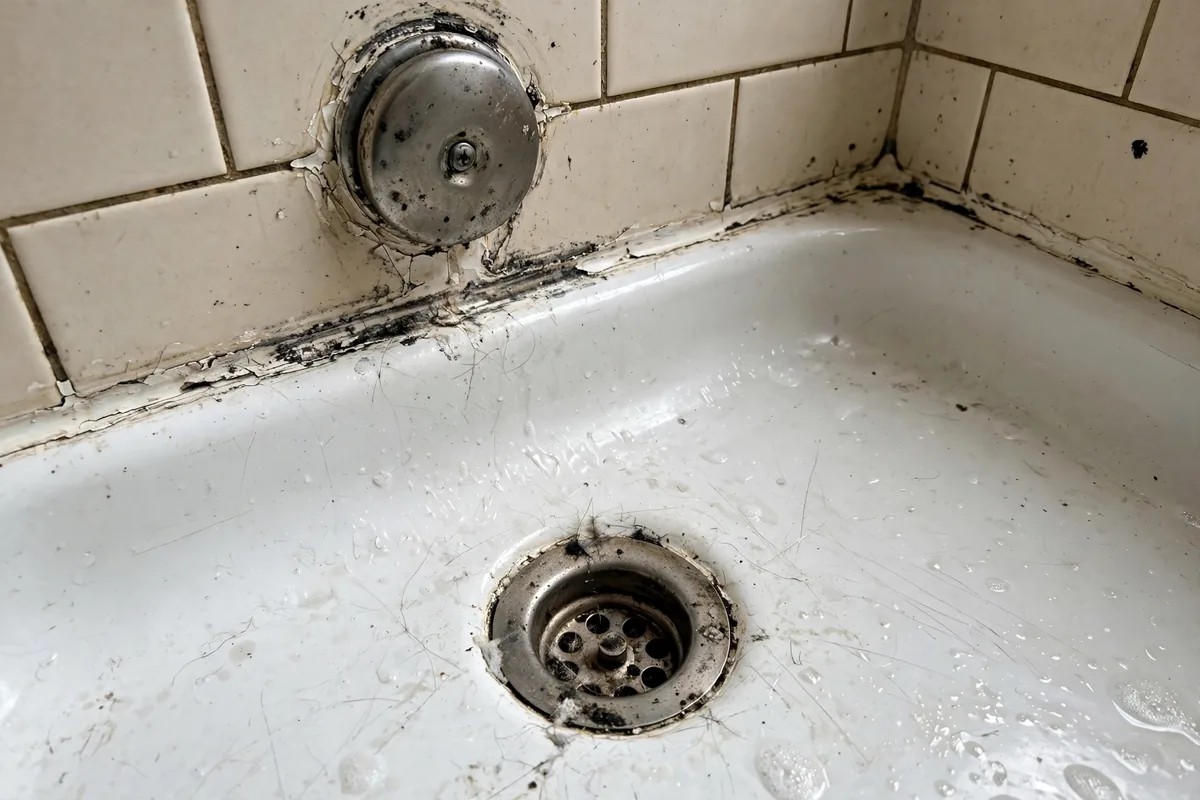
Drain systems are mostly joints: trap connections under sinks, slip nuts on tubular drains, hub connections on PVC, the tub shoe and overflow gasket, the flange where the toilet meets the floor. Joints are where movement, age, and chemistry do their damage. A slip nut loosens a quarter turn over years of vibration. A tub overflow gasket dries out and shrinks. A PVC joint that was never fully seated weeps only when the pipe fills.
The usual suspects in a Columbia home: the kitchen sink drain assembly (garbage disposals vibrate everything loose over time), bathroom sink traps, tub and shower drains, the washing machine standpipe and its trap, and the main drain connections in a crawlspace or basement where you can actually see the runs. Each one gets tested by running water through it while we watch.
How we test a drain line
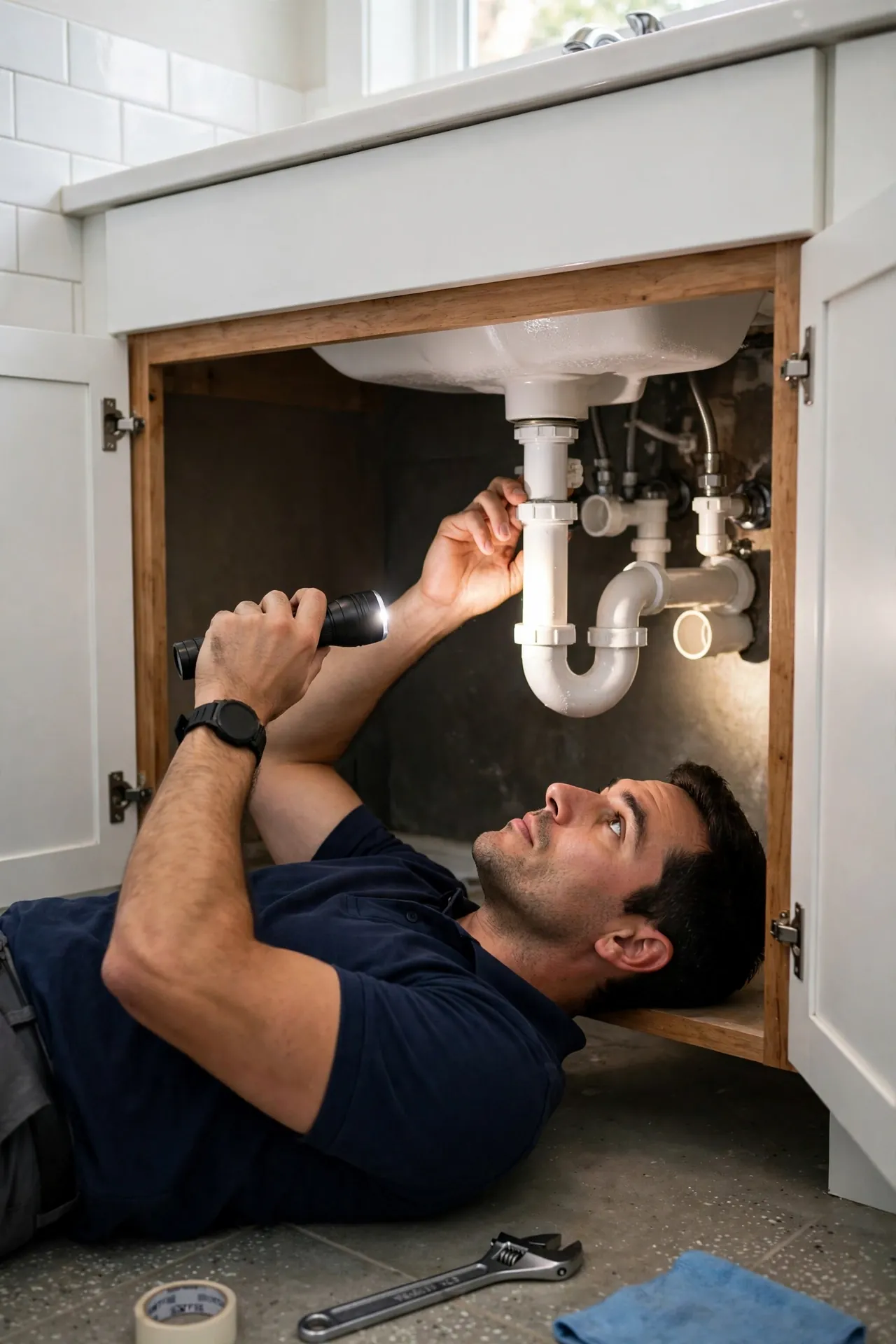
The core method is beautifully simple: run water and watch. We fill the fixture, release it, and watch every accessible joint in the drain path with a flashlight and a dry hand. For a tub or shower, that means running the shower while checking the ceiling below or the access panel behind. For a sink, it's filling the basin and pulling the plug while watching the trap and tailpiece.
Where joints aren't accessible, we use dye or moisture mapping. A little food coloring in the drain water makes a weeping joint obvious when the colored water appears where it shouldn't. Thermal imaging can show the cool trail of drain water inside a wall cavity after a test run. And in crawlspaces, where drain runs are often exposed, a visual inspection during a test run frequently finds the culprit directly.
The tub overflow: the most underrated leak source
Ask any plumber about the leak they see most often in bathrooms, and the tub overflow gasket is high on the list. The overflow is the round plate under the spout, and behind it a gasket seals the overflow tube to the tub. When that gasket dries, cracks, or shifts, every bath that fills past the overflow level sends water down inside the wall instead of down the drain. The symptom is a ceiling stain below the tub that appears after baths but never after showers.
It's a small part and a straightforward repair, but finding it requires knowing to test it: fill the tub to the overflow and watch. Homeowners almost never think to do that, which is why this particular leak can run for years.
Drain leaks and the damage they do quietly
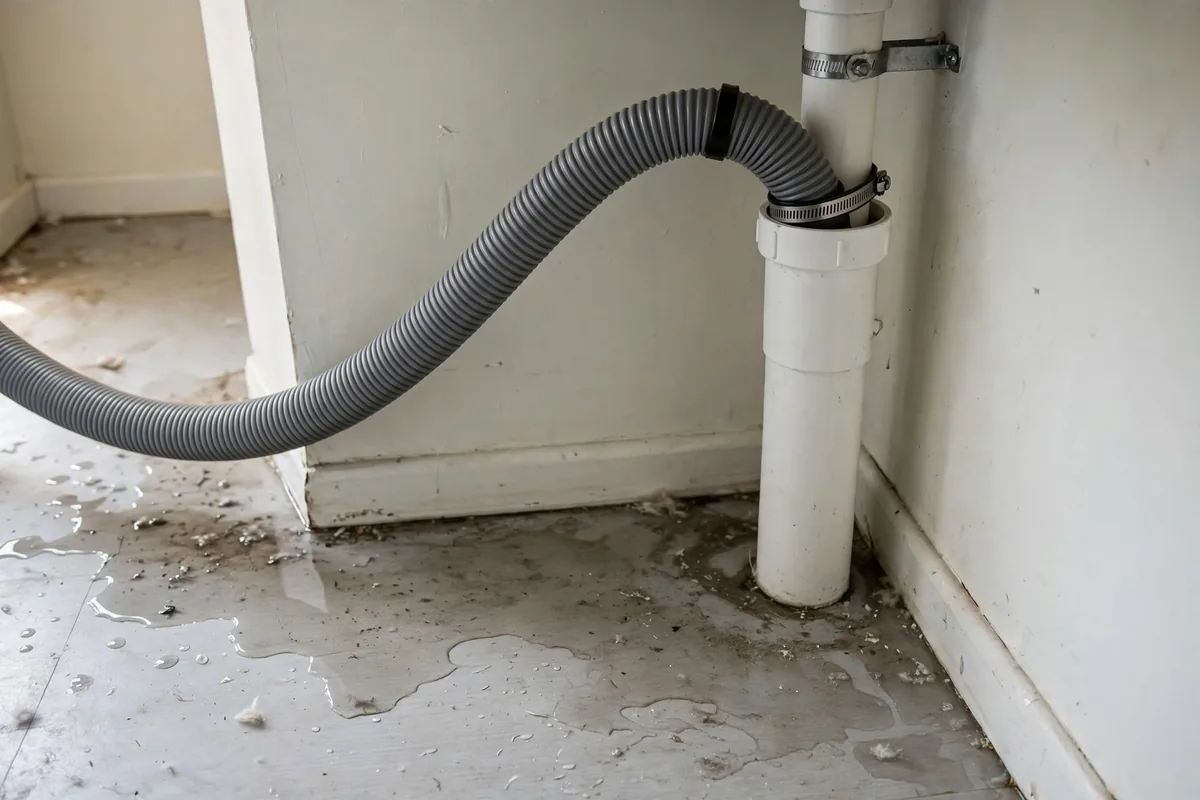
Because drain leaks are intermittent, people live with them longer than supply leaks. A cabinet floor that gets damp every day and dries every night doesn't look like an emergency. But repeated wetting is exactly how particle-board cabinet floors swell and crumble, how subfloor around a tub softens, and how mold gets established in a dark, undisturbed cavity. The damage is slow, which makes it easy to ignore and expensive by the time it's obvious.
If you've got a damp spot that follows a pattern, don't wait for it to get worse. The detection visit is straightforward, the fix is usually a joint or a gasket, and catching it now is the difference between a repair and a renovation. We find drain leaks throughout Columbia and Maury County.
Common Questions
Why doesn't my water meter move if I have a drain leak?
Because drain pipes aren't pressurized. The meter only measures water entering the house through the supply side. A drain leak happens after the water has already been used, on its way out, so the meter never sees it. That's normal and expected for drain-side problems.
The cabinet under my sink is damp but the supply lines look dry. What now?
Then it's likely the drain assembly: the trap, the tailpiece connections, or the slip nuts. Fill the sink, pull the plug, and watch the joints while it drains. If you see weeping at a joint, that's your answer. If you can't see it, that's what we're for.
My ceiling stain only appears after someone takes a bath. What does that mean?
That's a classic tub overflow gasket or tub shoe leak. Baths fill water up to the overflow level; showers don't. The test is to fill the tub to the overflow while someone watches the ceiling below. It's one of the most common drain leaks we find.
Can a drain leak cause mold?
Yes, and it's one of the more common causes of hidden mold in bathrooms and kitchens. Intermittent wetting inside a dark cabinet or wall cavity is ideal for mold growth. If there's a musty smell along with the dampness, mention it when you call.
Do you fix the drain once you find the leak?
We locate it precisely and hand you the findings. Most drain leaks are joint, gasket, or trap repairs your plumber can handle quickly once they know exactly which joint is failing.
Related Leak Detection Services
Bathroom Leak Detection
Supply vs drain vs grout: we test each source separately.
Learn moreKitchen Plumbing Leak Detection
Sinks, dishwashers, ice-maker lines: the slow drips that ruin cabinets.
Learn moreSewer Leak Detection
Odors and soggy ground traced with camera inspection before anyone digs.
Learn more
Ready to stop guessing?
One visit is usually all it takes to turn a mystery into a marked spot. Call and we'll take it from there.