Leak Detection in Woodland Hills
Woodland Hills is an established subdivision east of downtown Columbia, the kind of place where the lots are bigger, the trees are older, and the houses were built for families to stay in. It is family-oriented in the truest sense: kids, dogs, backyards that actually get used. The homes here are not new and not ancient. They are settled, lived-in, and old enough that their plumbing deserves a proper look when something seems off.
What a Typical Woodland Hills Service Call Looks Like
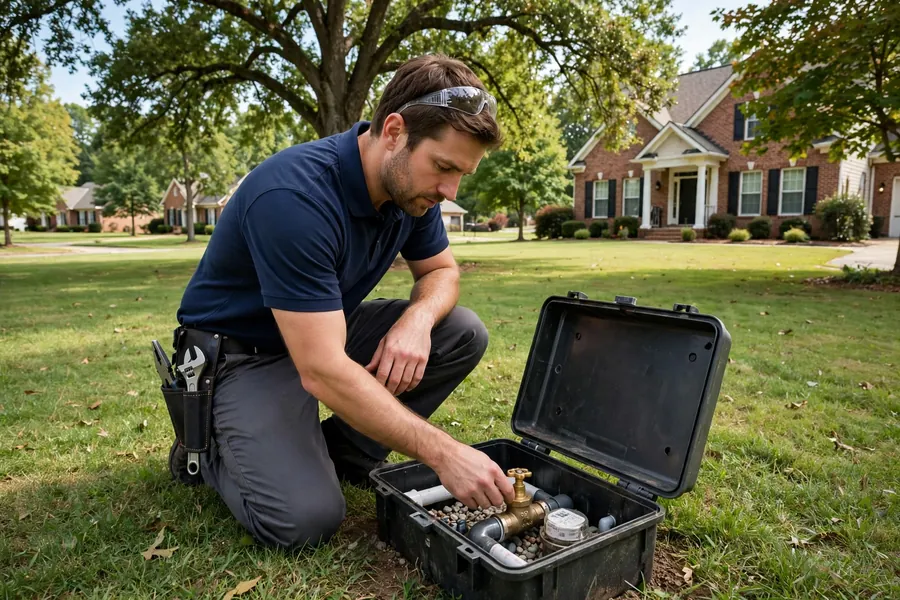
Out here the call often starts in the yard. Someone notices one patch of grass that stays green and soft while the rest of the lawn dries out, or a strip near the driveway that never quite firms up. Or it starts inside: several drains running slow at once, a toilet that gurgles when the washer drains, a water bill that jumped even though nobody changed their habits.
We start with the meter and the isolation test, because on a larger lot the first question is always whether the water is being lost inside the house or out in the yard. Then we walk the yard run, check the irrigation valves, and listen along the service line. Bigger lots mean longer runs, and longer runs mean the leak can be a good distance from the house, which is exactly why we locate before anyone digs. The folks at Leak Fix Experts handle these larger-lot calls all over Columbia's east side, and the approach is the same every time: test, narrow, then point to a spot.
Spotted a warning sign? Let’s find the source.
Most leaks are located in a single visit. Call now and tell us what you’re seeing.
Three Things That Bring Us to Woodland Hills
Longer yard service lines
A bigger lot means a longer run from the street to the house, and every extra foot is another foot of pipe sitting in Maury County clay, shifting a little with the seasons. When one of these lines seeps, the signs are subtle: a soft patch, a green strip, a meter that creeps when everything is off. An underground leak detection visit listens along the whole run instead of guessing at the wettest spot.
Irrigation zones and valve boxes
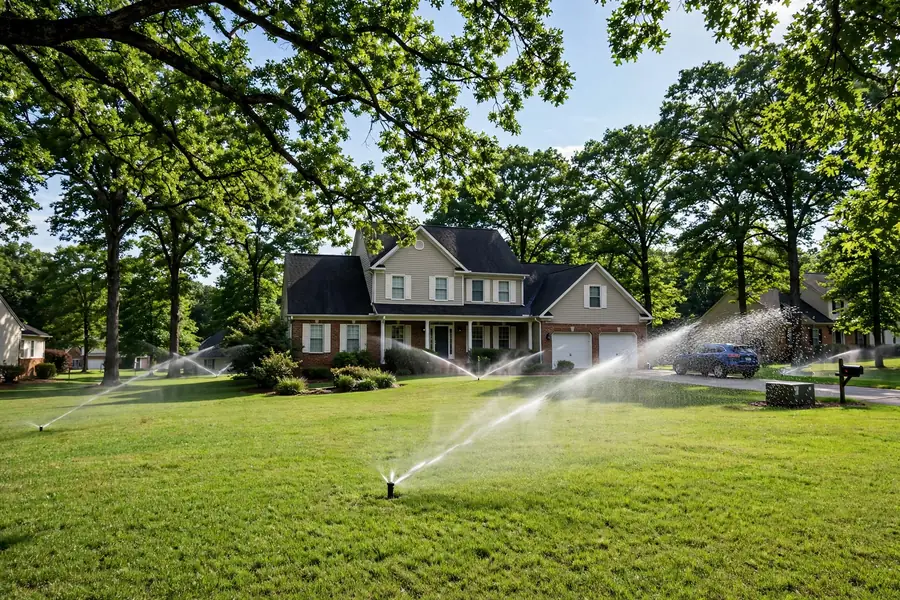
Large lawns usually mean irrigation, and irrigation has a lot of parts that can weep: valve boxes that fill with water, heads that leak at the seal, a zone that never fully shuts off. Homeowners often blame the main line when an irrigation zone is the real culprit. Our irrigation leak detection visit tests zones one at a time, so the answer is evidence, not a hunch.
Mature-tree roots on sewer lines
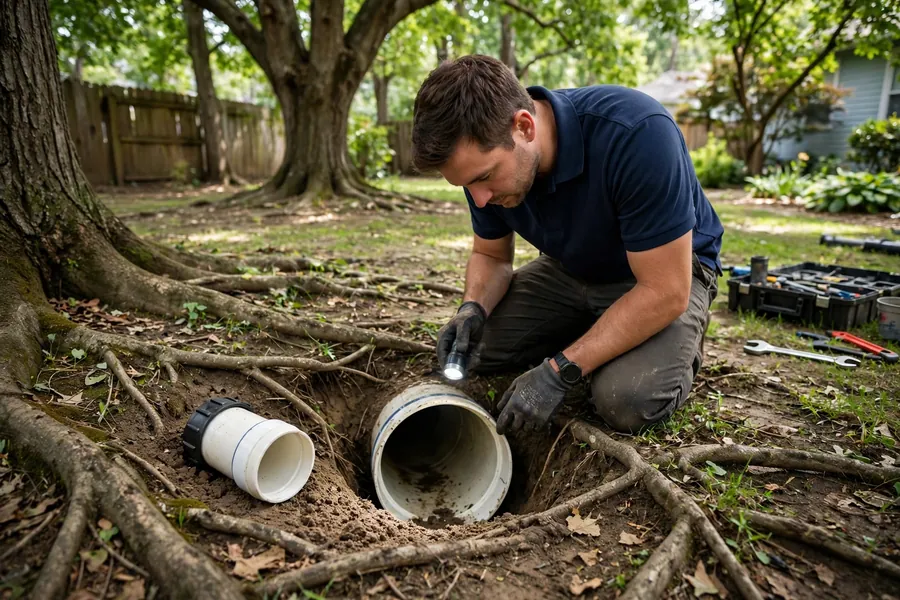
Woodland Hills trees are a selling point, and they are also the most common reason we get called about slow drains. Roots chase moisture, and an older sewer joint is an invitation. The result is usually gradual: drains get slower over months, then one day a line backs up. Sewer leak detection helps confirm whether roots, a cracked section, or a simple blockage is behind it, before anyone talks about digging up the yard.
The Question Every Big-Lot Call Comes Down To
Inside or outside? That is the question that decides everything on a larger lot, because digging up a yard is expensive and opening a wall for a yard leak is pointless. So we answer it first. Meter test with everything off. Then irrigation isolated. Then fixtures isolated. Each step cuts the search area in half, and by the time we are listening along a run, we already know which system is losing water.
A word on roots, since they get blamed for everything: roots do not break healthy pipe out of nowhere. They exploit joints and cracks that are already there, then make them worse over time. If your drains are slow and you have big trees, roots are a reasonable suspect, but a grease blockage or a sagging section can look the same from inside the house. Testing tells the difference, and the difference decides whether you need a spot repair, a cleaning, or something bigger.
Family homes add one more wrinkle: more bathrooms, more laundry, more fixtures in daily use, which means more valves and connections that can weep quietly. A running toilet in a kids' bathroom can waste a surprising amount of water without ever flooding anything. If the bill jumps, check the toilets first with a simple dye test, food coloring in the tank, and see if color shows up in the bowl without flushing. If it does, you have found at least part of the problem. For the rest, our water line leak detection page explains how a visit runs, and our Columbia service areas page shows everywhere else we work.
East of Downtown, With Room to Breathe
Woodland Hills sits east of downtown Columbia, far enough out that the lots open up, close enough that downtown is an easy drive. The houses are established family homes, not starter boxes and not estates, and the neighborhood has the settled feel that comes with mature trees and neighbors who have been there a while. For a nearby landmark, Woodland Park, a Columbia park with a disc golf course at 821 W 9th St, is elsewhere in the city and handy for giving directions, though it is not part of the subdivision itself.
The soil story here is the same clay that covers Maury County, but on a larger lot it plays out over longer runs and more yard to watch. If you notice a soggy patch, a green strip, slow drains across the house, or a bill that does not match your usage, do not write it off as a quirk of an older home. Those are the exact signs that reward an early check, while the fix is still small and the digging, if any is needed at all, is still limited to one spot.
Woodland Hills Leak Detection FAQs
There is a soggy patch in my yard but it has not rained. Is that a leak?
It very well could be. On a larger lot, a yard service line can seep for weeks and the only sign is one patch of grass that stays greener or softer than the rest. We pressure-test the service line and walk the run with listening gear to see whether the water is coming from your line, an irrigation zone, or just a low spot that holds water. Do not dig it up on a guess, since the wet spot is often not right over the break.
How do you tell an irrigation leak from a main water line leak?
By isolating them. We shut the irrigation system off at its own valve and watch the house meter. If the meter stops moving, the irrigation side is the suspect, and we test its zones one at a time. If the meter keeps moving with irrigation off, the main service line or something inside is losing water. That one test saves a lot of digging in the wrong place.
Can tree roots really break a sewer line?
They do not usually snap a healthy pipe in half. What they do is find a tiny joint gap or hairline crack, send fine roots in for the moisture, and slowly wedge that gap wider until drains run slow, gurgle, or back up. Mature trees on an established lot make this more likely, not certain. If several drains are slow at once, that points to the main sewer run rather than one fixture, and it is worth a look before it becomes a backup.
Will detection take longer because my lot is bigger?
A little, sometimes. A longer yard run means more ground to listen across, and a big house means more fixtures to check. But the process is the same, and most Woodland Hills visits still wrap up in one appointment. The extra time goes into narrowing the spot, which is what keeps any repair digging small.
Do you serve the east side of Columbia and the streets near Woodland Park?
Yes. We cover Woodland Hills and the east side of Columbia, and Woodland Park, the Columbia park with the disc golf course at 821 W 9th St, is nearby in the city, a handy landmark if you are telling us roughly where you are. Give us your street when you call and we will confirm the visit window.
Leak in Woodland Hills? Call (931) 800-6431
Soggy yard patch, slow drains, a bill that keeps climbing. Tell us what you are seeing and we will track it down, yard or house.