A Pipe Is Leaking Inside Your Walls. Here's How We Find Which One
Hearing water move when every tap is closed is unsettling, and it's one of the clearest signs of a supply pipe leak. Copper, PEX, or older lines inside walls and ceilings can be traced with listening and pressure testing, so the repair opens one section, not the whole wall.
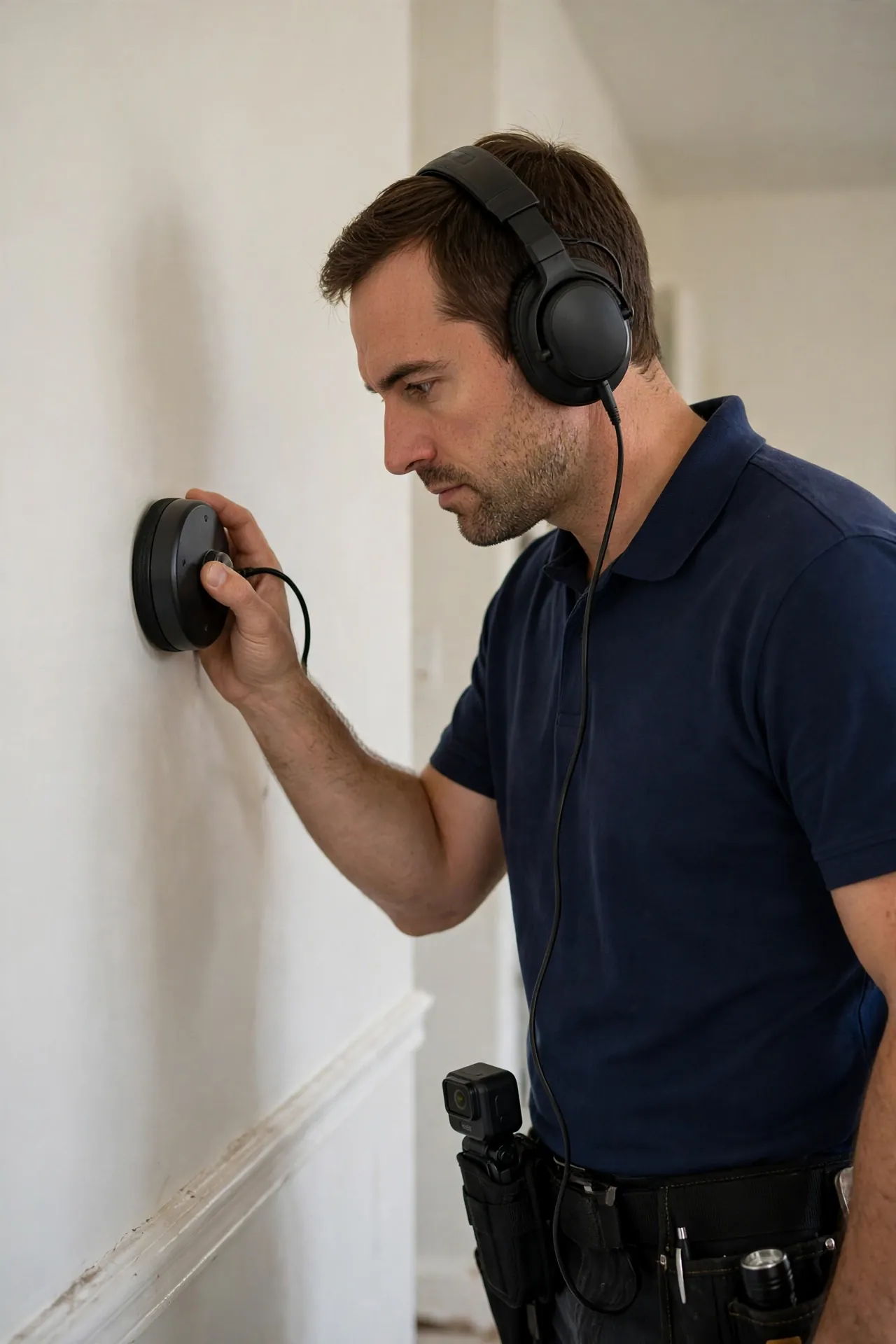
Noticed something off with your water?
A quick call is the cheapest diagnostic there is. Tell us what you're seeing and we'll tell you what it likely means.
What a pipe leak sounds and feels like
The signature symptom is sound: a hiss, a rush, or a faint ticking of water moving inside a wall or ceiling when nothing is running. Late at night when the house is quiet is when people notice it first. Press a glass or your ear to the wall in a quiet house and you might hear it yourself. That sound is pressurized water escaping through a pinhole or a failing joint, and it's actually good news for detection, because sound is traceable.
Other signs are subtler. A section of wall that's cool and damp to the touch. Paint that bubbles or peels in one area. A musty smell in a hallway with no visible water. Low water pressure at fixtures on one side of the house, which can mean a supply line is losing water before it arrives. Any one of these is worth a call; two together make a strong case.
Copper, PEX, and the older stuff
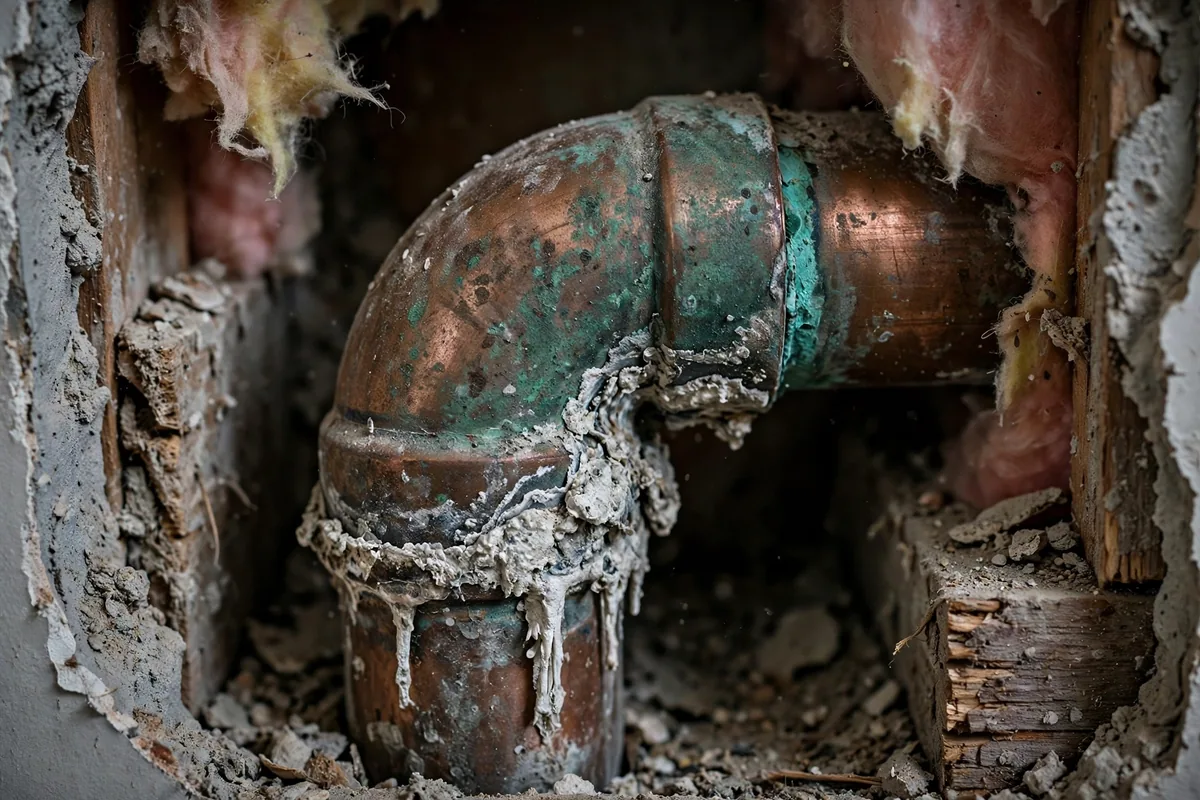
Columbia homes carry just about every pipe material used in the last seventy years, and each fails differently. Copper develops pinhole leaks, often where water chemistry or flux residue has been working on the pipe from the inside for years. A copper pinhole can spray a fine mist inside a wall cavity for weeks before anything shows on the surface.
PEX is flexible and freeze-tolerant, but the fittings are the weak point. A crimp ring that wasn't quite right, or a fitting stressed during installation, can weep slowly at the joint. Older homes may still have galvanized steel supply lines, which corrode from the inside until the waterway narrows and the wall weakens. Knowing the material tells us what kind of failure to expect and where to listen.
Listening first, then proving it
Acoustic listening is the workhorse for supply pipe leaks because a pressurized leak is noisy. We move a sensitive ground microphone or contact sensor along the wall or floor, following the sound's volume. The loudest point is usually directly over the break. It sounds simple, but it takes practice to separate leak noise from normal pipe sounds, water heater rumble, or a toilet fill valve across the house.
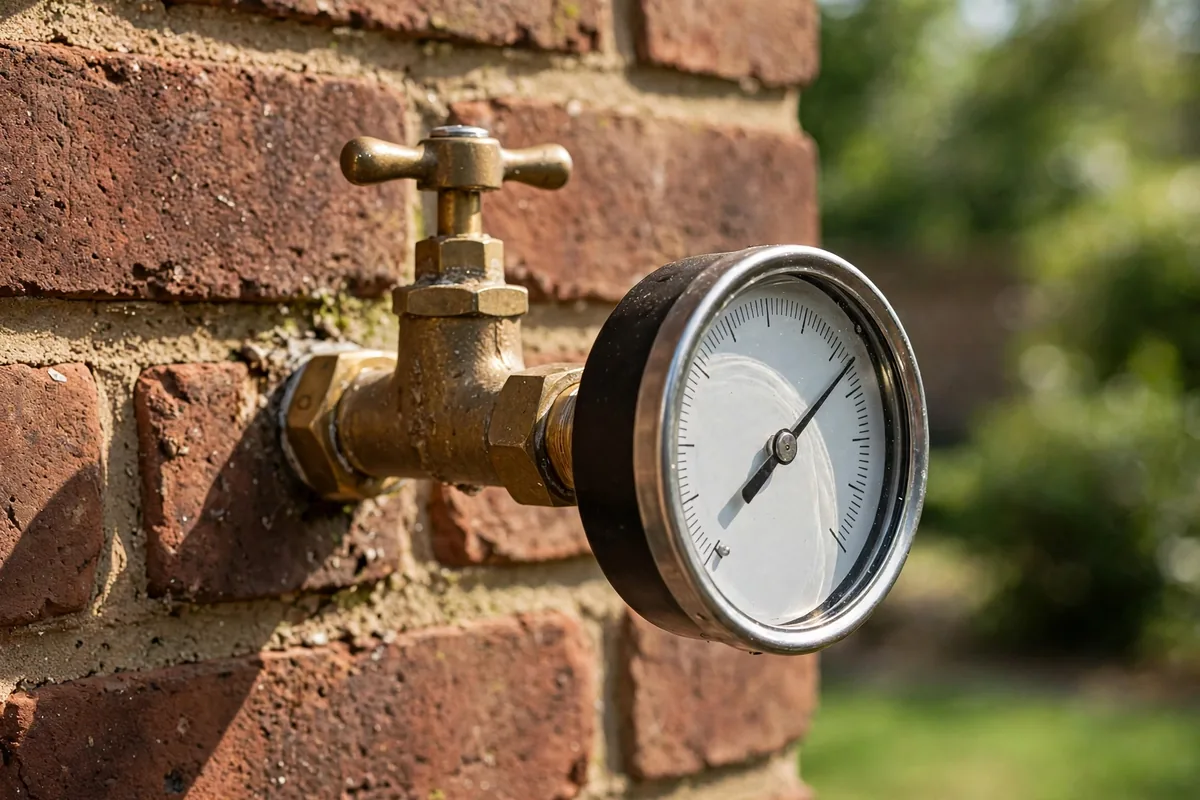
Sound alone isn't the whole answer, though. We back it up, typically by pressure-testing the suspect line. Isolate the run, pressurize it, and watch: a line that bleeds pressure has a leak, and the rate of the drop hints at the size. Thermal imaging can add a third confirmation when conditions allow, showing the cool pattern of moisture spreading in the cavity. Two methods, one marked spot.
Why we don't just open the wall and look
It's tempting, and plenty of people do it: cut a hole where the stain is and take a look. The problem is that water travels. It runs along pipes, follows framing, and drips down inside a wall to pool far from the break. The stain marks where water landed, not where it started. Open the wall at the stain and you often find damp framing and no leak, then you're cutting a second hole, then a third.
Detection flips that around. Find the break first with listening and testing, mark it, then open one section with confidence. Less drywall repair, less patching and painting, and a much shorter path from problem to fixed.
Freeze damage and pipe leaks in Middle Tennessee
Our winters are mild until they aren't. A hard freeze finds every poorly insulated pipe run, in exterior walls, above garages, in crawlspaces, and the damage often doesn't show until the thaw. A pipe that split during a cold snap may weep just enough to dampen insulation for weeks before a stain appears on the ceiling below. If you're seeing new wall or ceiling symptoms in late winter or spring, freeze damage is on the suspect list.
Pipes in exterior walls of older Columbia homes are the usual victims, especially where insulation has settled or was never installed around the run. When we find a freeze split, we'll tell you, and it's worth having the repair include insulation or rerouting so it doesn't happen again next winter. Pipe leak detection is available across our Columbia, TN service area.
Common Questions
I hear water running in the wall but see nothing. How urgent is that?
It means a pressurized line is losing water somewhere, and it's worth finding sooner rather than later. A pinhole can run for weeks inside a wall before showing on the surface, and by then there's often mold or framing damage. Call and describe what you hear; we'll tell you honestly how fast to move.
Can you tell which pipe is leaking without opening the wall?
Usually yes. Acoustic listening follows the sound to the loudest point, and pressure-testing individual runs confirms which line is losing pressure. The wall stays closed until the repair, when your plumber opens one marked section.
My house has PEX plumbing. Can PEX leak?
PEX tubing itself rarely fails, but fittings and connections can weep, especially if a crimp wasn't perfect or the fitting was stressed. The detection process is the same: listen, isolate, pressure-test, confirm.
The stain is on the ceiling below the bathroom. Is the leak in the bathroom?
Not necessarily. Water runs along pipes and framing and can drip down well away from the break. The stain shows where water landed. We trace it back to the source before anyone opens anything, which is often a supply line a few feet away from the stain.
Do you repair the pipe once you find the leak?
We find and mark it; your plumber does the repair. That keeps our role clean: we're there to locate the break accurately, not to sell the fix. You'll get findings your plumber can work from directly.
Related Leak Detection Services
Ceiling & Wall Leak Detection
Stains and damp drywall traced back to the source with moisture mapping.
Learn moreSlab Leak Detection
Warm floor spots and water sounds under the slab, traced without tearing up floors.
Learn moreHidden Leak Detection
No visible water, just symptoms: meter checks, thermal scans, moisture mapping.
Learn more
Ready to stop guessing?
One visit is usually all it takes to turn a mystery into a marked spot. Call and we'll take it from there.