The Slow Drip Under Your Sink Is Ruining the Cabinet. Let's Catch It
Kitchen leaks are patient. A dishwasher supply line weeps a little with every cycle. An ice-maker line drips behind the fridge. The cabinet under the sink stays faintly damp for months. By the time anyone looks, the cabinet floor is swollen and the subfloor is soft. We find these leaks while the fix is still small.

Spotted a warning sign? Let’s find the source.
Most leaks are located in a single visit. Call now and tell us what you’re seeing.
The under-sink ecosystem
Open the cabinet under your kitchen sink and count the leak points: hot and cold supply lines, two shutoff valves, the faucet tailpieces, the drain tailpiece, the trap and its slip nuts, the garbage disposal with its mounting gasket and drain connections, and the dishwasher drain hose if it routes through. That's a dozen or more joints in a dark box nobody looks inside. It's no wonder this is the most common place in the house for a slow leak to live undisturbed.
The signs are humble: a musty smell when you open the cabinet doors, a darkened ring on the cabinet floor, cleaning bottles with rusted bottoms, or the cabinet floor feeling soft at the edges. By the time water is visible on the kitchen floor, the cabinet floor has usually been compromised for a while.
Dishwashers: leak behind the kick plate
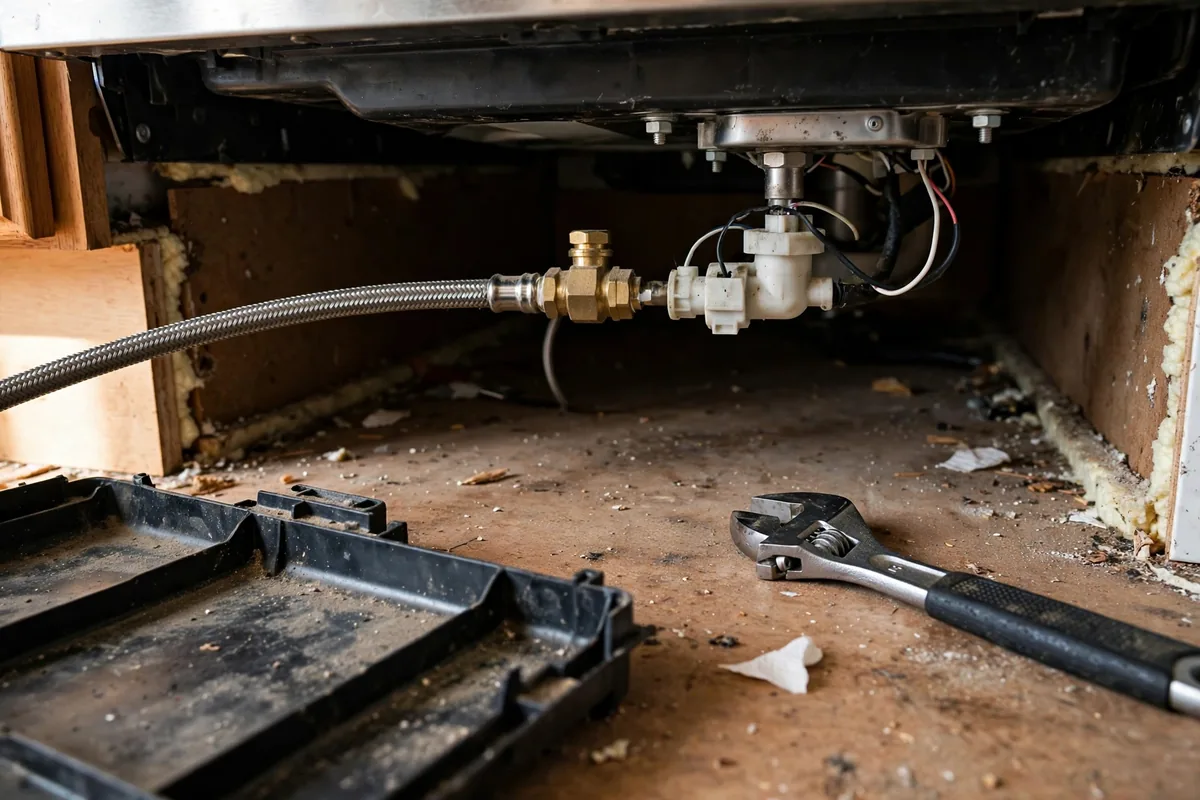
Dishwashers leak in places designed to hide it. The water supply connection at the dishwasher's inlet valve, the drain hose connection, the door gasket that weeps when it wears, and the tub itself if it cracks. Most of this sits behind the kick plate at the bottom front, an area nobody inspects. A dishwasher that leaks a little every cycle sends water under the unit and into the subfloor, where it spreads sideways under the surrounding cabinets.
The clues: a warped or discolored strip of flooring in front of the dishwasher, a musty smell near it, the unit rocking slightly because the subfloor underneath has softened, or water appearing on the kitchen floor with no obvious source after the dishwasher runs. We pull the kick plate, run a cycle, and watch with a light. It takes one cycle to know.
Ice maker lines: small tube, big trouble
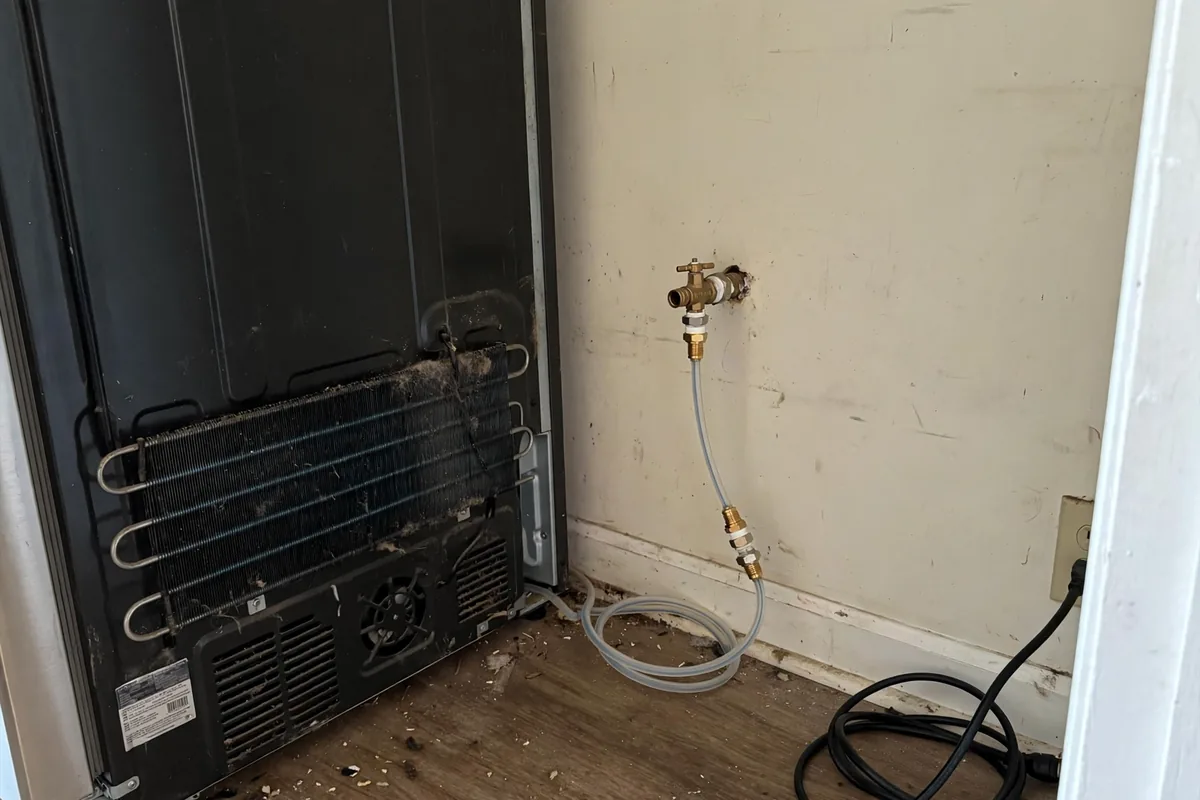
The little quarter-inch line feeding the refrigerator's ice maker and water dispenser is disproportionately destructive. It's often a plastic or braided line run through cabinets or behind the fridge, with compression fittings at each end. When a fitting weeps, or the line gets kinked and stressed during a fridge move, it drips steadily onto the floor behind the refrigerator, an area that might not be seen for years.
We've seen ice-maker leaks damage hardwood floors across a whole kitchen before anyone pulled the fridge out. If your fridge has a water line, pull it out once a year and look. Feel the line's connections for moisture. It takes two minutes and it prevents the kind of surprise nobody wants.
Garbage disposals shake things loose
A disposal vibrates, and vibration loosens things. The mounting gasket where it meets the sink, the drain connections, the dishwasher inlet hose, all of them work a little looser over years of grinding. A disposal-area leak often shows up as dampness in the cabinet that seems to come and go, because it only leaks while the disposal runs or while water drains through it.
Testing it means running the disposal with water flowing while watching every connection with a flashlight. It's a two-person job in practice, one to run it and one to watch, which is part of why these leaks persist. People run the disposal alone and never see what's happening underneath at the same moment.
Kitchens across Columbia's home eras
Columbia's kitchens carry a century of plumbing: older supply lines in the historic homes, copper in the mid-century builds, PEX in the newest subdivisions. The leak points differ by era, which is why the visit starts with what's actually under your sink instead of assumptions. See our Columbia, TN service area for the neighborhoods and communities we cover.
What the kitchen visit covers
We go through the whole wet wall of the kitchen: under-sink supply and drain with everything run and watched, the disposal connections under load, the dishwasher with the kick plate off through a full cycle, the ice maker line and its fittings with the fridge pulled out, and moisture readings on the cabinet floors, the subfloor at the edges, and the wall behind. You get a specific answer for each fixture: leaking or clear, and exactly where.
Kitchen leaks are almost always cheap to fix and expensive to ignore. A supply line, a gasket, a fitting. The cabinet and flooring damage is where the real money goes, and that's entirely a function of time. If something under your sink smells musty, don't wait for it to become visible.
Common Questions
There's a musty smell under my kitchen sink but I don't see water. Is that a leak?
Very likely a slow one. Musty cabinet smell with no visible water usually means a connection is weeping intermittently and the cabinet floor is staying damp. Dry everything, lay down paper towels, run the faucet and disposal, then check the paper for wet spots.
How do I check if my dishwasher is leaking?
Look for warped or discolored flooring in front of it, a musty smell, or the unit rocking. For a real check, remove the kick plate at the bottom front, run a full cycle, and watch the connections and the floor underneath with a flashlight.
Can an ice maker line really cause major damage?
Yes, because it's hidden behind the fridge where nobody looks. A weeping fitting can drip for years, ruining hardwood and subfloor across the kitchen. Pull the fridge out once a year and check the line and its connections. It takes two minutes.
My garbage disposal area is damp only sometimes. What does that mean?
It means the leak is tied to use: a connection that weeps while the disposal runs or while water drains through it. Vibration loosens disposal connections over time. Test it by running the disposal with water while someone watches underneath with a light.
Will you pull out my refrigerator and dishwasher to check?
Yes, with your permission. Those are exactly the places kitchen leaks hide, and a proper inspection means looking behind and underneath the appliances, not just at what's visible.
Related Leak Detection Services
Faucet & Fixture Leak Detection
Shower valves and faucet bodies leaking inside walls and cabinets.
Learn moreDrain Pipe Leak Detection
Leaks that only appear when water runs: sinks, tubs, laundry standpipes.
Learn moreBathroom Leak Detection
Supply vs drain vs grout: we test each source separately.
Learn more
Think you've got a leak? Let's find it.
The longer a leak runs, the bigger the repair bill gets. One call, and we'll start narrowing it down.