Leak Detection in Downtown Columbia
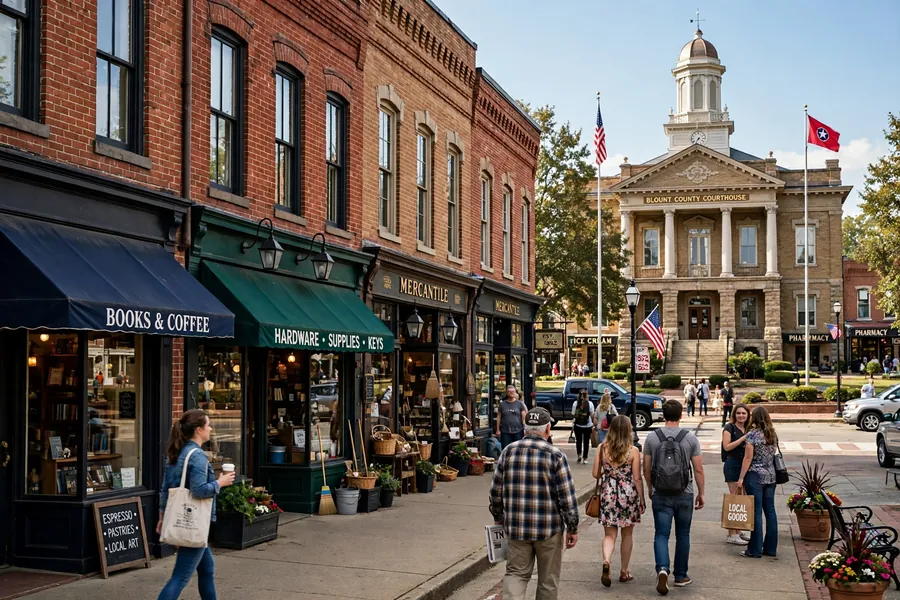
Downtown Columbia is built around a classic town square, with the Maury County Courthouse, built in 1906, at its heart. Brick storefronts hold shops and restaurants, First Fridays bring the square to life, and the James K. Polk Home sits nearby. Columbia was chartered in 1807, and the Columbia Commercial Historic District earned its place on the National Register in 1984. A few blocks south of the square, the Arts District adds galleries and studios, plus the Mulehouse venue. These are some of the oldest working buildings in town, and their plumbing has stories to tell.
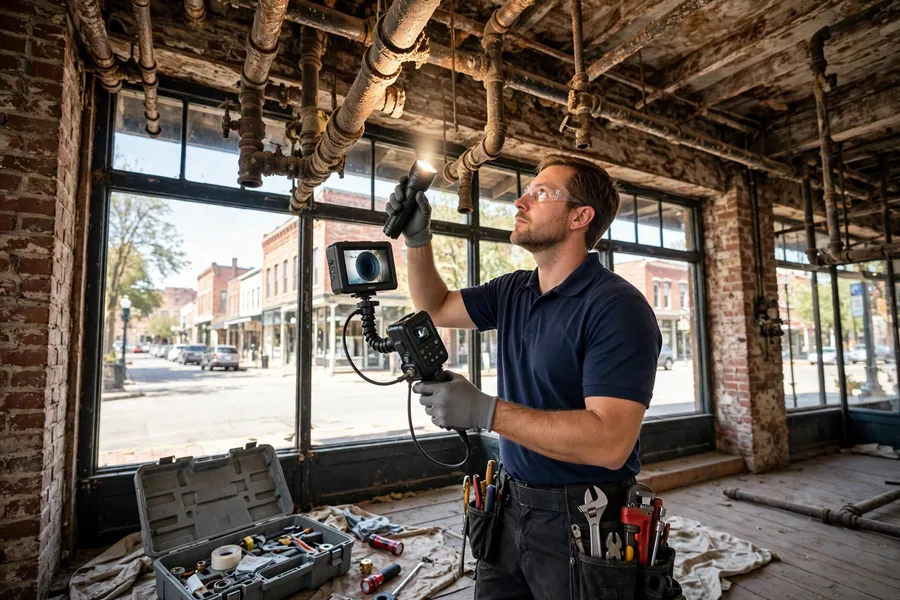
What a Typical Downtown Service Call Looks Like
Downtown calls rarely start with a homeowner. They start with a shop owner who spots a stain spreading across the ceiling, or a tenant upstairs who notices the bathroom floor feels spongy, or a property manager caught between two tenants who both swear the leak is not theirs. Water in a mixed-use building is a people problem as much as a plumbing problem, and the first job is figuring out whose water it actually is.
We start upstairs and work down, checking fixtures, stacks, and supply runs, and scanning the ceiling below for temperature differences that show where water is traveling. In these old brick buildings the stain is almost never directly under the leak. Water follows joists, runs along beams, and drops where it finds a gap. Guessing from the stain alone is how ceilings get opened in the wrong place. Testing first is how they do not. If you run a business or manage a building on the square, our commercial leak detection service is built around exactly this kind of call.
Spotted a warning sign? Let’s find the source.
Most leaks are located in a single visit. Call now and tell us what you’re seeing.
Three Things That Bring Us Downtown
Very old cast-iron and galvanized plumbing
Many downtown buildings still carry cast-iron drains and galvanized supply runs from decades ago, sometimes layered under newer work from a remodel. These materials do not fail all at once. They corrode, scale up, and weep at joints, often for months before anyone notices. A drain pipe leak detection visit can separate a drain problem from a supply problem, which matters because the fix is completely different.
Shared walls and shared runs
Downtown buildings were not built with today's separate-everything plumbing. Runs cross party walls, stacks serve more than one unit, and a leak on one side shows up on the other. We test each side separately so the report says clearly where the water is coming from. That clarity is worth as much as the detection itself when two owners or a landlord and tenant are involved.
Upstairs-downstairs leak paths
An upstairs bathroom or kitchenette leaking into the shop below is the classic downtown call. The ceiling stain grows slowly, then all at once, and by the time it drips, the joists above may have been wet for weeks. Ceiling and wall leak detection is about tracing that path back to the fixture or joint above it, before the ceiling has to come down.
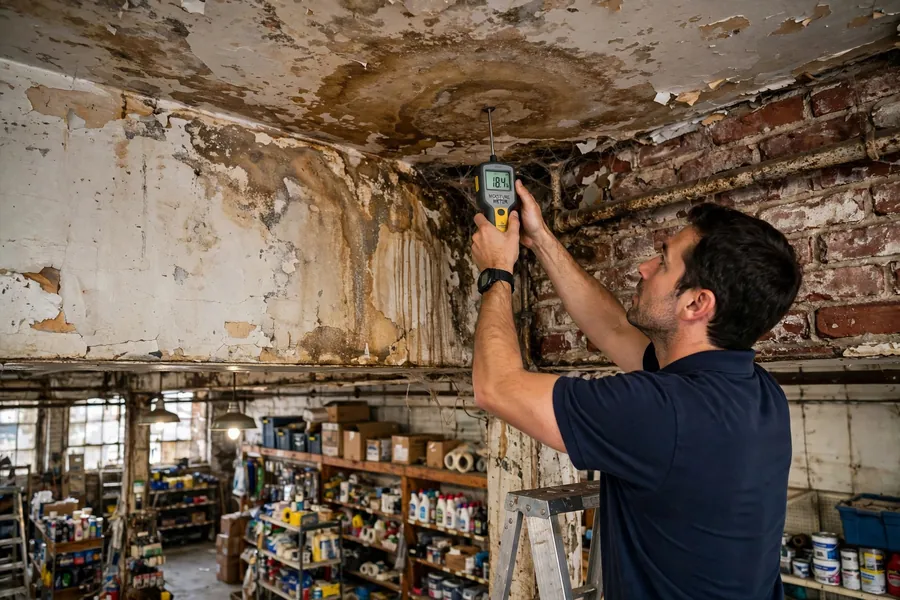
Working in a Building That Never Really Closes
A downtown building is rarely empty. There is a shop trading downstairs, someone living upstairs, maybe a gallery or studio a few blocks south in the Arts District with work on the walls. That changes how we work. We keep the mess contained, we explain what we are testing before we test it, and we do not shut off water to a whole building when isolating one run will do.
It also changes what is at stake. A leak in a house damages a room. A leak in a mixed-use building can close a shop for a day, ruin stock, or damage a neighbor's space, and the longer it runs, the more people it involves. If you see a stain growing, smell dampness in a shared hallway, or hear water when the building should be quiet, that is not a wait-until-Monday situation. Call, and if water is actively coming in, say so up front so we can prioritize it.
One myth worth correcting: a small stain does not mean a small leak. In old buildings, a lot of water can hide in plaster, lath, and old framing before it ever breaks through. The stain you see is often the last place the water arrived, not the first. That is why a hidden leak detection visit starts with testing, not with cutting. And if you are weighing whether this counts as a business call or a home call, our Columbia service areas page covers both sides of that line.
The Square, the Arts District, and Everything Between
Downtown Columbia packs a lot into a small footprint: the 1906 courthouse on the square, brick storefronts that have traded for generations, First Fridays that fill the sidewalks, the James K. Polk Home nearby, and the galleries, studios, and the Mulehouse venue in the Arts District just south of the square. This page covers the whole downtown core, including the Arts District, because the buildings share the same story: old, brick, mixed-use, and plumbed long before modern materials.
If you own, manage, or rent in one of these buildings, keep an eye on the ceilings below every bathroom and kitchen, and on the walls you share with your neighbor. A faint stain, a musty hallway, a paint bubble that was not there last month, those are early warnings, and early is when detection is cheapest and least disruptive. Our Columbia leak detection service takes downtown calls around the clock, because water does not respect shop hours.
Downtown Columbia Leak Detection FAQs
My shop is downstairs and an apartment is upstairs. How do you tell where a leak starts?
We trace it the way water travels, which is usually down and sideways along joists, not straight down. We check the upstairs fixtures and stacks first, scan the ceiling below, and pressure-test runs to see which one loses water. The stain in your shop is the symptom, not necessarily the source, and finding the real source matters because patching the ceiling without fixing the pipe above it just buys you a second stain.
Can you work around shop hours so we do not have to close?
Often, yes. A lot of downtown detection work happens early in the morning or after closing, because nobody wants a crew in the middle of a sales day. Call and tell us your hours and whether tenants upstairs need notice, and we will work out a time that keeps the building running. Emergency calls, where water is actively coming in, come first no matter the hour.
Our building has old cast-iron drains. Does that change the job?
It changes what we look for, not whether we can find it. Cast iron and galvanized piping fail differently than modern plastic: they corrode from the inside, crack at joints, and can weep for a long time before anything shows. We listen and test rather than assume, and we will tell you whether the problem is a supply leak, a drain leak, or both, since the repair path is different for each.
There are galleries and studios near the square. Are those spaces at risk too?
Any older building with plumbing above or beside finished space is at risk, and studios and galleries have an extra worry: water does not just damage drywall, it damages work on the walls and stored pieces. If you have a studio a few blocks south of the square in the Arts District, a small ceiling stain is worth a fast check, not a wait-and-see month.
A shared wall is damp but neither neighbor admits a leak. What happens then?
This comes up a lot downtown, where buildings share walls and sometimes share old plumbing runs. Detection is actually the way out of that argument: we test each side's runs separately and the results show which side is losing water. You get a clear report you can hand to the other owner or a property manager, instead of two opinions and a damp wall.
Leak Downtown? Call (931) 800-6431
Stain on the shop ceiling, damp shared wall, apartment leak dripping through. Tell us what you are seeing and we will trace it to the source.