Signs of a Hidden Water Leak
Hidden leaks rarely announce themselves with a puddle. They show up as bills, sounds, smells, and stains. Here are the nine signs we hear about most, and what each one usually points to.

A hidden leak can run for weeks or months before anyone sees a drop of water. The house just drops hints. The trick is knowing which hints matter and which ones are harmless. Below are the symptoms that bring people to us most often in Columbia and Maury County, explained the way we would explain them standing in your hallway.
High water bill with no change in habits
The classic. Your bill climbs or suddenly spikes, but you are not watering more, nobody moved in, and nothing is visibly running. Before blaming the utility, compare the actual usage numbers across bills, not just the dollar amount, because rates change. If usage really is up, water is going somewhere.
Water meter moves with everything off
Turn off every tap, toilet, and appliance, then watch your meter. If the register or the little leak-indicator triangle keeps creeping, you have a leak, full stop. This is the single most reliable DIY check there is, and it tells us exactly where to start when we arrive.
That calls for a water leak detection visit: we work the whole property until the source shows itself.
Hearing water running when everything is off
That faint hiss or whoosh under the floor or inside a wall, at night, with nothing running. Pressurized water escaping a pipe makes sound, and in a quiet house you can often hear it. The louder and more localized it is, the easier it is to pinpoint.
This is classic slab leak detection territory: we listen the sound down to its loudest point.
Wet spots or damp areas on floors
Carpet that feels damp in one spot, tile that never quite dries, a darkened patch along a baseboard. Dampness that returns after you dry it is water arriving from somewhere. Lift the rug and check whether it is worse near walls or in the middle of the room; that detail helps.
Our hidden leak detection visit is built for exactly this: no visible water, just the clues.
Ceiling or wall stains
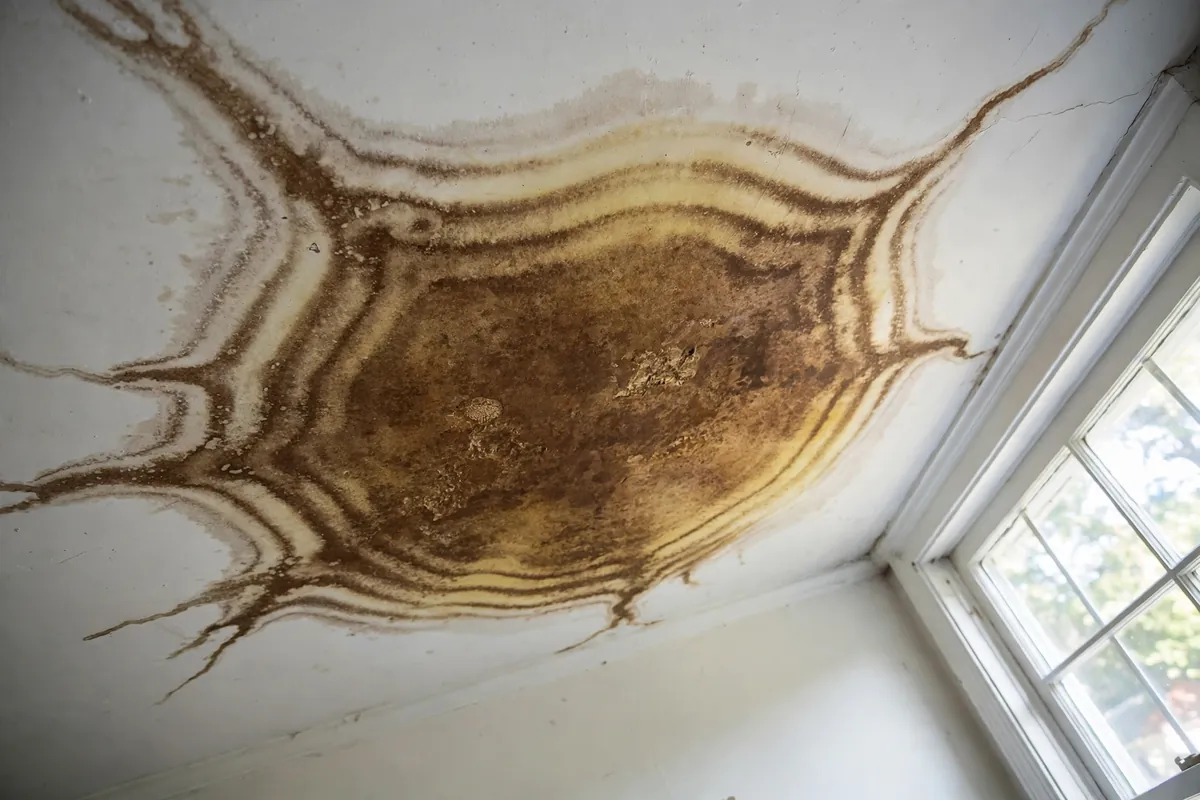
Yellow-brown rings on the ceiling or high on a wall are dried water damage. One important quirk: the stain is not always directly under the leak. Water travels along pipes, joists, and framing, so it can drip a good distance from where it started. Do not assume the pipe is right above the mark.
That is what ceiling and wall leak detection is for: tracing the water back uphill to the real entry point.
Musty odor with no visible water
That damp, earthy smell in a bathroom, closet, or along an exterior wall. Musty usually means moisture is feeding something somewhere it should not be: behind drywall, under flooring, or in a crawlspace. Persistent dampness also feeds mold growth, which is the main reason musty-smelling leaks deserve attention sooner rather than later. If the smell is stronger after rain, note that too; it helps separate plumbing leaks from exterior water getting in.
If the smell centers on a bathroom, bathroom leak detection sorts out supply, drain, and grout failures one by one.
Low water pressure
Pressure that drops suddenly or fades over time can mean water is escaping before it reaches the tap. But leaks are only one cause. A failing pressure-reducing valve, mineral buildup in fixtures, or a municipal supply issue can do the same thing. Narrowing it down matters before anyone starts digging.
Warm spots on the floor
A warm patch on tile or wood flooring, found by walking in bare feet, is one of the most reliable slab-leak clues there is. It usually means a hot-water line under the slab is leaking and warming the concrete. The warm spot often grows slowly over weeks.
A slab leak detection visit traces the warm run with acoustic and thermal equipment.
Soggy yard or standing water
A strip of grass that is greener and faster-growing than the rest, a patch that stays soft and muddy, or standing water in the yard with no rain to explain it. In Maury County clay soil, water from an underground leak spreads sideways instead of draining down, so the soggy area can be wider than the actual leak.
That is the underground leak detection pattern: we trace the buried line and mark the break before anyone digs.
Noticed something off with your water?
A quick call is the cheapest diagnostic there is. Tell us what you're seeing and we'll tell you what it likely means.
What to do when you notice one of these
First, do the meter check described above. It costs nothing and it answers the most important question: is water actually leaving the system? If the meter is still, whatever you are seeing may be old damage, condensation, or something else entirely, and that is genuinely good news.
Second, document what you see. Photos of stains, damp spots, and the soggy area of the yard, taken from a couple of angles, are useful for us and for any insurance claim later. Note dates too. "The stain showed up sometime last month" is less useful than a photo with a timestamp.
Third, resist the urge to open things up based on a guess. Cutting into the wall under a stain or digging up the soggy patch is how small problems get expensive. Detection first, then a repair aimed at the right spot. If you are dealing with active flooding, standing water indoors, or sewage, skip all of this: shut off your main valve and call for emergency leak detection.

One symptom or several?
A single symptom can have innocent explanations. A high bill alone might be a stuck irrigation zone or a toilet that runs silently. But two or three together, say a high bill plus the sound of running water plus a warm floor spot, is a leak until proven otherwise. If that sounds like your house, the honest next step is a detection visit, not another month of hoping it goes away.
Common questions
What is the first sign of a hidden water leak?
Usually the water bill. A bill that climbs or spikes with no change in habits is the most common first sign of a hidden leak, often before any visible evidence appears. A close second is hearing water running when everything is turned off.
Can I check for a leak myself before calling?
Yes. The simplest DIY check is the meter test: turn off everything in the house, then watch your water meter. If it is moving, water is going somewhere. Our resources explain the meter test and other simple checks step by step.
Do musty smells always mean a leak?
Not always, but they often mean moisture is somewhere it should not be. A musty odor with no visible water usually points to a leak behind a wall, under a floor, or in a crawlspace, and it is worth investigating.
Which symptom should I act on first?
Active flooding or sewage is an emergency: shut off your main valve and call. For everything else, the meter test is the fastest way to confirm whether a leak actually exists, and that answer shapes everything that follows.
Recognize one of these signs?
Tell us what you are seeing. We will confirm the leak and pinpoint it before anyone digs.