Your Toilet Is Wasting Water. Let's Find Out Where
A toilet can waste hundreds of gallons a day without a single visible drip. The tank refills when nobody flushed, the base feels damp, or the floor around it is soft. Dye testing and pressure checks sort out whether it's the tank, the seal, or the flange.
Noticed something off with your water?
A quick call is the cheapest diagnostic there is. Tell us what you're seeing and we'll tell you what it likely means.
The silent water waster
Toilets are the single most common source of indoor water waste, and most of it is silent. A flapper that doesn't seal lets tank water trickle into the bowl around the clock. You won't see it, you won't hear it over the normal sounds of the house, but the fill valve tops the tank up every so often and the meter keeps score. We've seen this one add up to a shocking number of gallons over a billing cycle.
The giveaway is sound: if you ever hear the tank refilling when nobody has flushed recently, water is escaping somewhere. Another is the bowl itself. A toilet with a leaking flapper sometimes shows a faint ripple or movement in the bowl water. And the water bill, of course, which is how most people discover it.
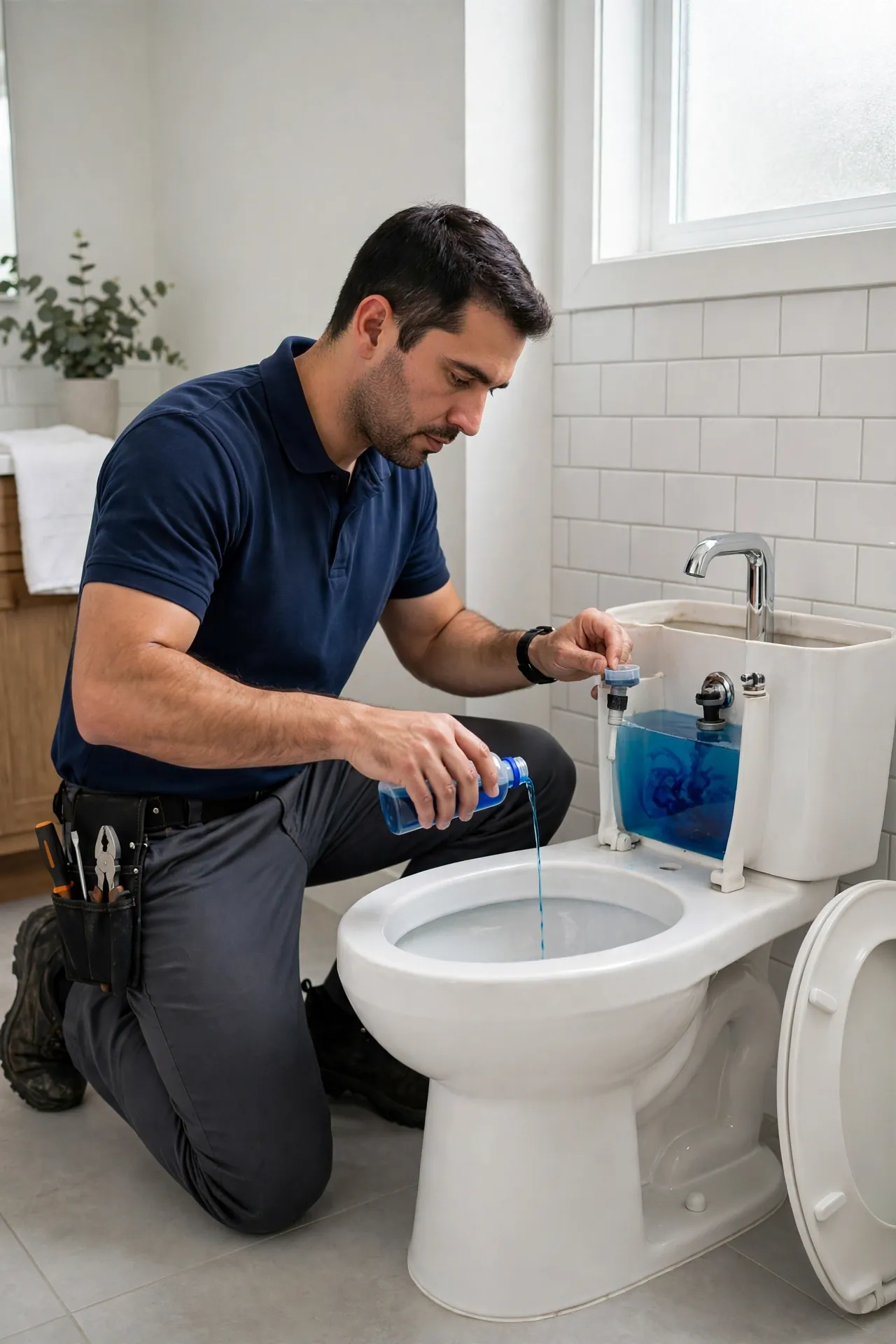
The food coloring test you can do today
This is the best DIY leak check in the whole house, and it costs almost nothing. Put a few drops of food coloring in the toilet tank, enough to clearly color the water, then don't flush for 20 to 30 minutes. If color shows up in the bowl without flushing, the flapper is leaking and tank water is flowing straight into the bowl.
It's a simple test but it answers the most common toilet-leak question definitively. If the test is positive, the fix is usually a flapper replacement, one of the cheapest repairs in plumbing. If the test is negative but the symptoms persist, the leak is elsewhere: the fill valve, the supply line, or the base seal.
When the leak is at the base
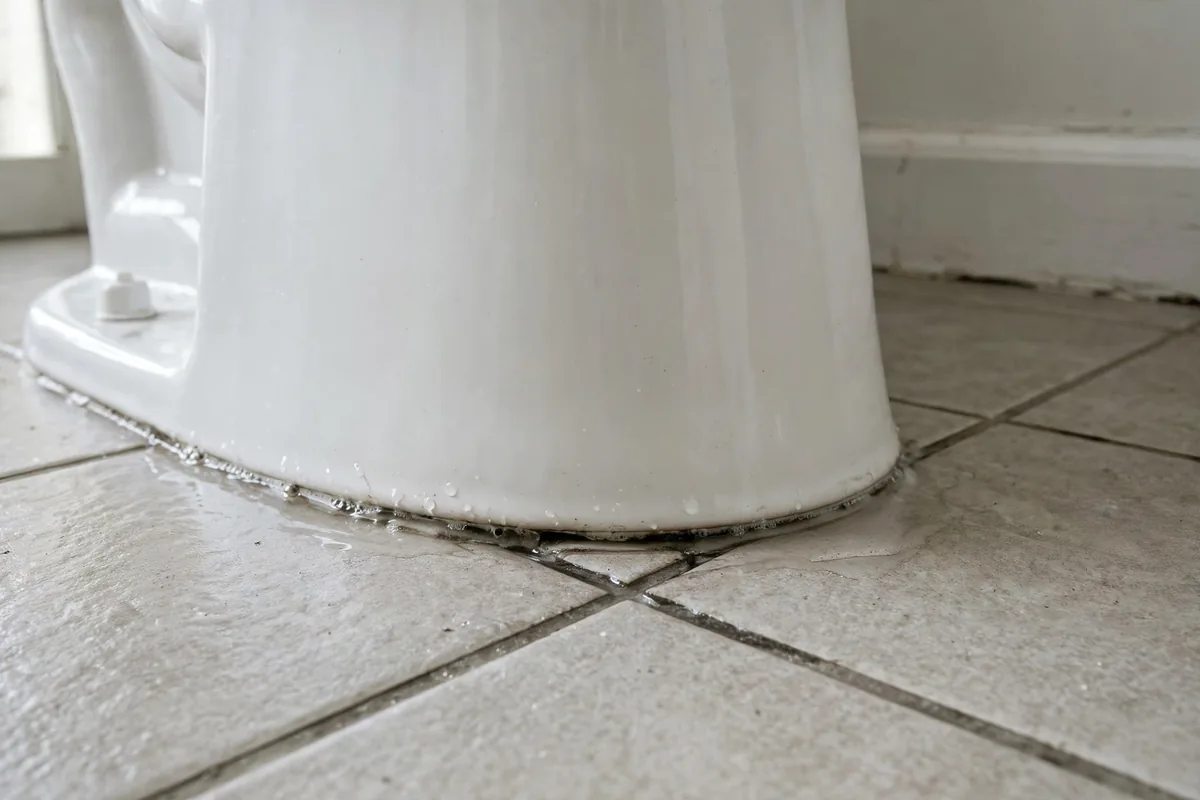
A toilet that rocks slightly, or flooring that's damp or soft around the base, points to the wax ring or flange seal. The wax ring seals the toilet to the drain flange, and when it fails, flush water seeps out at the base with every flush. It also lets sewer gas escape, so a persistent odor around the toilet is part of the pattern.
Base leaks deserve prompt attention because the water goes straight into the subfloor. A wax ring failure that runs for months can rot the subfloor around the flange, turning a simple reseat into a flooring repair. If the toilet moves when you push it gently, or the floor feels spongy nearby, don't put it off.
The fill valve and the supply line
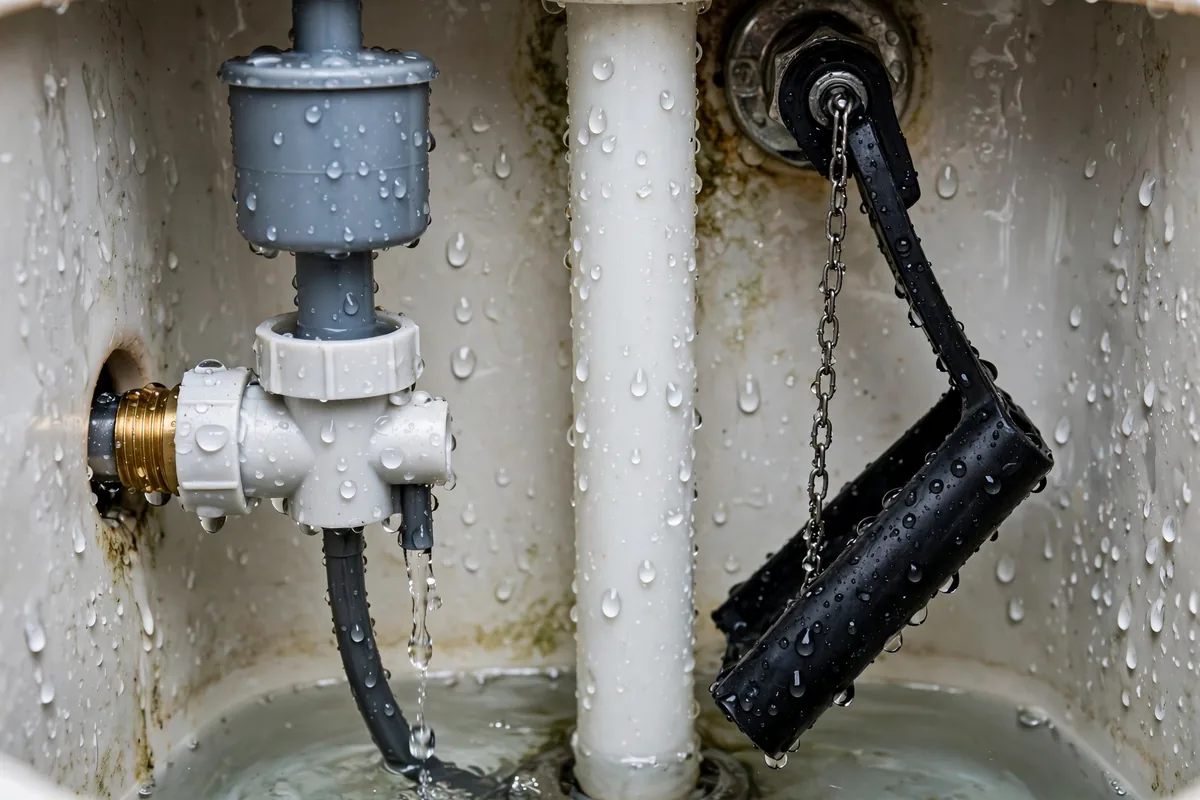
The fill valve is the mechanism that refills the tank after a flush. When it wears out, it can stick, run continuously, or fail to shut off, sending water down the overflow tube nonstop. You'll hear this one: a constant faint hissing or running from the tank. The water level in the tank sits too high, right at or above the overflow tube.
The supply line and its shutoff valve are the other check. The braided or rigid line from the wall to the tank, and the little valve behind the toilet, can weep slowly at the connections. Because it's behind the toilet where nobody looks, a supply-line weep can dampen the wall and floor for a long time before anyone notices. We check the whole assembly, not just the tank.
Toilets in Columbia's older bathrooms
Much of Columbia's housing stock predates modern low-flow toilets, and the internals wear out on schedule: flappers harden, fill valves stick, and supply connections corrode. In older homes, we check original shutoff valves especially carefully, because a valve that hasn't turned in twenty years can weep once it's disturbed. If your bathrooms are original to the house, the toilet is the first place we look when the bill climbs. We serve all of Columbia and Maury County, from the older neighborhoods to the newest subdivisions.
What our visit covers
We run the dye test properly, check the flapper seal and fill valve operation, inspect the supply line and shutoff valve, check the base for movement and moisture, and look at the flooring and subfloor around the toilet for damage. If the toilet is fine but the bill is still high, we'll say so and point the search elsewhere, because a toilet that tests clean isn't the culprit no matter how suspicious it looks.
Most toilet leaks turn out to be simple once located: a flapper, a fill valve, a supply line, or a reseat with a new wax ring. The value of the visit is certainty about which one, so the fix is right the first time.
Common Questions
How do I know if my toilet is leaking silently?
Do the food coloring test: color the tank water, wait 20 to 30 minutes without flushing, and check whether color appears in the bowl. If it does, the flapper is leaking. Also listen for the tank refilling on its own, which means water is escaping somewhere.
My toilet runs every few minutes. What's causing that?
Usually a flapper that isn't sealing, letting tank water trickle into the bowl until the fill valve tops it up again. A worn flapper is the most common cause and one of the cheapest fixes. The dye test confirms it in half an hour.
There's water at the base of my toilet. Is that serious?
It usually means the wax ring seal has failed, and yes, it's worth fixing promptly. Every flush sends water into the subfloor around the flange, which rots wood over time. If the toilet also rocks, the flange itself may need attention.
Can a toilet leak really affect my water bill that much?
Absolutely. A silently running toilet can waste hundreds of gallons a day, which shows up as a major bill increase with no change in habits. It's the first thing to check when a bill jumps and there's no visible leak anywhere else.
The toilet is fine but my bill is still high. What next?
Then the search moves on: irrigation, the water heater, a slab line, or the service line. We'll tell you the toilet is clear and redirect the investigation rather than guessing.
Related Leak Detection Services
Bathroom Leak Detection
Supply vs drain vs grout: we test each source separately.
Learn moreHidden Leak Detection
No visible water, just symptoms: meter checks, thermal scans, moisture mapping.
Learn moreWater Leak Detection
The general visit: we work the whole property and narrow the mystery to a source.
Learn more
Let's pin down that leak.
Describe the symptom on the phone and we'll show up with a plan, not a hunch.