Crawlspace & Basement Leak Detection
Musty air, standing water, and damp foundation walls all look alike from the access door, but a pipe leak, seepage, and groundwater lead to very different fixes. We test the plumbing first and find the actual source.
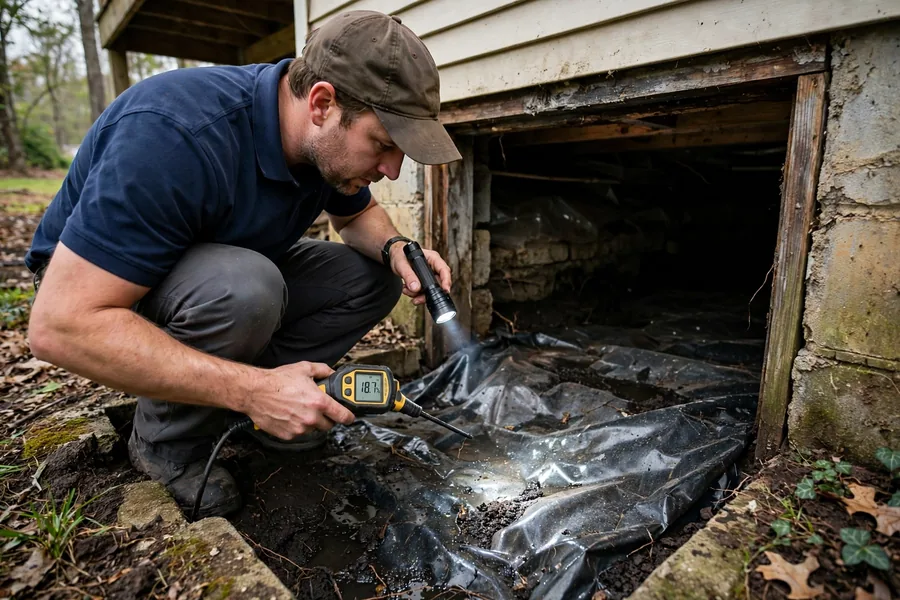
Spotted a warning sign? Let’s find the source.
Most leaks are located in a single visit. Call now and tell us what you’re seeing.
Columbia homes and the space underneath them
A lot of Columbia houses sit over a crawlspace rather than a slab or a full basement. It is a practical Tennessee build: the house gets off the ground, the pipes and ducts run underneath, and the access door is usually somewhere you forget about until something smells wrong. That forgotten space is also where a slow leak can live for months without anyone seeing it, because nobody goes down there on a normal day.
The homes most affected are the ones you see all over Maury County, older ranches and two-stories with original or aging supply lines, plus newer builds where the crawlspace was closed up tight and never checked again. Add a humid summer, a wet spring, and a winter freeze, and you have a space that is almost always damp to some degree. The question on a detection visit is never whether a crawlspace is a little humid. It is whether water is coming from a pipe, from the ground, or from outside, because each answer leads somewhere different.
What brings us under the house
The calls usually start upstairs, not downstairs. A musty smell that gets stronger after rain. A bedroom floor that feels soft near an exterior wall. A water bill that climbed while nothing visible changed. A patch of efflorescence, that white mineral bloom, on a foundation wall. Sometimes a homeowner actually goes under the house for something else and finds standing water, or a vapor barrier that has pulled loose and is holding a pond.
Standing water deserves a calm response, not a panicked one. It looks dramatic, but it does not by itself prove a plumbing leak. Rainwater, groundwater, and a plumbing weep can all end up in the same low spot. Our job is to sort those out with tests, not assumptions, because chasing a plumbing repair for a drainage problem wastes money, and chasing drainage for a plumbing leak wastes time while the pipe keeps running.
Maury County clay soil, and why it matters to pipes
If you have gardened anywhere in Maury County, you know the soil. It is heavy clay, and clay moves. It swells when it soaks up water and shrinks when it dries out, and that seasonal push and pull works on everything buried or supported in it: supply lines, drain lines, footings, and the piers under a crawlspace. A joint that held for fifteen years can start weeping after a wet spring followed by a hard dry summer, not because anyone did anything wrong, but because the ground moved a fraction of an inch in the wrong direction, season after season.
That is also why crawlspace leaks and foundation worries get tangled together. A long-running leak saturating clay under a footing is a different matter from a one-week drip, and we say so plainly when the signs point that way. Detection can tell you where water is coming from and how long it looks to have been there. What it cannot do is assess a foundation, and we will not pretend otherwise. If our findings suggest the soil under a footing has been saturated for a long time, a foundation specialist is the right next call, and we will tell you that in plain terms.
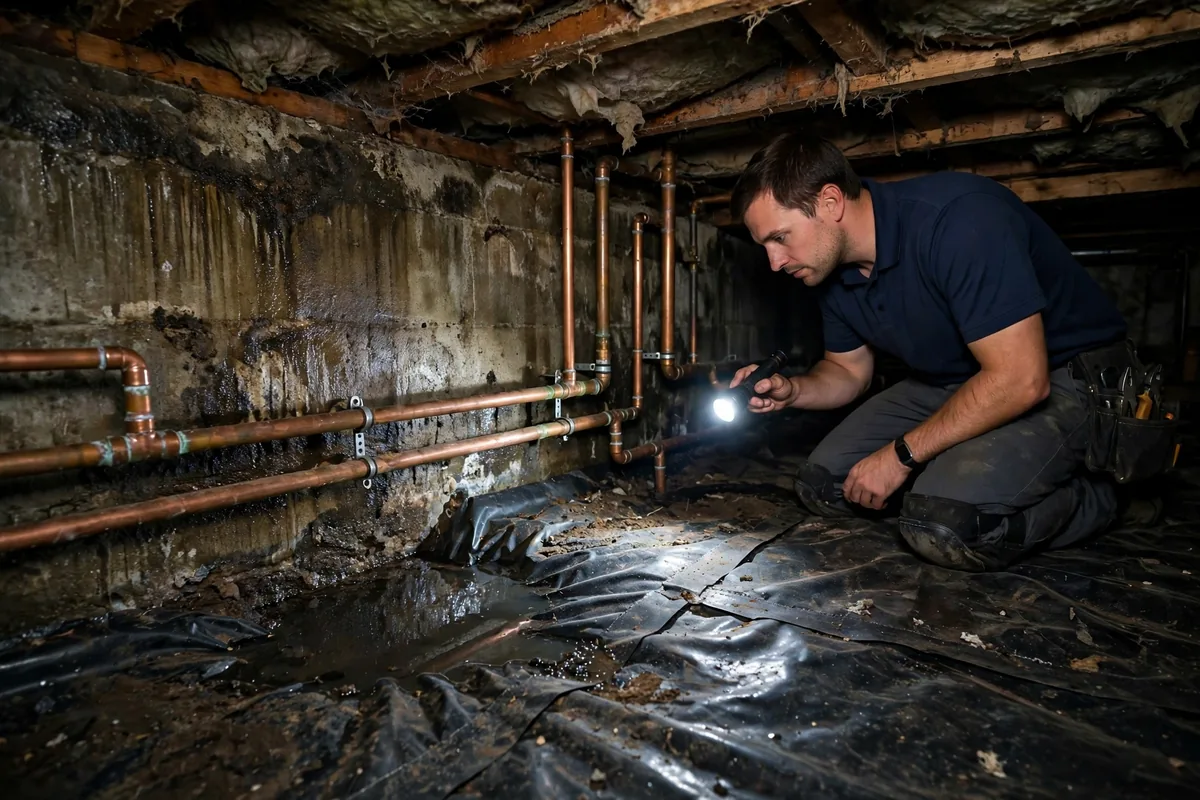
Moisture, musty smell, and the vapor barrier
A vapor barrier is a sheet of plastic laid over crawlspace soil to slow ground moisture from rising into the house. When it is intact and overlapped properly, it helps a lot. When it is torn, bunched, or holding standing water on top of it, it can hide the very problem it was meant to prevent, because water sits on the plastic where nobody looks, and the soil underneath stays wet.
Musty smell is the symptom homeowners notice first, usually in a room above the crawlspace or in the hallway near the access door. It is easy to dismiss as just an old-house smell, and sometimes it is just humidity. But a musty smell that is new, or that gets worse after rain or after running a particular fixture, is worth tracing. A slow supply weep can keep joists and insulation damp for months without ever making a puddle you would notice from the access door, and damp wood does not get better on its own.
One honest boundary here: finding the moisture source is our work. Drying a crawlspace, replacing insulation, or dealing with microbial growth are separate jobs for separate specialists. We will not promise those outcomes, and you should be wary of anyone who bundles a detection visit with a remediation sale before the source is even located. Source first, everything else second.
Foundation wall seepage, and telling it apart from a pipe leak
Seepage through a foundation wall or at the joint where the wall meets the footing usually shows up after heavy rain, and it usually dries between storms. A pipe leak, by contrast, does not wait for rain. That pattern is the first clue, and we test it rather than trust it: meter check with everything off, isolation of the runs that pass through or near that wall, and moisture readings along the wall itself.
Seepage stains tell their own story too. Mineral deposits and tide lines on a wall mark where water has repeatedly reached and dried. A fresh, clean damp patch with no mineral trail, especially near a pipe penetration, points more toward an active plumbing source. We read those signs on site and explain which pattern we are seeing, because the next step for seepage and the next step for a pipe leak are completely different conversations.
Sump pumps and drainage, in context
Some Columbia homes, especially those with basements or low-lying lots near the Duck River bottoms, have a sump pump or an interior drain system. When those are working, they quietly move water out. When a pump fails, a discharge line clogs, or a drain channel fills with silt, water finds the lowest corner and stays there, and it looks for all the world like a leak.
On a detection visit we note the drainage picture as context, whether a pump is running, whether discharge is clear, whether water is pooling near a drain rather than near a pipe, because that context helps rule things in or out. But correcting drainage, regrading a yard, or replacing a sump system is not detection work, and we do not present it as such. Our report says what the plumbing tests showed, what the drainage picture looked like, and which specialist fits the finding.
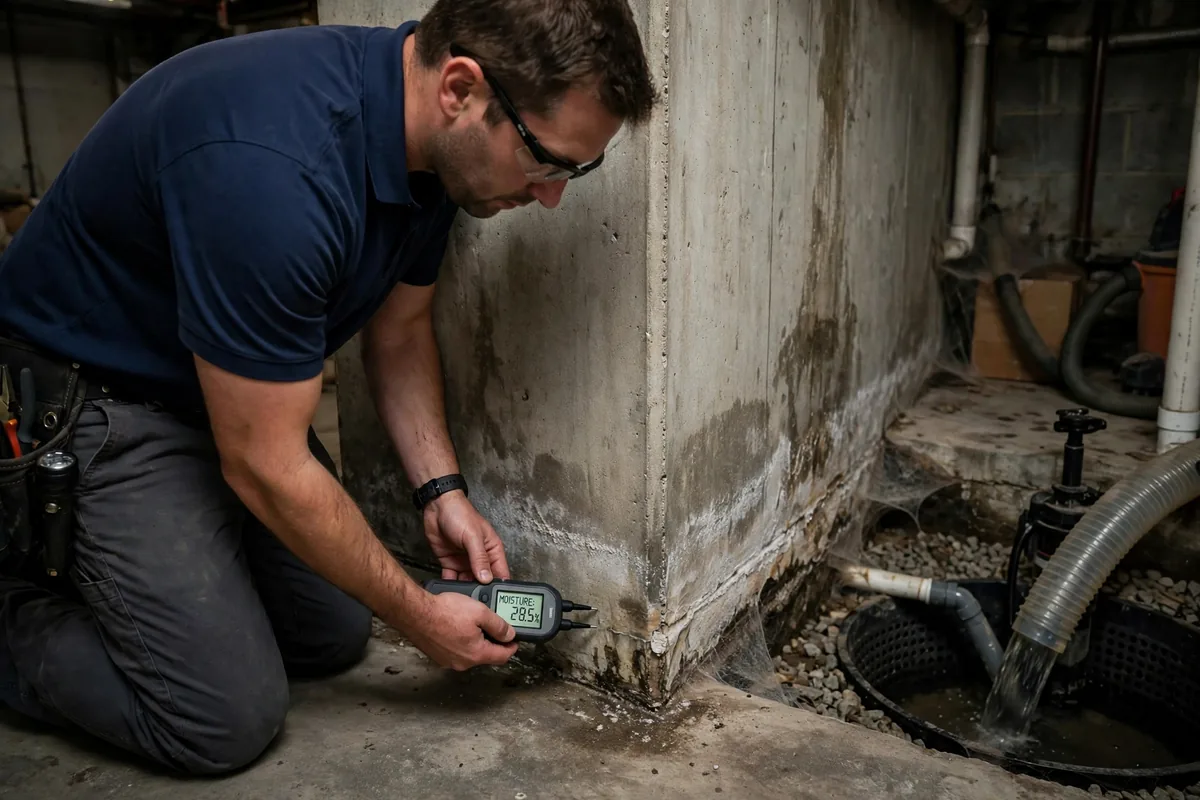
How a crawlspace or basement detection visit works
A visit from our Columbia leak detection service starts upstairs, with your story and a meter check, because proving that water is leaving the plumbing system at all saves a lot of crawling around. If the meter moves with everything off, we know we are chasing a supply leak, and we work the branches that run through the crawlspace or basement, listening and scanning, and isolating runs one at a time. If the meter holds steady, we look at drain and fixture patterns, and at whether the moisture follows rain rather than usage.
Under the house, we work along the runs with acoustic listening and moisture readings, marking the source or the narrowed area rather than opening things up to look. We check pipe penetrations through foundation walls, joints and supports stressed by soil movement, and the areas around water heater and laundry lines that drop through the floor. You get findings in plain language: what was tested, what held, what did not, and where the source is or is not.
Basements get the same approach with a different emphasis. A full basement usually shows its leaks on the walls or floor, so the work is tracing that water back to a pipe, a penetration, or seepage, and being honest about which one it is. The same rule holds in both spaces: detection first, and the right specialist second. For the broader picture of how we work, see how leak detection works, and for leaks that are not confined to the crawlspace, our hidden leak detection visit and slab leak detection pages cover the neighboring cases.
Crawlspace & Basement Leak Detection FAQs
Why does my crawlspace smell musty even when I cannot see water?
Musty air usually means moisture has been present long enough for organic material to stay damp, even if no puddle is visible on the day you look. A slow supply weep, a drain seep, or ground moisture wicking through the soil can keep wood and insulation damp between visits. Smell is a legitimate clue, and it is worth tracing to a source rather than covering with a deodorizer.
Is standing water under my house always a plumbing leak?
No, and that distinction shapes the whole visit. Standing water can come from a plumbing leak, from surface water finding its way in after heavy rain, or from groundwater rising in a low spot. We test the plumbing side first, meter, isolation, and pressure checks, because a plumbing source can be proven or ruled out. If the plumbing holds, the water is a drainage or groundwater matter for the right specialist.
Can you find a leak in a crawlspace without tearing out the vapor barrier?
Usually, yes. Detection work is designed to avoid exploratory damage. We lift or work around small sections as needed, listen and scan along runs, and use moisture readings to narrow the area. Any opening we make is small and discussed with you first, and the goal is a marked source, not a gutted crawlspace.
Does Maury County clay soil really affect my pipes?
It can. Clay swells when wet and shrinks when dry, and that seasonal movement stresses buried and under-house lines, joints, and supports over years. It does not guarantee a leak, plenty of clay-soil homes never have one, but it is one reason a line that held for a decade can start weeping after a wet season followed by a dry one.
Do you do waterproofing or mold cleanup after you find the leak?
No. Our work is detection: finding and marking the source and explaining what we found. Waterproofing, drainage correction, and mold remediation are separate trades with their own methods, and we will tell you plainly when a finding belongs with one of them. Finding the source first keeps those next steps focused instead of guesswork.
Related Leak Detection Services
Hidden Leak Detection
No visible water, but the bill, meter, or smell says otherwise.
Learn moreSlab Leak Detection
For slab homes: warm floors and water sounds under concrete.
Learn moreUnderground Leak Detection
Yard lines between meter and house, traced without digging blind.
Learn more
Musty smell or water under the house? Let's trace it.
Tell us what you are noticing upstairs or under the house, and we will test the plumbing first, so the next step is based on a source, not a guess.