Pool Losing Water: Evaporation or a Leak?
Every pool loses water in a Tennessee summer. The bucket test, done right, tells you in a day whether yours is losing a normal amount or leaking somewhere you cannot see.
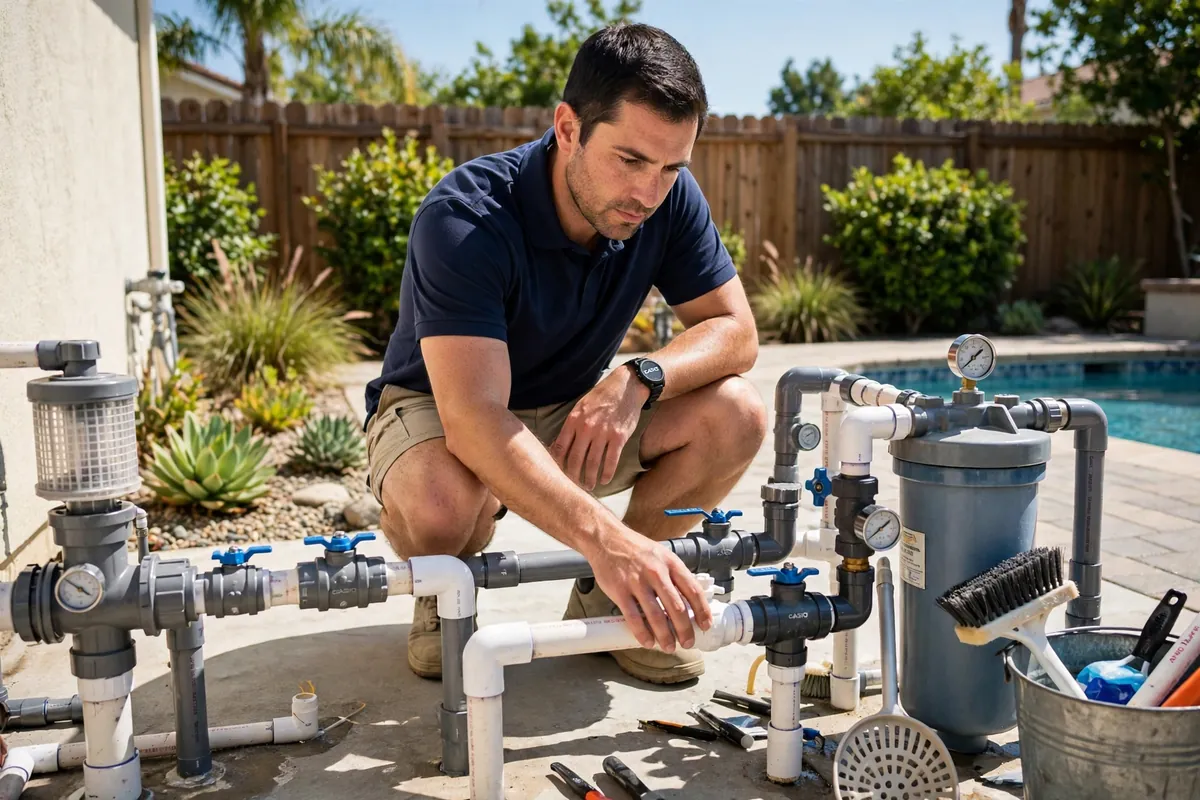
Every pool owner in Columbia has had the same moment: you walk past the pool, glance at the waterline, and think it looks lower than it did a few days ago. Then comes the second thought, the one that keeps you guessing all summer. Is this just July, or is something actually broken? Pools lose water every day to the air, and in a Middle Tennessee summer that loss is easy to see. A leak, meanwhile, can lose a similar amount without showing a single puddle. Telling those two apart matters, because one needs nothing at all and the other quietly runs up your water bill and your chemical use all season.
The trick that settles it is not staring harder at the waterline. It is keeping a short log and running one simple comparison. Write the level down, note the weather and whether anyone swam, and do that for a week or two. Patterns show up fast. A pool that drops on windy, busy days and holds steady on calm, quiet ones is behaving like evaporation. A pool that drops the same amount no matter the weather, or drops faster and faster as the weeks go on, is telling a different story. The bucket test below turns that hunch into an answer in a single day.
What evaporation looks like across a Columbia season
Evaporation is not one steady rate. It follows the season, the weather, and how the pool gets used. In late spring, when the water is still warming up and nights are cool, loss is modest. By late June and July, with long sunny days, warm nights, and a heater running, the same pool loses noticeably more. Come September, as nights cool off, it slows down again. So the first question to ask yourself is not "how much did it drop" but "how much did it drop compared with last month, in similar weather?" A July drop that worries you might be perfectly ordinary for July, and a September drop of the same size would be more suspicious.
Wind is the factor most people underestimate. Moving air strips the damp layer off the surface and replaces it with dry air, so a windy stretch can take far more water than a calm one, even at the same temperature. Sun matters too, and so does use. Every swimmer carries water out on their skin and swimsuit, dogs shake it everywhere, and a lively afternoon with kids jumping in can take out more than a whole calm day of evaporation. A solar cover changes the picture a lot: it blocks wind and traps humid air over the surface, so a covered pool loses far less than an uncovered one. If you stopped using a cover this year, started swimming more, or had a windier stretch than last summer, the level may have a boring explanation. That is worth ruling out before you assume the worst.
Your autofill, if you have one, can hide all of this. When it works right, it quietly replaces lost water and you never notice the level move, until the water bill arrives. When it starts running far more often than it used to, that change in behavior is itself a clue worth writing down. Note how often it kicks on, and whether the pool still drops even with it running. Those notes are gold later, whether you end up calling us or not.
The bucket test, done so you can trust the result
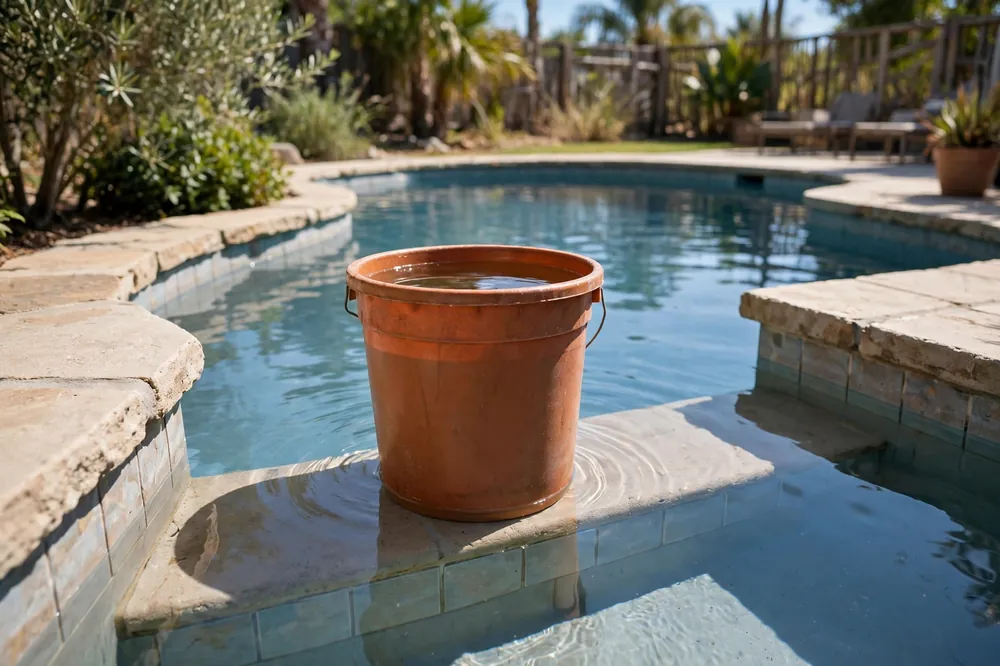
The bucket test works because it gives evaporation a control group. A bucket of pool water sitting in the pool loses water to the air at roughly the same rate as the pool itself, because both share the same sun, wind, and temperature. If the pool drops more than the bucket, the extra water went somewhere other than the air. That somewhere is usually a leak. The test is simple, but the details are what make the result believable.
- Use pool water in a plain five-gallon bucket. Fill it to within an inch or two of the top so it starts at the same temperature as the pool. Mark the level inside the bucket with tape or a waterproof marker, and mark the pool level on a tile or the skimmer faceplate at the same time. Snap a photo of both marks so you are not squinting at tape the next day wondering if it moved.
- Set the bucket in the pool if you can. A step or ledge works well, with the water outside the bucket sitting at about the same height as the water inside. If no step works, the deck right beside the pool is an acceptable backup, just know it is slightly less exact, because a bucket on hot decking can warm up differently from the pool.
- Pick a calm, dry 24 hours and keep everyone out. No swimming, no splashing, no topping up. A cannonball mid-test ruins the whole thing. Heavy rain ruins it too, because rain adds water to the pool and the bucket unevenly, especially if the bucket sits under any shelter. If it rains hard, throw the result out and redo it on a dry day.
- Run it once with the pump off, then once with it on. The pump-off run is the cleanest: it takes the plumbing out of the picture and tests the shell and skimmer alone. The pump-on run adds the plumbing back in. If the pool loses more with the pump running, the trouble is more likely in a line that only carries water when the system runs. If it loses the same either way, the shell or skimmer area is the likelier suspect. Two runs, two answers, and a much shorter conversation when you call.
- Compare the two drops, and repeat a small gap. If pool and bucket fell by about the same amount, evaporation explains it. If the pool fell clearly more, that gap is water leaving somewhere else. A tiny gap can be measuring error, so repeat the test before you conclude anything. A clear gap that shows up twice is a real finding.
Three quick checks before you call anyone
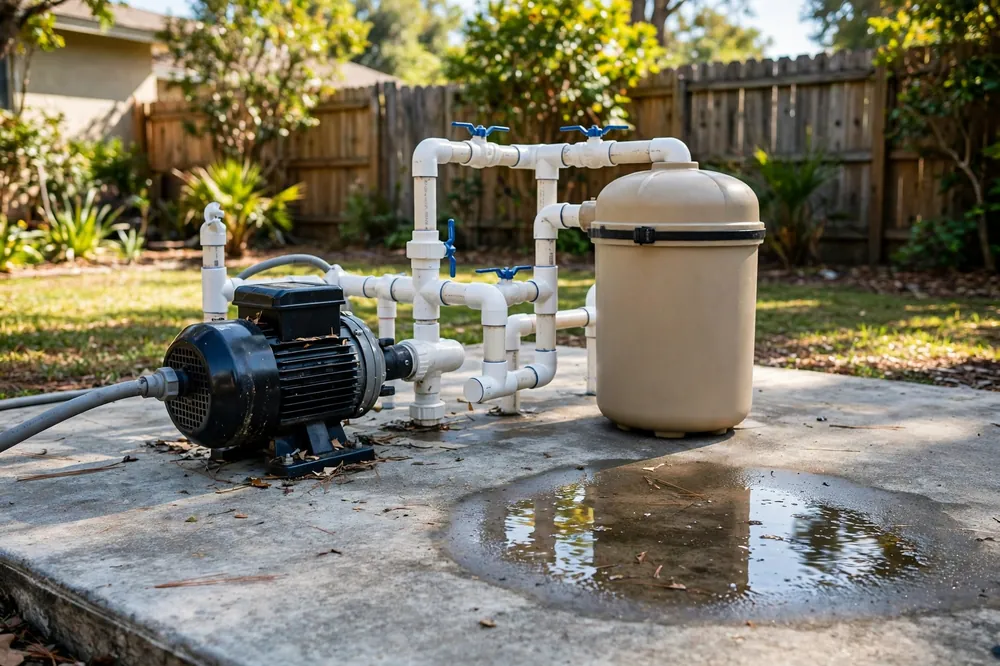
These take ten minutes and they are worth doing, because they often explain the result or sharpen the question. First, look at the skimmer mouth: a waterline stain sitting below the skimmer opening, or a skimmer that keeps gulping air when the level looks fine, is worth noting. Second, watch the autofill: if it runs far more than it did last season, or the pool drops right after a backwash, write that down. Third, walk past the equipment pad and look for a damp ring at a joint or a patch of ground that stays soft after dry weather. You do not need to diagnose anything here. You are just gathering observations, and those three notes will save real time on a visit. The detailed pad and line testing, pressure testing each run and tracing the losing line, is what a pool plumbing leak detection visit is for, and our how leak detection works page explains that general approach.
Does your pool's surface change the answer?
The bucket comparison works the same whatever your pool is made of, because the bucket shares the pool's weather either way. What changes is where a confirmed leak is likelier to sit, and that changes what you look at while you wait for help. A vinyl liner pool can develop a tear at a seam, a fitting, or a step edge, and a liner that has pulled away from the wall can hide a slow loss behind it. Look for wrinkles that were not there last season, a liner that feels loose around a fitting, or a damp patch on the ground outside the wall near a return. A concrete or gunite pool tells a different story: hairline cracks in the plaster, a tile line that has shifted, or a skimmer mouth that has separated from the shell. A fiberglass shell is the most rigid of the three, so a loss there points more often at fittings, the skimmer throat, or the plumbing runs than at the shell itself. None of this replaces the bucket comparison. It just tells you, and us, where to look first once the comparison says leak.
Keep a simple loss log for two weeks
If the first bucket run is unclear, a short written log beats memory every time. Once a day, at the same hour, jot four things: the weather and wind, whether anyone swam, whether the cover was on, and the waterline against your tape mark. After a week or two, the pattern usually speaks for itself. Steady drops on calm, covered, unused days point one way. Drops that track wind and swim days point the other. Bring the log to the call if you end up making one. A technician who can see two weeks of readings, instead of hearing "it seems lower," starts the visit much further along, and you get a faster answer for it.
Reading your result: what each outcome means
Same drop in pool and bucket: evaporation is the story. Keep the log going for another week if you are still uneasy, and check the cover and autofill before worrying further. Small, unclear gap: repeat the test once, pump off, on a dry day. A gap that repeats is meaningful even if it looks modest. Clear gap, worse with the pump on: a plumbing-side issue is likely, and this is the point to call, because the losing line will not fix itself. Clear gap either way: shell or skimmer area, also worth a call, since those tend to grow. And a pool that needs topping up every day or two, whatever the test says, has already told you enough. Do not let a slow pool leak run all season because it seems small. Every gallon you replace needs treating again, and water escaping underground can wash soil from under a pad or deck over time. A bucket test costs nothing, takes a day, and turns a summer of guessing into a clear answer. If the bucket says leak, call our home base in Columbia and tell us what the two runs showed and what your three checks found. That is the fastest way from a falling water level to a found leak.
Bucket test says leak? Let us find which line is losing water.
Call and tell us what you are seeing. We will help you figure out the next step.
Common questions
My pool drops faster the week we swim a lot. Is that a leak?
Usually not by itself. Swimmers carry water out, dogs shake it everywhere, and a lively afternoon can take out more than a calm day of evaporation. If the level recovers its normal pattern on quiet weeks, use is the likely explanation. If it drops the same amount on quiet weeks too, run the bucket test.
Does a solar cover really change how much water I lose?
Yes, a lot. A cover blocks wind and traps humid air over the surface, which are the two biggest drivers of evaporation. If you stopped using a cover this year, a bigger drop is expected, and comparing covered weeks with uncovered weeks tells you how much of the change is the cover.
My autofill runs every day now. Is that normal?
It depends on the change, not the fact itself. An autofill that quietly tops up in summer is doing its job. One that runs far more often than it did last season, or cannot keep up at all, is a behavior change worth noting, and it pairs well with a bucket test result when you call.
Rain fell during my bucket test. Do I have to redo it?
Yes, if the rain was heavy. Rain adds water to the pool and the bucket unevenly, especially if the bucket sits under any shelter, so the comparison stops being fair. Redo the test on a dry, calm day for a result you can trust.
Does the bucket test work the same for vinyl and concrete pools?
The comparison works the same either way, because the bucket shares the pool's weather whatever the shell is made of. What changes is where a confirmed leak is likelier to sit, which is a question for the detection visit, not for the test itself.
Still unsure? Call (931) 800-6431
Open 24/7 in Columbia, TN. Tell us what you found and we will take it from there.