How to Run a Water Meter Test
Thirty minutes, no special tools, and one honest answer: is water leaving your plumbing when everything is off? Here is the test we run first on many service calls.
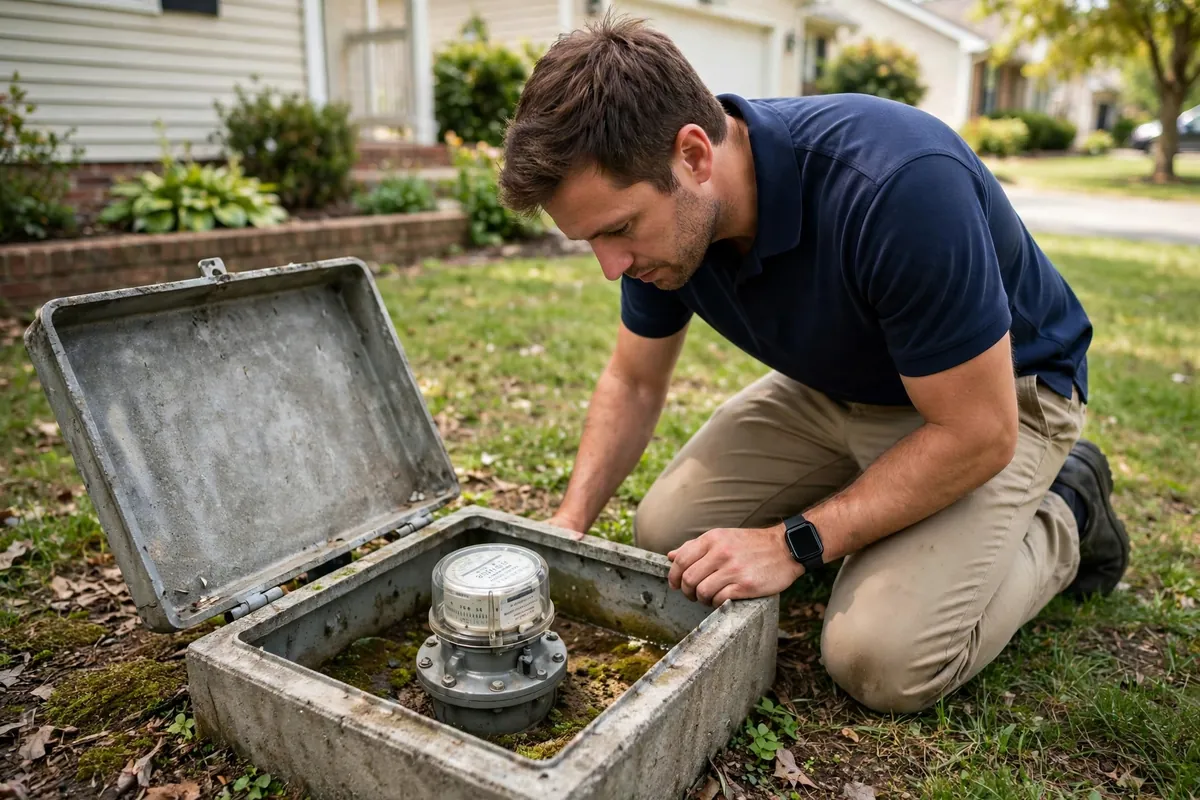
Your water meter is the most honest witness in your house. It does not guess, it does not forget, and it does not care whether you can see the leak or not. If water is leaving your plumbing system and the meter is moving while everything is off, something is using that water. That is the whole idea behind the water meter test, and it is a check any homeowner in Columbia can run in about half an hour, with no tools beyond a phone camera and a bit of patience.
We use this test on service calls all the time, often before we touch a listening device or a thermal camera. It tells us whether there is a leak at all, and it often tells us whether the leak is inside the house or out in the yard. That second part matters, because it decides where the search starts. A homeowner who runs the test before calling can save real time on the visit, because we walk in already knowing which half of the system to chase.
Before you start: find your meter and your shutoff
Most Columbia homes have the meter in a box near the street or at the edge of the yard, often a rectangular lid marked with water or meter, sometimes flush with the grass. The lid can be heavy and the box can hold water, bugs, or dirt, so gloves help and a flat screwdriver helps pry a stuck lid. Inside you will find the meter itself, usually with a dial face and a row of numbers. Some meters are digital and show a flow rate on a small screen. Either type works for this test, as long as you can see whether the numbers or the indicator are changing.
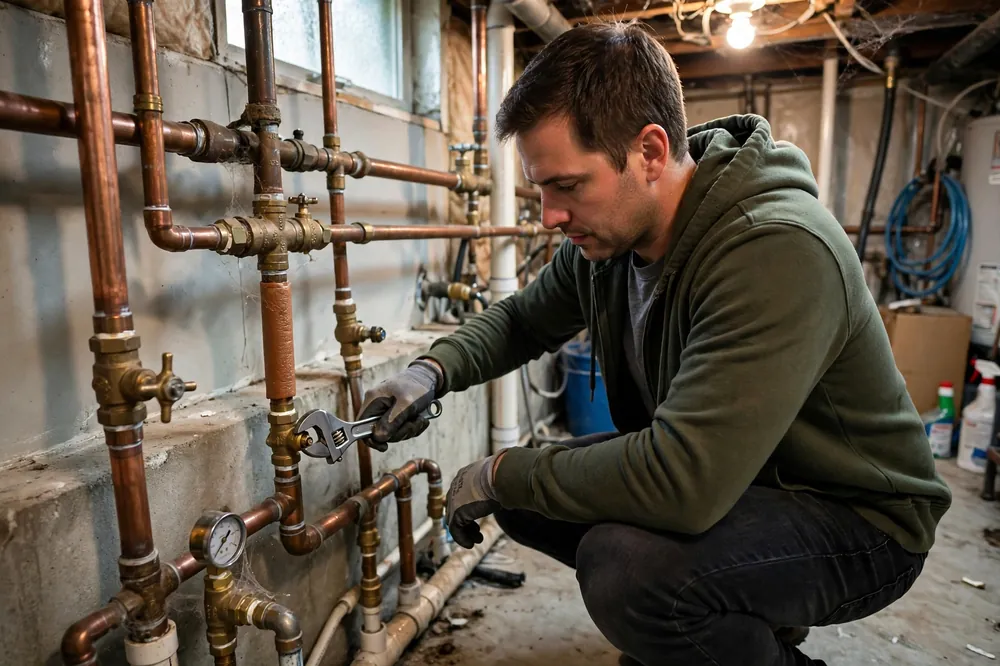
The second thing to find is your main shutoff inside the house, usually near where the water line enters, often by the water heater or in a utility area. You will need it for the second half of the test, which separates an indoor leak from an outdoor one. If you cannot find it, or it will not turn, note that and run the first half of the test anyway. A stuck shutoff is worth fixing on its own, and it is exactly the kind of thing you want to discover on a calm afternoon rather than during an active leak.
One caution up front: do not force a meter valve or a shutoff that will not move. Meter boxes belong to the utility in many cases, and a seized valve can break if muscled. If something will not turn with reasonable hand pressure, leave it alone and call. The test is useful, but it is never worth breaking a valve over.
The test, step by step
- Turn everything water-using off. Every faucet, shower, toilet, dishwasher, washing machine, and ice maker. Turn the irrigation controller off too, not just to a zone that looks idle, but fully off, so no zone can kick on mid-test. If anyone else is home, tell them not to flush or run water for the next 30 minutes. A single flush during the test ruins the result and sends you back to the start.
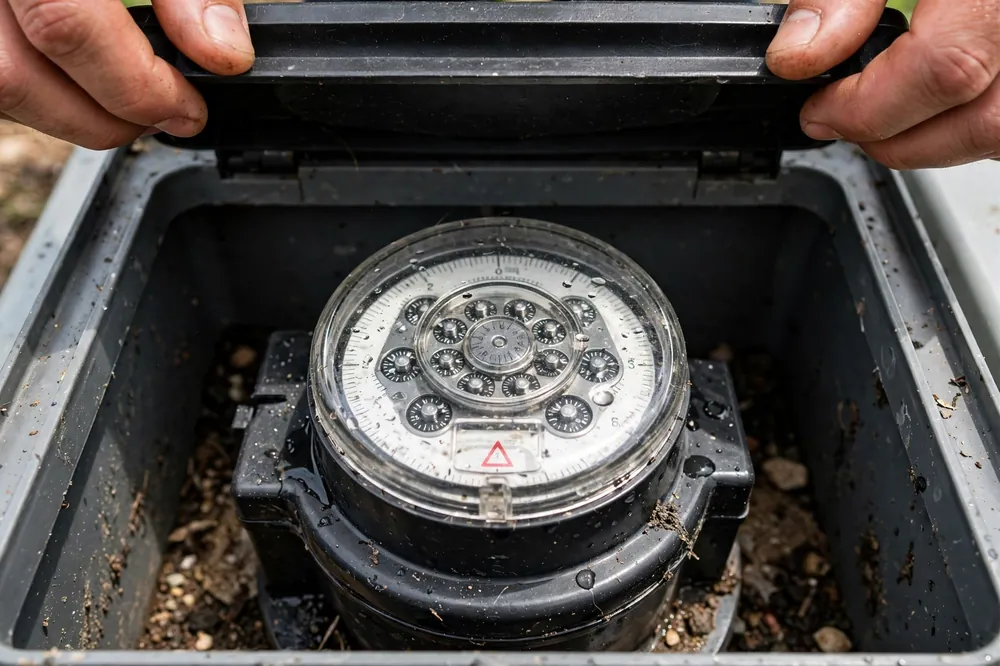
- Read the meter and take a photo. Write down the numbers exactly as shown, or take a clear photo of the dial face. On an analog meter, note the position of the sweep hand and the small leak indicator, often a little triangle or star-shaped dial that spins with even tiny flows. On a digital meter, note the reading and whether it shows a flow rate. The photo matters because it is easy to misremember a digit, and the photo settles arguments later.
- Wait 30 minutes with everything still off. Thirty minutes is a good middle ground. Fifteen minutes can miss a very slow leak, and an hour is hard to hold with a family in the house. Do not use any water at all during the wait. If you have a water softener or a filter that regenerates on a timer, check whether it is due to run. A regeneration cycle during the test looks exactly like a leak on the meter, and it has fooled plenty of people.
- Read the meter again. Compare the second reading to the photo. If nothing changed, and the leak indicator did not move, your system held water for half an hour. That is a good sign, though it does not rule out a drain-side problem or a leak that only shows under pressure or use, like a toilet that leaks when flushed. If the numbers moved, water went somewhere. Note how much it moved, because the size of the movement hints at the size of the problem.
- Isolate indoor versus outdoor. If the meter moved, close the main shutoff inside the house, so the house is cut off but the line from the street to the house is still live. Wait another 15 to 30 minutes and read the meter again. If it stopped moving, the leak is most likely inside the house, past the shutoff. If it keeps moving with the house shut off, the leak is most likely in the service line between the meter and the house, or in an outdoor line. That distinction is the most valuable thing this test gives you.
- Open the shutoff and check fixtures one by one. If the leak looks indoor, turn the house water back on and check the usual suspects in order: toilets, faucets, the water heater, and the washing machine connections. The food-coloring test in a toilet tank takes ten minutes and catches a worn flapper, which is the most common indoor culprit we see. If every fixture looks dry and the meter still moves with everything off, the leak is hidden, in a wall, under a slab, or in a run you cannot see.
Reading the leak indicator
The leak indicator deserves its own mention, because it is the most sensitive part of the meter. On many analog meters it is a small triangle or star that turns with very small flows, flows too small to move the big sweep hand noticeably in a few minutes. If that little dial is creeping around while everything is off, water is moving, even if the main numbers barely change. Watch it for a full minute. A dial that twitches and stops may be a toilet refilling or a softener finishing a cycle. A dial that keeps turning steadily is a leak talking.
Digital meters vary, so read what yours shows rather than guessing. Some display a flow rate, some flash a leak warning after a period of continuous flow, and some simply show the total. If your meter has a screen you do not understand, take a photo of it and show it to your water provider or to us when you call. A photo of the actual display beats a description every time, and it keeps everyone from chasing the wrong reading.
What the result means
Meter still, everything off. No supply-side leak is running right now. If you still have symptoms, like a damp spot, a musty smell, or a bill that climbed, the problem may be on the drain side, which the meter cannot see, because drain water has already passed through the meter. It may also be intermittent, like a toilet that only leaks after a flush, or a line that only leaks when the system is at full pressure. Keep the photo of your readings anyway. If the bill jumps again, you have a baseline.
Meter moving, stops when the house is shut off. The leak is inside. Work through fixtures first, then think hidden: walls, ceilings, and slab runs. A warm patch on a floor, a wall that sounds like running water when the house is quiet, or a damp baseboard all point to the same kind of problem, and our hidden leak detection service is built for exactly that search. Do not start opening walls on a guess. The meter told you the leak is inside, but it did not tell you which wall.
Meter moving, keeps moving with the house shut off. The leak is outside, most likely in the service line or an irrigation main. Look for a soggy patch in the yard, grass that stays greener in one strip, or a soft spot near the line from the street. In Maury County clay, an underground break can stay hidden for a while because the soil holds the water, so a dry yard does not rule it out. This is underground leak detection territory, and also water line leak detection if the service line itself is the suspect.
Meter moving fast. If the numbers are climbing quickly, or you can hear water running somewhere, treat it as urgent. Shut off the main, check for visible water, and call. A fast-moving meter usually means a break, not a weep, and the water is going somewhere every minute it runs. Our emergency leak detection line is staffed around the clock for that situation, and a fast meter reading is one of the clearest reasons to use it.
When the result means call a pro
Call when the meter moves and you cannot find the source after checking fixtures, when the meter keeps moving with the house shut off, or when the movement is fast. Call too if the meter box is damaged, the meter itself looks broken, or the shutoff will not turn. Those are utility or pro problems, not DIY problems. And call if the test is inconclusive but the symptoms persist. A high bill, a damp wall, and a still meter can still add up to a real leak, just one the test could not catch in half an hour.
When you call, have your two readings ready, and say whether the meter stopped when the house was shut off. That one sentence tells the folks at Leak Fix Experts in Columbia where to start, and it often shortens the visit. If you want a fuller picture of what to watch for alongside the meter, our leak symptoms guide covers the signs that pair with a moving meter, and our how leak detection works page explains what happens once a pro takes over the search. The meter test is a great first step. It is not the whole job, but it is the step that turns a vague worry into a clear direction.
Meter moving and you cannot find the source? That is when to call.
Call and tell us what you are seeing. We will help you figure out the next step.
Common questions
How long should I wait during a water meter test?
Thirty minutes with everything off is a good middle ground. It is long enough to catch a slow leak, and short enough to hold with a family in the house. A second 15 to 30 minute check after shutting off the house helps separate an indoor leak from an outdoor one.
What is the leak indicator on a water meter?
On many analog meters it is a small triangle or star-shaped dial that turns with very small flows. If it keeps turning steadily while everything is off, water is moving, even if the main numbers barely change.
Why does my meter move if I cannot find any water?
Supply leaks can hide in walls, under slabs, or underground, where the soil or the building absorbs the water. A moving meter with no visible water is a classic hidden leak pattern, not a reason to ignore the result.
Can a toilet or softener ruin the test?
Yes. A toilet refilling, a softener regenerating, or irrigation kicking on during the test all look like leaks on the meter. Turn everything off, including irrigation, and make sure no one uses water during the wait.
What should I tell a leak detection company about my test?
Share both meter readings, whether the leak indicator moved, and whether the meter stopped when you shut off the house. That one detail tells the technician whether to start inside or outside.
Still unsure? Call (931) 800-6431
Open 24/7 in Columbia, TN. Tell us what you found and we will take it from there.