Winter Freeze and Frozen Pipe Leaks
One hard night in Middle Tennessee is all it takes. Here is how to protect your pipes before a freeze, thaw a frozen run safely, and catch the splits that hide until spring.
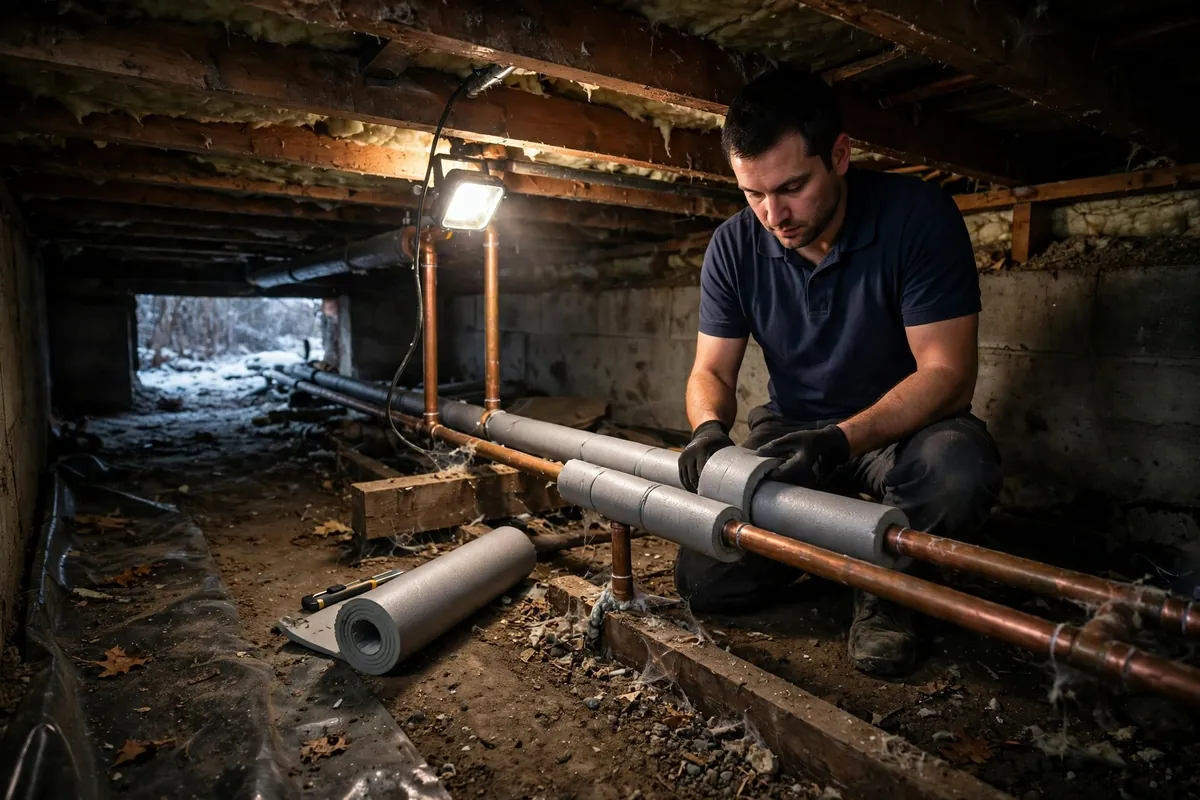
Middle Tennessee winters have a habit of fooling people. One week in January it is 55 and raining, the next week an overnight low drops into the teens and stays there. That swing is exactly when pipes get in trouble. Water expands as it freezes, and a pipe that was fine all fall can split in one cold night. The leak often does not show up right away either. It waits until the ice thaws, the water starts moving again, and finds the crack. If you live in Columbia, that pattern is worth knowing, because a lot of our winter calls follow the same script.
Here is the honest version of how this usually goes. A homeowner wakes up to no water at one faucet, or a faucet that only trickles. They assume the whole house is frozen. Sometimes it is just that one run. Sometimes a pipe in the crawlspace has already split and the water is pooling under the house, out of sight. The calls we get after a cold snap are rarely about a dramatic burst. They are about a damp crawlspace, a stain that appeared on a ceiling, or a water bill that jumped for no clear reason. That is why the check after a freeze matters as much as the prep before it.
Why Columbia homes freeze the way they do
Columbia has a mix of housing that makes freeze risk uneven. Older brick ranches in places like Westwood often have plumbing running through crawlspaces and along exterior walls, and the insulation around those runs may be thin, missing, or knocked loose over the years. Newer homes tend to have better protection, but they are not immune. A pipe in a garage wall, a laundry room on an outside wall, or a hose bibb that never got drained can freeze in any house if the cold lasts long enough and the wind finds the gap.
Our clay soil and humid summers play a part too, in a roundabout way. Crawlspace vents that stay open all winter let cold air wash straight across pipes. Attic runs are another quiet risk. An attic in Maury County can get brutally cold on a clear January night, and a supply line tucked near the eaves, especially one feeding a bathroom on an outside wall, is sitting in the coldest part of the house. Add a power outage or a furnace that struggles on the coldest night, and the margin gets thin fast.
One myth worth clearing up before we go further: letting a faucet drip does not guarantee a pipe will not freeze. It can help in some cases, because moving water is slower to freeze, but it is not a fix for an exposed pipe in a vented crawlspace. Insulation and sealing the cold air out do more work than a dripping tap ever will. And a pipe does not have to burst to cause trouble. A small split that weeps for days can soak insulation, framing, and subfloor before anyone notices a thing.
Before the cold: the prep that actually helps
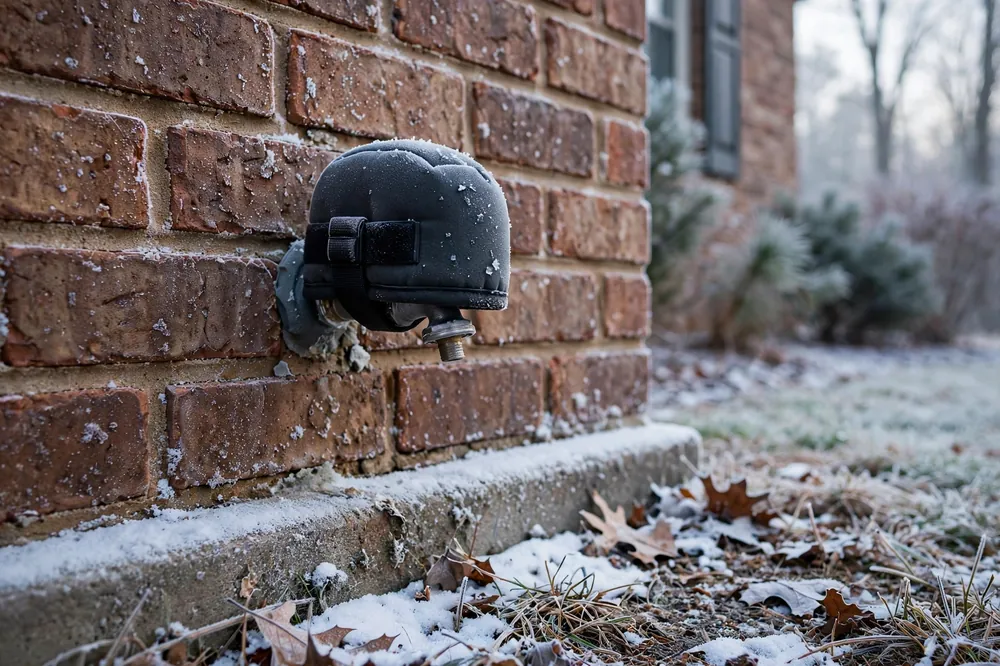
Start outside. Disconnect garden hoses from every hose bibb, drain them, and store them. A hose left connected traps water in the bibb and the short run behind it, and that is one of the most common freeze splits we see. If you have frost-free sillcocks, they still need the hose off to drain properly. Foam faucet covers are cheap and worth using on any bibb that faces north or sits in the wind, but they are a backup, not a substitute for disconnecting the hose.
Next, look at the crawlspace. Close the vents for winter if your home uses vent covers, and check that pipes under the house have insulation that is actually in place. Foam sleeves slide off. Fiberglass wrap sags when it gets damp. If you can see bare copper or PEX in a vented crawlspace, that run is exposed. Pay special attention to pipes near vent openings and along the rim joist, where cold air sneaks in through gaps in the framing. Sealing those gaps with caulk or foam, where you can reach them safely, often matters more than adding another layer of wrap.
Inside, find the pipes on exterior walls. Kitchen sinks and bathroom vanities on outside walls are the usual suspects. On a hard-freeze night, opening the cabinet doors under those sinks lets warm house air reach the pipes. It sounds almost too simple, but it works because the cabinet is otherwise a little cold box. If you are leaving town during a cold snap, do not turn the heat all the way down. Keeping the house at a steady, moderate temperature protects pipes far better than saving a few dollars on heat while you are away. Ask someone to check the house if a long freeze is forecast while you are gone.
Know where your main shutoff is before you need it. This is the single most useful piece of winter prep, and it costs nothing. If a pipe splits, shutting the water off in the first few minutes limits the damage more than anything else you do afterward. Show everyone in the household where it is and how it turns. If the valve is stiff or will not turn, that is worth sorting out on a calm day, not during a leak. Our pipe leak detection visits often start with that same shutoff conversation, because the homeowner who knows where it is has already saved themselves a lot of trouble.
When a pipe freezes: what to do, in order
First, do not panic and do not crank the heat up and walk away. If you suspect a frozen pipe, open the faucet it feeds. A trickle, or nothing at all, while other faucets work normally, usually points to one frozen run rather than a whole-house problem. Keep that faucet open. If the pipe thaws, water needs somewhere to go, and an open faucet gives it a path that does not build pressure behind the ice.
Second, find the frozen section if you can do so safely. Feel along exposed pipes in the crawlspace, garage, or attic for a section that is noticeably colder or has frost on it. A hair dryer on a low setting, or towels soaked in warm water, can thaw an exposed section gradually. Work from the faucet end back toward the frozen spot, so melting water has somewhere to escape. Never use an open flame on a pipe. A torch on a frozen copper line is how a bad night turns into a fire call, and it can damage fittings even if nothing catches.
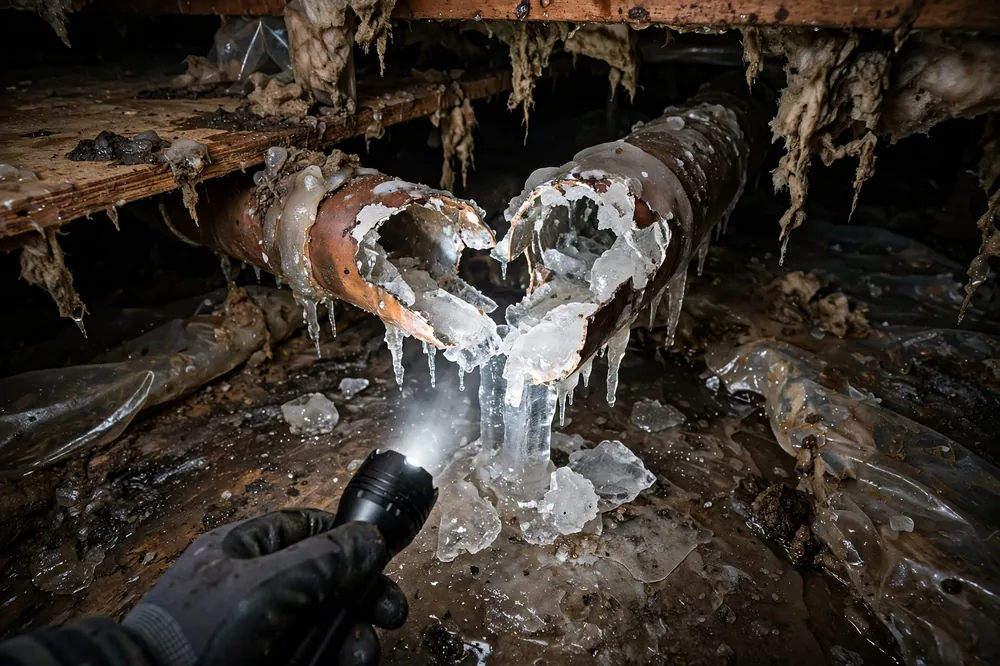
Third, watch for the leak as it thaws. This is the step people skip, and it is the important one. A split often stays sealed by ice until the thaw, then starts weeping. Stay nearby while a pipe thaws and check the area afterward. Look for drips at joints, damp insulation, and water on the ground under the run. If water appears and you cannot stop it at a nearby valve, shut off the main and call for help. That is the point where emergency leak detection earns its keep, especially if the split is somewhere you cannot see or reach.
If no water comes back at all after a reasonable thaw attempt, or if you hear running water somewhere you cannot find, stop guessing. A pipe that stays frozen can split in more than one place, and a second split can hide behind the first. The same goes for a pipe in a wall cavity. You cannot safely thaw what you cannot reach, and opening a wall blind is a good way to make a small problem bigger.
Where freeze splits hide
Crawlspaces top the list. A split under the house can run for days with no sign inside, except maybe a musty smell, a higher bill, or a soft spot in the floor. We check crawlspaces after cold snaps for exactly this reason, looking for damp insulation, puddling, and the telltale white or green crust on copper where water has been weeping. If your crawlspace has standing water after a freeze, do not assume it is just rain or condensation. It may be a supply line that thawed and split.
Attics come next, especially runs feeding second-floor bathrooms or additions. A stain on a ceiling a week after a cold snap is a classic delayed freeze leak. The split happened during the freeze, the water found its way down slowly, and the stain showed up later. Exterior walls are the third hiding spot. A pipe inside an exterior wall that freezes and splits can soak insulation and drywall for days before the wall feels damp. If a wall feels cold and soft in one spot after a freeze, or paint starts bubbling there, that wall deserves a closer look. Our hidden leak detection work is built for these cases, where the water is real but the source is not obvious.
Garages deserve a mention too. A lot of Columbia homes have a water heater, a laundry setup, or a bathroom wall shared with the garage, and garages are rarely heated as well as the house. Pipes in garage walls freeze first in many homes, and the leak shows up as a wet garage floor or a damp wall that everyone blames on a car or a spill. Check the garage after a freeze, even if the house seems fine.
After a cold snap: a simple walk-through
Once temperatures are back above freezing for a day or two, walk the house with fresh eyes. Run every faucet and flush every toilet, and watch for low pressure at one fixture, which can mean a run is still partly blocked or has been damaged. Check under every sink, around the water heater, and behind the washing machine. Go into the crawlspace if you can do so safely, or at least look in through the access and sniff for that damp, earthy smell that was not there before. Look at ceilings under upstairs bathrooms for new stains. Then check the water meter with everything off. If it moves, water is leaving the system somewhere, and a leak symptoms check can help you sort what you are seeing. You can also read our step-by-step guide to the water meter test if you want to run that check yourself first.
Do not wait for a stain to grow before calling. A small split found in February is a far smaller repair than the same split found in April after it has soaked a wall cavity all winter. If you are unsure, a call costs nothing to make, and describing what you found after a freeze helps our Columbia leak detection team point you in the right direction, whether that is a visit or a check you can safely do yourself. Winter in Middle Tennessee is short, but it only takes one hard night to make a leak. A little prep in November, and a careful look after each cold snap, covers most of it.
Pipe split after a freeze? Do not wait for the stain to grow.
Call and tell us what you are seeing. We will help you figure out the next step.
Common questions
How cold does it have to get for a pipe to freeze?
There is no single temperature that fits every home. A pipe in a vented crawlspace or an exterior wall can freeze during a sustained hard freeze, especially overnight with wind, while a pipe in a heated interior wall may never freeze. Exposure, insulation, and how long the cold lasts matter more than one night's low.
Should I leave a faucet dripping during a freeze?
Dripping can help in some cases because moving water is slower to freeze, but it does not protect an exposed pipe in a cold crawlspace. Insulation, sealing cold-air gaps, disconnecting hoses, and keeping the house heated do more work than a dripping tap alone.
Why does a frozen pipe leak only after it thaws?
Ice can seal a split while the pipe is frozen. Once the ice melts, water reaches the crack and starts weeping. That is why watching a pipe as it thaws, and checking again a day or two later, matters as much as the thaw itself.
Where should I look after a cold snap?
Check crawlspaces, attics, garage walls, and exterior-wall sinks and bathrooms. Look for damp insulation, new ceiling stains, soft floors, and a water meter that moves with everything off.
Can you find a freeze split I cannot see?
Yes. Hidden splits in walls, crawlspaces, and under floors are a common winter call. Listening, thermal imaging, and pressure testing can narrow the location before any wall or floor is opened.
Still unsure? Call (931) 800-6431
Open 24/7 in Columbia, TN. Tell us what you found and we will take it from there.