Musty Smell After a Leak: What It Can Mean
A smell that sticks to one room, one closet, or one wall is your house telling you something stayed wet. Here is how to follow it to the source, safely.
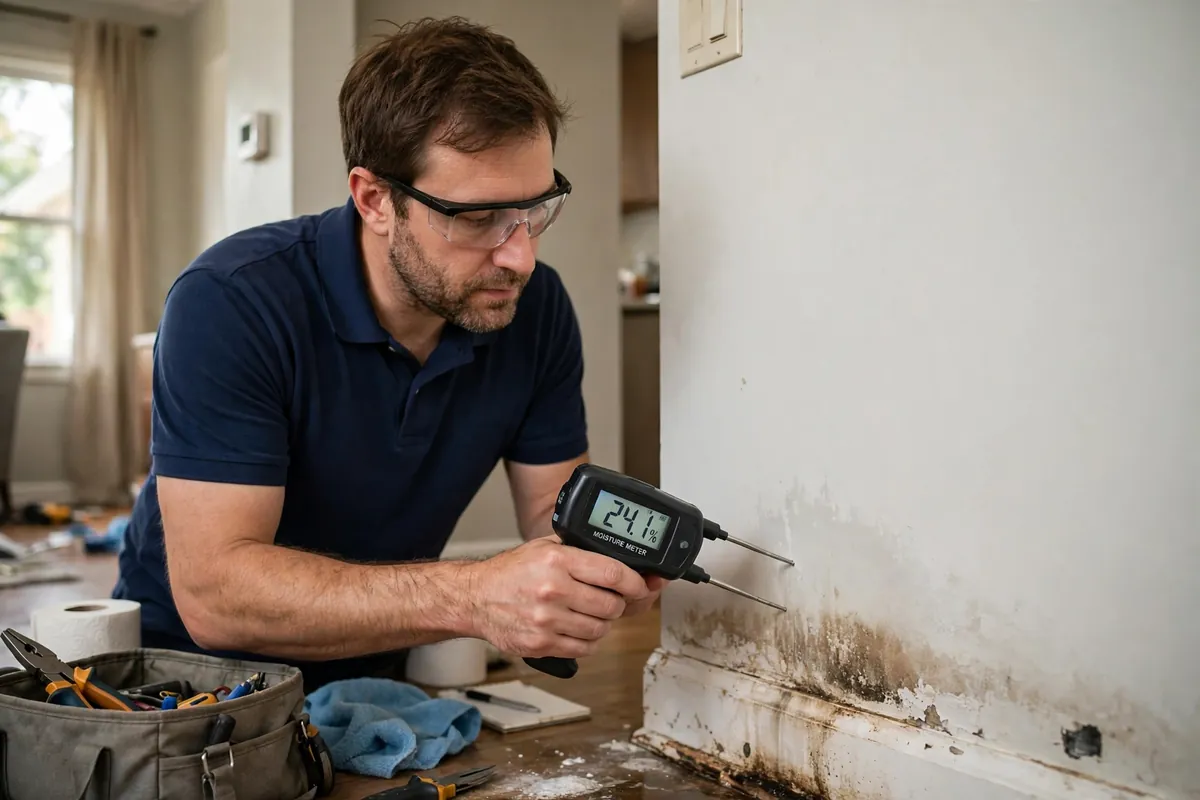
A musty smell in a house is easy to dismiss. People blame the weather, an old carpet, a closet that never airs out. Sometimes that is all it is. But in a Columbia home, a musty smell that appears in one room, or gets stronger after rain or after a plumbing repair, is worth taking seriously, because it often means something stayed damp longer than it should have. Damp drywall, damp insulation, and damp crawlspace wood all smell like that, and the dampness usually got there for a reason.
This guide is not about diagnosing anything in your home from a distance, and it is not medical advice. It is about what a musty smell can mean in plumbing terms, what you can safely check yourself, and where the line sits between a homeowner check and a pro visit. If anyone in the home has breathing concerns, talk to a medical professional about that part. What we can help with is the water side: finding whether a leak is feeding the dampness, and stopping it at the source.
Why damp places smell musty
That musty odor is, in plain terms, the smell of damp organic material. Drywall paper, wood framing, carpet backing, and insulation all give off that earthy smell when they stay wet. A wall cavity is a perfect setup for it: dark, still air, a paper-faced surface, and a slow leak that keeps the inside damp without ever showing water on the outside. You can walk past that wall for weeks and notice nothing except a faint smell when you enter the room, or a smell that seems stronger on humid days.
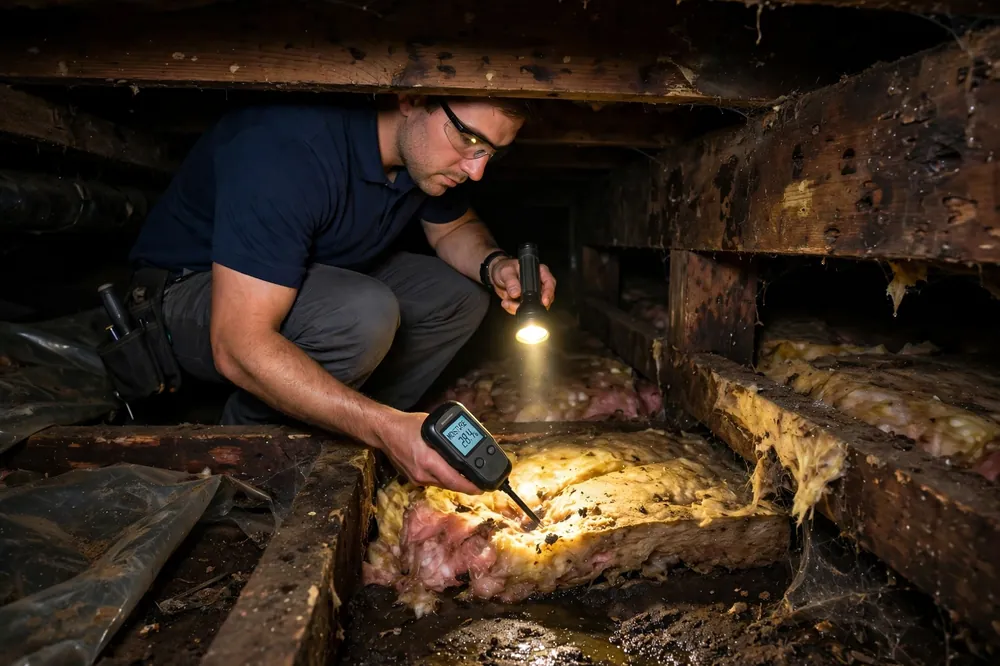
Crawlspaces are the other classic source, and Maury County homes give them plenty of opportunity. Our humid summers keep crawlspace air damp, and a small plumbing weep under the house adds liquid water to already humid air. The smell then drifts up through gaps in the floor, around pipe penetrations, and through ductwork. Homeowners often chase the smell in the living room for months before anyone looks underneath the house, where the actual dampness lives. A crawlspace that smells strongly musty, has visibly damp insulation, or shows standing water after a dry spell is telling you something, and it is rarely just the weather.
A useful distinction: a smell that is everywhere in the house on a humid day points more toward general humidity or ventilation. A smell that is strongest in one room, one closet, or near one wall, especially if that wall backs onto a bathroom, a kitchen, or a laundry area, points more toward a local water source. That local pattern is the one to chase, because local dampness usually has a local cause, and a local cause can often be found.
What a homeowner can safely check
Start with the simple, visible things. Look under every sink in the suspect room and the rooms around it. Feel the cabinet floor and the supply lines. A slow weep at a shutoff valve or a supply connection leaves a damp ring or a swollen cabinet bottom long before it leaves a puddle. Check around toilets at the base, and around tubs and showers where the wall meets the tub. Grout that stays dark, caulk that has pulled away, or a soft spot in the floor near a tub are all worth noting, even if nothing looks actively wet.
Check the water heater area, the washing machine connections, and any exposed pipes in a utility room or garage. Look for mineral crust on copper joints, rust streaks, and damp insulation. Then run the meter test with everything off. If the meter moves, water is leaving the system somewhere, and that gives the smell a likely source. Our step-by-step water meter test guide walks through that check. If the meter holds steady, the dampness may be coming from outside the supply system, like a drain leak, a roof leak, or ground moisture, which the meter cannot see.
Sniff systematically, room by room, and note where the smell is strongest. Open closets on shared walls with bathrooms. Look at ceilings under upstairs bathrooms for faint stains, even small ones. A stain the size of a coin can mark a leak that has been weeping for weeks. Take photos of anything you find, including stains, damp spots, and the meter reading. Photos help a pro see the pattern, and they give you a record if the spot changes over time.
What not to do matters as much as what to do. Do not tear open a wall to look for the source. Opening a wall cavity without knowing what is inside can spread damp material through the house and turn a contained problem into a bigger cleanup. Do not spray bleach on a large damp area and call it fixed, either. Bleach on a surface does nothing about water still coming in behind it, and the smell will come back as long as the source keeps feeding it. And do not ignore a smell because you cannot see water. Hidden leaks are hidden precisely because the water stays inside the wall or under the floor.
When it needs a pro
Call when the smell persists after you have checked the visible fixtures, when the meter moves with everything off, when you find a stain on a ceiling or a soft spot in a floor, or when the smell is strongest in a crawlspace or a wall cavity you cannot inspect. Those are all signs that the water source is out of sight, and finding it takes tools that read through walls and floors rather than guesses. Our hidden leak detection work covers wall and ceiling leaks, and our ceiling and wall leak detection service is the direct route when the stain or smell is tied to a specific wall or ceiling.
A pro visit for a musty smell usually starts with questions, not equipment. Where is the smell strongest? When did it start? Did anything change around then, a repair, a new appliance, a heavy rain, a cold snap? Then comes the meter check, a walk of the fixtures, and listening and scanning around the suspect area. Thermal imaging can show a cool, damp patch inside a wall. Acoustic listening can catch the hiss of a pressurized line. Moisture readings around the suspect area map how far the dampness has spread, which matters because the wet area is often larger than the stain you can see.
Be wary of anyone who promises to fix a smell in one visit without finding the water first. Drying and cleanup have their place, but they come after the source is stopped, not instead of it. If a leak is still feeding a wall cavity, any cleanup done before the repair is temporary. The right order is always the same: find the water, stop the water, then deal with drying. A detection report that documents the location and the method used can also help if you later need to show someone, like an insurer, what was found and where. Our guide to a leak detection report for insurance explains what that kind of report typically contains.
Drying context, without overpromising
Once the source is stopped, drying is about air movement, time, and removing what stayed wet. Small, accessible damp spots, like a cabinet floor that got wet from a weeping valve, often dry with the cabinet emptied, the area wiped, and air allowed to circulate. Larger or hidden dampness, like insulation inside a wall or a crawlspace floor, is a different matter. Wet insulation often needs to come out, because it dries slowly and holds dampness against framing. Wet drywall that has softened or bowed usually needs cutting out rather than drying in place. Those are judgment calls best made with eyes on the actual material, not from a guide.
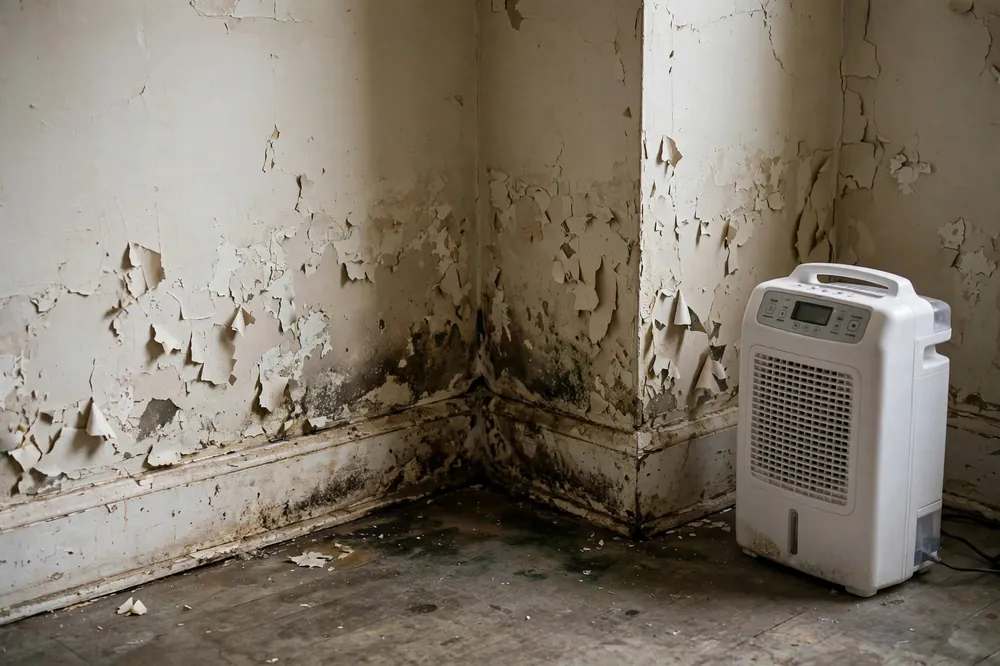
Ventilation helps, but it is not a cure on its own. Running a fan in a room with a still-leaking pipe just moves damp air around. Dehumidifiers help in crawlspaces and basements after the source is fixed, and they are commonly used in Middle Tennessee homes because our summer air is humid enough to slow drying on its own. If a crawlspace stays damp after a leak is fixed, that is worth a separate conversation about drainage, vapor barriers, and ventilation, because a crawlspace that never dries will keep producing that musty smell regardless of plumbing.
One more myth to drop: a musty smell does not always mean visible mold, and visible mold does not always mean a plumbing leak. Condensation on a cold duct, a roof leak, or ground moisture can all feed dampness without a single pipe involved. That is why the meter test and a fixture walk matter before anyone settles on a cause. They rule the plumbing side in or out, and that narrows the search for everyone else who might need to look at the house afterward.
A practical order of operations
If you are standing in a room right now wondering about a smell, here is the order we would suggest. First, note where the smell is strongest and whether it is local to one area. Second, check the visible fixtures around that area, under sinks, around toilets and tubs, at the water heater and washing machine. Third, run the meter test with everything off. Fourth, take photos of anything damp, stained, or soft. Fifth, if the meter moves, if you found a stain or a soft spot, or if the smell keeps coming back after the visible checks, call. Describe the smell, where it is strongest, and what the meter did. That description helps the Leak Fix Experts crew in Columbia decide whether the visit should focus on a wall, a crawlspace, or the whole system.
A musty smell is your house telling you something stayed wet. Sometimes the answer is simple, a valve that needs attention or a caulk line that failed. Sometimes it is a hidden line that has been weeping for weeks. Either way, the smell is worth following to its source, because dampness that keeps going does not stay small. And if anyone in the home has breathing concerns while you sort this out, talk to a medical professional about that side of it, and let the water search stay focused on finding and stopping the leak.
Smell keeps coming back after the visible checks? Time to find the water.
Call and tell us what you are seeing. We will help you figure out the next step.
Common questions
Does a musty smell always mean a plumbing leak?
No. General humidity, condensation, a roof leak, or ground moisture can all feed dampness. A smell strongest in one area, especially near a bathroom, kitchen, or laundry wall, points more toward a local water source, and a meter test helps rule plumbing in or out.
Is it safe to open a wall to look for the source?
We would not recommend it. Opening a wall cavity without knowing what is inside can spread damp material and turn a contained problem into a bigger cleanup. Finding the leak first, with listening or thermal imaging, keeps any opening small and targeted.
Will drying fix a musty smell on its own?
Only if the water source is stopped first. Drying, fans, and dehumidifiers help after a repair, but as long as a leak keeps feeding a wall or crawlspace, the dampness and the smell will return.
What should I check before calling?
Check under sinks, around toilets and tubs, at the water heater and washing machine, and note where the smell is strongest. Run the meter test with everything off, and take photos of any stain, damp spot, or soft area you find.
If anyone in the home has breathing concerns, what should I do?
Talk to a medical professional about the health side. On the plumbing side, focus on finding and stopping any water source, and keep the affected area as dry and ventilated as you safely can in the meantime.
Still unsure? Call (931) 800-6431
Open 24/7 in Columbia, TN. Tell us what you found and we will take it from there.