Leak Detection in Arden Village
Arden Village sits in North Columbia, not far off Saturn Parkway toward I-65, and it is one of the newer subdivisions in town. Listings put the median build year around 2014, with a mix of single-family homes and townhomes, many of them single-level, on fairly compact lots. That newness is good news in one way: the pipes themselves are young. It just means the leaks here tend to come from a different place than they do in Columbia's older neighborhoods.
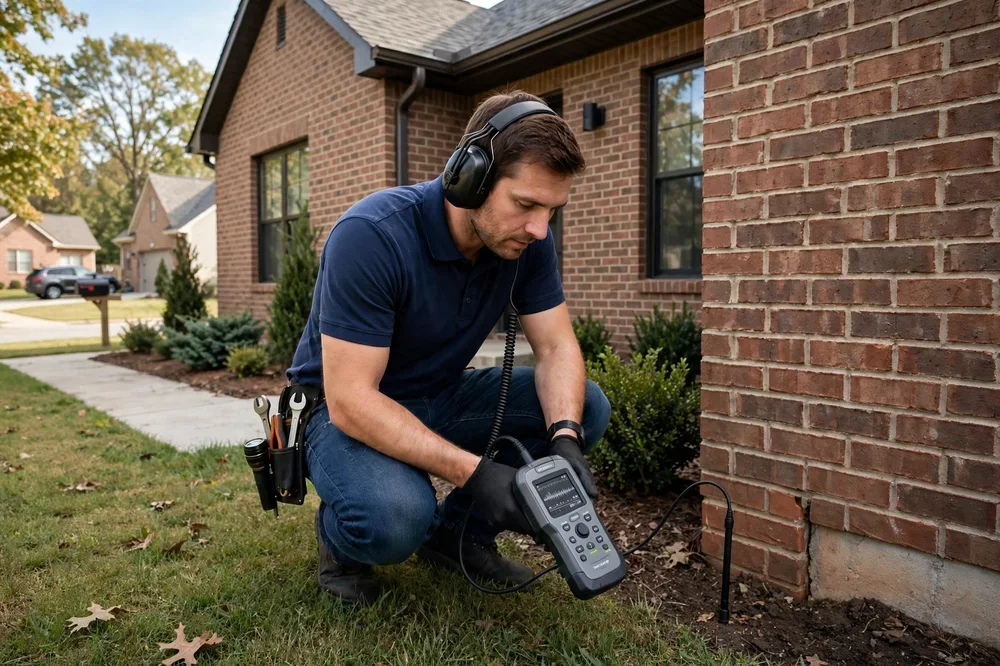
What a Typical Arden Village Service Call Looks Like
The call usually starts with the water bill. It creeps up for a couple of months, nothing dramatic, just enough that you notice. Or a toilet starts running and will not quite stop. Sometimes it is a damp patch on a shared wall in a townhome, and nobody is sure which side it came from.
We start the same way every time: everything off, watch the meter. If it moves, water is leaving the system somewhere. Then we narrow it down fixture by fixture, because in a newer home the main runs are usually fine and the trouble is at a connection point. Our Columbia-wide leak detection crew handles Arden Village calls the same day when we can, and the visit is non-invasive: listening, scanning, and pressure checks before anyone talks about opening anything up.
Spotted a warning sign? Let’s find the source.
Most leaks are located in a single visit. Call now and tell us what you’re seeing.
Three Things That Bring Us to Arden Village
Fittings and connectors, not worn-out pipes
In a home built in the 2010s, a full pipe failure is uncommon. What we see far more often is a supply connector behind a toilet or washing machine that has started to weep, a faucet supply line that drips only under pressure, or a valve that was never quite snug. Our pipe leak detection visit tests runs one at a time, so a small fitting problem does not turn into a whole-house guessing game.
Townhome shared walls
Arden Village includes townhomes, and shared walls change the detective work. Water does not respect a property line, and a stain on your side of the wall may have started next door. We check both sides of the story where we can, trace the run back to its source, and explain clearly whose plumbing is involved before any repair talk starts. That is the heart of a hidden leak detection visit here.
Water heaters and toilets doing the quiet damage
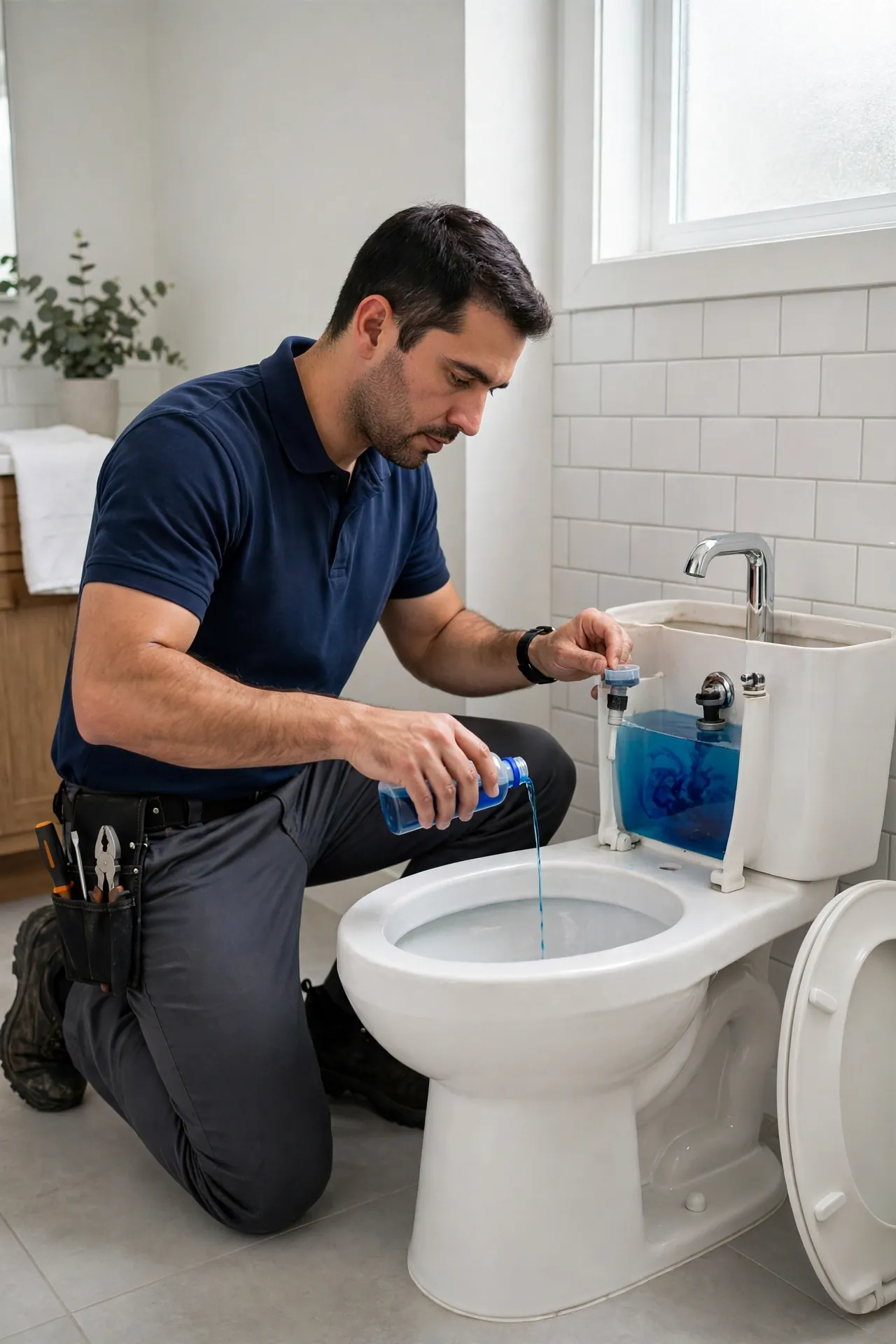
A toilet that runs on and on, or a water heater relief valve that drips into a drain nobody looks at, can waste a surprising amount of water without ever making a puddle. If your bill climbed and the house looks dry, a toilet leak detection check and a look at the water heater connections are the sensible first steps.
Why Compact Lots Change the Search
Arden Village lots run compact, with a median lot size around 4,356 square feet in listing data. That matters for leak hunting in a practical way: the yard service line from the street to the house is short, so an underground leak has fewer places to hide, and we can rule the yard in or out fairly quickly.
The flip side is that everything sits closer together. A leak at an outdoor spigot, a hose bibb, or a short irrigation run shows up fast on a small lot, and on a townhome row it can show up on a neighbor's side first. We walk the whole picture, house, yard line, and shared walls, rather than fixating on the one damp spot you called about.
If you want to check something yourself before you call, look behind each toilet and under each sink with a flashlight once a month. You are looking for a valve that looks damp, a supply line with crust or staining, or a toilet that refills on its own every few minutes. For the wider picture, see our water meter test guide, which walks through the same first check we do on arrival.
Living in Arden Village, and What to Watch For
Arden Village's spot near Saturn Parkway makes it an easy drive from Spring Hill and Franklin, and the neighborhood's newer homes draw a lot of first-time buyers and young families. New does not mean leak-proof, though. It means the leaks tend to be small, specific, and very findable, if you check early instead of waiting for the bill to do the talking.
Neighbors in similar newer pockets of town, like North Columbia and Windermere, run into the same pattern: young pipes, aging fixtures, and fittings that need a look every now and then. If your bill has climbed for no clear reason, or a wall feels damp in one spot, our water leak detection service page explains how a visit runs. Or just call and describe what you are seeing. We will tell you straight whether it sounds like a detection visit or a five-minute fixture check.
Arden Village Leak Detection FAQs
My Arden Village home was built in the 2010s. Can it really have a leak already?
Yes, and it is more common than people expect. The pipes are young, but fittings, supply connectors, toilet parts, and water heater valves can fail at any age. A leak in a newer home is usually small and specific, which is good news: it is also easier to pinpoint before it does real damage.
I live in a townhome and the damp spot is on a shared wall. Whose leak is it?
That is exactly what detection work sorts out. Water travels along framing and can appear on either side of a shared wall, so we trace the run back to its source rather than assuming the stain marks the leak. We will explain what we found and which side the plumbing belongs to, so you and your neighbor are not guessing.
My water bill went up but I cannot see any water. Where do I start?
Start with the meter test: turn off everything in the house, then watch the meter for 15 to 30 minutes. If it is still moving, water is leaving the system somewhere. Note the reading, take a photo, and call us. That one check tells us a lot before we arrive.
Do you have to open walls to find a leak in a newer home?
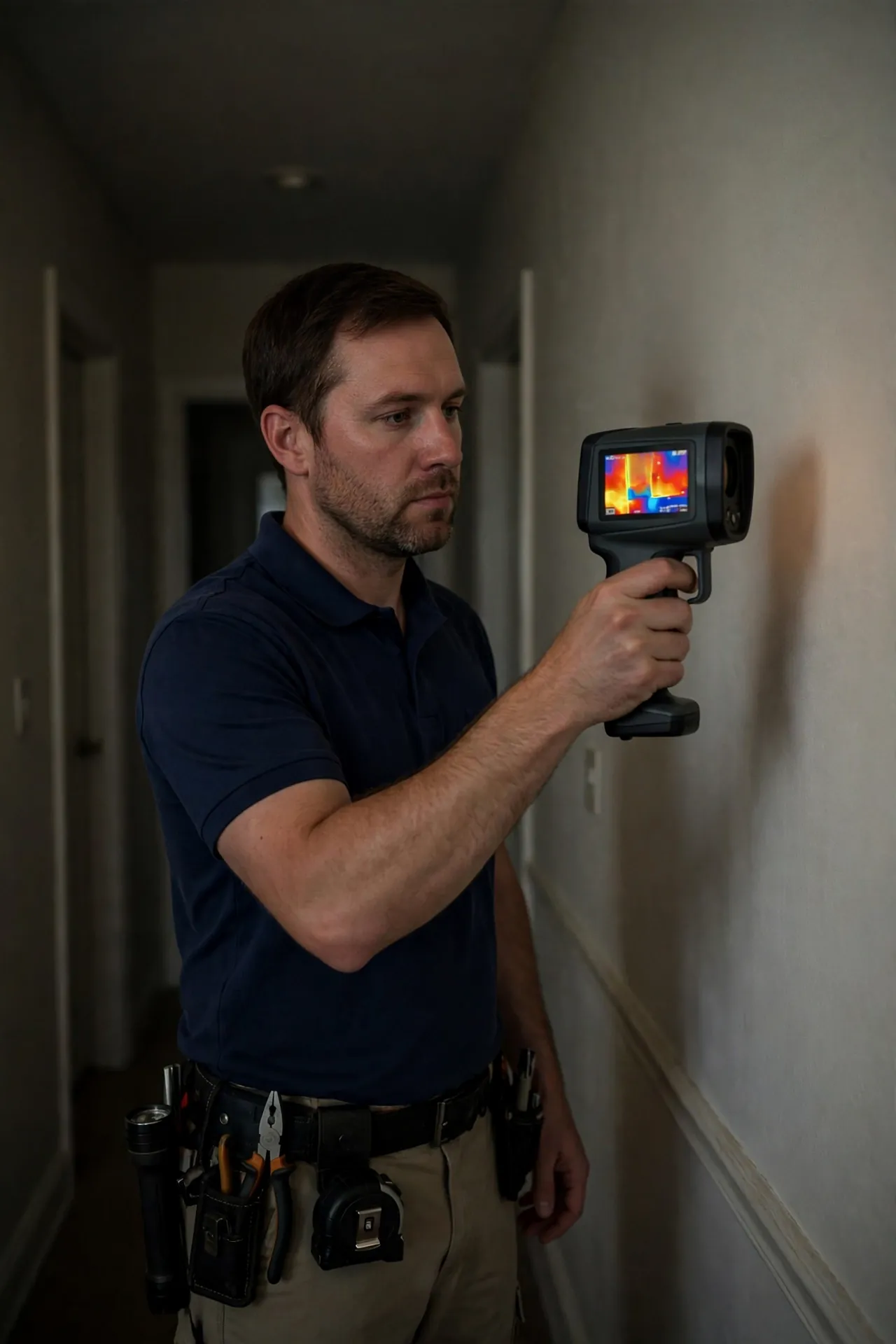
Almost never at the detection stage. We listen, scan for temperature differences, and pressure-test runs first. In these homes the leak is often at a fixture or fitting, which means the fix may not need an opening at all, and any opening that is needed stays small and happens only with your say-so.
How often should I check for leaks in a newer home?
A quick monthly look is plenty: under sinks, behind toilets, and at the water heater connections. Look for damp valves, crust on supply lines, or a toilet that refills on its own. Catching a weeping fitting early is worth far more than any gadget, and it costs you nothing but a flashlight.
Leak in Arden Village? Call (931) 800-6431
Bill creeping up, toilet running on, damp spot on a shared wall. Tell us what you are seeing and we will come find it, without tearing your newer home apart.