Leak Detection in Honey Farms
Honey Farms is a large master-planned community in Columbia, off Highway 31, with a pool, cabana, and playground, and homes that come in two distinct eras. The original detached homes along streets like Honey Farm Way date roughly to the late 2000s into the mid 2010s, while newer townhome collections have been built more recently around Nectar Lane. That mix is what makes leak calls here interesting: two ages of plumbing, two housing styles, and two very different leak patterns, all in one neighborhood.
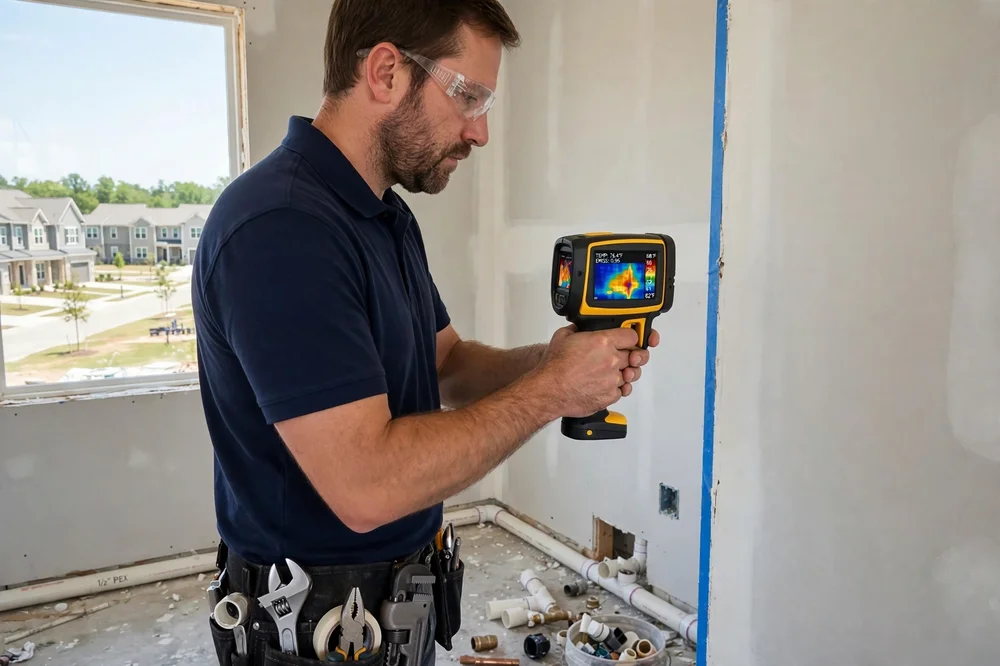
What a Typical Honey Farms Service Call Looks Like
The call depends on which Honey Farms home you live in. In an original detached home, it is often the familiar story: a bill that climbed, a water heater connection that started weeping, or a fixture that has simply aged. In a newer townhome, it is more likely a damp spot on a ceiling or shared wall, or a neighbor noticing water where it should not be.
Either way we start with the meter test, then work by era. For the older detached homes we check fixtures, heaters, and yard lines in order. For townhomes we trace shared walls carefully, because the stain and the source are often on different sides of the wall. Leak detection across Columbia is what we do every day, and Honey Farms is a good example of why one checklist does not fit every home in the same neighborhood.
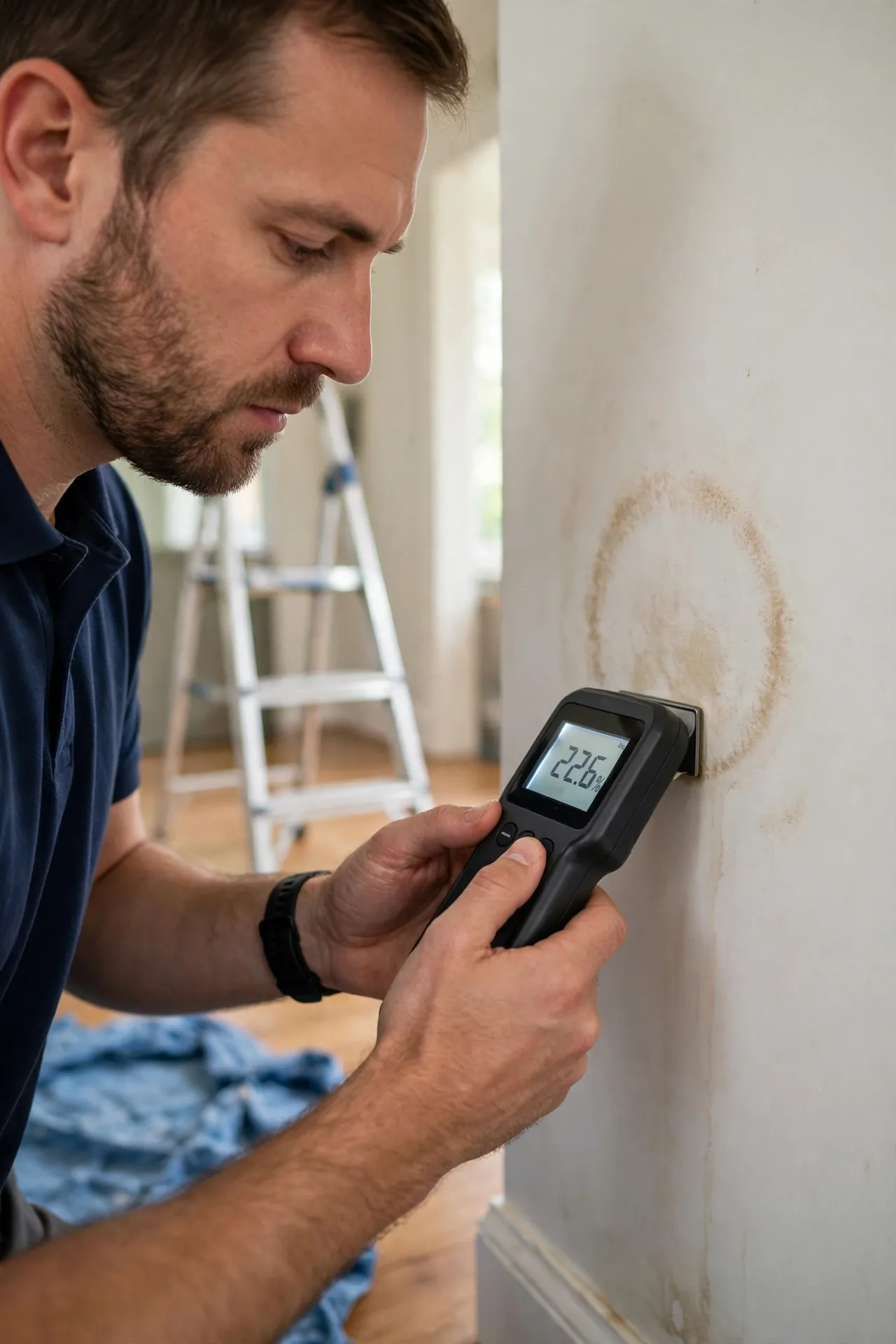
Spotted a warning sign? Let’s find the source.
Most leaks are located in a single visit. Call now and tell us what you’re seeing.
Three Things That Bring Us to Honey Farms
Two eras, two leak patterns
An original detached home from around 2010 has fixtures and a water heater that have had a decade or more of daily use, so aging parts are the usual suspects. A brand-new townhome has young pipes, but a fitting that was never quite tight, or an appliance connector that weeps from day one, can still cause trouble. Our hidden leak detection visit adjusts to the home in front of us instead of assuming one age fits all.
Ceiling and shared-wall stains in townhomes
In a townhome, a leak upstairs or next door often shows up as a ceiling stain or a damp shared wall in your unit. That makes the source tricky: the stain marks where water ended up, not necessarily where it started. A ceiling and wall leak detection check uses listening and temperature scanning to trace the path back, so the repair lands on the right unit and the right run.
Yard and service lines in the older sections
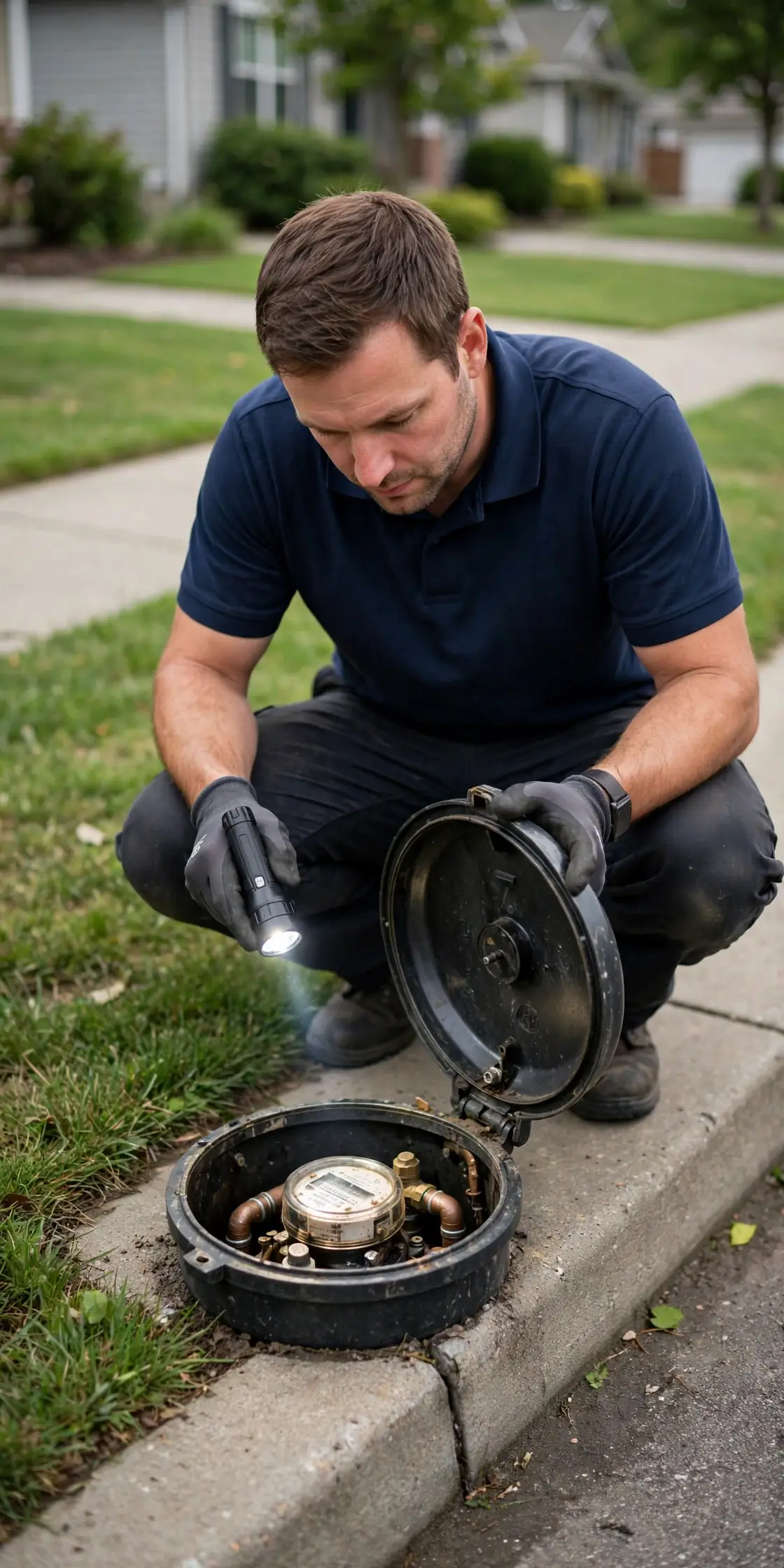
The original detached sections have had more years for yard-line joints to work loose in clay soil, and more years for outdoor spigots and irrigation connections to wear. If the meter moves with the house shut off, the yard is the next place to look, and a water line leak detection check can confirm it without digging on a guess.
Why Shared Walls Make Detection Harder, and More Important
Shared walls are the defining leak puzzle in the newer Honey Farms townhomes. Water follows framing, pipes, and gravity, not floor plans, so a leak in one unit can stain the ceiling below or the wall next door. The fix is not to open the stained wall first. It is to test each nearby run, check the units above and beside the stain where access allows, and narrow it down before anyone cuts anything.
That neighbor angle matters for another reason too: a slow townhome leak affects more than one household if it runs long enough. Catching it early protects your home and keeps a small plumbing problem from becoming a neighbor dispute. If you see a new stain on a shared wall or ceiling, note when it appeared, take a photo, and call sooner rather than later.
For the detached homes, the advice is simpler and just as useful: check the water heater connections, look under sinks monthly, and run the meter test if your bill jumps. Our hidden leak signs guide covers the warning signs for both housing styles in this neighborhood.
Living in Honey Farms, and What to Watch For
Honey Farms gives residents the master-planned perks, a pool and cabana, a playground, and quick access to downtown Columbia's shops and galleries, while the original detached streets keep a quieter, established feel. It is a big community, and its plumbing reflects that scale: a little bit of everything, from aging fixtures to brand-new fittings.
If you live here and something feels off, a bill that climbed, a stain on a shared wall, a water heater you have never looked at, do not wait for it to get obvious. Neighbors in Sunnyside and Tall Trees Estates see similar mixed-age patterns. For how a visit runs, see our water leak detection service page, or just call and describe what you are seeing.
Honey Farms Leak Detection FAQs
I live in a Honey Farms townhome and the stain is on my ceiling. Is the leak mine?
Not necessarily. In a townhome, water from an upstairs or neighboring unit often shows up in your ceiling or on a shared wall. Detection work traces the run back to its source before anyone talks about repairs, so the fix lands on the right plumbing.
My detached Honey Farms home is from around 2010. What should I watch?
Fixtures, toilet parts, water heater connections, and yard-line joints are the usual suspects at that age. A monthly look under sinks and at the heater, plus a meter test if your bill jumps, will catch most problems while they are still small.
Can a leak in a brand-new townhome really happen?
Yes. New pipes can still have a fitting that was never fully tight, an appliance connector that weeps, or a valve that drips. Newness rules out age-related wear, not installation issues, and those are usually quick to pinpoint once you know where to listen.
My water bill jumped but nothing looks wet. Where do I start?
Start with the meter test: turn off everything, watch the meter for 15 to 30 minutes. If it moves, water is leaving the system somewhere, even if nothing looks wet. Note the reading, take a photo, and call us with it.
Do you have to open my walls or ceiling to find the leak?
Almost never at the detection stage. We listen, scan for temperature differences, and pressure-test runs first. Any opening that is eventually needed stays small, targeted, and only happens with your say-so.
Leak in Honey Farms? Call (931) 800-6431
Stain on a shared wall, bill climbing in an older detached home, damp spot in a new townhome. Tell us what you are seeing and we will come find it, without opening walls on a guess.