Leak Detection in Jackson Heights
Jackson Heights sits in Columbia north of Bear Creek Pike, a well-established neighborhood of mostly mid-century homes, many of them brick ranches built from the mid-1950s through the 1980s. The lots are generous, the trees are mature, and a lot of the plumbing has been quietly doing its job for decades. When it starts to fail, it usually fails out of sight, in a yard line or an old interior run, and the first sign is often just a water bill that stops making sense.
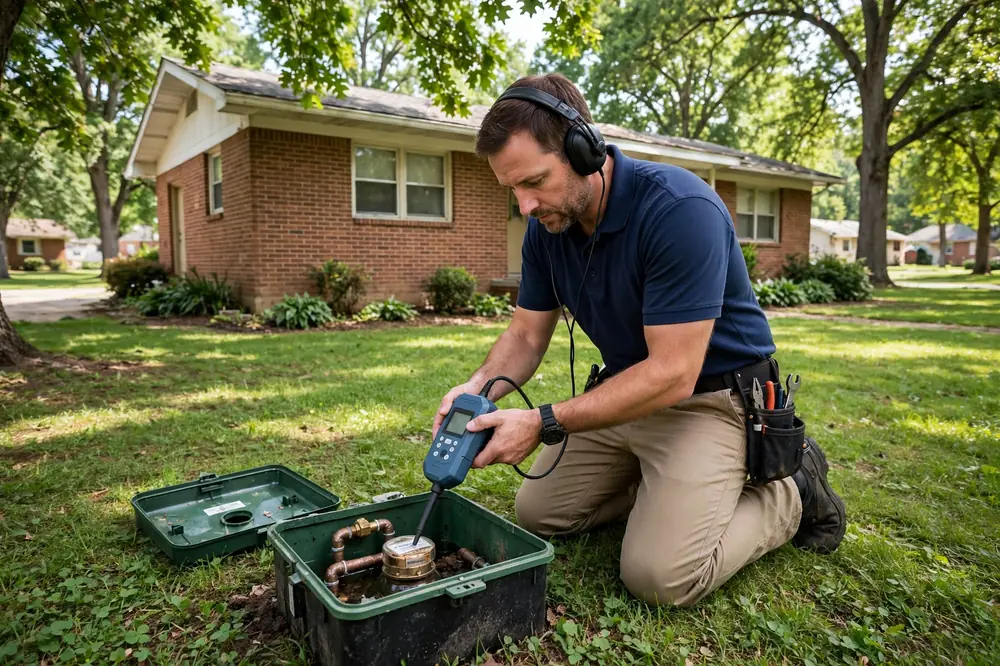
What a Typical Jackson Heights Service Call Looks Like
The call usually starts with a bill. It climbs for a month or two, nobody can point to a change in how much water the house uses, and there is no puddle to show for it. Sometimes there is a second clue, a patch of lawn that stays greener than the rest, or a faint sound of running water when every tap is off. Sometimes there is no second clue at all.
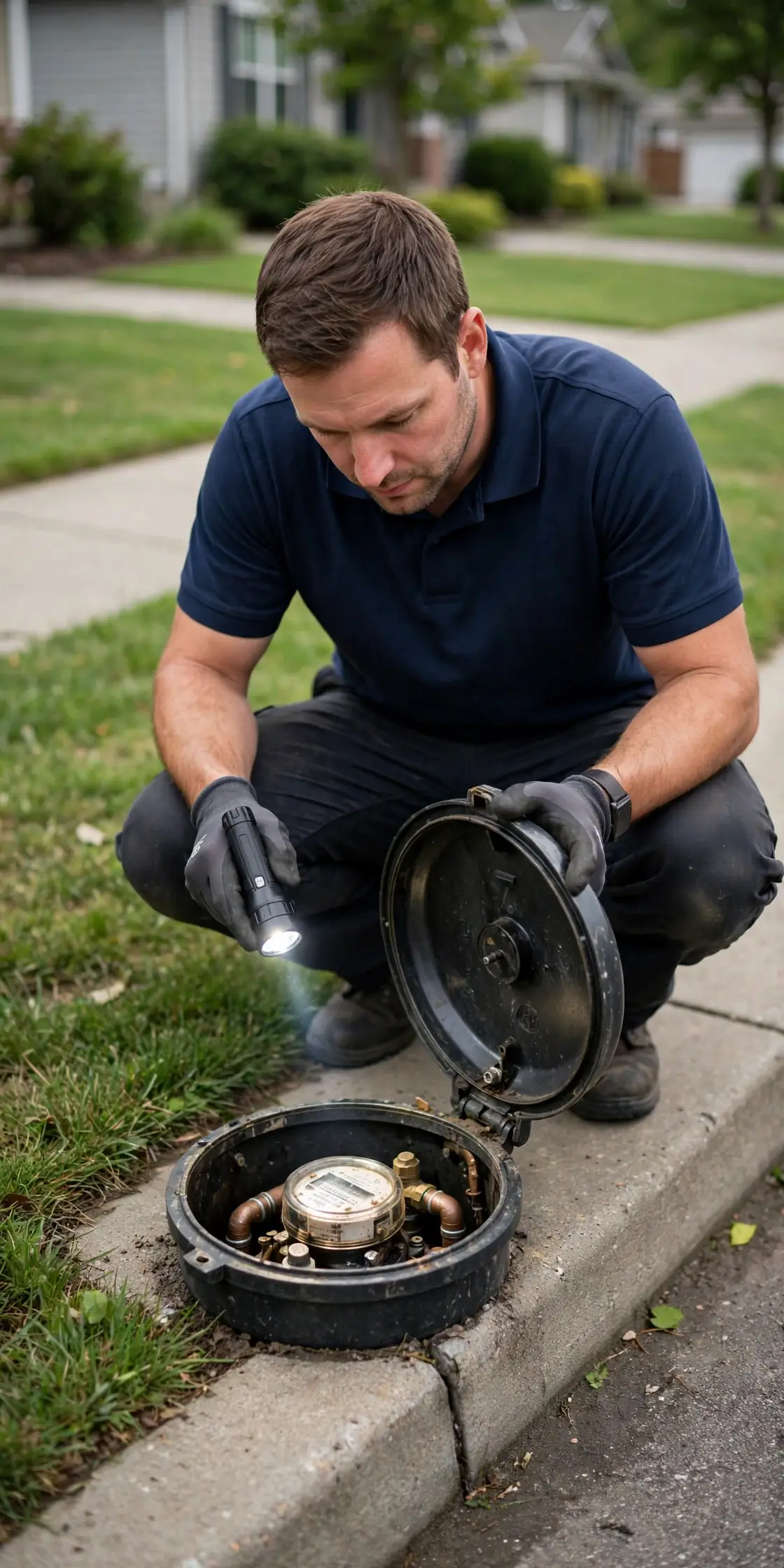
We start at the meter, with everything in the house shut off. If the dial is still moving, water is leaving the system somewhere. From there we work in sections, because a Jackson Heights home can have more than one plumbing era under one roof: an original run here, a copper replacement from a remodel there, and a yard line that has been in clay soil since the house was built. Our Columbia leak detection crew tests those sections one at a time so we can say whether the loss is inside, outside, or both, before anyone talks about a repair. That matters on these bigger lots, where the yard line alone is a long run and digging in the wrong place would be an expensive guess.
Spotted a warning sign? Let’s find the source.
Most leaks are located in a single visit. Call now and tell us what you’re seeing.
Three Things That Bring Us to Jackson Heights
Long yard service lines in clay soil
Roomy lots are a perk until the service line starts to seep. A long run from the street to the house gives a leak plenty of places to hide, and clay that swells and shrinks with the seasons works on the joints over the years. Our underground leak detection visit listens along that run and pressure-tests it, so we can point to a section instead of trenching the whole front yard.
Mixed-era interior plumbing
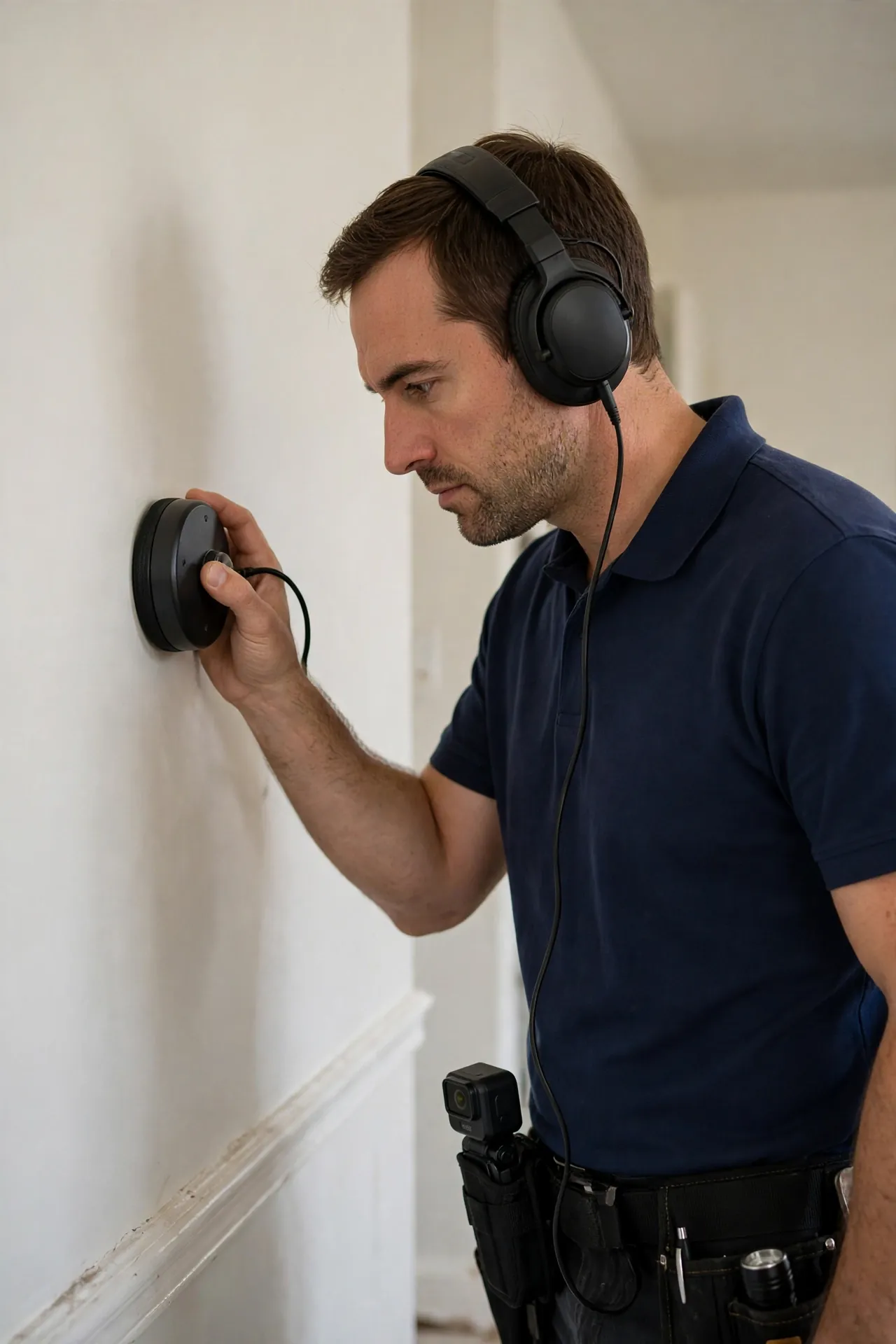
Homes built between the mid-1950s and the 1980s rarely have one uniform system. A kitchen may have been replumbed in copper while a back bathroom still runs on older material, and the joints between those eras are common failure points. A pipe leak detection check tests runs individually, which is the only honest way to say which part of the system is losing water.
Valves and fixtures nobody has touched in years
Shutoff valves, hose bibbs, and older toilet and faucet parts can sit untouched for a decade and then weep the first time they are used or nudged. A toilet that runs quietly or a valve that drips behind a washing machine can push a bill up for months without a single visible puddle. If the meter moves but the yard checks out, a water line leak detection visit inside the house is the next step, along with a fixture-by-fixture check.
Why Jackson Heights Leaks Are Easy to Miss
Here is the tricky part about this neighborhood: everything about it gives a leak room to hide. The lots are generous, the houses are mostly one level, and a slow leak can soak into clay soil or spread under a slab or crawlspace long before it shows up inside. A homeowner can walk the whole property, see nothing wrong, and still be losing water every hour.
That is why we lean so hard on the meter test. Turn everything off, watch the dial for 15 to 30 minutes, and note the reading. If it moves, you have a leak, even if the house looks bone dry. Our water meter test guide walks through that check step by step, and our guide to a suddenly high water bill covers the other usual causes, so you can rule a few things out before you call. If you are just south of here, the Bear Creek area page covers similar yard-line and clay-soil issues, and North Columbia is the wider area Jackson Heights sits in.
One habit worth building: once a month, glance at the meter yourself, look under sinks, and check the valves behind toilets and the washing machine for green crust, rust streaks, or dampness. Five minutes, no tools, and it catches the slow ones early. And for the full picture of where we work, see our Columbia service areas page.
An Established Pocket North of Bear Creek Pike
Jackson Heights has the feel of a neighborhood that has settled in. The homes are midsize, many in the 1,300 to 2,300 square foot range, the streets are shaded, and the area has kept attracting buyers who want a solid, reasonably priced house in Columbia rather than a brand-new subdivision. That established character is exactly why leak detection here is a bit different from a new-build call: the systems are older, they have been altered in stages, and the yard lines have had decades of seasonal clay movement to contend with.
If your bill has jumped, or you hear water when nothing is running, do not wait for a puddle to prove it. A detection visit finds the section that is losing water, and it does it without tearing the house or the yard apart. See how a visit runs on our water leak detection service page, or how we trace a buried run on our underground leak guide, then call and tell us what you are seeing.
Jackson Heights Leak Detection FAQs
My Jackson Heights house was built in the 1960s or 70s. Should I worry about the pipes?
Not automatically, but that era is worth a closer look. A lot of homes from that period have a mix of materials, with some runs replaced during past remodels and some still original. Galvanized steel narrows with age, and old valves can start weeping when they are finally turned. A pressure test and a meter check will tell you which runs are still solid and which ones are suspect, without guessing about the whole house.
My bill went up but I cannot find a wet spot anywhere. Could the leak be outside?
Yes, and in Jackson Heights that is a real possibility. The lots here are roomy, so the service line from the meter to the house can be a long run through clay soil, and a leak along it may never surface as a puddle. It might show up as one greener strip of grass, a soft patch of lawn, or nothing at all. If the meter moves with everything in the house off, the yard line is one of the first places we check.
Is the clay soil here hard on water lines?
Maury County clay swells when it is wet and shrinks when it dries out, and that movement works on buried pipe joints year after year. It does not guarantee a leak, but it is one reason an older yard line can start seeping at a joint after decades of quiet service. Listening equipment and a pressure test help us find the spot instead of digging up the whole run.
Can you tell a yard leak from a problem inside the house?
Usually, yes, and the meter test is how we start. We shut everything off inside and watch the meter. Then we isolate sections, the yard line, then runs inside, until the moving meter stops. That narrowing down matters here because the fix for a yard line and the fix for a bathroom run are completely different jobs.
Do I need to dig up my whole front yard to fix a yard leak?
No, not as a first step. Detection comes before any digging. We pinpoint the leak first, so any excavation is limited to the spot that actually needs work, and only with your approval. Most of the detective work happens with listening gear and pressure tests, not a shovel.
Leak in Jackson Heights? Call (931) 800-6431
High bill, a greener strip of lawn, or the sound of running water when nothing is on. Tell us what you are seeing and we will track it down, yard line or interior run, without digging up the whole property.