Leak Detection in Bradford Place
Bradford Place is an established Columbia neighborhood of single-family homes built in the early 1990s, laid out in sections around Bradford Circle and Bradford Court. The lots run from modest to generous, the trees have had thirty years to grow in, and most of the homes are on their second or third water heater by now. These are solid houses. Their plumbing has simply been in service for three decades, and that is when small failures start showing up.
What a Typical Bradford Place Service Call Looks Like
The call usually starts with something small. A water bill that climbed for two months running. A damp edge on the carpet near a bathroom wall. A shutoff valve that wept the first time someone turned it in years. Sometimes it is just a musty smell in a hall closet that does not go away no matter how much the windows get opened.
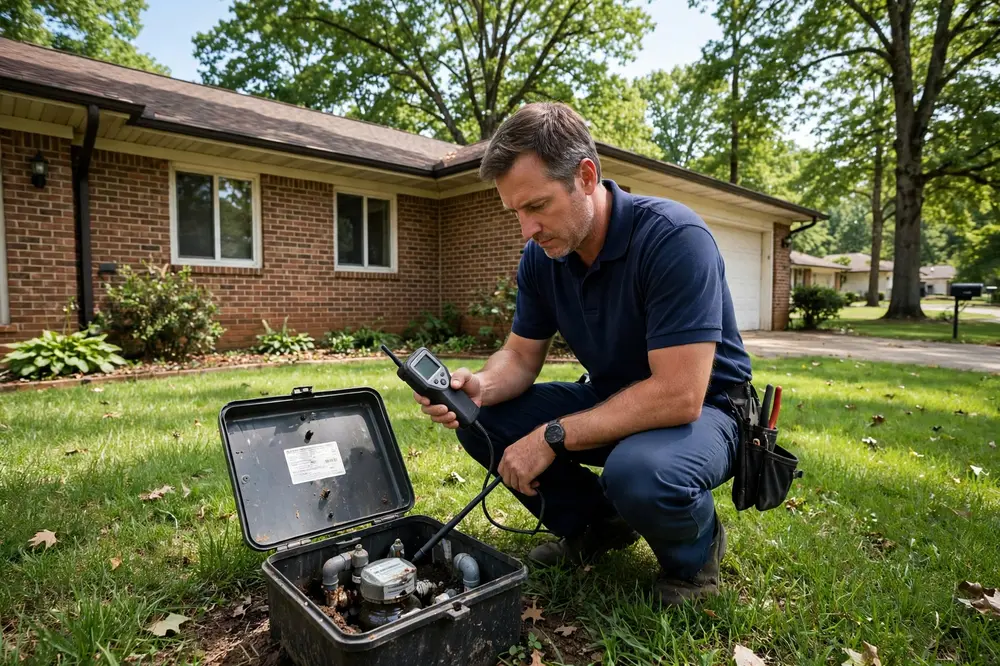
We come out and the first thing we do is the meter test: everything off, watch the dial. If it moves, water is going somewhere it should not. Then we walk the house the way water would travel, checking valves, listening at walls, scanning floors for warm or cool patches. In Bradford Place the answer is often a supply run or a valve that has finally given up after three decades, but established landscaping makes the detective work trickier than in a new subdivision, because a yard line leak can hide under thirty years of shrubs and settled soil. That is why we check both the plumbing inside and the service line outside before we say what is going on. Leak Fix Experts works across all of Columbia, and early-1990s neighborhoods are exactly the kind of place where a careful, non-invasive check saves a lot of damage.
Spotted a warning sign? Let’s find the source.
Most leaks are located in a single visit. Call now and tell us what you’re seeing.
Three Things That Bring Us to Bradford Place
Supply lines and valves at the end of their first life
Early-1990s homes rarely have one plumbing system. They have layers: some original runs, some replaced during a remodel, some patched when a bathroom was updated. The joints between those eras are where trouble often starts, and so are the shutoff valves, which can sit untouched for decades and then weep the first time someone turns them. Our pipe leak detection visit tests runs one at a time so we can say which section is losing water, instead of condemning the whole house.
Water heaters on their second or third unit
A home built in 1993 has usually been through more than one water heater by now, and each replacement disturbs the connections around it. A slow drip at a heater connection can soak a closet floor for weeks before anyone notices, and it can look a lot like a roof or condensation problem from the room next door. A water heater leak detection check covers the heater, its relief valve, and the lines feeding it, so you know whether the heater is the problem or just the place the water ended up.
Yard service lines under thirty years of landscaping
The lots in Bradford Place have had three decades for shrubs to grow in, roots to spread, and Maury County clay to shift around buried lines. A yard service line that seeps can push a bill up without ever showing a puddle, because the water spreads through settled soil and established planting beds. If the meter is moving and the house looks dry, a water line leak detection check of the yard line is the sensible next step.

Why a 1990s Home Hides Leaks So Well
Here is the honest version of a Bradford Place leak: the house is old enough for things to wear out, but new enough that everything still looks fine. The walls are finished, the floors are in good shape, and the yard is settled and green. Water from a small leak has plenty of places to go before you ever see it. It can run along framing, soak into carpet padding, or spread through soil under shrubs that have been there since the house was built.
That does not mean every damp spot is a pipe leak, and anyone who tells you otherwise is guessing. What we do is rule things out in order: meter test first, then fixtures and valves, then the runs under the floor and the yard line outside. If the meter holds steady with everything off, the dampness is more likely condensation or drainage, and we will say so rather than sell you a repair you do not need. If the meter moves, we keep narrowing it down until we can point to a run, a joint, or a fixture.
One thing Bradford Place homeowners can do for free: once a month, look under the sinks, behind the toilets, and at the water heater connections with a flashlight. You are looking for green crust on copper, rust streaks, or a valve that looks wet when nothing has been used. Catching those early is worth more than any gadget. And if your bill is the thing that tipped you off, our high water bill guide walks through the same checks, and our Columbia service areas page lays out everywhere we serve.
An Established Neighborhood, Well Settled In
Bradford Place was built out in sections, and property records for homes on Bradford Circle and Bradford Court show construction in 1992 through 1994, with lots ranging from about a fifth of an acre to around six tenths of an acre. That spread is part of the neighborhood's character: some homes sit on compact lots, others have room for big back yards, and all of them have had thirty years for their landscaping to mature.
The soil is the same Maury County clay you find across Columbia, but here it has had three decades to shift around buried lines, and that slow movement is one more reason older runs eventually fail at a joint. If you live in one of these early-1990s homes and something feels off, a high bill, a damp room, a valve that weeps, do not wait for it to get obvious. For a look at how a visit actually runs, see our water leak detection service page, or just call and describe what you are seeing. We will tell you straight whether it sounds like a detection visit or something a handyman can check first.
Bradford Place Leak Detection FAQs
My Bradford Place home was built in the early 1990s. Should I worry about the original plumbing?
Not worry, but pay attention. Thirty-plus years is a long service life for valves, toilet internals, and supply line joints, and many of these homes have been updated in pieces: a remodeled bathroom here, a new water heater there, while the rest of the system is still original. A detection visit tests runs one at a time, so you find out which parts are holding up and which ones are suspect, instead of guessing about the whole house.
The water heater closet feels damp. Is the heater leaking?
It might be, but the closet can also catch condensation or a drip from a nearby valve, so it is worth checking properly. Look for rust streaks at the base, a puddle that returns after you dry it, or a relief valve that drips. A heater in a 1990s home is usually well past its first replacement, and the connections age right along with it. We check the heater, its connections, and the lines feeding it before we say what is going on.
A shutoff valve under a sink weeps when I turn it. Is that urgent?
It is not an emergency, but it is not something to ignore either. Valves that sit untouched for years often weep the first time they are turned, and a slow weep can stain a cabinet, warp a floor, or quietly run the meter. If it is just a drip, put a towel under it and do not force the valve. If it keeps dripping after you leave it alone, call us and we can trace whether the valve itself is the problem or a symptom of pressure elsewhere in the run.
My bill jumped but nothing looks wet. Where do I start?
Start with the meter. Turn off everything in the house, then watch the meter for 15 to 30 minutes. If it is still moving, water is leaving the system somewhere, even if nothing looks wet. In a 1990s home the usual hiding spots are a toilet that runs quietly, a yard service line under established landscaping, or a valve behind an appliance. Note the reading, take a photo of it, and call us. That one check tells us a lot before we even pull into the driveway.
Can you find a leak without cutting into finished walls?
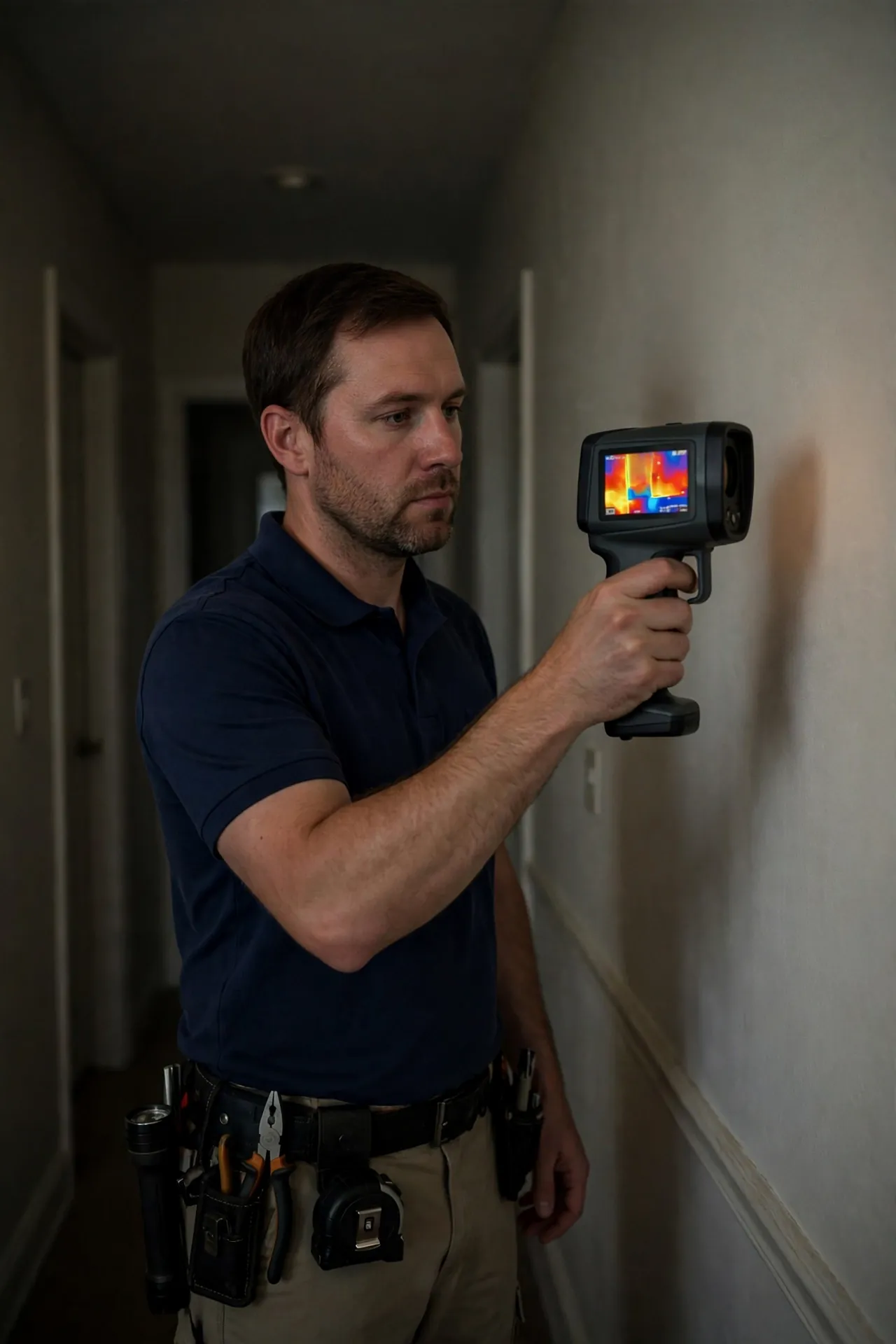
That is the point of detection work. We listen, scan for temperature differences, and pressure-test runs before anyone talks about opening a wall. In these homes the leak is often not right behind the stain anyway, since water travels along framing and under flooring. Pinpointing first means any opening stays small and happens only with your say-so.
Leak in Bradford Place? Call (931) 800-6431
High bill, a valve that weeps, a damp spot that will not dry. Tell us what you are seeing and we will come find it, without tearing your house apart.