Leak Detection in Armstrong Meadows
Armstrong Meadows is a ranch-home neighborhood in Columbia, built out in sections from the late 2000s into the late 2010s, with homes along streets like Susan Road. The pattern here is easy to picture: mostly single-level brick homes on level lots of around a third of an acre, the kind of place where the yard is big enough for a garden and the house is all on one floor. That layout shapes the leaks we find here, and it is a different story from the compact townhome rows across town.
What a Typical Armstrong Meadows Service Call Looks Like
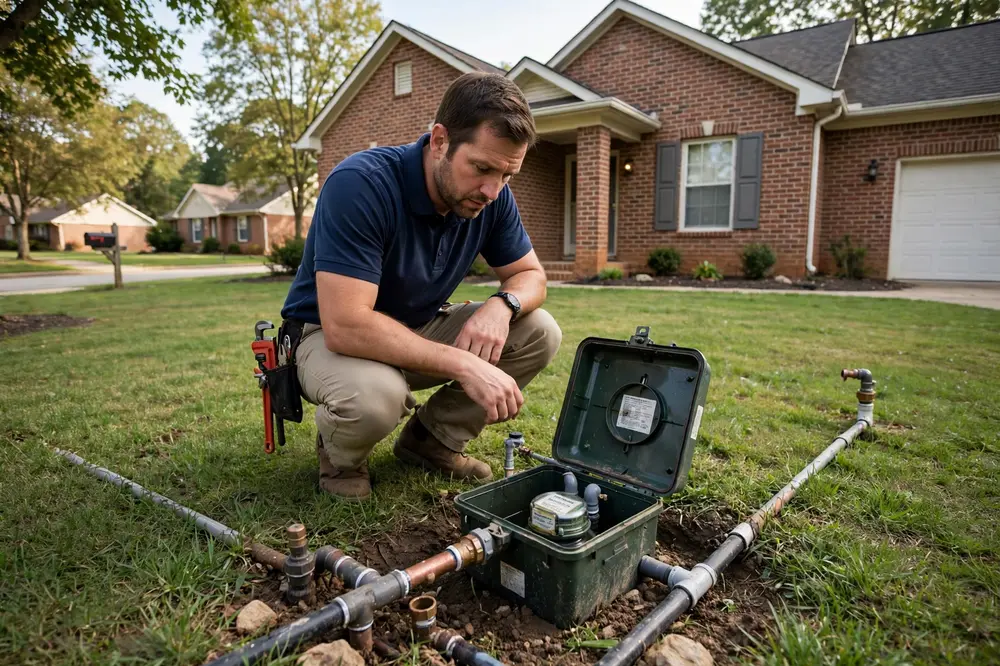
Here the call often starts outside. A patch of grass that stays greener than the rest, a soft spot in the yard, or a bill that climbed even though nothing inside looks wet. Sometimes it starts in the laundry room, with a water heater that has been quietly dripping into a drain pan for weeks.
We start with the meter test, then we separate the house from the yard. If the meter moves with the house shut off at the main, the leak is in the yard line. If it holds, we work inward, fixture by fixture. The team at Leak Fix Experts serves Armstrong Meadows across all its sections, and because these are single-level homes, most of the plumbing is reachable without the crawlspace gymnastics an older two-story can demand.

Spotted a warning sign? Let’s find the source.
Most leaks are located in a single visit. Call now and tell us what you’re seeing.
Three Things That Bring Us to Armstrong Meadows
Long yard service lines
A third-of-an-acre level lot means a longer run from the street to the house than you get on a compact lot, and more joints along the way. Those joints sit in Maury County clay, which swells when wet and shrinks when dry, and that slow movement can open a joint over the years. Our underground leak detection visit listens along the line and pressure-tests it, so we can say whether the yard is the problem before anyone digs.
Water heaters reaching replacement age
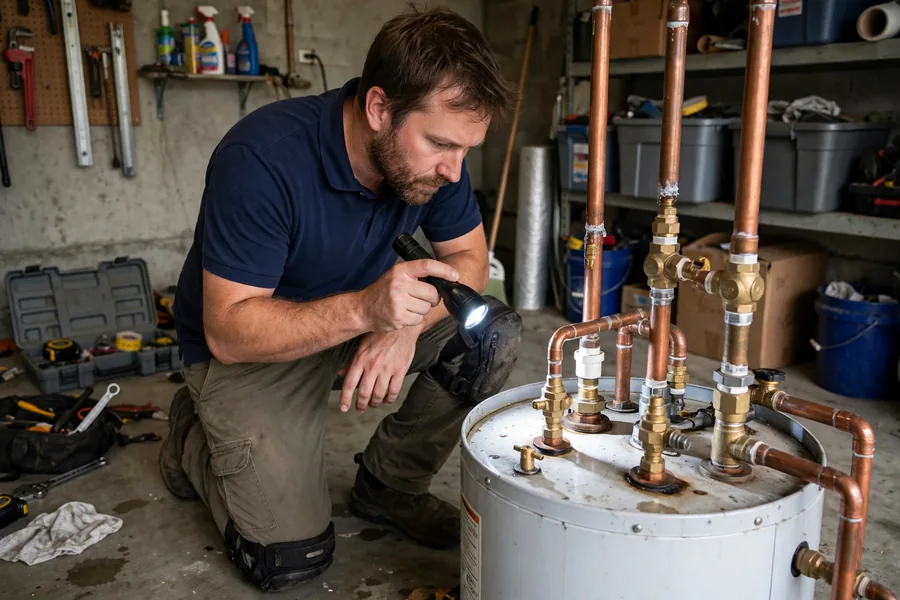
The earliest Armstrong Meadows sections date to around 2008, which puts some original water heaters well into the age where tanks, relief valves, and connections start to fail. A heater does not always burst. More often it weeps, rusts at a fitting, or drips from the relief valve into a drain you rarely check. A water heater leak detection check looks at the tank, the valves, and the lines feeding it, and tells you whether you are looking at a small fix or a replacement conversation.
Level lots that hold water
A level lot is easy to live on and slow to drain. After heavy rain, water can sit around hose bibbs, outdoor spigots, and the low points of a yard line, which makes a slow seep harder to spot: everything looks a bit damp anyway. If the meter is moving on a dry week, that points to plumbing rather than rain, and a water line leak detection check is the way to confirm it.
Why a Level Lot in Clay Needs a Closer Look
Maury County clay is the quiet background character in a lot of Columbia leak stories, and Armstrong Meadows is no exception. Clay holds water, then dries and shrinks, and that cycle works on buried joints year after year. It does not mean every home here will have a yard leak. It means a yard leak here is worth ruling out early, because it can run for months underground while the only sign is a bill that keeps climbing.
Inside, the ranch layout helps us. Single-level homes tend to have shorter interior runs and fixtures that are easier to isolate one at a time, so a pressure test can narrow things down fast. The trick is not to stop at the first damp spot. We check the yard line, the heater, and the fixtures in order, so the fix matches the actual source.
One free habit that pays off here: once a month, walk the yard line route from the street toward the house and look for a strip of grass that is greener, softer, or wetter than the rest, especially in a dry spell. And inside, glance at the water heater connections. Our underground leak guide explains what to look for before you call.
Living in Armstrong Meadows, and What to Watch For
Armstrong Meadows sits on the quieter, residential side of Columbia life, close to neighborhood schools and everyday errands, and its ranch homes suit folks who want everything on one level. That single-level living is a plus for leak detection too: fewer hidden runs between floors, and most fixtures within easy reach.
If you live here and your bill has jumped, your yard has a suspiciously green patch, or your water heater is old enough to worry about, do not wait for it to get obvious. Neighbors in Westwood and Graymere deal with similar clay-lot yard lines. For how a visit runs, see our water leak detection service page, or just call and describe what you are seeing.
Armstrong Meadows Leak Detection FAQs
My Armstrong Meadows home was built around 2008 to 2018. What fails first?
Usually not the main pipe runs. The early failures tend to be water heater connections and relief valves, toilet parts, hose bibbs, and yard-line joints. The oldest sections are now at the age where original water heaters deserve a close look, even if they still make hot water.
There is a green, soft patch in my yard. Is that a leak or just the grass?
It can be either, and a dry spell is the best test. If the patch stays green and soft when it has not rained, and your meter moves with everything in the house off, that points to a yard-line leak. If the meter holds steady, it is more likely drainage or a low spot, and we will say so.
How do you find a yard leak without digging up the whole lawn?
We listen along the line, check pressure, and isolate sections before any digging is discussed. The point of detection is to narrow the leak to a short stretch of line, so any excavation stays small and targeted, and only happens with your approval.
My water heater still works. Should I still have it checked?
Yes, if it is an older unit. A heater can keep making hot water while a fitting weeps or the relief valve drips into a drain. A check looks at the tank, connections, and valves, and it can catch a slow failure before it turns into a flooded utility area.
Does the clay soil here really affect plumbing?
It affects buried joints more than indoor pipes. Clay swells when wet and shrinks when dry, and that movement works on yard-line joints over years. It is one reason we always rule the yard line in or out on a high-bill call here, rather than assuming the leak is inside.
Leak in Armstrong Meadows? Call (931) 800-6431
Green patch in the yard, bill climbing, water heater old enough to worry about. Tell us what you are seeing and we will come find it, without digging up your lawn on a guess.