Leak Detection FAQs
Straight answers on finding leaks, costs, the visit, detection methods, and what to do after a leak is found. Where another page already covers a question in depth, you get a short answer and a link, not a repeat.
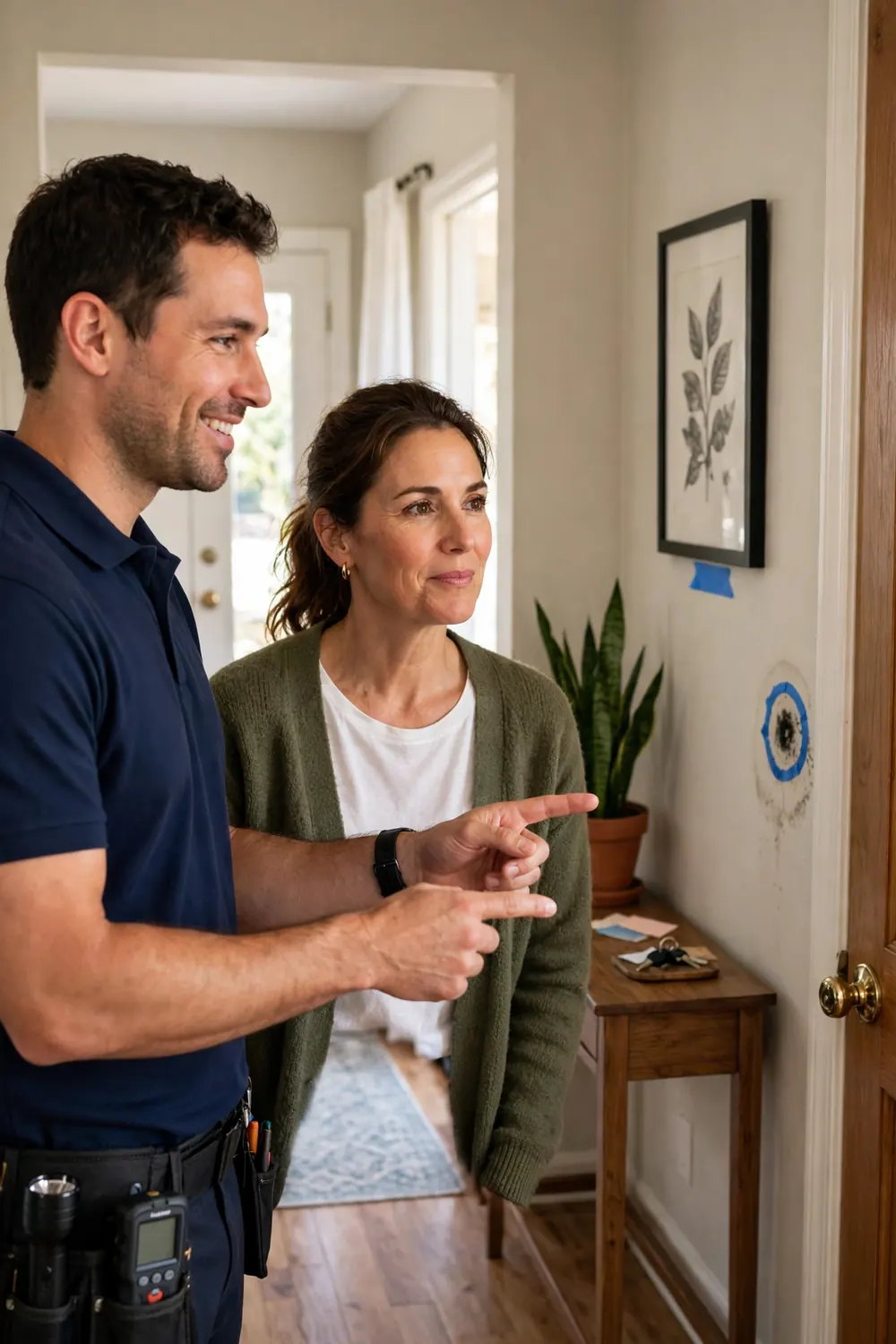
Spotted a warning sign? Let’s find the source.
Most leaks are located in a single visit. Call now and tell us what you’re seeing.
Before you read: how this page works
Leak detection has been covered on this site from a lot of angles already, and repeating the same full answers here would not help anyone. So this page does two things. For questions that are genuinely new, you get the full answer right here. For questions already answered in depth on another page, you get a short answer and a link to the full explanation, so you are never sent in circles.
If you do not see your question below, the fastest route is a phone call. Tell us what you are seeing and we will give you a straight answer for your house. That is what the team at Leak Fix Experts in Columbia does all day, and a two-minute conversation often settles what a page of reading cannot.
Finding leaks
Can you find a leak if my water meter test showed no movement?
Sometimes, yes, because a meter test only catches leaks that are active while you are watching. A drain leak only shows itself when that drain is used, a toilet may refill in bursts rather than steadily, and an irrigation leak only runs when a zone is on. If the meter held still but a symptom persists, say so when you call. It changes which test we start with, and our water meter test guide explains what a still meter does and does not rule out.
Can you find a leak behind tile or a finished shower wall without breaking the tile?
Often, yes, at least to the point of knowing whether a pipe behind that wall is leaking and roughly where. Acoustic listening and moisture mapping both work through tile without breaking it, and a thermal scan can help on the hot side. What cannot be promised is that the eventual repair will avoid tile work, since reaching the pipe is a different job from finding the leak. Detection keeps the opening small by narrowing the spot first.
What if there are two leaks at once? Will you only find the first one?
No. A good visit does not stop at the first confirmed leak when the symptoms do not fully add up. Once one source is found, the branch tests are repeated, because a second leak on another branch can hide behind the first one, especially in older homes where several runs are the same age. If a second source turns up, you will hear about it before any repair decisions are made.
Cost
Do you charge differently if a second visit is needed to finish tracing?
That depends on why the second visit is needed, and it is worth asking about on the first call. If the first visit narrowed the leak to a small area but a drain-only or intermittent leak needs a retest under different conditions, that is a different situation from starting over. Ask how follow-up tracing is handled before anyone starts, so the arrangement is clear either way.
Is detection priced separately from repair, even if the same company does both?
Yes. Detection and repair are separate scopes of work, and they are priced separately. Our leak detection cost guide explains the distinction and why asking which part a quote covers matters before you agree to anything.
Can I get the findings in writing to hand to a repair contractor or insurer?
Yes, you should leave a visit knowing what was found and how it was confirmed, and written findings make that useful to anyone who comes next. For insurance paperwork specifically, our guide to leak detection insurance reports covers what a report usually includes and what else to send with it.
The visit
How long will my water be off during a detection visit?
Usually not for the whole visit, and sometimes not at all. Water is typically shut off in short stretches while individual branches are isolated and tested, then turned back on between tests. If a main shutoff is stiff or hard to reach, it helps to mention that when you call, since a shutoff that will not budge can slow the whole visit down.
Does cold weather, rain, or a wet yard make detection harder?
It can, mostly for yard work. Rain and wet ground make it harder to tell a leak's damp patch from ordinary wet soil, and Maury County clay holds water for a long time after rain, which muddies the picture further. Cold weather itself does not stop indoor detection, but a freeze can create new leaks, so a visit after a cold snap often checks more than one suspect. Indoor listening and scanning are barely affected by weather.
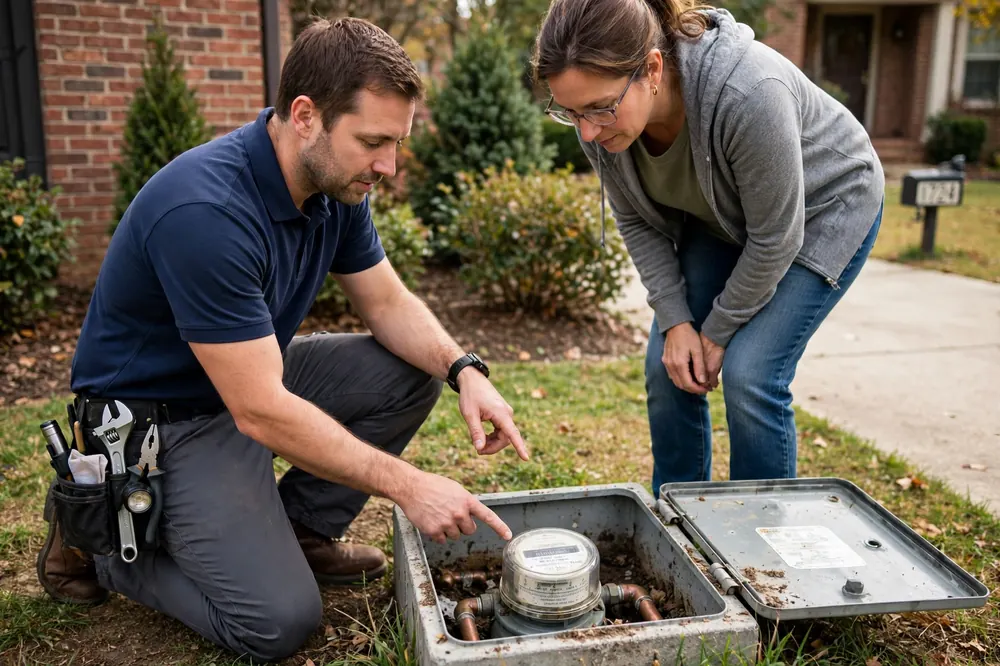
Do you need access to locked gates, crawlspace hatches, or a garage full of storage?
Only to the places the search actually leads, but access delays are one of the most common reasons a visit runs long. A locked side gate matters if the service line runs through the back yard. A crawlspace hatch blocked by boxes matters if the lines run underneath. You do not need to empty the garage, but clearing a path to the water heater, the main shutoff, and the meter before we arrive genuinely helps.
Methods
Can a thermal camera see a leak through a wall or floor?
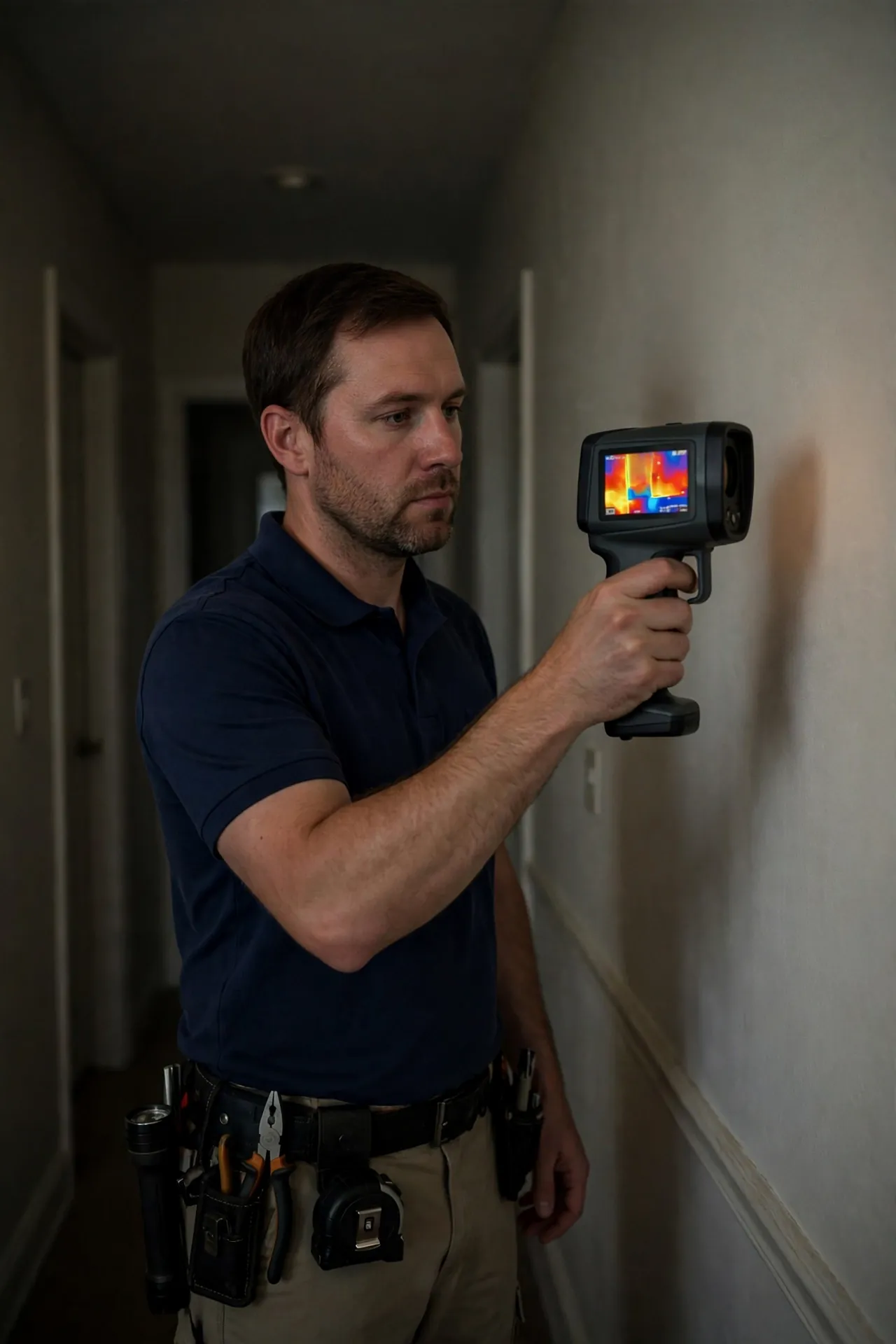
Not the leak itself. A thermal camera reads surface temperature, so it shows a warm patch on the surface above a hot-water leak, not a picture of the pipe or the water. It cannot see through a wall, and it shows nothing useful for most cold-water leaks. It is a pointing tool that says "look closer here," and the closer look comes from listening, pressure testing, or another method. Our leak detection methods hub explains each tool's limits in full.
Is tracer gas safe around kids and pets?
The mixture used for leak tracing is mostly nitrogen with a small amount of hydrogen, and it is used in small quantities inside an isolated line. It is not a fumigant and it is not left filling a room. As with any visit, keeping kids and pets out of the immediate work area while testing is underway is sensible, and the technician will say if a room needs to stay clear for a stretch.
Why can't a single tool find every kind of leak?
Because each tool senses one thing: sound, heat, gas, pressure, moisture, or a camera image. A cold, quiet leak defeats listening and thermal imaging alike, while a drain leak defeats tools built for pressurized supply lines. Our leak detection methods hub walks through what each method can and cannot find, and why visits usually combine two or three of them.
After a leak
How soon should a marked leak be repaired?
As soon as is practical, and sooner if water is still active. A marked leak that is shut off or isolated buys you time, but a slow weep left running keeps soaking material, and soaked material is what turns a plumbing job into a flooring or drywall job. If a repair cannot happen for days, ask on the visit what to shut off or avoid using in the meantime.
Can I keep using water normally while I wait for the repair?
It depends on which line is leaking. If the leaking branch can be isolated and shut off, the rest of the house usually carries on normally. If the leak is on the main service line or cannot be isolated, normal use may keep feeding it, and the technician will tell you what to limit. Do not guess at this one: a short call to confirm beats a weekend of water running into a wall cavity.
What should I do about the damp area after the leak is marked?
First, take photos of the damp area and the marked spot before anything is opened up, since that record helps with repair quotes and any insurance conversation. Keep the area ventilated if you can, and do not open walls or pull up flooring on a guess about how far the wet has spread. Drying helps, but it does not fix a musty smell on its own if material stayed wet for a long time, so flag lingering dampness or odor to whoever handles the repair.
If your question is about the visit itself rather than the tools or the aftermath, our how leak detection works page walks through it step by step. And if you are still weighing whether a visit is worth it, the honest answer is that a conversation costs nothing: describe the symptom to the team behind leak detection in Columbia, TN and we will tell you whether detection is the right next step or whether a simpler check will do.
Leak Detection FAQs
Can you find a leak if my water meter test showed no movement?
Sometimes, yes, because a meter test only catches leaks that are active while you are watching. A drain leak only shows itself when that drain is used, a toilet may refill in bursts rather than steadily, and an irrigation leak only runs when a zone is on. If the meter held still but a symptom persists, say so when you call, since it changes which test we start with.
Can you find a leak behind tile or a finished shower wall without breaking the tile?
Often, yes, at least to the point of knowing whether a pipe behind that wall is leaking and roughly where. Acoustic listening and moisture mapping both work through tile without breaking it, and a thermal scan can help on the hot side. What cannot be promised is that the eventual repair will avoid tile work, since reaching the pipe is a different job from finding the leak.
What if there are two leaks at once? Will you only find the first one?
No. A good visit does not stop at the first confirmed leak when the symptoms do not fully add up. Once one source is found, the branch tests are repeated, because a second leak on another branch can hide behind the first one, especially in older homes where several runs are the same age.
Do you charge differently if a second visit is needed to finish tracing?
That depends on why the second visit is needed, and it is worth asking about on the first call. If the first visit narrowed the leak to a small area but a drain-only or intermittent leak needs a retest under different conditions, that is a different situation from starting over. Ask how follow-up tracing is handled before anyone starts, so the arrangement is clear either way.
Is detection priced separately from repair, even if the same company does both?
Yes. Detection and repair are separate scopes of work, and they are priced separately. See our leak detection cost guide for the full explanation of what each part covers and why asking which part a quote covers matters.
Can I get the findings in writing to hand to a repair contractor or insurer?
Yes, you should leave a visit knowing what was found and how it was confirmed, and written findings make that useful to anyone who comes next. See our guide to leak detection insurance reports for what a report usually includes and what else to send with it.
How long will my water be off during a detection visit?
Usually not for the whole visit, and sometimes not at all. Water is typically shut off in short stretches while individual branches are isolated and tested, then turned back on between tests. If a main shutoff is stiff or hard to reach, mention that when you call, since a shutoff that will not budge can slow the whole visit down.
Does cold weather, rain, or a wet yard make detection harder?
It can, mostly for yard work. Rain and wet ground make it harder to tell a leak's damp patch from ordinary wet soil, and Maury County clay holds water for a long time after rain, which muddies the picture further. Cold weather itself does not stop indoor detection, but a freeze can create new leaks, so a visit after a cold snap often checks more than one suspect.
Do you need access to locked gates, crawlspace hatches, or a garage full of storage?
Only to the places the search actually leads, but access delays are one of the most common reasons a visit runs long. A locked side gate matters if the service line runs through the back yard, and a crawlspace hatch blocked by boxes matters if the lines run underneath. Clearing a path to the water heater, the main shutoff, and the meter before we arrive genuinely helps.
Can a thermal camera see a leak through a wall or floor?
Not the leak itself. A thermal camera reads surface temperature, so it shows a warm patch above a hot-water leak, but it cannot see through a wall and shows little for cold-water leaks. Our leak detection methods guide explains what thermal imaging can and cannot find.
Is tracer gas safe around kids and pets?
The mixture used for leak tracing is mostly nitrogen with a small amount of hydrogen, and it is used in small quantities inside an isolated line. It is not a fumigant and it is not left filling a room. As with any visit, keeping kids and pets out of the immediate work area while testing is underway is sensible, and the technician will say if a room needs to stay clear for a stretch.
Why can't a single tool find every kind of leak?
Because each tool senses one thing: sound, heat, gas, pressure, moisture, or a camera image. A cold, quiet leak defeats listening and thermal imaging alike, while a drain leak defeats tools built for pressurized supply lines. See our leak detection methods hub for what each method can and cannot find, and why visits usually combine two or three of them.
How soon should a marked leak be repaired?
As soon as is practical, and sooner if water is still active. A marked leak that is shut off or isolated buys you time, but a slow weep left running keeps soaking material, and soaked material is what turns a plumbing job into a flooring or drywall job. If a repair cannot happen for days, ask on the visit what to shut off or avoid using in the meantime.
Can I keep using water normally while I wait for the repair?
It depends on which line is leaking. If the leaking branch can be isolated and shut off, the rest of the house usually carries on normally. If the leak is on the main service line or cannot be isolated, normal use may keep feeding it, and the technician will tell you what to limit. Do not guess at this one: a short call to confirm beats a weekend of water running into a wall cavity.
What should I do about the damp area after the leak is marked?
First, take photos of the damp area and the marked spot before anything is opened up, since that record helps with repair quotes and any insurance conversation. Keep the area ventilated if you can, and do not open walls or pull up flooring on a guess about how far the wet has spread. Drying helps, but it does not fix a musty smell on its own if material stayed wet for a long time.
My pool keeps losing water. Is it a leak or just evaporation?
It can be either, and evaporation alone rarely explains a steady drop. Run the bucket test first: if the pool still loses more than the bucket, a plumbing leak is likely. Our pool losing water guide walks through the checks to run before you call.
Related Leak Detection Services
Leak Detection Methods
What each tool senses, where it falls short, and why visits combine methods.
Learn moreHow Leak Detection Works
The visit itself, step by step, from the first questions to the marked spot.
Learn moreLeak Detection Cost Guide
What shapes a visit, with no fixed figures invented for the occasion.
Learn more
Still have a question we did not cover?
Call and describe what you are seeing. A two-minute conversation often settles what a page of reading cannot.