How to Find an Underground Water Leak
The soggy strip in your yard is a clue, not a location. Here is how to confirm an underground leak and narrow it down before anyone digs.
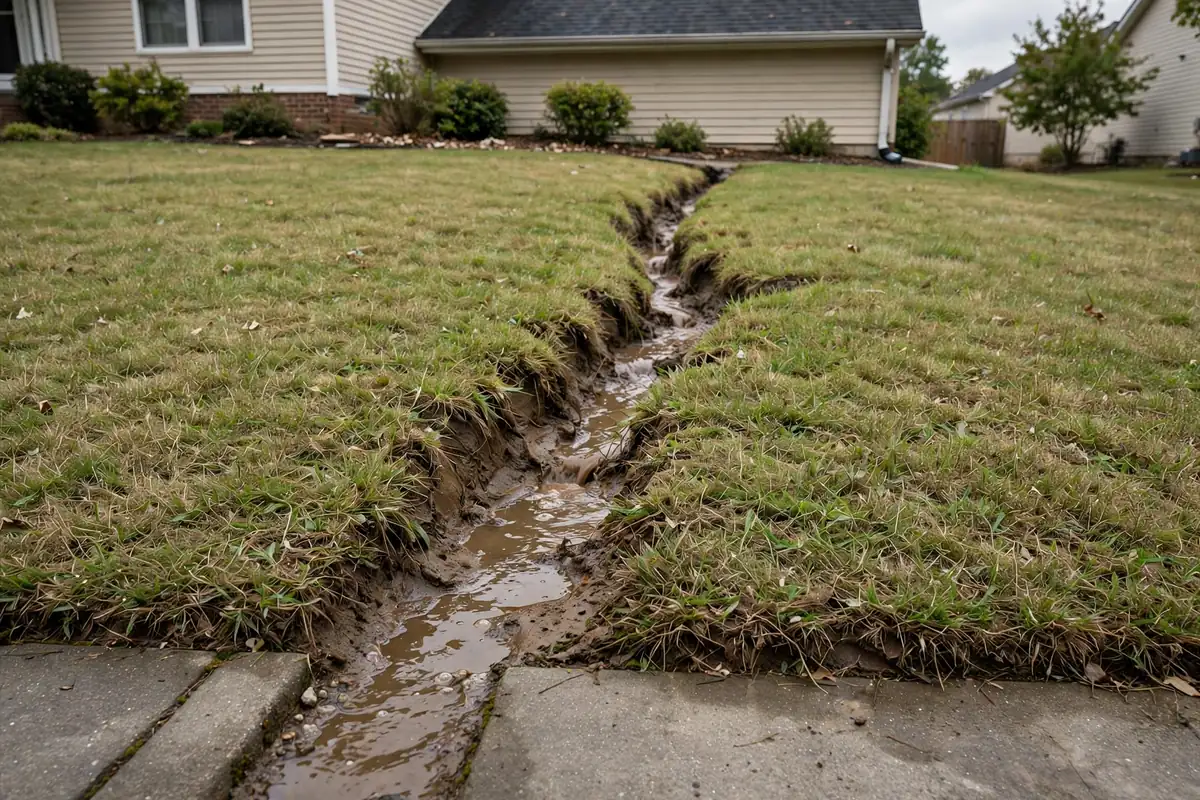
An underground water leak is the kind that keeps running while everything looks fine. The service line between the street meter and your house can break and lose water into the soil for weeks before anyone notices a thing. Your bill usually notices first. Your yard notices second. This guide covers what to look for, how to prove it, and how to tell a supply-line break apart from the other things that make a yard soggy.
What an underground leak looks like from above
The signature sign is a strip of grass that is greener, taller, and faster-growing than the rest of the lawn, often running in a line from the meter toward the house. That is the service line's path, and it is getting watered from below. Other signs:
- A soft, muddy patch that stays wet days after rain stops
- Standing water or a small puddle with no weather to explain it
- Soil that sinks or feels spongy underfoot in one area
- A hissing sound at the meter box when everything inside is off
One quirk worth knowing about Maury County: the clay soil here drains poorly. Water from an underground leak spreads sideways through clay instead of sinking down, so the soggy area on the surface can be much wider than the actual break. Do not assume the middle of the soggy patch is the leak location. It often is not.
Step one: prove it with the meter isolation test
Before anything else, confirm the leak is underground. Run the meter test with everything in the house off. If the meter is moving, close the main shutoff valve where the line enters the house and check the meter again.
- Meter keeps moving with the house shut off: the leak is in the underground line between the meter and the house. That is a service-line problem.
- Meter stops: the leak is inside the house or under the slab, not in the yard.
This test is decisive. Everything after it is about where along the line the break is, not whether one exists.
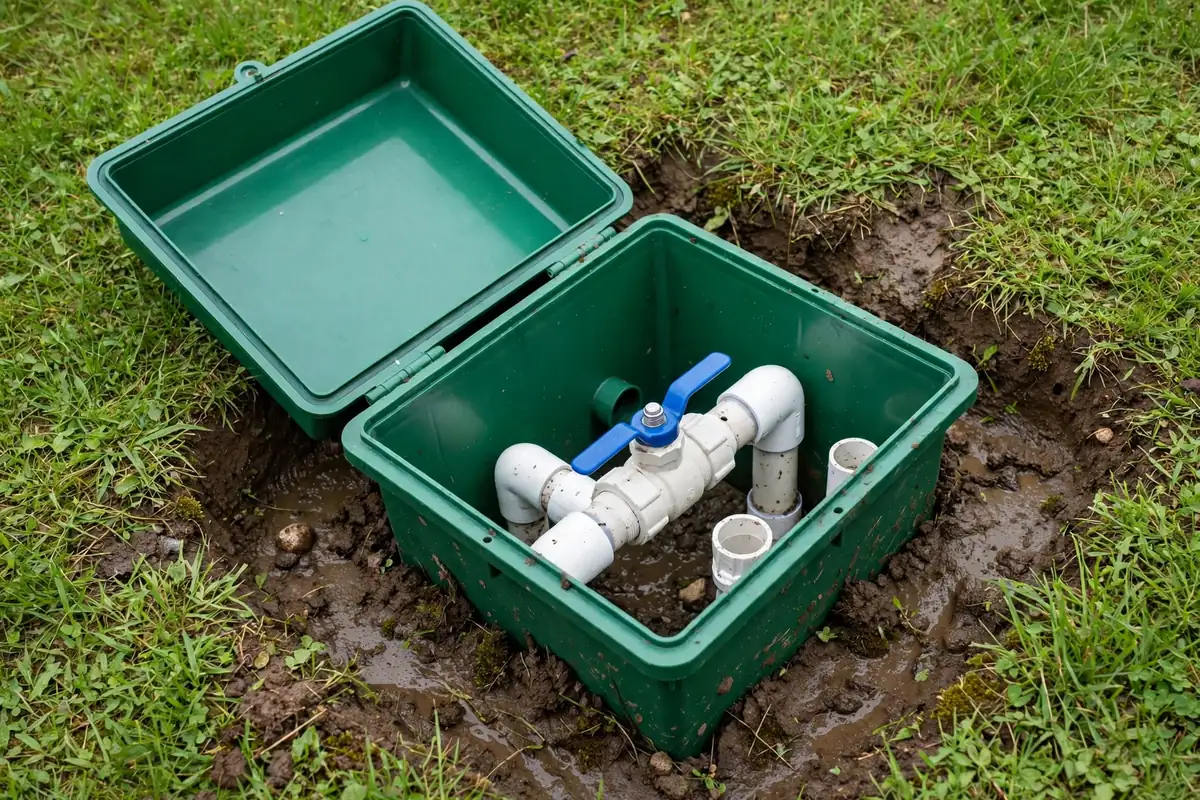
Service line vs. irrigation: telling them apart
This is the mix-up we see most. A broken irrigation lateral line also makes a soggy yard, but the fixes are completely different, so sorting it out matters.
- Timing. A supply-line leak runs 24 hours a day. An irrigation leak usually shows up only when a zone runs, or gets dramatically worse during watering cycles. Soggy all the time points to the service line. Soggy after the sprinklers run points to irrigation.
- The meter test. Turn off the irrigation controller entirely, run the meter isolation test. If the meter still moves with irrigation off and the house shut off, it is the service line.
- Location. Irrigation breaks cluster near heads, valve boxes, and along zone lines. Service-line breaks sit between the meter and the house, usually in a fairly straight run.
If it turns out to be irrigation, that is a different investigation, covered by irrigation leak detection. If the meter test points to the service line, keep reading.
Why service lines break
When we get a call about a soggy yard in Maury County, shifting clay soil is the first thing we suspect, and it is right more often than not. A few other usual causes: older galvanized or poly lines that corrode or split with age, rocks pressing against the pipe, freeze damage from hard winters, and the occasional nick from a shovel or fence-post digger that slowly turns into a break. None of these are anyone's fault. Buried pipe lives a hard life.
How professionals pinpoint it
This is where the guesswork ends. Digging up a yard to find a leak is the most expensive way to do it, so professional detection comes first. The methods commonly used in the trade for underground lines:
- Acoustic listening along the line's path, following the sound to its loudest point through the soil.
- Tracer gas, where a harmless gas is introduced into the line and a sensitive sniffer finds where it surfaces. Very effective for deep or long runs.
- Pressure isolation, to confirm the break is in the service line and not a branch.
The result is a marked spot, often within inches. Then the repair crew digs one hole in the right place instead of trenching the whole yard. That difference is the entire point of underground leak detection. If the break turns out to be on the main water line feeding the house, water line leak detection is the service that covers it.
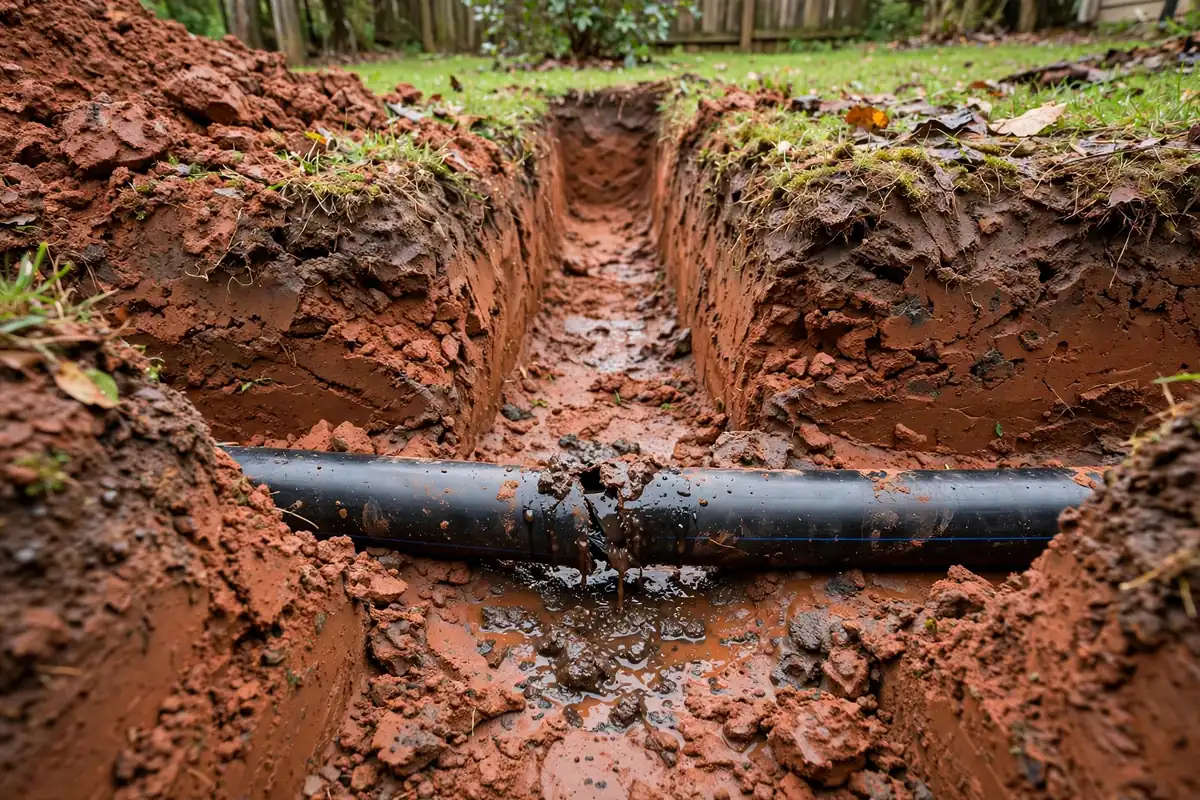
Do not dig on a guess
We say this on almost every underground job: the soggy patch is not the location. In clay soil, water travels. We have marked leaks ten feet from where the homeowner was sure the problem was, and we have seen people dig three dry holes before calling us. One detection visit is cheaper than one wrong trench, let alone three.
Also, before any digging anywhere in Columbia, TN, utility lines need to be marked. That is a separate call and it is free. We will remind you when we mark the leak.
A quick checklist
- Run the meter test with everything off.
- Do the isolation test at the main valve: yard or house?
- Rule out irrigation: controller off, watch for zone-timed sogginess.
- Photograph the soggy area and note the dates.
- Call for detection before anyone digs.
Spotted a warning sign? Let’s find the source.
Most leaks are located in a single visit. Call now and tell us what you’re seeing.
Common questions
How do I know if a water leak is underground?
The meter isolation test is the proof: close the main valve at the house. If the meter keeps moving with the house shut off, the leak is in the underground line between the meter and the house. Soggy strips of yard and a climbing bill back it up.
Is a soggy yard always a water line leak?
No. It can be a broken irrigation zone, a drainage problem, a high water table, or a sewer issue. The meter isolation test separates a pressurized supply leak from everything else, which is why it comes first.
Can I find an underground leak without digging?
Professionals do it without digging first, using acoustic listening, tracer gas, and pressure testing to pinpoint the spot. Digging happens only after the location is marked, so the hole is small and in the right place.
Soggy yard, moving meter?
Get the break pinpointed before anyone brings a shovel.