How to Tell If You Have a Hidden Water Leak
Before you call anyone, there are three tests you can do yourself with no tools. Here is exactly how to run them, and what the results mean.
We get the call all the time: "My bill went up and I think I have a leak, but I cannot see anything." Sometimes there is a leak. Sometimes there is not. Either way, the first thing we do on arrival is confirm whether water is actually leaving the system. And here is the good part: you can do that confirmation yourself, in about half an hour, with no special equipment. This guide walks through the three checks that matter, in order.
Test 1: The water meter test
This is the single most useful DIY leak check in existence. Here is how it works:
- Turn off every water-using fixture in the house. Taps, toilets, dishwasher, washing machine, ice maker. Everything. Make sure nobody runs anything during the test.
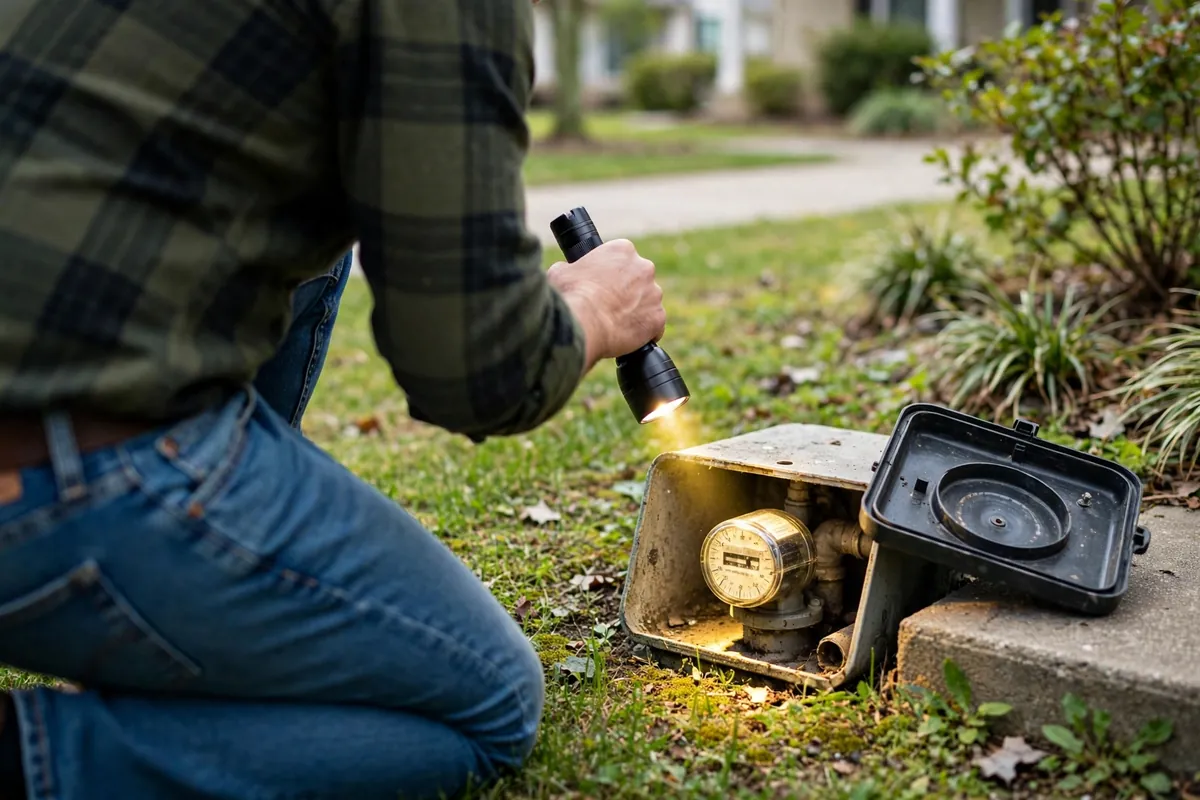
- Go to your water meter, usually in a ground-level box near the street or sidewalk. Lift the lid. You may need a screwdriver or a gloved hand to flip the cover on the meter face itself.
- Look for the leak-indicator triangle or a small dial on the register. It is the most sensitive part of the meter. Note its position.
- Wait 30 minutes without running any water. Then check again. If that triangle or dial has moved, water went through the meter while everything was off. That is a leak.
Why 30 minutes? A fast leak shows in seconds, but a slow one needs time. Half an hour catches leaks that a quick glance misses. A few notes from experience: if your meter is fogged or dirty, wipe the face. If the box is full of water, that alone is information worth telling us. And in Maury County, some meters sit in low spots that flood after rain, so check on a dry day if you can.
One caveat worth knowing: a single quiet reading does not always clear you. Some leaks are intermittent, a toilet that runs only after certain flushes, an irrigation valve that sticks on some cycles and not others. If the bill says water is going somewhere but the meter sits still during your test, repeat the test at a different time, and do the food-coloring toilet check in the meantime.

Test 2: The main-valve isolation test
If the meter moved, the next question is where the leak lives: in the yard or inside the house? Close the main shutoff valve where the water line enters your home, usually near the water heater, in a utility room, or at the foundation. Then check the meter again.
- Meter stops moving: the leak is between the main valve and your fixtures, somewhere inside the house or under the slab.
- Meter keeps moving: the leak is between the meter and the house, in the underground service line.
This one test can save a detection visit from going in the wrong direction. If you do it before calling, tell us the result. We will take it from there. One caution: older gate-style valves can be stiff or corroded. Do not force one with a wrench until it snaps. If it will not turn by hand, leave it alone and let us deal with it.
Test 3: The bare-feet warm spot check
Walk barefoot slowly across your hard floors: tile, concrete, hardwood. You are feeling for a warm spot that is warmer than the surrounding floor. A warm patch, especially one that seems to be growing, is a classic sign of a hot-water line leaking under the slab. Hot water escaping into the soil warms the concrete, and the concrete warms the floor. People discover leaks this way more often than you would think.
The signs that back up a positive test
A positive meter test plus any of these means you are very likely dealing with a real leak:
- Hearing water running or a faint hiss when everything is off
- A water heater that runs far more than it should, a hot-side clue
- Damp carpet edges, tile that never dries, or a musty smell in one area
- A soggy patch in the yard that stays wet between rains
Two or three of these together? Call. That combination rarely resolves itself.
Do not forget the toilet: the food-coloring test
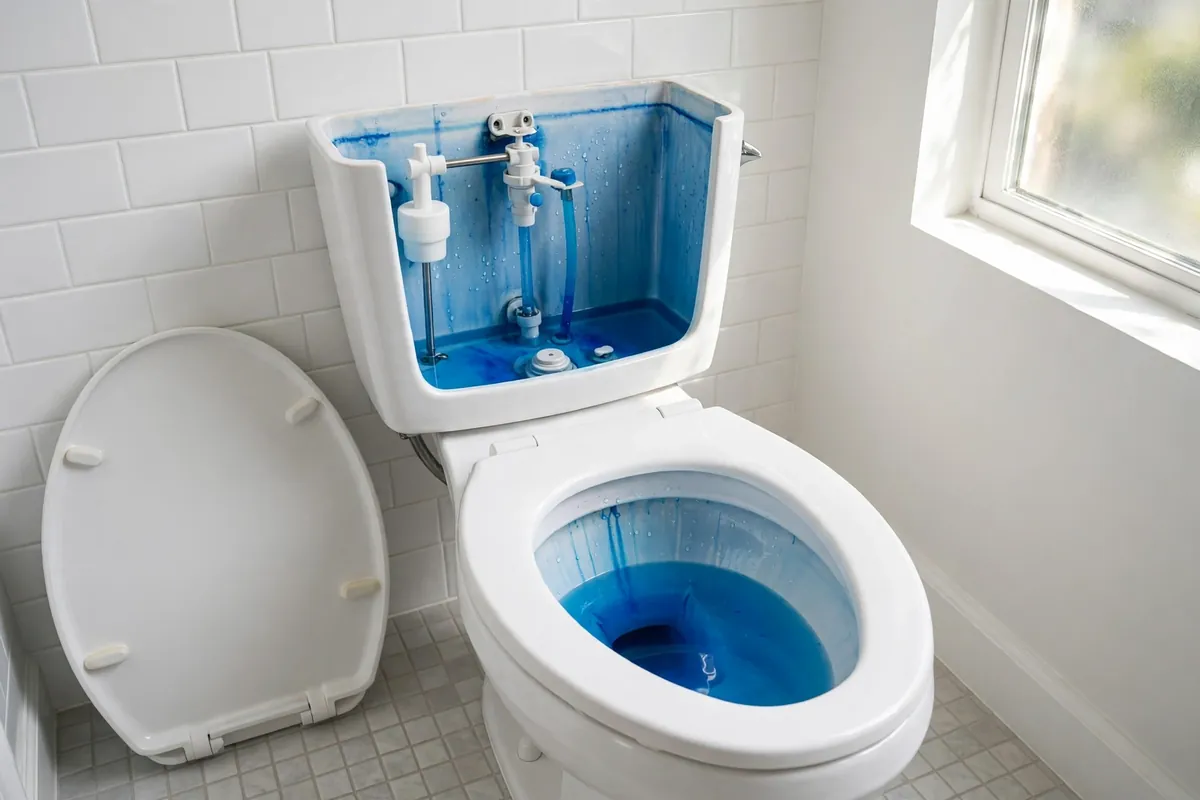
Here is a leak that fools everyone. A toilet can run silently, leaking hundreds of gallons a month straight into the bowl, without a sound. The test takes ten minutes: put a few drops of food coloring in the toilet tank, do not flush, and wait. If the bowl water turns color, the flapper is leaking. A worn flapper costs a few dollars to replace and can fix a "mystery" bill overnight. We mention this in nearly every high-bill conversation because it is the cheapest win in plumbing.
The honest limits of DIY
These tests confirm whether a leak exists and roughly where it lives. What they cannot do is pinpoint. Knowing "the leak is somewhere in the hot-water lines under the slab" is genuinely useful, but it is not a repair plan. Pinpointing within inches takes acoustic listening, thermal imaging, or tracer gas, the methods commonly used in the trade, and the experience to read them correctly.
There is also a limit to patience. We have seen homeowners spend months re-running DIY checks while a slab leak soaked the soil under their home. If your meter test is positive and the simple checks have not found the source, that is exactly when a professional visit earns its money. A detection visit costs far less than a wrong guess about where to dig.
What to have ready when you call
If your checks point to a leak, bring us this information: the meter test result, whether the isolation test pointed to yard or house, your recent bill history, and anything you have noticed (sounds, smells, warm spots, stains). Photos with timestamps help. That is everything we need to start, and it makes hidden leak detection faster and more accurate. If you are anywhere in Columbia, TN or the surrounding Maury County communities, that is the call to make.
Noticed something off with your water?
A quick call is the cheapest diagnostic there is. Tell us what you're seeing and we'll tell you what it likely means.
Common questions
What is the fastest DIY test for a hidden water leak?
The meter test. Turn off everything that uses water, then watch your water meter for 30 minutes. If the register or leak-indicator triangle moves, water is leaving the system somewhere and you have a leak.
Can I find the exact location of a leak myself?
Sometimes you can narrow it down to a room or a branch of plumbing, especially with the main-valve isolation test. But pinpointing within inches usually requires acoustic or thermal equipment, which is why professional water leak detection exists.
My meter is not moving but my bill is high. Is that still a leak?
Not necessarily. A still meter with everything off means no active leak at that moment. The high bill may come from a toilet that runs intermittently, an irrigation zone stuck on, a meter misread, or a rate change. Compare usage across bills before assuming a leak.
Meter test came back positive?
Tell us what you found. We will pinpoint the leak before anyone digs.