Leak Detection in Alcoa, TN
Alcoa is a city of about 10,978 people in Blount County, at the foot of the Great Smoky Mountains and right next door to Maryville. It is a company town in the truest sense: the Aluminum Company of America bought the land in 1910, built a smelter and a whole planned community for its workers, and the city took the company name when it incorporated in 1919. The houses here tell that story, from 1940s brick company homes to new subdivisions along the Little River. The rain comes hard off the mountains, the foothill clay holds moisture, and a slow leak can hide for months. We drive over from our Columbia base to find them, the same way we do at home, listening and testing before anyone opens a wall.
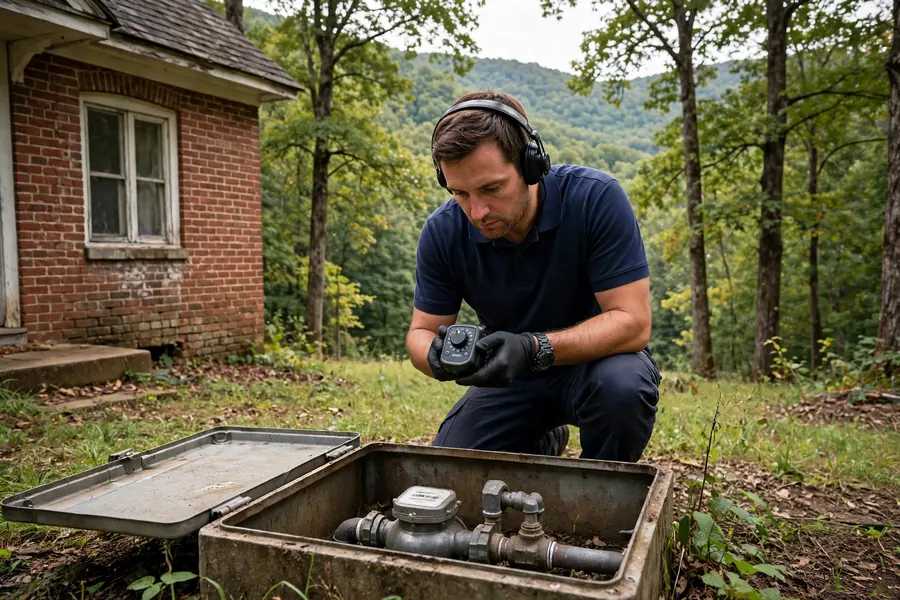
What a Typical Alcoa Service Call Looks Like
The call usually starts with a water bill that climbed for two months running, or a crawlspace that never dries out. Sometimes it is a stain on a ceiling under an old bathroom, or a toilet that runs quietly all day. Out here the first question is always the same: how old is the house? The answer decides where we look first.
In a company-era home we start with the old supply runs and the joints that have been patched more than once. In a newer subdivision home we start at the meter and work inward. Either way the method is the same: everything off, watch the meter, then walk the house the way water would travel, checking valves, listening at walls, and scanning floors for warm or cool patches. Leak Fix Experts is based in Columbia, and Alcoa is extended coverage for us, roughly 200 miles east, so we come prepared to find it in one visit rather than make two trips of it.
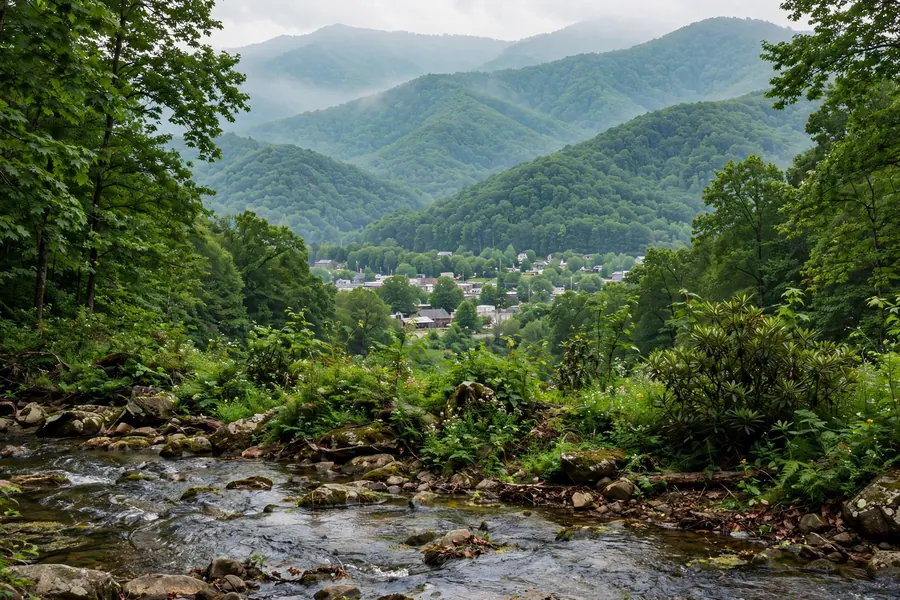
Spotted a warning sign? Let’s find the source.
Many leaks are located in a single visit. Call now and tell us what you’re seeing.
Three Things That Bring Us to Alcoa
Company-era plumbing, layered by remodels
The old company houses were built fast, and most have been remodeled more than once, so you get original runs joined to newer ones, galvanized pipe next to copper, and joints buried behind tile or a finished wall. Our pipe leak detection visit isolates the runs section by section, so layered plumbing stops being a guessing game.
Heavy mountain rain and wet crawlspaces
Alcoa sits where the Smokies push the weather up, and the rain comes hard. Foothill clay holds that moisture, and a crawlspace under a house near the Little River can stay damp for months. A damp crawlspace might be rain and drainage, or it might be a slow supply leak. Our crawlspace and basement leak detection visit starts with the meter, which settles the question before anyone crawls under the house.
Freeze-exposed lines in winter
The foothills get real winter. Pipes in crawlspaces, garages, and along outside walls are the ones that freeze, and the leak often does not show until the thaw, when a split line starts feeding water into a wall or under a floor. If the first warm week brings a damp spot or a bill that jumps, that is the time to call. Our emergency leak detection line is answered around the clock, and we will tell you straight whether it can wait for a scheduled visit.
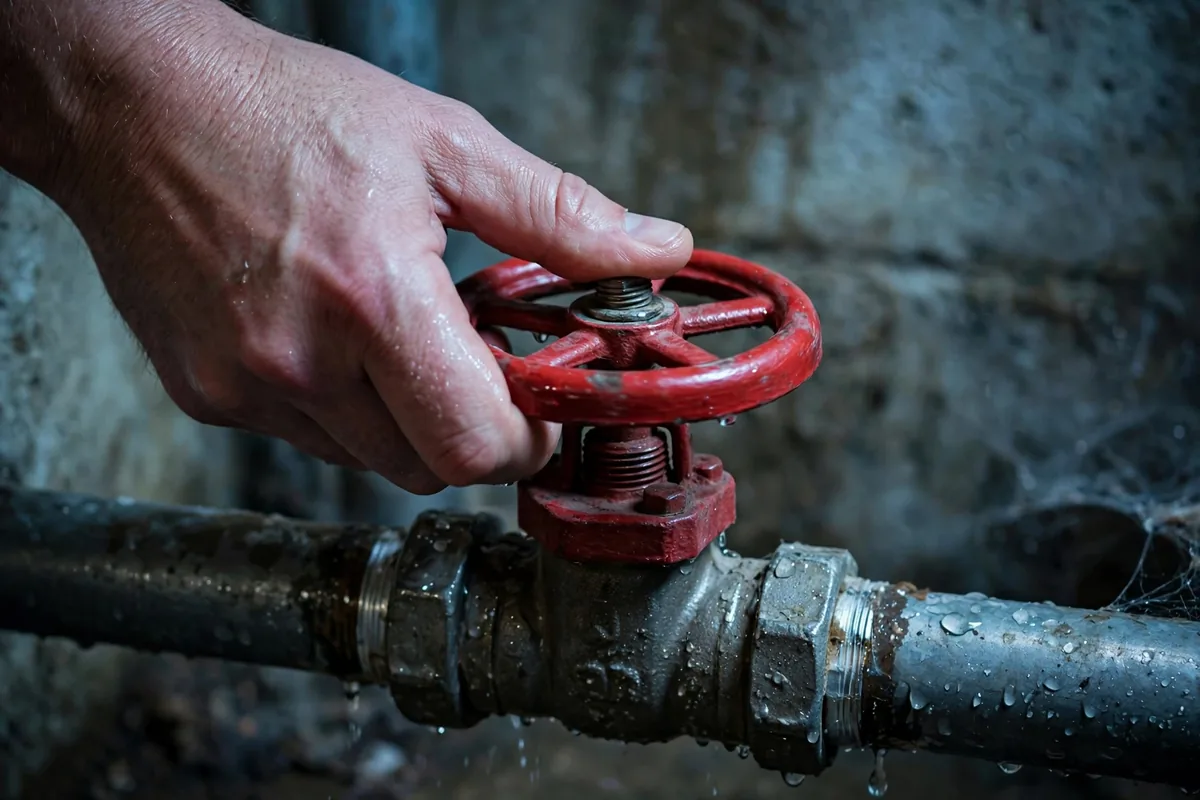
Telling Mountain Rain Apart From a Leak
This is the most common question we get from Alcoa, and it is a fair one. The rain here is serious, and after a big storm the ground is wet everywhere, the crawlspace is damp, and a room can smell musty for days. None of that proves a pipe is leaking. It proves it rained.
The meter test settles it in fifteen minutes. Turn everything in the house off, then watch the meter. Rain cannot move your meter, so if it is still moving, a supply line is leaking. If the meter holds still, the damp is rainwater or drainage, and the fix is grading, gutters, or a downspout, not a plumber. We are glad to talk you through the test on the phone before you book anything. If the meter does move, a water leak detection visit traces the line and finds the break, so the repair stays small.
A Company Town at the Foot of the Smokies
Alcoa grew out of the aluminum smelter the Aluminum Company of America built here in the 1910s, when cheap hydroelectric power from the Little Tennessee River made the site right. Engineers laid out streets and housing for the workers, the town incorporated in 1919, and the workforce swelled through both world wars, when aluminum went into aircraft. After the war the company sold off the worker housing, and the town grew into its own place. McGhee Tyson Airport sits just north of town, and the Little River runs along its edge before joining Fort Loudoun Lake. The 37701 ZIP covers Alcoa and the ground around it.
Maryville, the county seat, shares a border with Alcoa, and the two cities run together along Alcoa Highway, US 129. The housing is a mix of the old company neighborhoods, mid-century ranches, and new subdivisions pushing toward the foothills. The soil is foothill clay and chert, which swells when it is wet and shrinks when it is dry, working on buried lines season after season. Summers are humid, winters bring hard freezes, and the mountain rain keeps everything damp. If you live in Alcoa or anywhere in the 37701 ZIP and something feels off, a high bill, a damp crawlspace, a stain on a ceiling, call and describe what you are seeing. We will tell you straight whether it sounds like a detection visit. For how we serve the whole region, our Columbia service areas page lays it out.
Leak Detection Services for Alcoa Homes
Everything below travels with us from Columbia. Pick the one that matches what you are seeing, or just call and describe it.
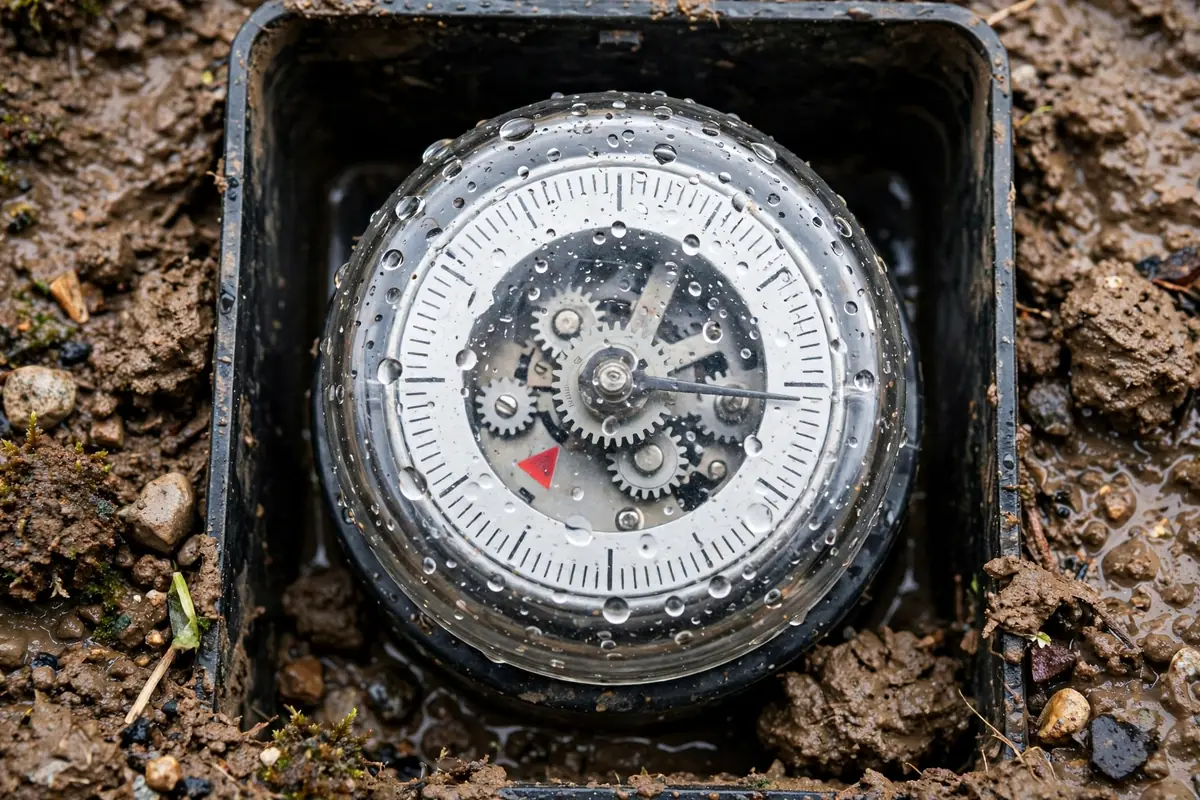
Water Leak Detection
The full-property sweep for an Alcoa home: meter test first, then a systematic pass over supply lines, fixtures, and the runs under the floor.
Learn more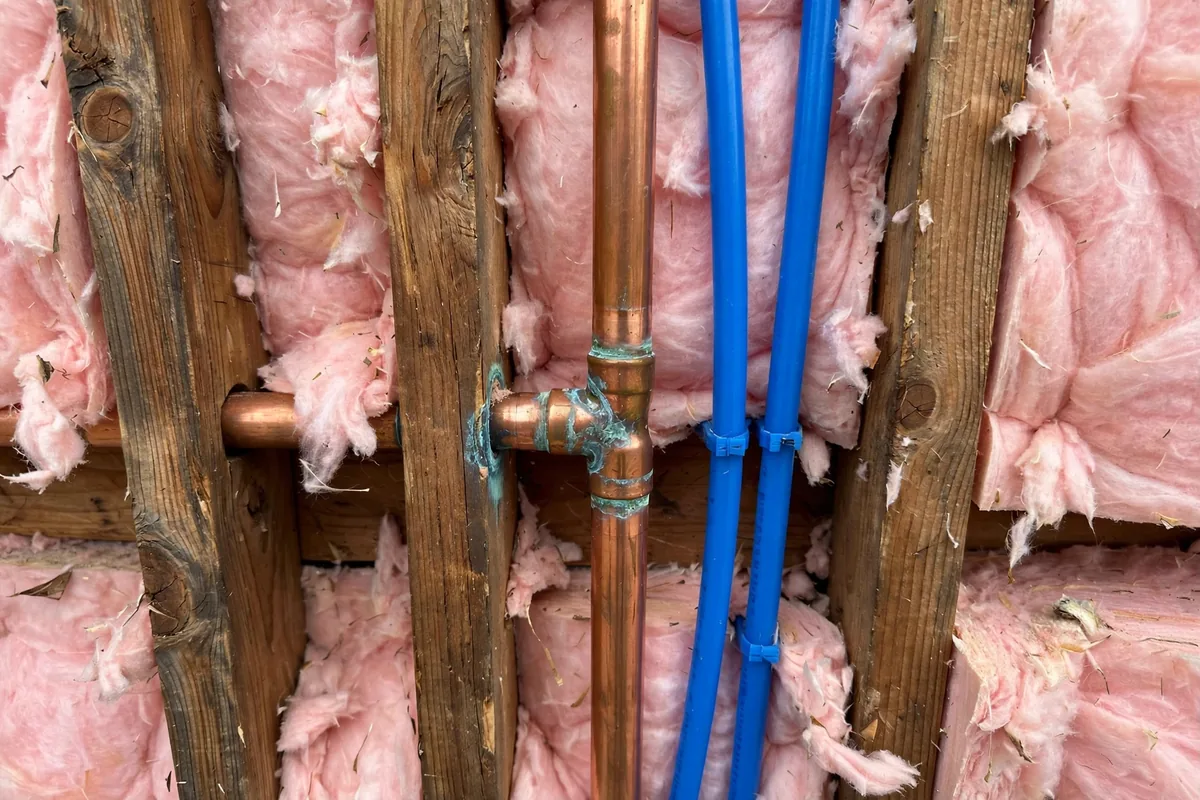
Pipe Leak Detection
Company-era supply runs isolated section by section, then listened down to the exact run, so layered plumbing stops being a guessing game.
Learn more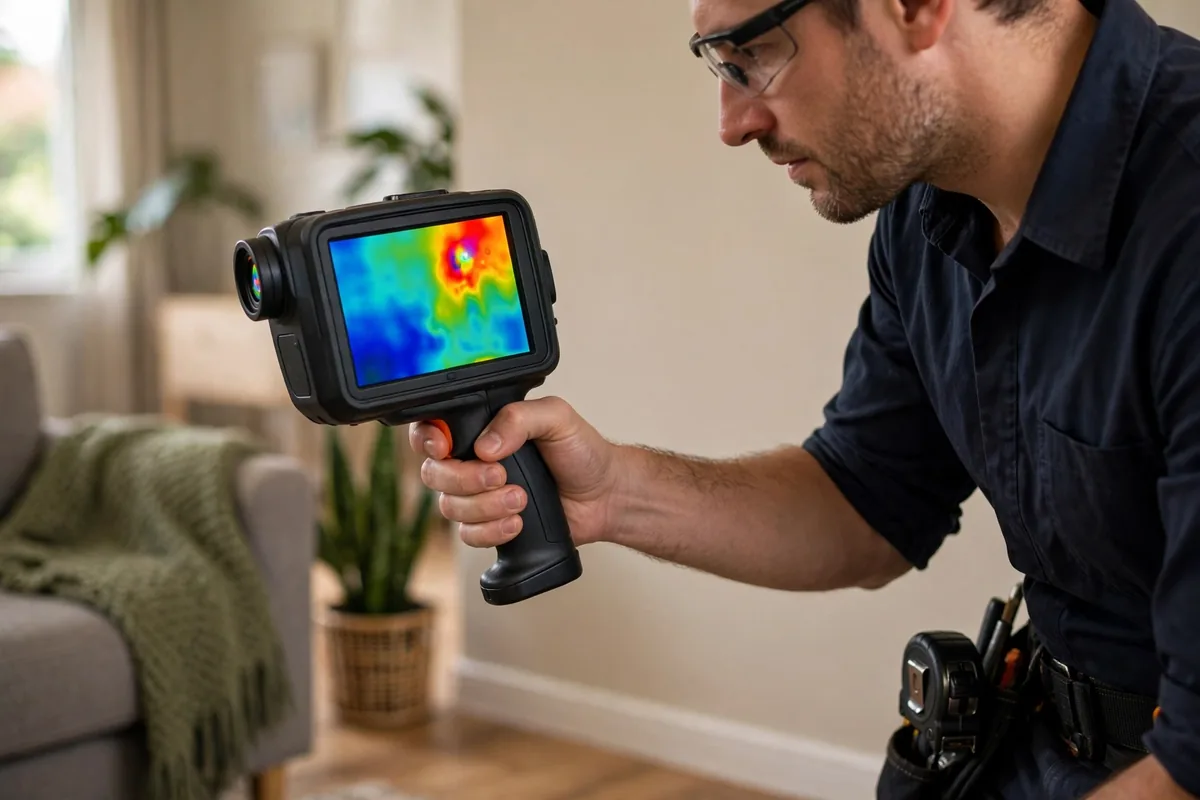
Hidden Leak Detection
For the damp room with no visible source: thermal scanning and acoustic listening to tell a slow pipe leak apart from mountain humidity.
Learn more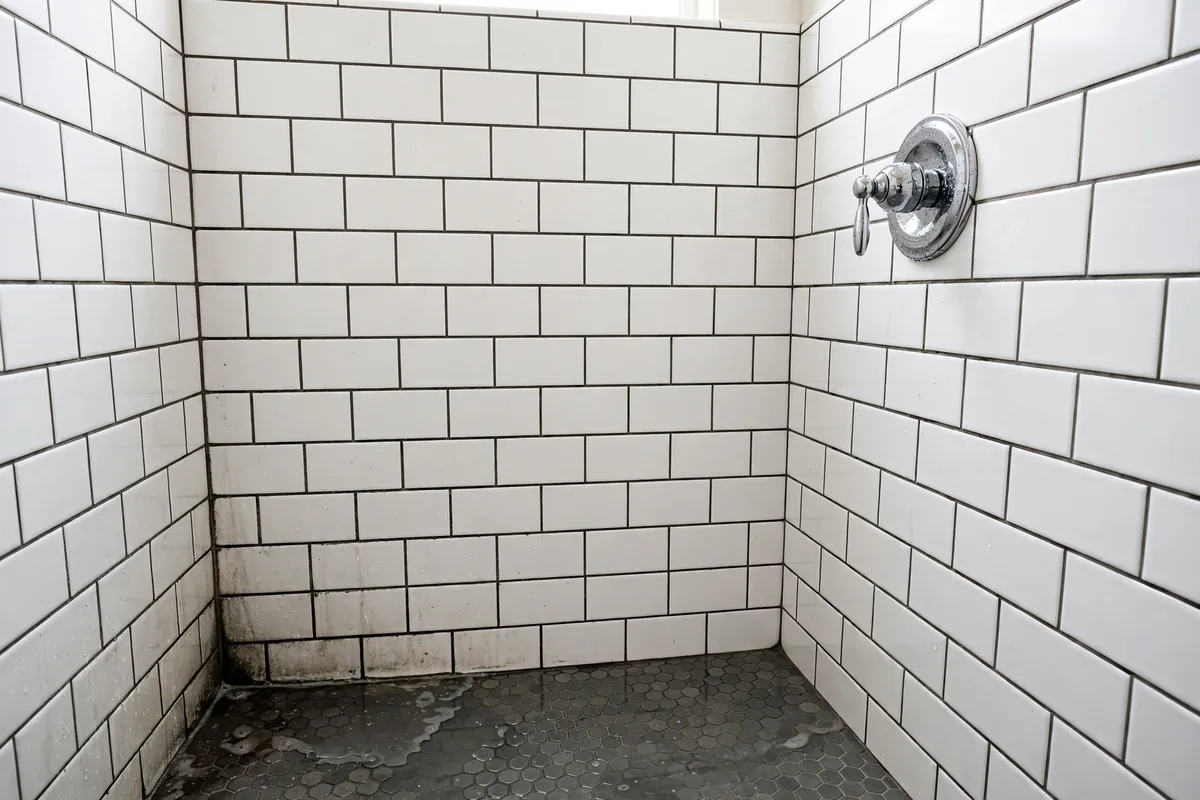
Bathroom Leak Detection
Old tubs, showers, and toilets in company-era bathrooms checked without tearing out tile, tracing the leak to the run that feeds it.
Learn more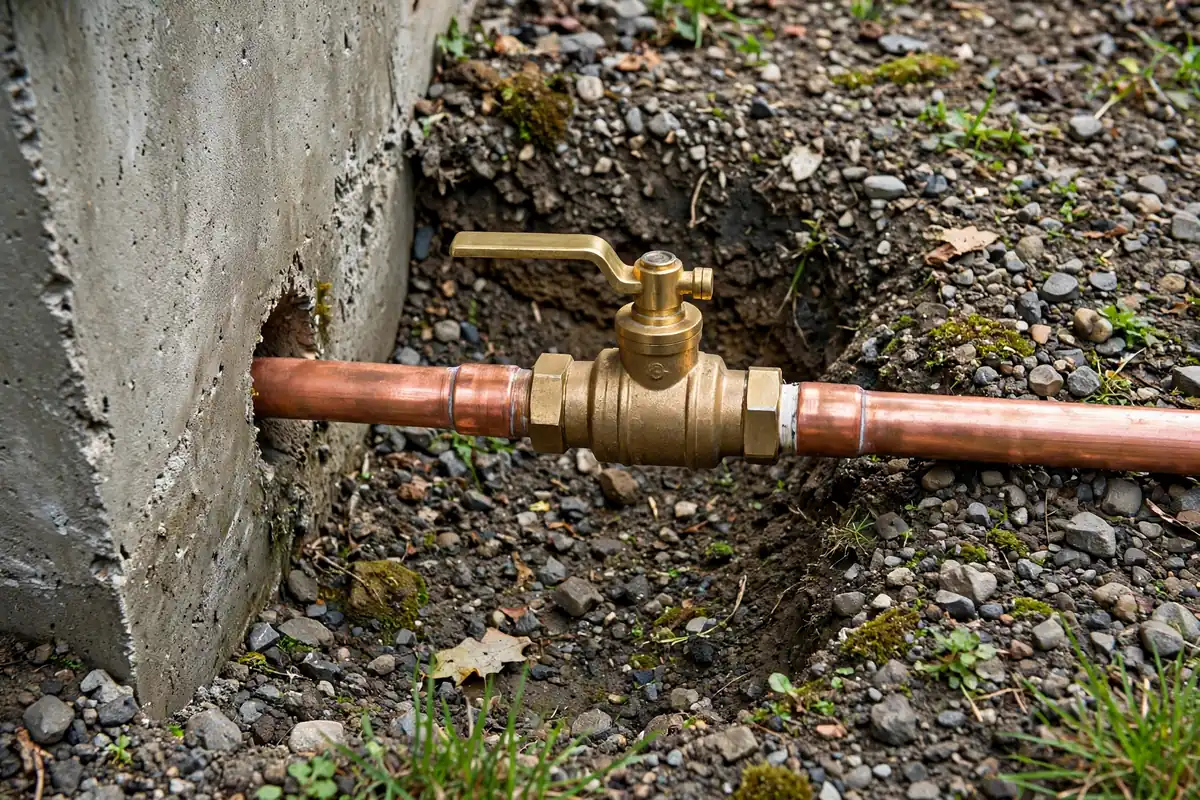
Water Line Leak Detection
The main line from the street pressure-tested and traced, so a break in foothill clay gets found before anyone digs up the yard.
Learn more
Emergency Leak Detection
Active water coming in after a freeze split or a burst line. Call any time and we will talk you through shutting the water off first.
Learn more
How an Alcoa Visit Works
Here is the honest version: we do not have an office in Alcoa. Our base is in Columbia, on Nashville Highway, and Alcoa is extended coverage, roughly 200 miles east. That means visits here are scheduled, not drop-in. When you call, we will ask what you are seeing, the meter check, the age of the house, and whether it is a company-era home or a newer build, and we will agree on a visit window before we drive over. For active water coming in, call any time. The phone is answered around the clock, and we will talk you through shutting the water off and give you a straight answer about how fast we can get there.
We also cover the towns around Alcoa on the same trips: Maryville, right next door, Louisville, Rockford, and the Highway 129 corridor toward Knoxville. If you are anywhere in the 37701 ZIP or along that stretch of road, you are in our extended coverage. The work itself is the same as in Columbia: non-invasive detection first, a clear explanation of what we found, and no repair pressure. If you want to see everything we do, the services hub has the full list.
Alcoa Leak Detection FAQs
You are based in Columbia. Do you really come all the way to Alcoa?
Yes. Alcoa is extended coverage for us, not a separate office. Our base is in Columbia, roughly 200 miles west, and we schedule visits to Alcoa and the Highway 129 corridor toward Maryville. When you call we will agree on a visit window before we drive over, so you are not waiting on a maybe. For active water coming in, the phone is answered around the clock and we will tell you honestly how fast we can get there.
My house is a 1940s Alcoa company house. What usually leaks in these?
Age and layers. These houses were built fast for aluminum workers, and most have been remodeled more than once, so you get original runs joined to newer ones, galvanized pipe next to copper, and joints buried behind tile or a finished wall. The usual suspects are old supply joints, a toilet that runs quietly, and a line under a slab addition. We isolate runs section by section and listen them down, so layered plumbing stops being a guessing game.
It rains hard off the Smokies. How do I tell rain from a leak?
The meter test settles it. Turn everything off and watch the meter for 15 to 30 minutes. Rain cannot move your meter, so if it is still moving, a supply line is leaking. If the meter holds still, the damp is most likely rainwater or drainage, and the fix is grading, gutters, or a downspout, not a plumber. Alcoa gets heavy mountain rain, so this check saves a lot of people a visit they do not need, and we are glad to talk you through it on the phone.
My crawlspace stays damp all summer. Is that a leak?
It might be, but damp air alone does it here too. Foothill clay holds moisture, and a crawlspace under a house near the Little River can stay humid for months. The check is the meter: turn everything off and watch it for 15 to 30 minutes. If it moves, water is leaving the system and the crawlspace is worth a detection visit. If it holds still, the damp is most likely humidity or drainage, and a vapor barrier or a vent check is the better next step.
My water bill jumped but I cannot see any water. Where do I start?
Start with the meter. Turn off everything in the house, then watch the meter for 15 to 30 minutes. If it is still moving, water is leaving the system somewhere, even if nothing looks wet. Check the toilets too: a flapper that does not seal can waste water all day without a sound. Note the reading, take a photo of it, and call us. That one check tells us a lot before we even pull into the driveway.
We get freezes here. What should I check when it thaws?
Walk the crawlspace first, then the hose bibbs and any line in the garage. Look for a split line, a valve that weeps, or a damp patch that was not there before the cold snap. Turn the water back on slowly and watch the meter. If the meter moves with everything off, shut the water off at the main and call. Catching a freeze split in the first warm week is a lot cheaper than finding it a month later.
Leak in Alcoa? Call (931) 800-6431
A bill that keeps climbing, a crawlspace that never dries out, a stain on a ceiling. Tell us what you are seeing and we will come find it, without tearing your house apart.