How Professional Leak Detection Works
Our How It Works page covers the full process. This article goes inside the visit: what the technician actually does, in what order, and why.
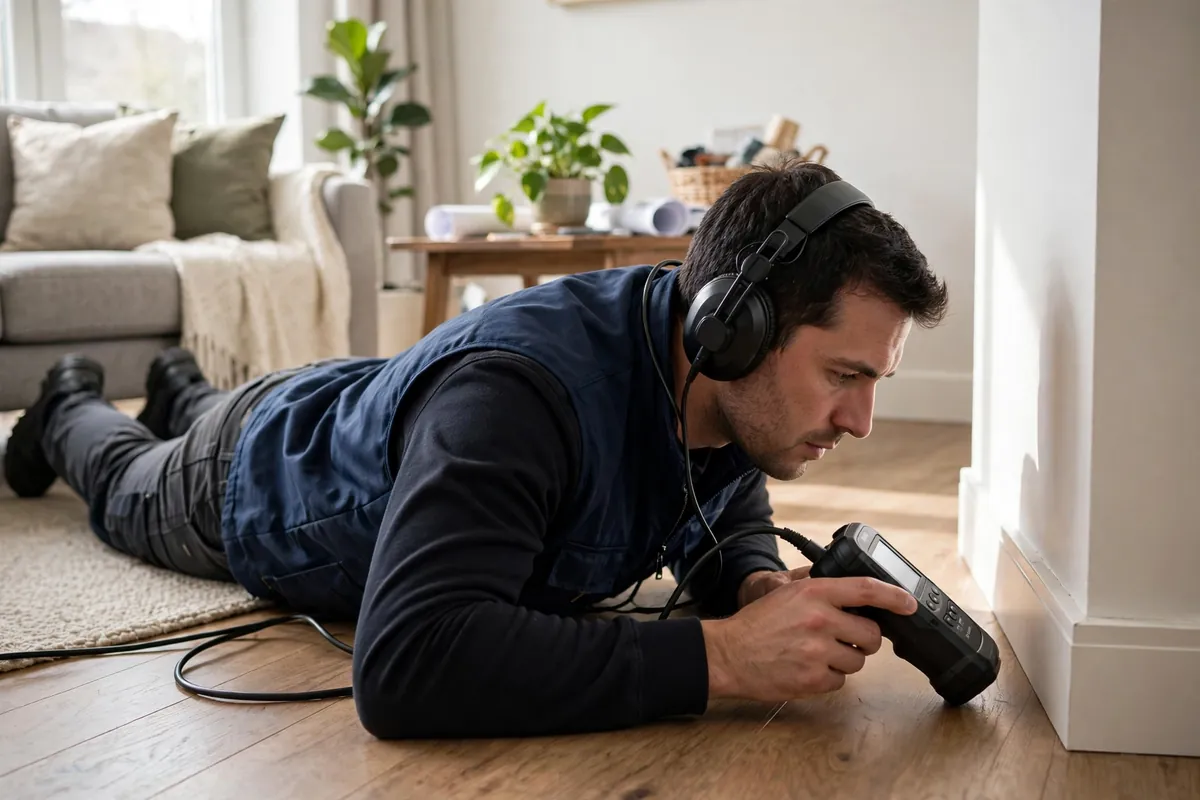
Here is something that surprises most homeowners: when we walk into your house, we do not reach for the equipment first. We ask questions. The tools are the last part of the job, not the first. This article is about what the visit looks like from your side of the front door: what to have ready, what you'll be asked, what you'll see us doing, and what you walk away with. (If you want the technical side, how each detection method works and what it rules out, our How It Works page covers that.)
Before we arrive: what to have ready
You don't need to prepare the house like it's a showing, but a few things make the visit faster. Pull up your recent water bills, or at least know roughly when the bill changed. If you ran the meter test yourself, tell us the result when you call; a customer who says "the meter kept moving with the house valve closed" has already done half the diagnosis. Clear access to the water heater, under-sink cabinets, the washing machine valves, and the crawlspace or attic hatch if you have one. Know where your main shutoff is, or at least which closet it's probably behind. And if you have a dog that treats strangers as a personal project, a plan for the dog helps more than you'd think.
The first fifteen minutes: your answers do the heavy lifting
The visit starts at your door, not at the meter, because you're the best witness we have. When did you first notice something? Is the sound constant or does it come and go? Did the bill spike overnight or creep up over months? Has anything been repaired or remodeled recently? Did it start after a freeze, a storm, or out of nowhere?
Don't worry about giving the "right" answers. The details that feel irrelevant are often the ones that matter: "the guest bathroom we never use" tells us where not to look, "right after the new water heater went in" points at a connection, "only at night" suggests a pressurized supply line rather than a drain. A homeowner who says "I hear water running under the kitchen floor at night" has already told us more than they realize. We still verify everything, but now we know where to start verifying.
While we work: what you'll see, and what we need from you
After the questions comes a visual pass through the house and around the property: the water heater, washing machine valves, toilets, exposed piping, the meter box, the yard. We're looking for anything obvious, because the obvious is cheap to check. Plenty of "hidden" leaks turn out to be hiding in plain sight behind a water heater.
Then the search narrows, and this is the part where we need two things from you: access and quiet. Acoustic listening, following the sound of escaping water to its loudest point, works best in a quiet house, so we may ask you to turn off the TV and keep conversation to a minimum for a stretch. We may also ask you to run a fixture while we watch a suspect area, or to stay out of a room while thermal imaging does its sweep. You don't need to hover, but stay reachable. The most useful thing you can do during a detection visit is answer the occasional "when did you first notice this?" and otherwise let the house go quiet.
What you won't see us do is start opening walls or breaking concrete. Detection comes before demolition, always. If anyone ever suggests cutting first and detecting later, that's your cue to get a second opinion.
Why we double-check before marking anything
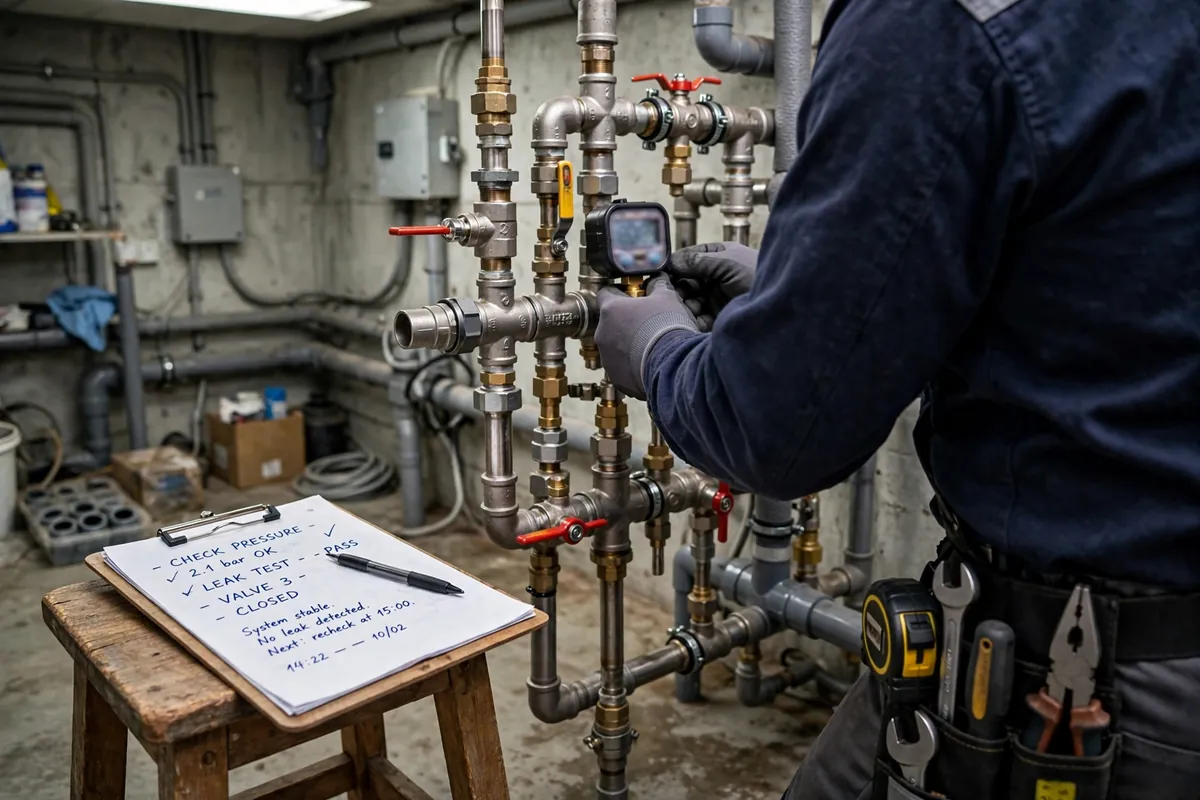
When we think we've found it, we confirm with a second, independent method before the mark goes down. From your side, this looks like us spending an extra twenty minutes after the answer seems obvious. It's deliberate. A plumber is going to cut concrete or open a wall based on our mark, and if we're wrong, somebody pays for that mistake in real money and real mess. Two methods agreeing on one spot is what makes the mark trustworthy. We'll also tell you out loud what we're confirming and why, because you're the one paying for the repair that follows and you deserve to understand the evidence.
What you walk away with
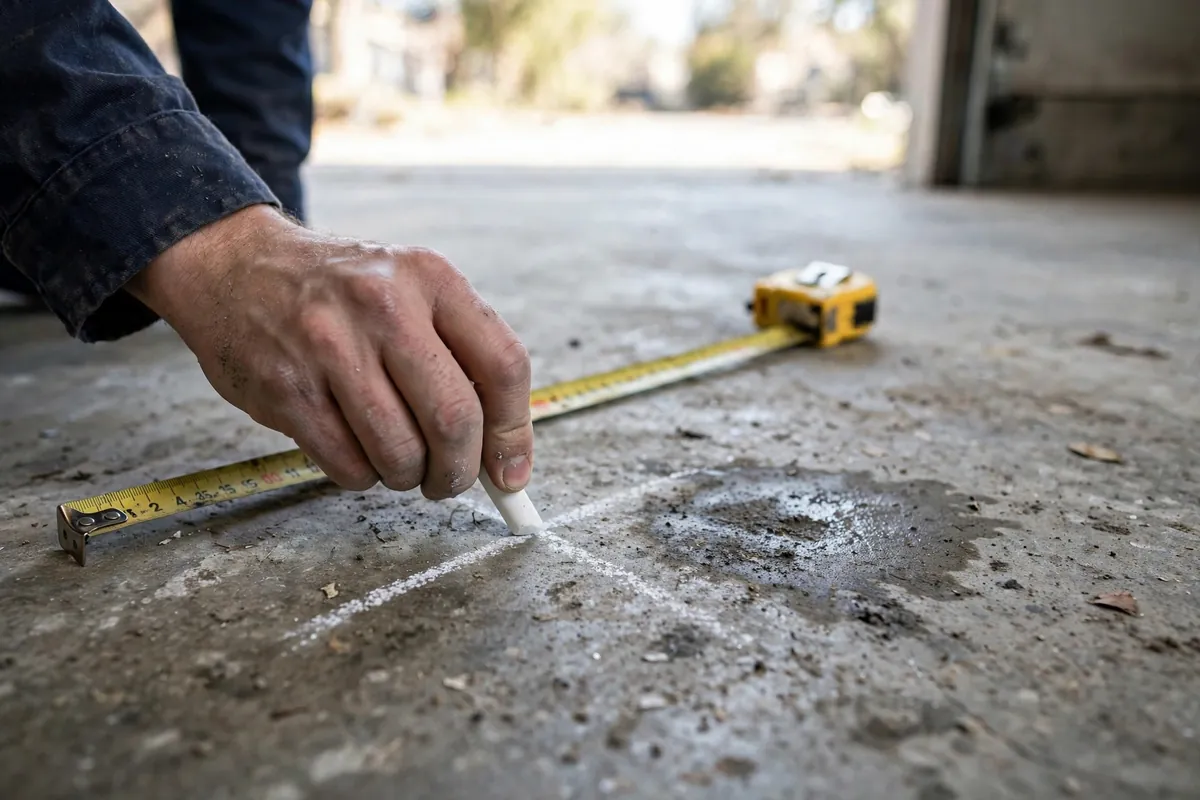
The visit ends with three deliverables. The leak location gets marked on site so everyone can see it. You get written notes describing what was found, where, and what the repair will likely involve. And we document visible damage with photos, which helps when you talk to your plumber and is useful for an insurance claim.
We do not do the repair. That separation is deliberate. When the company finding the leak is also selling the repair, there is pressure, real or imagined, to find something big. Detection-only means our only job is the truth about where the water is.
What can make a visit longer
A straightforward house call usually wraps up in one to two hours. What stretches it out: large properties with long pipe runs, commercial buildings, leaks that turn out to be in drainage rather than supply lines, and homes where access is tight, like older Columbia houses with low crawlspaces. Multiple symptoms pointing in different directions take longer too, because each one has to be checked. When you call and describe your situation, we will give you a realistic estimate for Columbia, TN homes like yours.
If this sounds like the kind of visit you need, the place to start is hidden leak detection. And if you want the whole sequence in checklist form, our How It Works page lays it out step by step.
A small leak found now beats a big repair later.
The earlier we catch it, the smaller the fix stays. Call and tell us what's going on.
Common questions
What does a leak detection technician do first?
Questions first, then a visual inspection of accessible areas, then a meter check with everything off. The specialized equipment comes out only after the search area has been narrowed by these simple steps.
Why do you confirm a leak with two methods?
Because a mark on the floor is only as good as the evidence behind it. If acoustic listening and thermal imaging both point to the same spot, the chance of sending a repair crew to the wrong place drops dramatically.
Does the technician fix the leak?
No. A detection visit finds and marks the leak and documents it for your plumber or contractor. Keeping detection separate from repair means the findings carry no sales agenda.
Want that kind of visit at your house?
Describe your symptoms. We will bring the right tools for your situation.