Signs of a Slab Leak
Slab leaks hide under your feet and can run for months. Here is how to recognize one, and the one thing you must not do about it.

A slab leak is a broken water line in or under the concrete foundation your house sits on. In much of Columbia, supply lines run through the slab, which means a break there is invisible, inaudible during the day, and perfectly capable of running for months. The good news: slab leaks leave a specific set of clues, and once you know them, they are hard to miss.
Run this check tonight: the bill first
Start with paperwork, not the floor. Pull three months of bills and look at usage, the gallons or cubic feet, not the dollars. A slab leak's signature is a steady climb with no change in habits: nothing new running, no houseguests, no pool fill. Dollars can move when rates change; usage only moves when water moves. If usage is flat, your slab is probably innocent and the culprit is a rate change or a fee. If usage is climbing month over month, keep going. Something is feeding on your water, and a slab line is a prime suspect.
Next: the barefoot walk
Morning is the best time, before the sun warms the rooms. Walk slowly across every hard floor in socks or bare feet and feel for a patch that runs warmer than the floor around it. Hot water escaping under the concrete heats the slab from below, and tile or wood passes that warmth straight to your feet. Found a warm patch? Mark its edges with painter's tape and check again in two or three days. A patch that's growing is active, and that rules out sun, ductwork, and appliances as explanations. This single check separates hot-side slab leaks from almost everything else in the house.
Then: the quiet-house listen
Late at night, with every fixture off and the house as quiet as it gets, stand in the rooms nearest your water heater and put your ear to the floor. A slab leak on a pressurized line makes a faint hiss or whoosh as water forces its way out into the soil. The closer you are to the break, the louder it gets, so move room to room and note where it's strongest. Silence doesn't clear you, cold-side leaks and slow seeps can be nearly noiseless, but a clear hiss with nothing running is one of the most reliable tells there is.
Check the water heater's behavior
A water heater that fires up far more often than it used to, especially overnight when nobody's using hot water, is working overtime to replace hot water that's escaping somewhere. Pair that with a warm floor patch and you've got two independent clues pointing at the same conclusion: a hot-side line leaking under the slab. On its own, a busy heater could be sediment or a failing thermostat. Combined with the barefoot test, it's close to a diagnosis, and it's exactly what we'll ask you about when you call.
Finish with the flooring and the foundation
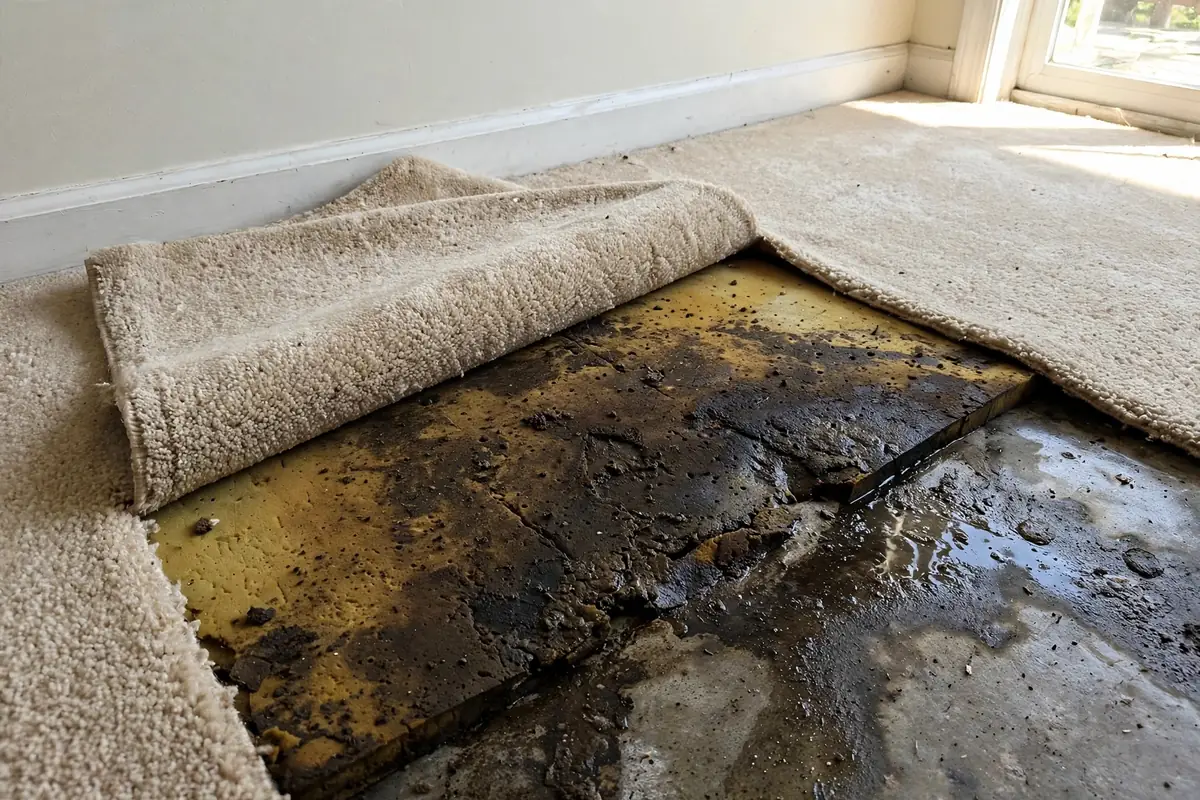
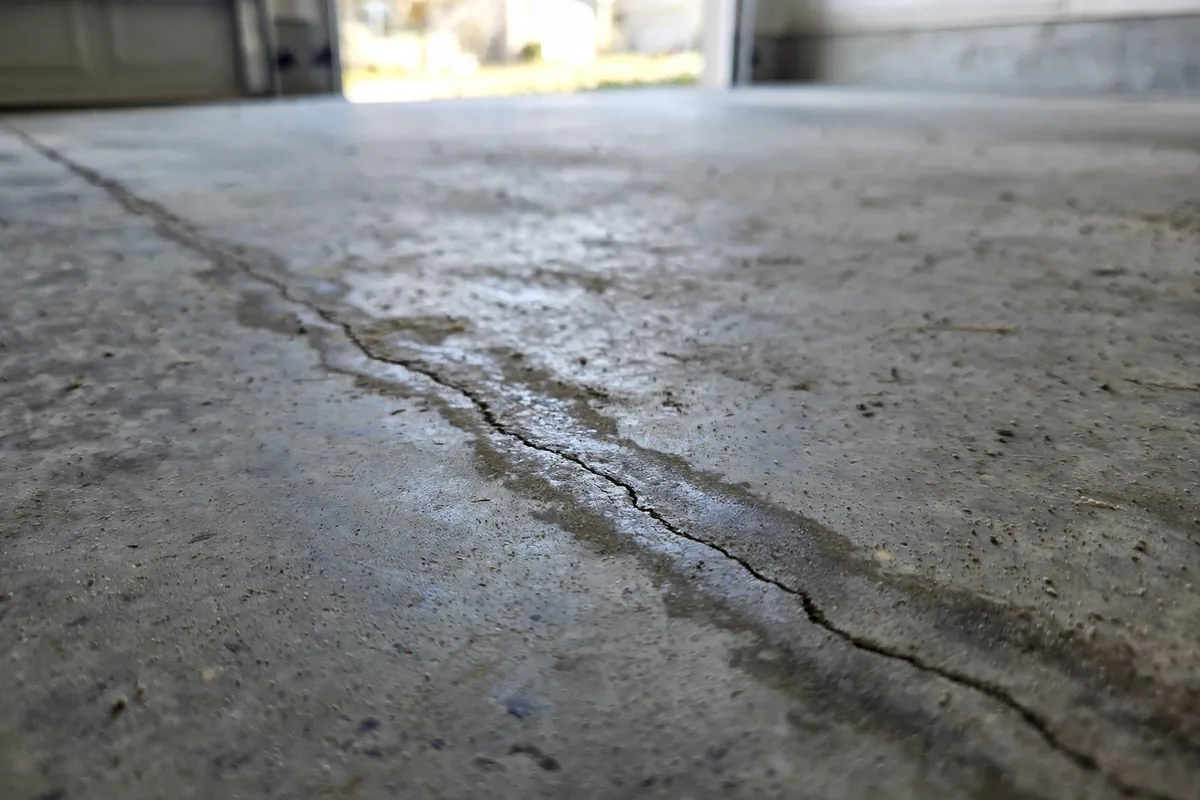
Two more checks close out the evening. First, the flooring: crouch along carpet edges and baseboards and feel for dampness, and look for tile grout that stays dark or laminate starting to cup. Moisture wicking up through concrete shows at edges and seams first, and a wet carpet pad under a dry-looking carpet is a strong clue. Second, the foundation itself: scan for hairline cracks that weren't there before, doors that have started sticking, or a floor that feels slightly uneven. Water under a slab washes out soil, and Maury County's clay swells and shrinks with wet-dry cycles, so a leak that's been running for months can start moving things. Foundation clues take time to develop, which is why the earlier checks matter more for catching it early.
The mistake that costs the most: drilling on a hunch
The most expensive thing a homeowner can do with a suspected slab leak is also the most tempting: drill or break concrete to "take a look." Inside that slab are other water lines, possibly electrical conduit, and in some homes post-tension cables that are dangerous to cut. Every blind hole destroys flooring in the wrong place, and we've seen a one-foot repair turn into a room-wide one because someone guessed at the location twice before calling us.
That's the order that keeps the bill reasonable: detection first, then one small opening at the mark. A slab leak detection visit exists so the concrete that gets opened is the right concrete.
What to ask before you hire anyone
Not every company that offers "leak detection" does it the same way. Ask whether they confirm with two independent methods before marking, ask what happens if they can't find it, and ask whether they do the repair too. A company that finds the leak and sells the fix has a built-in incentive to find something big. We do detection only, which means our only product is an accurate mark and honest notes your plumber can work from.
Also ask about the pipe. Copper under a slab fails differently than PEX, and older galvanized or polybutylene lines are usually a reroute conversation rather than a spot repair. If the person marking your floor can't tell you what's in your slab, keep looking.
What to do right now
Run the meter test with everything off. If the meter moves, do the main-valve isolation test to confirm the leak is under the slab and not in the yard. Photograph any warm spots, damp areas, or cracks, and note when you first noticed them. Then call for pipe leak detection so the leak gets pinpointed before anyone touches your floor. Slab leaks do not fix themselves, and every month of waiting is more water in the soil under your home.
After the pinpoint: the repair decision
Once there's a mark on the floor, the conversation shifts from finding to fixing, and it's worth walking in prepared. Your plumber will typically lay out two paths: open the slab at the mark and repair the broken section, or abandon that run and reroute a new line through walls or the attic. The right choice depends on things you can ask about directly: how old are the other lines in the slab, what material are they, and has this run leaked before? A single failed fitting in an otherwise young system favors a spot repair. Multiple aging lines favor a reroute, because fixing one break in a failing system just buys time until the next one.
Get the repair quote in writing, ask what happens to the flooring and who restores it, and don't authorize concrete work until the mark has been confirmed. A reputable plumber will want to see the detection notes before quoting, which is another reason the paperwork from the visit matters.
A small leak found now beats a big repair later.
The earlier we catch it, the smaller the fix stays. Call and tell us what's going on.
Common questions
What is the most reliable sign of a slab leak?
A warm spot on the floor, found by walking in bare feet. Hot water escaping under the slab warms the concrete, and the warmth shows up underfoot. Combined with a rising water bill or the sound of running water, it is a very strong indicator.
Can a slab leak damage my foundation?
Yes, over time. Water under the slab can wash out soil, cause settling, and create pressure that cracks concrete. In clay soil like Maury County's, repeated wetting and drying makes the ground shift, which stresses both the slab and the pipes in it.
Should I drill into the slab to find the leak myself?
No. Blind drilling risks hitting other pipes, electrical lines, or post-tension cables, and it destroys the floor in the wrong place. Professional detection pinpoints the leak within inches first, so any opening is small and in the right spot.
Warm spot on your floor?
Do not guess at the location. Get it pinpointed first.