What Causes Low Water Pressure?
Weak shower, slow-filling washer? Low pressure has several causes, and only one of them is a leak. Here is how to figure out which one you have.
Low water pressure is frustrating in a very personal way. The shower that used to blast now dribbles. The washing machine takes forever to fill. But before you assume the worst, know this: most low-pressure calls we see are not leaks. They are valves, buildup, or the fixture itself. This guide walks through the suspects in order, from the easy ones to the serious one.
First: measure it
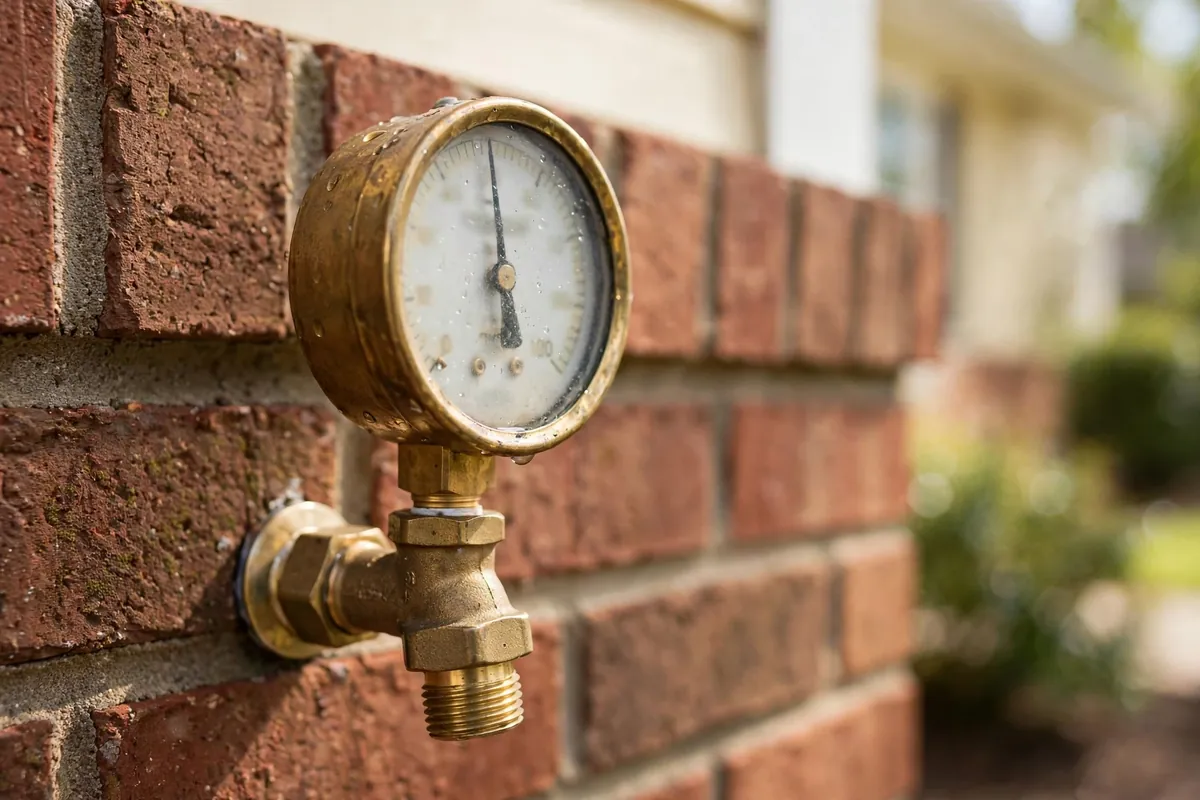
Guessing at pressure is unreliable. A ten-dollar pressure gauge that screws onto an outdoor hose bib gives you a real number. Open the tap fully and read it with nothing else running. Typical residential pressure runs roughly 40 to 80 psi. Below 40 is genuinely low. Above 80 is high enough to stress fixtures and cause its own problems.
Take the reading at a couple of different times. Municipal pressure can vary through the day, lower during peak morning and evening use. If pressure is fine at noon but weak at 7 a.m., that is a supply pattern, not a leak.
Cause 1: the fixture itself
If pressure is low at one faucet or one shower and fine everywhere else, it is almost never a leak. The usual suspects:
- A clogged aerator on the faucet tip, unscrew it and check for grit
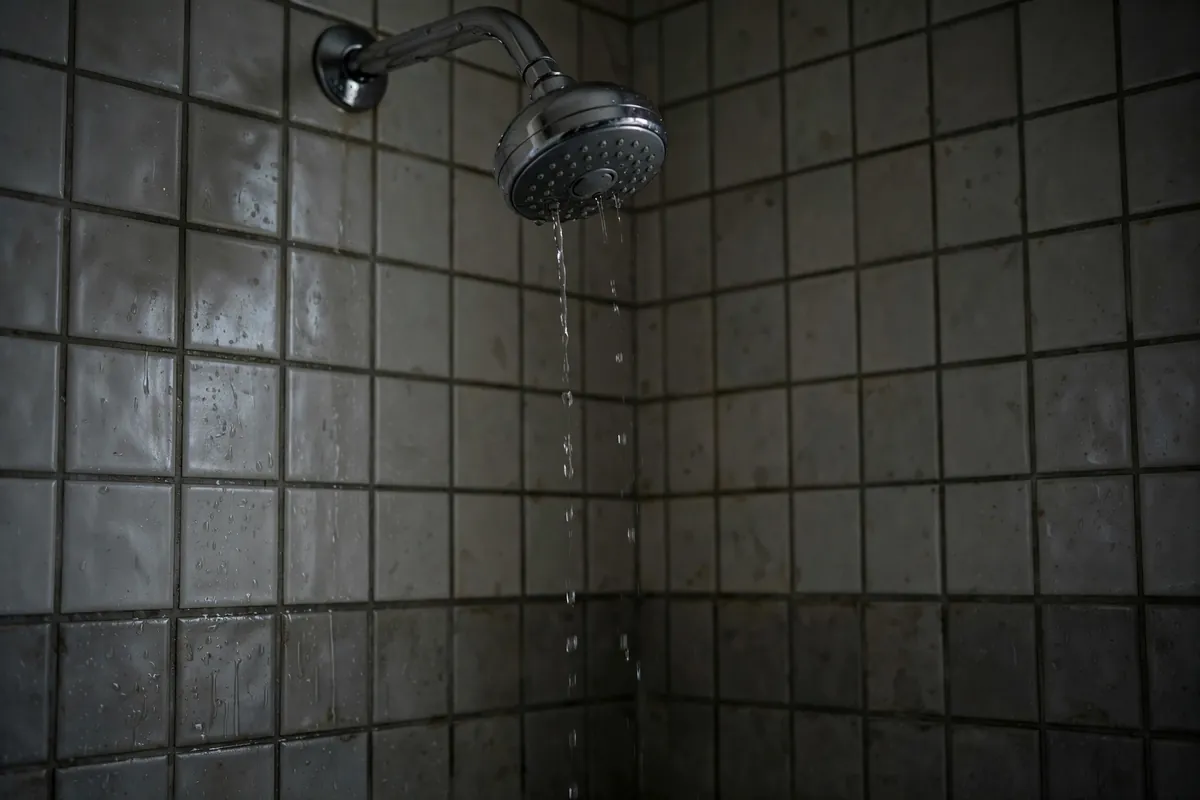
- Mineral buildup inside the showerhead
- A failing faucet cartridge
- A partially closed shutoff valve under the sink
Clean or replace the aerator first. It fixes an embarrassing number of "pressure problems."
Cause 2: the pressure-reducing valve
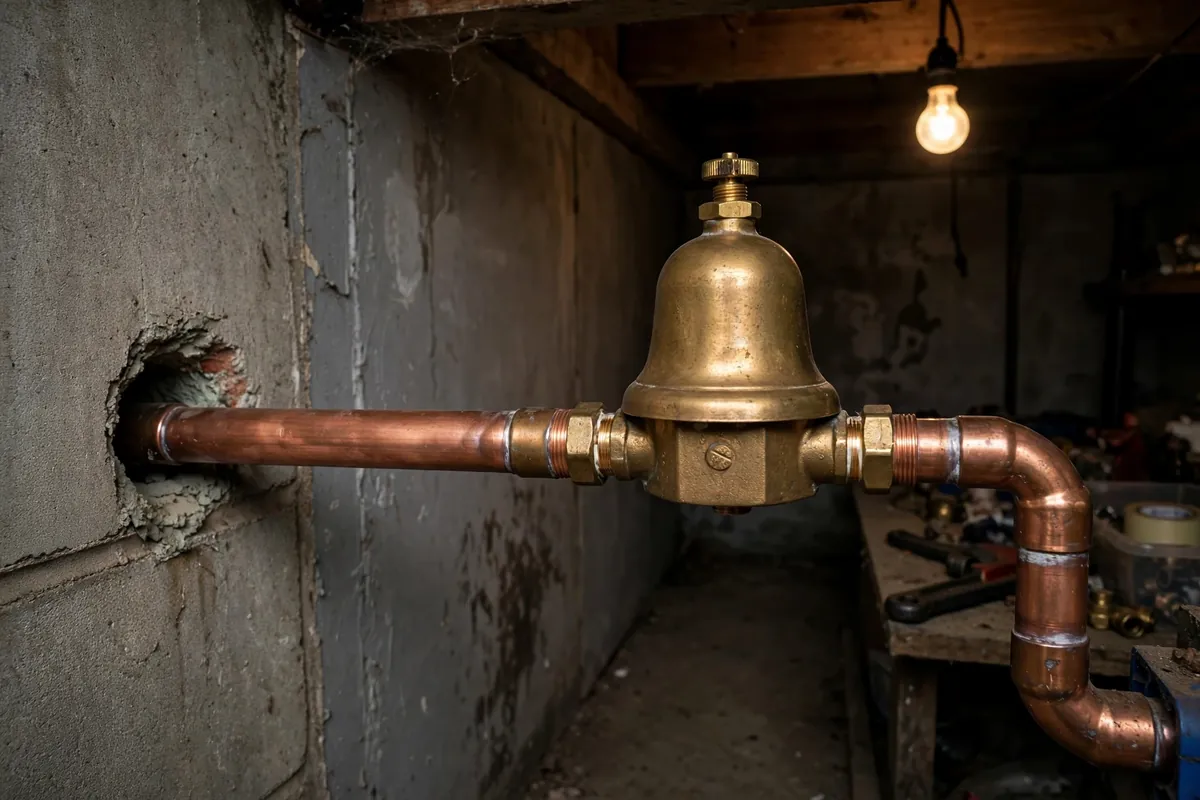
Many homes have a pressure-reducing valve, a bell-shaped device where the water line enters the house, that keeps municipal pressure at a safe level for your plumbing. When it fails, it often fails by choking flow down. If pressure dropped across the whole house at once, and especially if the gauge reading at the hose bib is low, the PRV is a prime suspect. On a typical visit where the whole house went weak at once, the PRV is where we look first, and we confirm with the gauge before touching anything. This is a plumber's job, not a DIY adjustment, because setting it wrong either starves the house or over-pressurizes the system.
Cause 3: the main valve or a stuck valve
If the main shutoff valve is not fully open, everything downstream runs weak. This happens after repairs, when a valve gets closed and not fully reopened, or with older gate valves that corrode internally and restrict flow even in the "open" position. Worth checking before anything expensive.
Cause 4: corroded or scaled pipes
In older homes with galvanized steel supply lines, the inside of the pipe narrows over decades as corrosion builds up. Pressure fades gradually, fixture by fixture, over years. This is a slow, whole-house pattern, and it is a repipe conversation, not a leak hunt. Homes in older parts of North Columbia with original galvanized lines see this pattern often.
Cause 5: the municipal supply
Sometimes the problem is not in your house at all. Water main work in the street, a partially closed municipal valve, or peak-demand dips can all drop your pressure temporarily. Ask a neighbor whether their pressure is off too. If it is, call the utility. No detection visit in the world will fix a city-side problem.
Cause 6: a leak
And here is the one we handle. A significant leak lets water escape before it reaches your fixtures, so pressure drops. But here is the key: a leak big enough to drop your pressure is usually big enough to show other signs too. A climbing bill. The sound of running water. A soggy yard. A warm floor spot.
If pressure is low and you have any of those companions, run the meter test. A moving meter with everything off confirms the leak. At that point, pipe leak detection or water leak detection is the right move, because guessing at the location is how people end up digging up the wrong part of the yard.
Narrowing it down: the pattern tells the story
- One fixture weak, rest fine: the fixture. Clean the aerator, check the valve.
- Whole house weak, sudden: PRV, main valve, or municipal supply. Check the gauge, check the neighbors.
- Whole house weak, gradual over years: corroded or scaled supply lines.
- Weak plus bill climbing, sounds, or sogginess: suspect a leak and test for it.
The honest mistake people make is jumping straight to the scariest explanation. Low pressure deserves a methodical check, not panic. Work the list from easy to hard, and let the pattern point you to the cause.
When low pressure is worth a detection visit
Here is the simple rule we give on the phone. If low pressure is your only symptom, start with a plumber or the easy DIY checks above. If low pressure comes with company, a moving meter, a climbing bill, running-water sounds, a soggy yard, or a warm floor spot, then it is a leak investigation, and that is our work. The meter test is the dividing line. Run it before you call anyone, and tell us the result. It saves you from paying for the wrong kind of visit, whichever kind that would have been.
Noticed something off with your water?
A quick call is the cheapest diagnostic there is. Tell us what you're seeing and we'll tell you what it likely means.
Common questions
Can a leak cause low water pressure?
Yes. A significant leak lets water escape before it reaches your fixtures, which drops pressure. But leaks are only one of several causes, so the meter test should confirm a leak before you assume pressure loss means broken pipe.
How do I check my home's water pressure?
Screw a pressure gauge onto an outdoor hose bib, open the tap fully, and read it. Typical residential pressure runs 40 to 80 psi. Check with nothing else running for the static reading, and check at different times of day, since municipal pressure can vary.
Why is pressure low in only one faucet?
That is almost never a leak. A single weak fixture usually means a clogged aerator, a failing faucet cartridge, mineral buildup in the supply line to that fixture, or a partially closed shutoff valve under the sink.
Pressure low with other leak signs?
If the meter is moving too, stop guessing and get the leak found.