When to Call Emergency Leak Detection
Some leaks need you now. Others can wait for morning. Here is the honest line between the two, and what to do in the meantime.
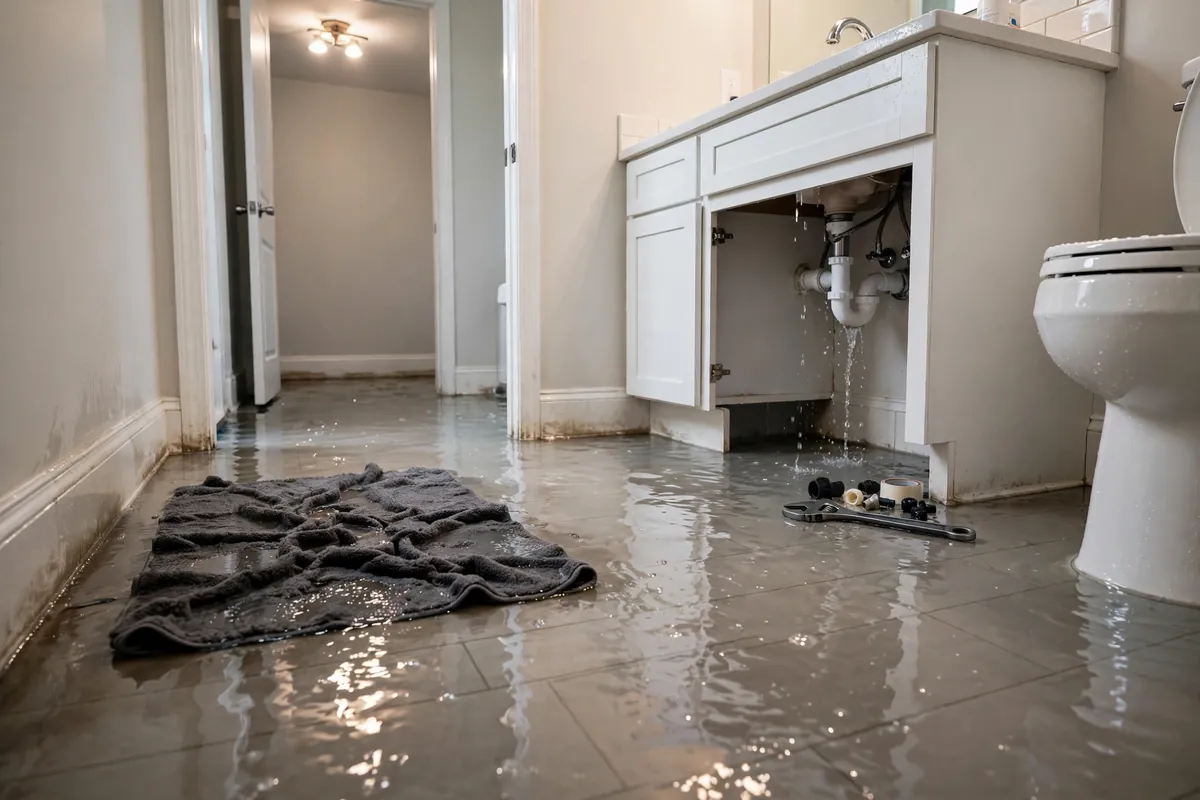
It is 2 a.m. and something is wrong with water in your house. The question running through your head is whether this can wait until morning or needs someone now. This guide gives you a clear answer, the shutoff steps to take first, and the things that genuinely cannot wait.
The shutoff steps come first, always
Before you decide anything, stop the water. Every minute of flow is more damage.
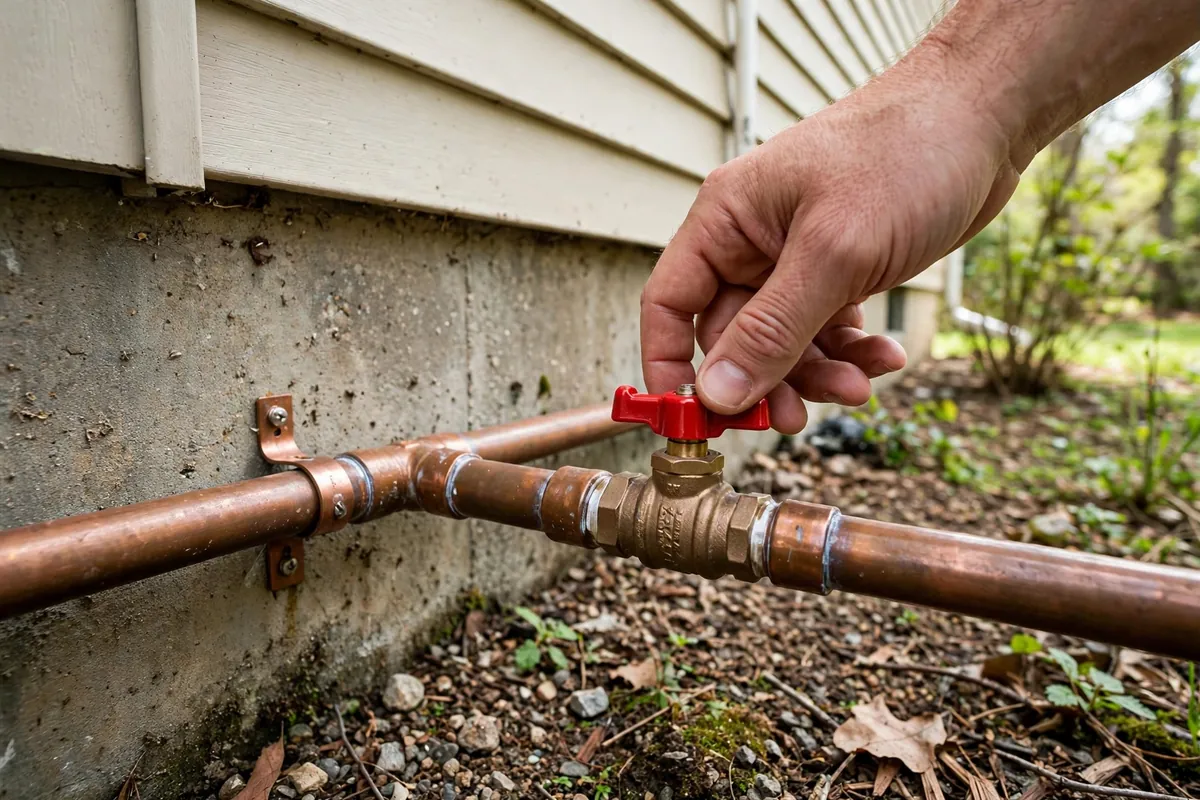
- Find your main shutoff valve. Usually where the water line enters the house: near the water heater, in a utility room, garage, or at the foundation. Turn it clockwise until it stops.
- If you cannot find it or it will not turn, shut off the closest fixture valve instead. Toilets, sinks, and washing machines all have their own valves.
- If water is near electrical outlets, panels, or appliances, do not wade in. Turn off the breaker for that area if you can do it safely from a dry spot, and stay out of the water.
- If the leak is outside and you cannot stop it, the curb-side meter valve can be shut off, but many homeowners are not comfortable doing that in the dark. That is fine. Contain what you can and call.
Do this now, before you finish reading. We will wait. Knowing where your main valve is ahead of time is the single best piece of emergency plumbing preparation there is. Go find yours this weekend if you have never touched it. Make sure it actually turns.
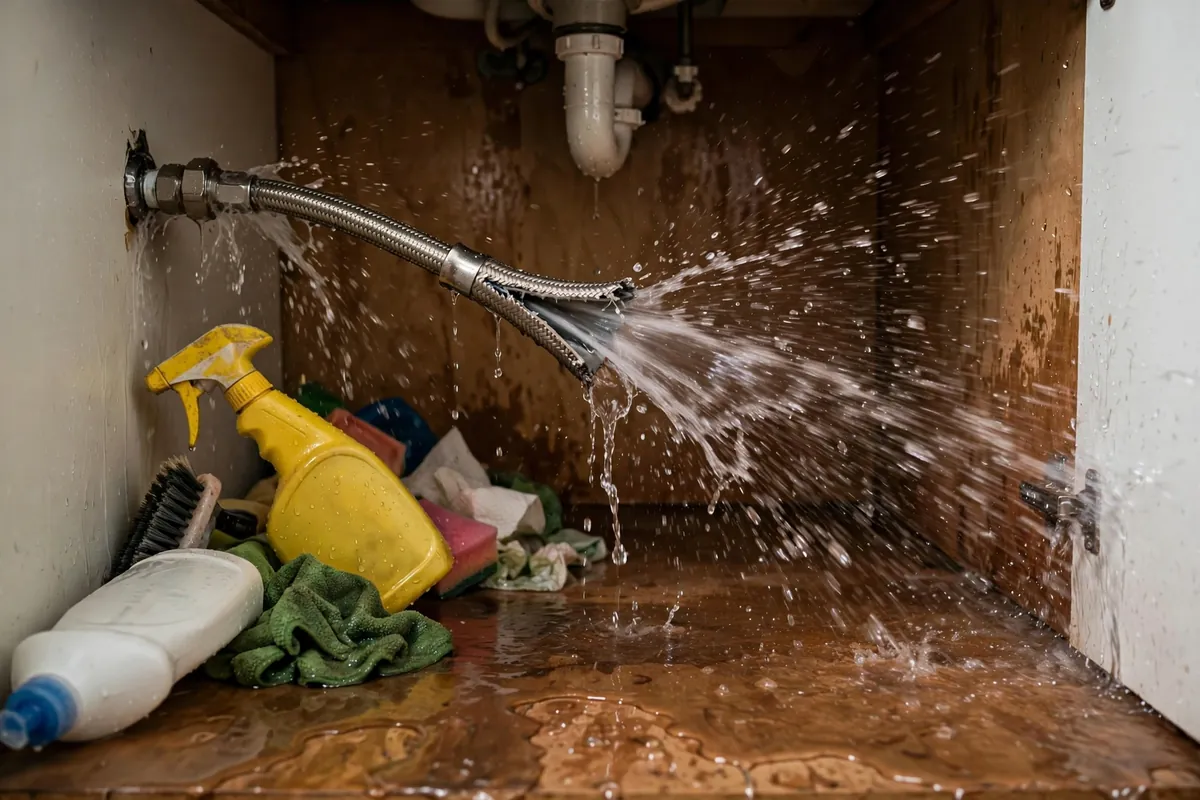
Supply hoses are a common culprit in indoor floods: the rubber hoses feeding a washing machine, and the braided lines under sinks and behind toilets. If one bursts, the fixture's own shutoff valve, or the main valve if there is none, is your only real stop.
What counts as an emergency
- Active flooding inside the home. Water spreading across floors, coming through a ceiling, or pooling where it should not be. Shut off the main and call.
- Sewage backup. Wastewater coming up through drains, tubs, or toilets is a health hazard, not a plumbing inconvenience. Stop using water and call.
- A burst pipe spraying water. A burst supply line can release an enormous amount of water fast. Main valve off, then call.
- Water near electricity. Water in a breaker panel, around outlets, or pooling near major appliances. Electricity first, water second, then call.
- No water at all after a freeze. In a hard Columbia winter freeze, pipes can burst when they thaw. If the house lost water during a freeze, assume something broke and check every room when it returns.
What can wait until morning
Not every leak is a middle-of-the-night problem, and we will tell you that straight. These are serious but not emergencies:
- A ceiling stain that is damp but not dripping
- A toilet that runs or a faucet that will not stop dripping
- A warm spot on the floor you just discovered
- A soggy patch in the yard
- A bill that spiked, with no visible water anywhere
For these, shut off the fixture's individual valve if it has one, put a bucket or towel where it helps, take photos with timestamps, and call in the morning. You will get the same careful detection visit, just during business hours.
While you wait: protect the house
Move what you can: rugs, electronics, furniture legs off wet flooring. Soak up what you can with towels, but do not delay the call to mop. Photograph everything before you move it, from a few angles. Those photos matter for insurance. If drywall is bulging with water, do not poke it. A bulging ceiling full of water is heavier than it looks, and releasing it wrong makes the mess worse.
General insurance advice: document first, mitigate second, repair third. Photos with timestamps, a note of when you discovered it and when you shut the water off, and the written findings from your detection visit all support a claim. We provide the written findings as part of every visit.
After the emergency: find the source
Stopping the water is step one. Finding where it came from is step two, because the repair depends on it. A burst supply hose under a sink is a simple fix once you know which one. A slab leak that flooded a room needs pinpointing before anyone opens the floor. That is what emergency leak detection is for: even in urgent situations, we confirm the source and mark it so the repair that follows is aimed at the right place.
Homes across Windermere and the rest of Columbia deal with the same winter freeze risk every year: pipes in exterior walls, hose bibs left connected, and crawlspace lines that were fine until the coldest night of the year. If a freeze just hit, walk the whole house when the water comes back. The burst is not always where you expect it.
The one thing not to do
Do not pour chemical sealers into your pipes in an emergency, and do not wrap a burst in tape and call it handled. Temporary patches have a way of failing at the worst moment, and sealers can complicate the real repair. Shut the water off, document the damage, and get professional detection to confirm the source. The boring, correct steps are the ones that work.
Hear water? See a stain? Bill climbing?
Those are the three signs we hear about most. Call and describe yours, and we'll point you at the right next step.
Common questions
What counts as a plumbing leak emergency?
Active flooding inside the home, sewage backing up into drains or fixtures, a burst pipe spraying water, and any leak near electrical panels or outlets. In all of these, shut off the water first, then call.
How do I shut off the water to my house?
Find the main shutoff valve where the water line enters the home, usually near the water heater, in a utility room, garage, or at the foundation. Turn it clockwise until it stops. If it will not turn by hand, do not force it with tools that could snap it.
Can a leak wait until morning?
If the water is contained, slow, and not near anything electrical, it often can. A dripping stain, a slowly climbing bill, or a warm floor spot are serious but not middle-of-the-night emergencies. Shut off the fixture's valve if you can, document with photos, and call in the morning.
Water where it should not be, right now?
Shut off your main valve, then call. We will take it from there.